
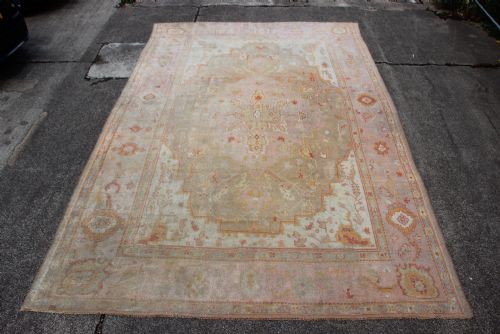



Faded Wool Rug
A faded wool rug brings softened colour and historic warmth to a floor, offering muted tones shaped by decades of sunlight and use.
Faded Wool Rug
When you search for a faded wool rug, you encounter floor coverings woven across the nineteenth and early twentieth centuries in Persian, Ottoman, and wider regional traditions. These textiles span various scales, from compact area pieces to expansive carpets and long runners designed for hallways.
The specimens on this page lean heavily towards Turkish and Persian origins, with Oushak, Sarouk, and Kirman examples appearing frequently alongside tribal pieces from Caucasian and Anatolian workshops. Their designs range from grand central medallions to all-over geometric patterns, subdued by time into gentle pastels and muted earth tones.
How they were made
Weavers constructed these pieces predominantly using natural wool yarn for the pile and foundation, occasionally incorporating cotton or angora wool for specific textures. Dyers relied on organic materials to achieve deep hues that subsequently mellowed through exposure to light and wear.
The pile was knotted by hand onto warp and weft threads, creating a dense textile capable of withstanding generations of foot traffic. Artisans finished the edges with sturdy selvages and secured the ends to prevent unraveling.
The listings span the nineteenth and early twentieth centuries, featuring wool, cotton, and angora wool across Turkish and Persian styles.
What varies in quality
The fineness of the knotting and the complexity of the original design separate standard room-size floor coverings from exceptional examples of weaving. Tighter knots allow for sharper pattern definition, even as the colours soften with age.
The balance of the patina matters greatly, distinguishing deliberate, even fading from heavy structural thinning. Superior pieces retain a sound foundation and resilient wool pile despite their aged appearance.
The Faded Wool Rug Glossary
- Patina
- The surface sheen and soft coloration acquired by textiles through decades of use, light exposure, and natural ageing. This quality defines the visual appeal of older floor coverings.
- Pile
- The upright yarn loops or cut ends that form the soft surface of a rug. Pile depth varies according to the regional tradition and intended use of the textile.
- Warp
- The vertical threads stretched tightly on the loom before weaving begins. The foundation yarns hold the entire structure together.
- Weft
- The horizontal threads passed through the warp yarns to lock the knots in place. Together with the warp, it forms the grid of the rug's foundation.
- Selvage
- The finished side edges of a rug, reinforced to prevent the horizontal weft threads from fraying. Sound selvages indicate careful preservation.
Faded Wool Rug: Frequently Asked Questions
How do I clean a faded wool rug?
Gentle surface vacuuming without a beater bar removes loose dirt from the pile safely. Professional washing is recommended for deeper cleaning to protect the aged wool and softer dyes.
Harsh chemical detergents and excessive scrubbing should be avoided entirely to preserve the delicate patina. Direct sunlight drying should also be managed carefully.
Can I place these rugs in high traffic areas?
Many of these antique pieces possess sturdy wool foundations that tolerate moderate hallway or living room use well. A quality underlay provides additional cushioning and prevents slipping.
Excessively worn examples benefit from placement in quieter rooms or bedrooms where foot traffic remains minimal. Regular rotation ensures even distribution of wear over time.
How do I identify an Oushak carpet?
Oushak carpets typically display large-scale floral motifs and medallion designs executed in soft pastel palettes and pale terracotta tones. The wool often feels slightly silky and looser in knot density compared to Persian counterparts.
Originating from western Anatolia, these pieces frequently utilise a distinctive knotting technique. Their relaxed geometry distinguishes them from tighter city-woven carpets.
What causes the faded look?
Decades of gentle sunlight exposure gradually lighten the natural dyes used in these vintage textiles. Daily foot traffic and regular washing also contribute to the softening of bright primary colours into muted pastels.
This gradual transformation creates the characteristic gentle patina valued by collectors. Rather than a defect, this weathering represents the natural history of the piece.