
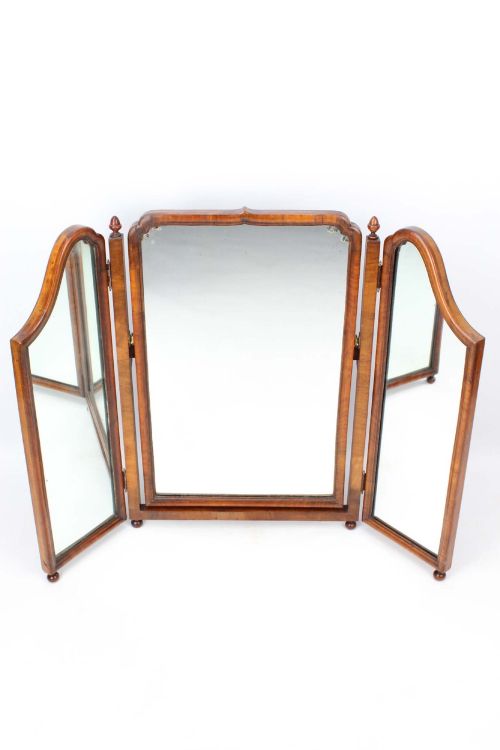
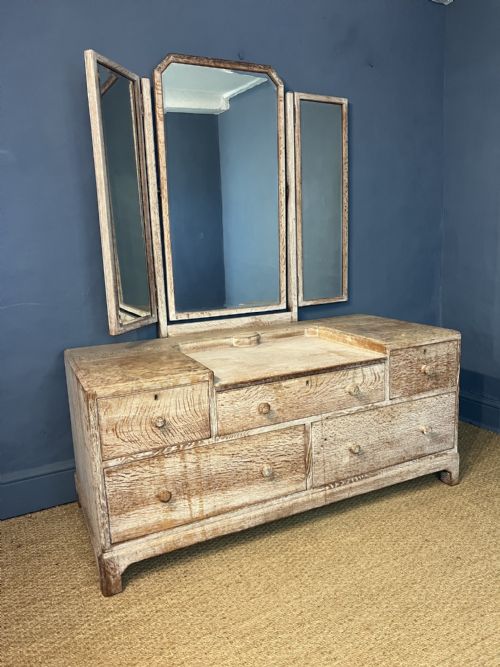


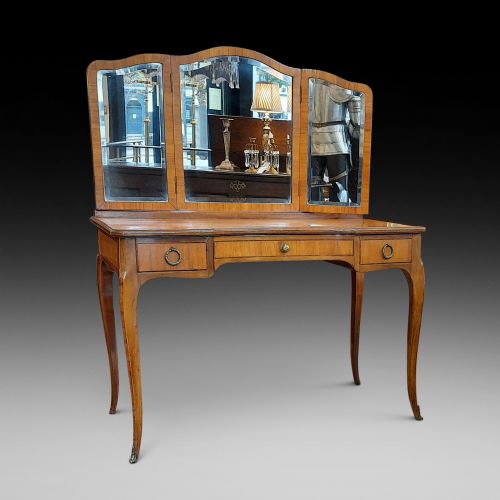

Tri Fold Mirror Dressing Table
These tri fold mirror dressing table pieces combine hinged glass and timber to anchor a bedroom scheme.
Tri Fold Mirror Dressing Table
A tri fold mirror dressing table brings together a vanity surface and a triptych of adjustable looking glasses. You encounter forms spanning from the late nineteenth century through to the mid twentieth century.
The inventory ranges from large timber dressing tables with marble tops down to freestanding brass or gilt folding triple dressing mirrors. French styles appear alongside English oak and walnut constructions.
Makers such as Heals and Peerage sit alongside provincial French workshops. The designs move from Rococo Revival curves to clean limed oak lines.
How they were made
Cabinetmakers utilised timber frames of mahogany, oak, walnut, kingwood and rosewood, frequently enhanced by crossbanding or carved details. Giltwood and brass constructions provide alternative metallic and reflective finishes.
Glass panels are bevelled and held within hinged brass or wooden frames to allow independent movement. Marble tops and fabric elements complete the construction of the larger dressing tables.
Some folding mirrors come equipped with fierce lion finials standing guard over your morning routine.
What varies in quality
The ambition of the timber selection and the crispness of the carving dictate the standing of the piece. Finer examples display thoughtful crossbanding and substantial brass embellishments rather than plain surfaces.
The weight and integrity of the hinge mechanism separate standard items from superior ones. Heavy brass finials and solid bracket feet elevate the construction.
Heals
The Tri Fold Mirror Dressing Table Glossary
- Triptych
- A three-panelled arrangement where the two outer sections hinge inwards. This allows the user to view angles otherwise missed by a single flat glass.
- Crossbanding
- A border of veneer laid across the grain of the primary timber. This technique frames the top surface of a dressing table.
- Limed oak
- Timber treated with a specialised finish that leaves a white pigment in the grain. This treatment lightens the tone of the wood.
- Giltwood
- Wood that has been coated with gold leaf or a gold-coloured finish. It is common on mirrors influenced by French decorative styles.
Tri Fold Mirror Dressing Table: Frequently Asked Questions
What is a tri fold mirror dressing table?
It is a vanity station featuring a central looking glass flanked by two smaller hinged mirrors. This setup lets you adjust the side panels to check your reflection from multiple angles.
The form includes both full dressing tables with drawers and smaller tabletop mirrors designed to sit on existing surfaces.
How do you date these dressing tables?
Dating relies on the prevailing wood choices, hardware styles, and decorative motifs present on the frame. Edwardian and early twentieth century pieces often show French Rococo Revival or Neoclassical influences.
Later pieces from the nineteen thirties introduce limed oak and simpler, stripped back lines associated with modern tastes.
Where should I place a tri fold mirror?
These pieces require a sturdy surface with adequate natural light to make the most of the adjustable glass panels. Bedroom placement works best when positioned near a window.
Freestanding table versions need a stable chest of drawers or dedicated dressing surface to support their hinged weight.
Are brass elements original to these pieces?
Brass embellishments, swan neck handles, and finials were standard fittings on French and English pieces from the Victorian era onward. They provide structural support for the hinges while adding a metallic contrast to the timber.
Inspect the fixings to ensure the brass components match the period of the main frame.