



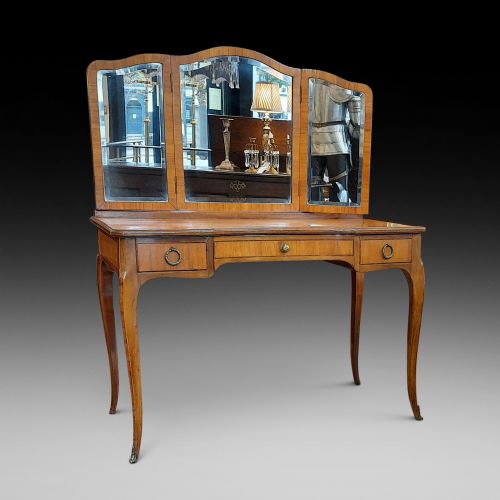
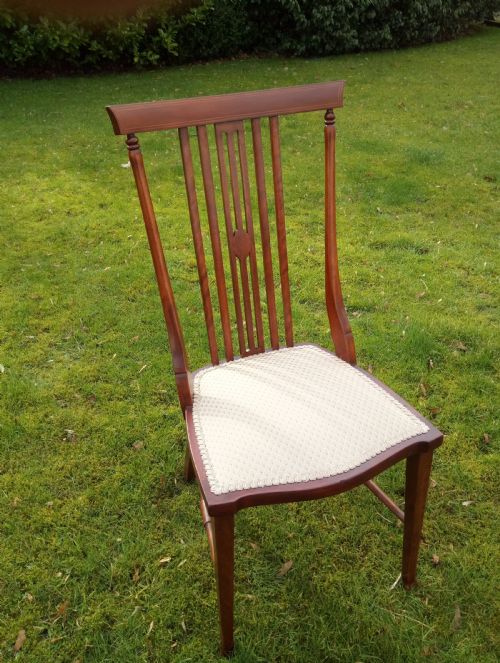
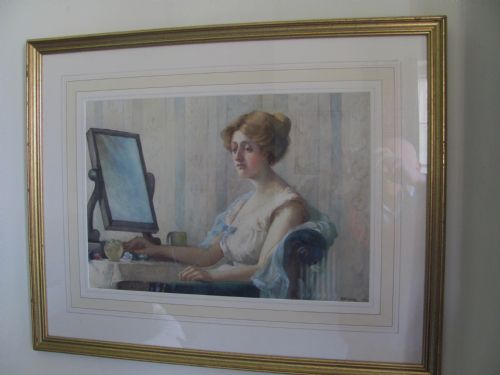
Early 20th Century Dressing Table
An early 20th century dressing table offers refined chamber storage and vanity surfaces, combining period timber work with pivot mirrors.
Early 20th Century Dressing Table
An early 20th century dressing table brings together vanity mirrors and fitted drawer spaces, drawing on Edwardian, revival, and continental designs. These pieces span from the 1900s through the 1930s, incorporating writing surfaces, kneehole layouts, and matching seating.
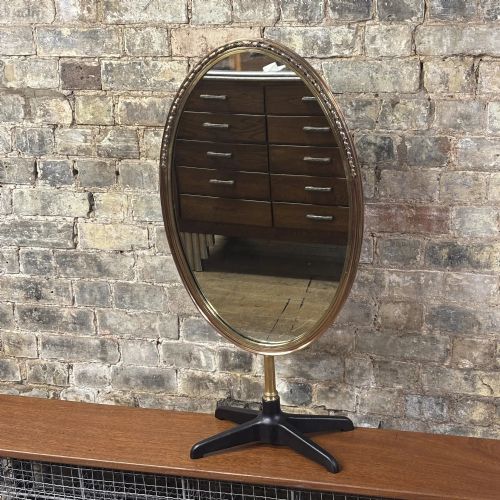
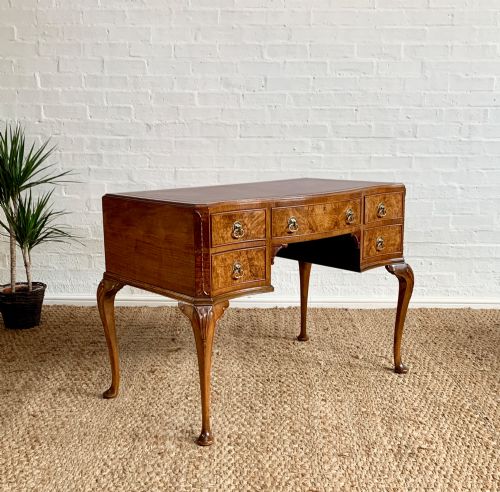
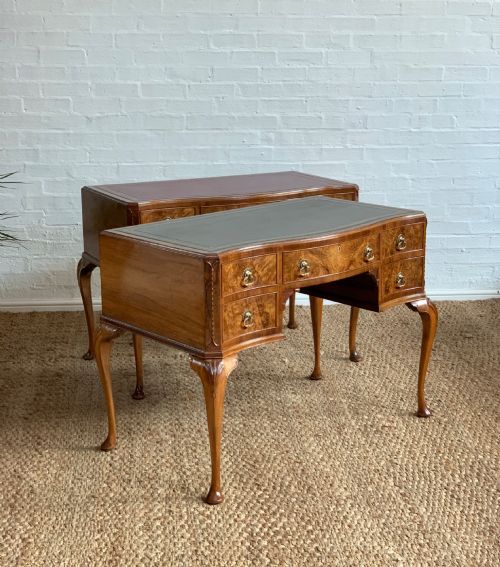
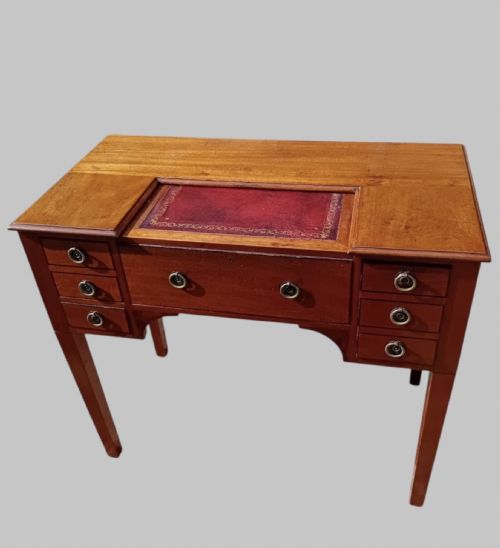
The versions most commonly met on this page include mahogany writing tables, oval brass mirrors, and walnut vanity pieces. Surviving examples often show revival influences such as Queen Anne, French Rococo, and Georgian styles alongside simpler Arts and Crafts forms.
How they were made
Cabinet makers constructed these pieces using solid timbers and decorative veneers like mahogany, burr walnut, kingwood, and rosewood. Brass fittings, adjustable mirror frames, and leather inserts provide functional detail to the wooden structures.
Surface decoration relies on crossbanding, inlay, and polished finishes that highlight the grain of the wood. Metal components such as cast brass and iron support the tilting mirrors and drawer handles.
Several dressing mirrors tilt on polished brass pivots, ready to catch the morning light just as they did a century ago.
What varies in quality
The distinction between standard pieces and finer examples rests in the choice of cabinet timbers and veneer selection. Matched burr walnut or crossbanded kingwood indicates greater workshop attention than plain secondary woods.
Design ambition also divides the range, moving from straightforward utility items to pieces featuring detailed carving, brass adjustable hardware, or documented maker attribution. Construction integrity in the drawer joints and mirror supports completes the measure of quality.
Wylie and Lochhead Glasgow
The Early 20th Century Dressing Table Glossary
- Crossbanding
- A strip of veneer run perpendicular to the grain of the main surface, often seen on borders. This technique frames the top panel of a table.
- Kneehole
- A recessed central space beneath a desk or dressing table designed to accommodate the user's legs. It is typically flanked by banks of small drawers.
- Kingwood
- A dense, heavy cabinet timber valued for its dark purple-brown colour and lighter figuring. It frequently appears in continental crossbanding.
- Arts and Crafts
- A design movement prioritising honest construction and visible materials over excessive ornament. Pieces from this tradition favour simple forms and solid construction.
Early 20th Century Dressing Table: Frequently Asked Questions
How do I date an early 20th century dressing table?
Dating relies on stylistic markers, construction methods, and timber choices typical of the 1900 to 1930 decades. Edwardian pieces often display lighter revival motifs, while 1920s and 1930s examples lean towards cleaner lines or burr walnut veneers.
Hardware, mirror mounts, and maker labels also assist in narrowing down the decade of production. Examining the secondary woods inside the drawers provides further clues to the manufacturing period.
What is the difference between a vanity table and a dressing table?
A dressing table typically incorporates integrated drawer storage and a fixed or pivoting mirror for grooming. Vanity tables often focus specifically on the surface and mirror arrangement for cosmetic use.
In the early 20th century, these terms sometimes overlap in listings, describing pieces with kneehole configurations or dedicated writing slides. Both formats were designed for the bedroom or dressing room.
How were dressing mirrors mounted on these tables?
Dressing mirrors of this period were frequently mounted on pivoting side arms attached to small upright supports. This allowed the glass to tilt to the user's preferred angle.
Alternatively, standalone brass or wooden table mirrors sat on top of the surface without permanent fixings. Some larger dressing tables integrated the mirror frame directly into the backboard of the cabinet.
Can I use an antique dressing table as a desk?
Many dressing tables and ladies' writing tables from this era function well as compact desks. Kneehole formats and pieces with leather-lined slides offer adequate knee room and writing surfaces.
When using one as a desk, consider the height of the drawers and the presence of any modesty panels at the back. Pairing the table with a suitable period stool or chair ensures comfortable seating.