
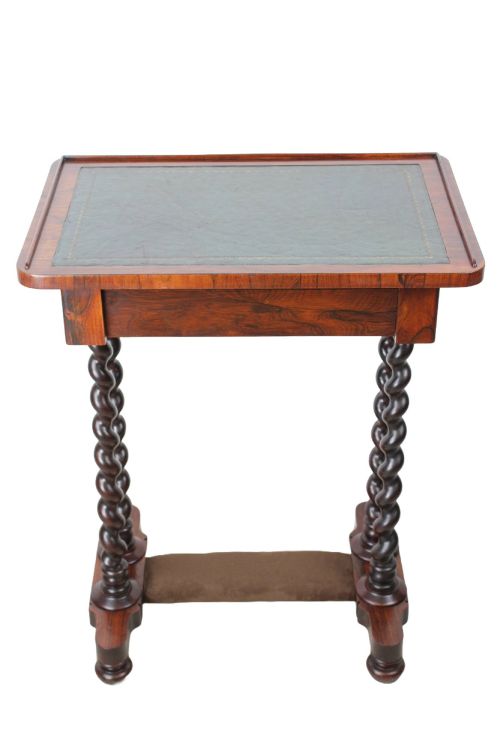
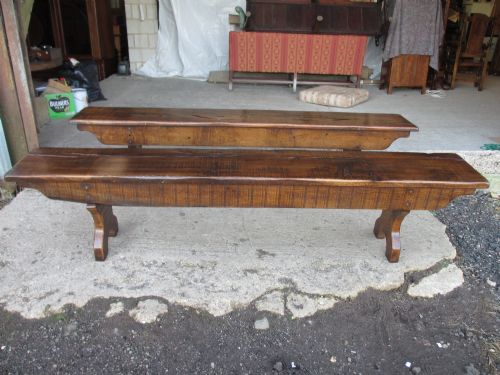
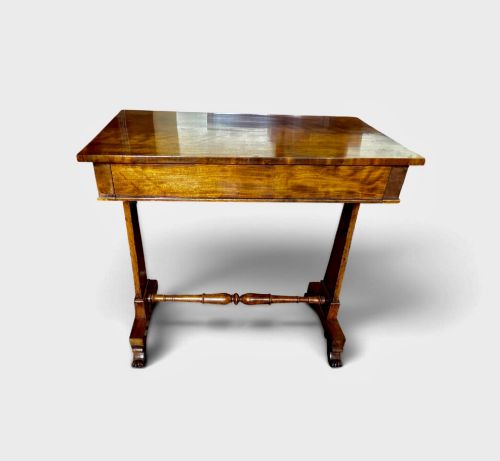
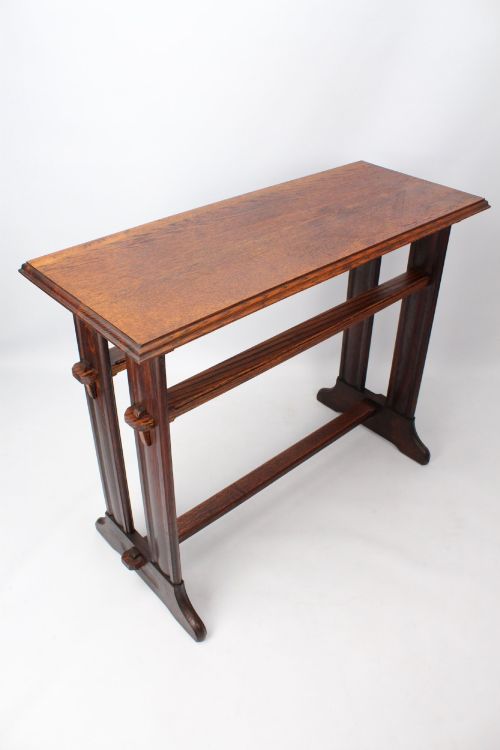
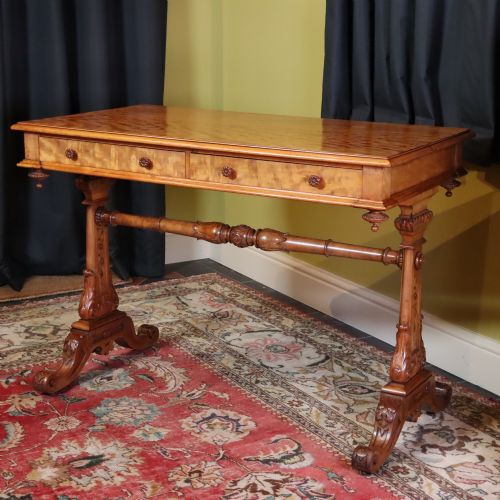
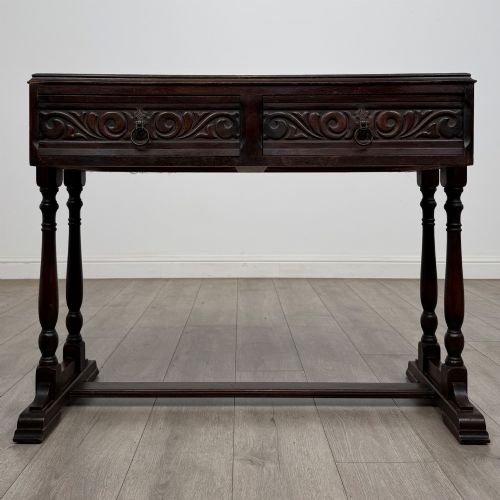
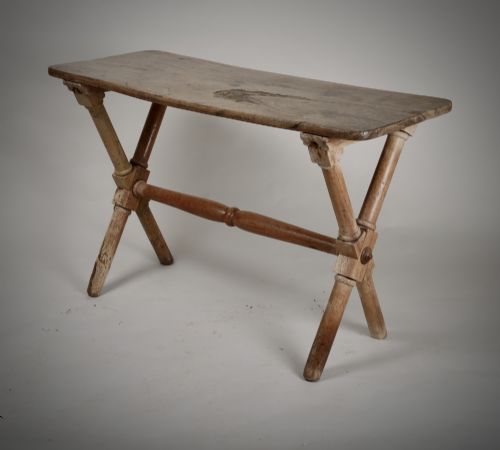
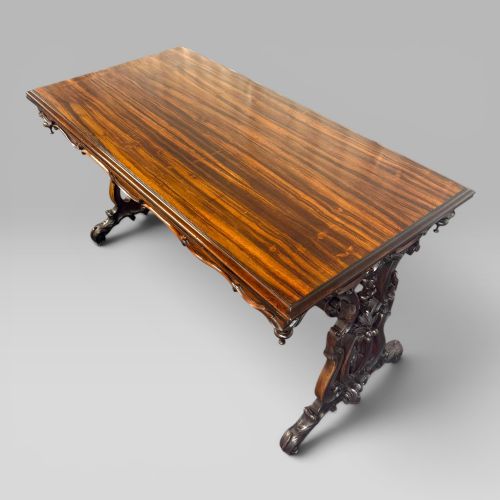
Trestle Hall Table
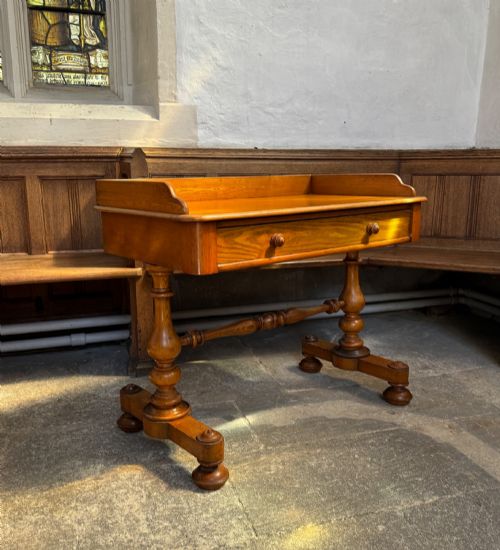
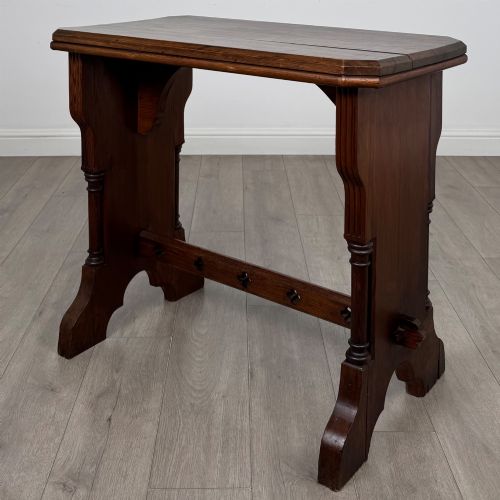
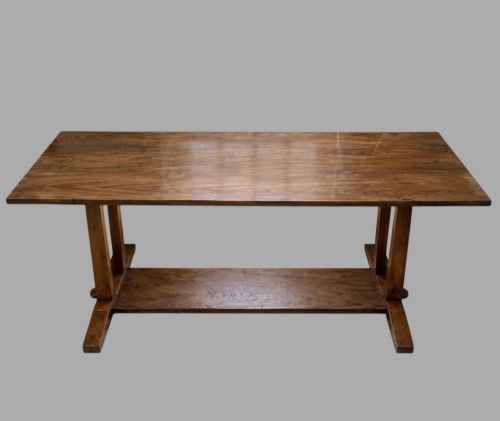
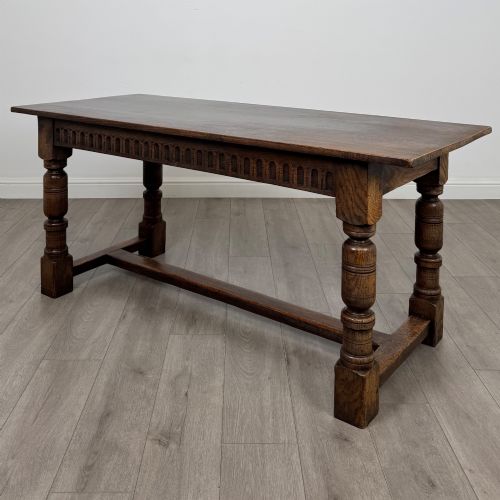
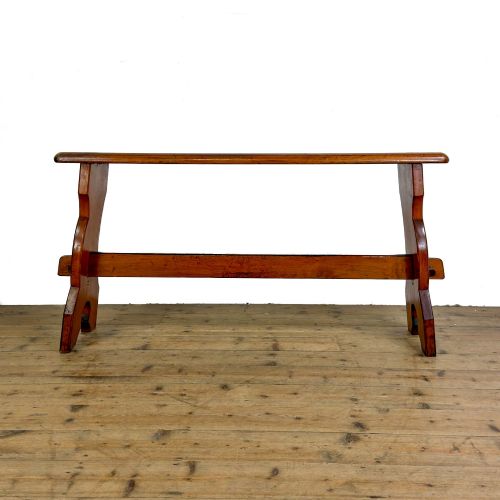
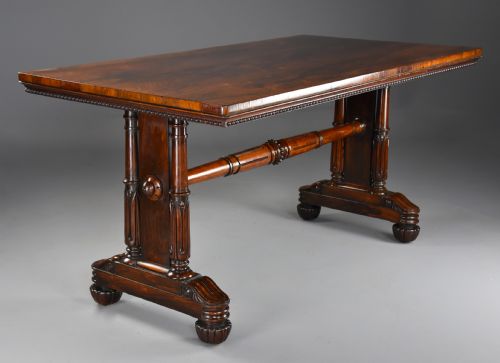
These trestle hall table pieces bring solid timber structure and clean proportions into a passageway, offering a surface that sits flush against a wall.
Trestle Hall Table
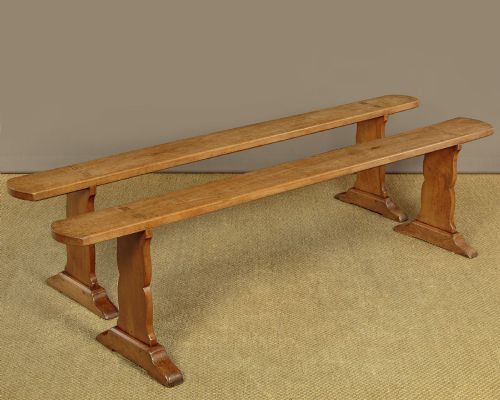
A trestle hall table provides a narrow surface intended for entrance spaces, often taking the form of side tables, console tables, or long benches with distinctive shaped supports.
The pieces seen on this page span the 19th century and Edwardian eras, utilising designs derived from Regency, Victorian, and Arts and Crafts traditions.
Buyers searching for a trestle hall table frequently encounter robust oak and mahogany constructions alongside refined rosewood and pitch pine examples.
Materials and Construction
Cabinet makers relied heavily on dense hardwoods such as oak, mahogany, and walnut, frequently incorporating burr walnut veneers for visual depth on surface tops.
Support structures combine pegged joints, turned spindle bases, and shaped trestle ends, sometimes accented with brass fittings or cast iron elements.
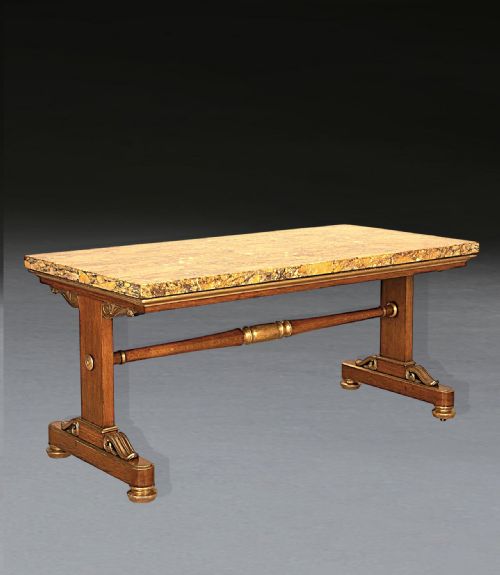
Secondary timbers like pitch pine and elm appear in vernacular benches and serving tables, whilst select pieces feature marble inserts or giltwood carved details.
The listings feature oak, mahogany, rosewood, and pitch pine across Victorian, Regency, and Edwardian periods.
Assessing Quality and Execution
Superior examples demonstrate timber selection with well-matched grain patterns, particularly on mahogany and burr walnut surfaces, whereas lesser pieces utilise plain or utility-grade deal.
The execution of joinery separates standard production from finer workshop output, evident in the rigidity of the trestle supports and the smooth operation of drawers.
Originality of the surface finish and patina dictates the standing of a piece, with untouched wax surfaces holding greater distinction than heavily stripped timber.
The Trestle Hall Table Glossary
- Trestle
- A structural support consisting of a horizontal beam fixed to two splayed vertical feet. This design allows maximum legroom beneath long surfaces.
- Console table
- A wall-mounted or freestanding narrow table designed for placement in hallways and reception rooms. These pieces traditionally stand flat against a wall.
- Siena marble
- A yellow-brown decorative limestone quarried in Italy, featuring dark veining. It appears inlaid on top surfaces of high-status Regency tables.
- Refractory style
- A heavy, elongated dining or serving table design modelled on medieval monastic forms. It utilises stout legs connected by a low central stretcher.
- Patina
- The surface sheen and coloration developed through decades of handling, polishing, and natural oxidation. Good patina indicates genuine age and continuous use.
Trestle Hall Table: Frequently Asked Questions
Where should a trestle hall table be placed?
These tables fit naturally in narrow entranceways, corridors, and reception spaces where floor space is limited. Their narrow profile allows them to rest against a wall without obstructing passageways.
Positioning them beneath a mirror or coat hanging area creates a functional landing space for daily items. They also serve effectively behind sofas in larger living rooms.
How do I identify a Victorian table?
Victorian pieces frequently utilise dark timbers like mahogany and walnut, often displaying heavy turned spindle bases or deep aprons beneath the top. Construction methods from this era involve machine-sawn internal components combined with hand-finished details.
Proportions tend to be heavier and more substantial than earlier Georgian designs. Look for maker stamps inside drawers or characteristic brass hardware when inspecting a piece.
Are these tables suitable for daily use?
Solid timber construction makes these tables resilient for everyday service in busy households. Hardwoods like oak and mahogany withstand regular weight and placement of everyday objects.
Routine maintenance requires only occasional waxing to protect the wood grain from moisture. Using coasters and placemats helps preserve antique polish against accidental spills.
What is the difference between a console and a side table?
Console tables traditionally feature designs intended to stand against a wall, sometimes with structural support relying partly on wall fixings or brackets. Side tables are fully freestanding items designed to stand against any wall or beside seating.
In modern usage, the terms often overlap, particularly with narrow hall formats. Examining the back edge of the table often reveals whether it was finished to be viewed from all sides.