




Craftsman Style Wooden Table
A craftsman style wooden table brings honest construction and solid timber into a room, offering both utility and enduring simplicity.
Craftsman Style Wooden Table
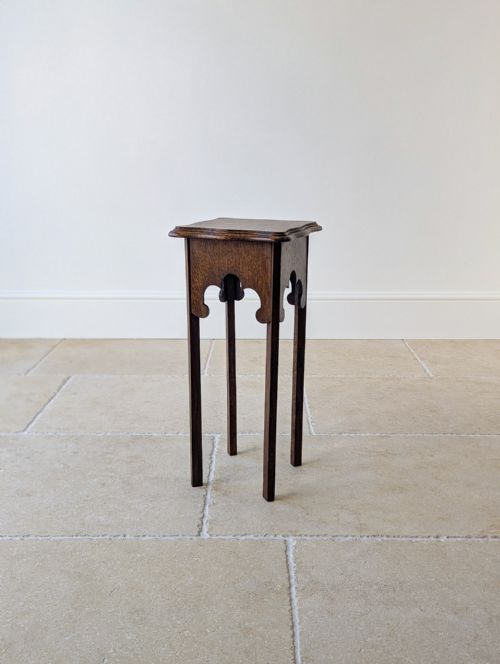
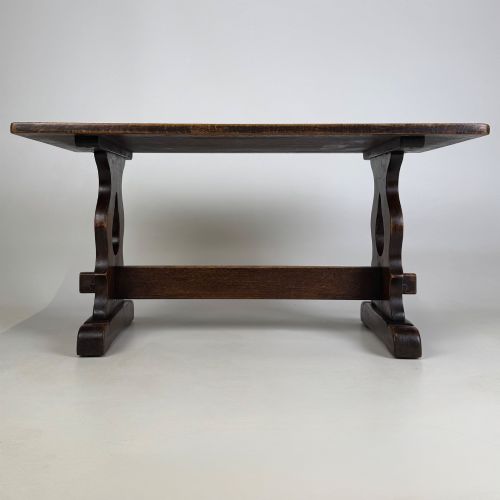
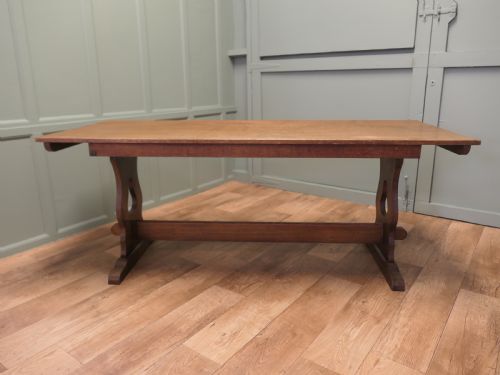
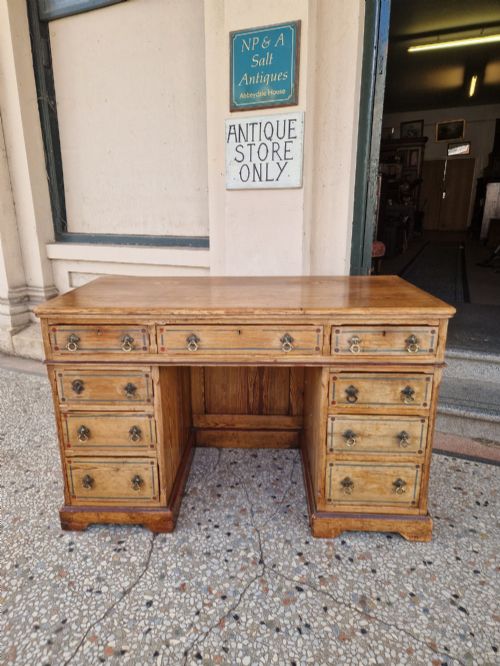
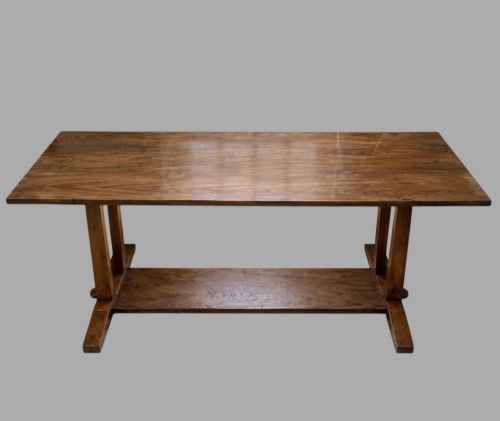
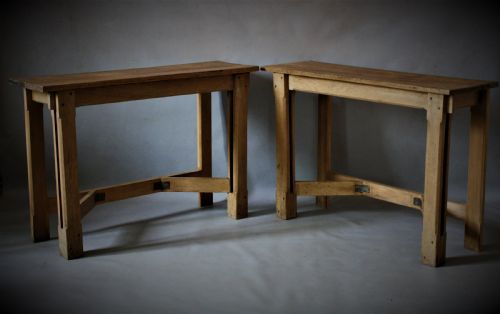
A craftsman style wooden table draws on the principles of the Arts and Crafts movement, prioritising visible construction and honest materials over superficial ornament. When searching for a craftsman style wooden table, buyers encounter forms ranging from compact plant stands and occasional pieces to substantial refectory dining tables and desks.
The pieces appearing on this page span several decades from the late nineteenth century into the twentieth, including Edwardian examples alongside items dated to the 1890s and 1920s. Oak is the primary timber met here, often complemented by pitch pine, elm, and mahogany, reflecting the material focus of the period.
Alongside standard dining and side tables, the selection includes specialised forms such as octagonal plant stands, coffee tables, window seats, and console tables. These diverse objects share a common lineage rooted in Arts and Crafts design principles.
Construction and materials
Makers relied heavily on solid oak and pitch pine, selecting timber for its natural grain and durability rather than applying heavy veneers. Elm and mahogany also appear in specific pieces, while secondary elements incorporate brass, ceramic tile, and tapestry upholstery.
Joinery methods were designed to be visible and robust, celebrating the structural integrity of the furniture. Simple framing, cross bases, and sturdy legs characterise the construction seen across these dining, occasional, and desk formats.
Craftsman Style Wooden Table Retail Price Guide 2026
Typical asking prices for craftsman style wooden table among the pieces listed under this phrase on Sellingantiques today, from the lower quarter to the upper quarter. They describe what is for sale here now, not the wider market.
An apprentice carved a tiny window seat just to prove his worth.
Judging quality
Quality in these pieces is dictated by the selection of timber and the precision of the joinery rather than elaborate decoration. Refined proportions and thoughtful detailing, such as those found in pieces designed by known architects or workshops, elevate certain examples above standard utility furniture.
The integration of secondary materials like ceramic tiles or brass fittings also marks out finer specimens. Consistency in the grain and the stability of the structural frame determine the lasting integrity of each table.
Baillie Scott·Sir Robert Lorimer
The Craftsman Style Wooden Table Glossary
- Arts and Crafts
- A design movement spanning the late nineteenth and early twentieth centuries that valued traditional craftsmanship, simple forms, and natural materials. It rejected mass production in favour of hand-finished integrity.
- Refectory table
- A long, narrow dining table traditionally used in communal halls but later adapted for domestic dining rooms. These versions utilise solid oak construction and sturdy stretcher bases.
- Occasional table
- A small, movable table designed for specific, intermittent use around a room such as holding lamps, plants, or books. They appear frequently in octagonal and square formats.
- Pitch pine
- A durable, resinous softwood sourced from pine trees, valued for its strong grain pattern and robustness. It was frequently utilised for desks and utilitarian furniture during this era.
- Apprentice piece
- A small-scale model or sample item created by a trainee craftsman to demonstrate mastery of joinery and woodworking techniques.
Craftsman Style Wooden Table: Frequently Asked Questions
What defines a craftsman style wooden table?
These tables are defined by their adherence to Arts and Crafts principles, focusing on sturdy construction, solid timbers, and minimal ornamentation.
They showcase the natural grain of woods like oak and pitch pine, often featuring exposed joinery and practical forms.
Where should I place an occasional table?
An occasional table works well beside seating or in corners to hold lamps, plants, or decorative items without cluttering the room.
Their compact size allows them to be moved easily to suit daily needs in a hallway, living room, or study.
How do I care for solid oak furniture?
Solid oak benefits from regular dusting with a dry cloth and occasional treatment with suitable natural wax to nourish the grain.
Keep these tables away from direct heat sources and strong sunlight to prevent the timber from drying out or splitting.