





Natural Timber Console Table
A natural timber console table offers honest utility and character, bringing warmth to halls and living spaces through centuries of traditional craftsmanship.
Natural Timber Console Table
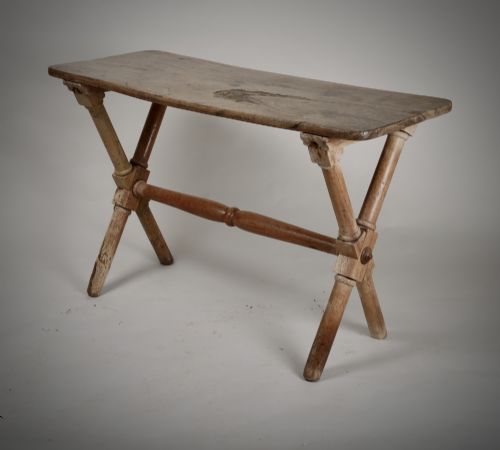
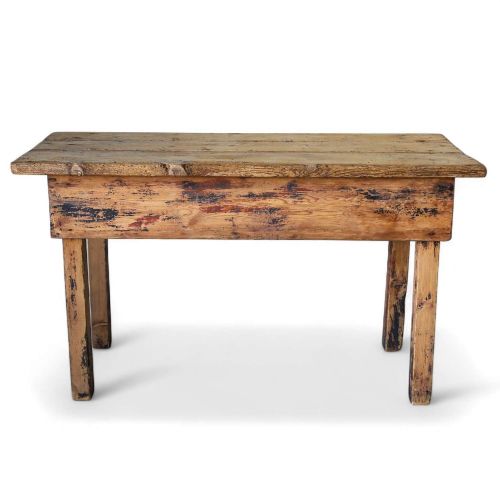
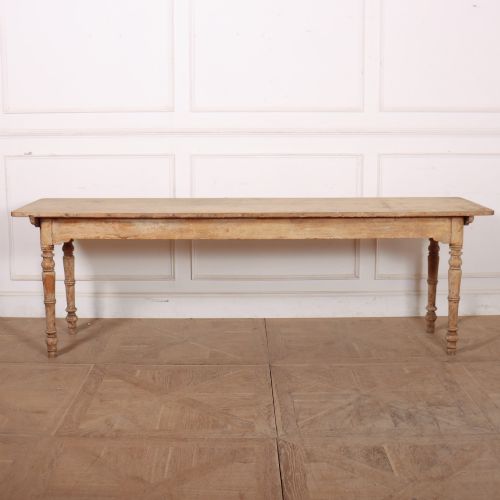
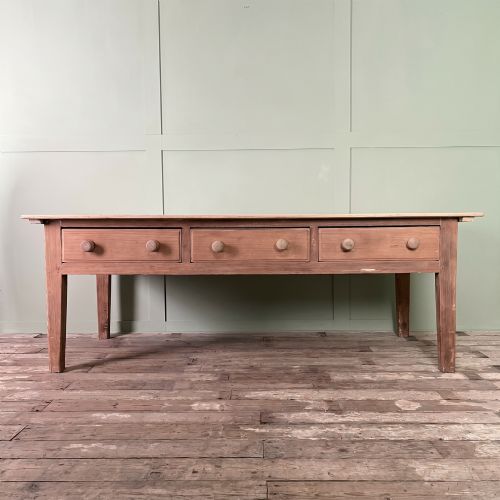
A natural timber console table spans formats from the nineteenth century up to the 1930s, featuring prominently in styles such as French provincial, rustic farmhouse, and Swedish folk art. Buyers exploring this category encounter sturdy functional forms built for daily use in domestic kitchens, dairies, and halls.
The assortment on this page relies heavily on regional European influences, with numerous French trestle tables and Welsh pine farmhouse pieces sitting alongside Italian painted examples and Chinese elm side tables. These variations reflect regional timber preferences and domestic requirements across different periods.
Forms extend beyond standard console tables to include tavern tables, dairy prep tables, side tables, and log boxes constructed from varied timber species. Each piece demonstrates how utilitarian furniture adapts across eras while retaining a distinct natural surface quality.
Materials and Construction Techniques
Construction relies upon solid woods including pine, oak, elm, sycamore, and ash, often selected for local availability and structural resilience. Artisans utilised traditional joinery methods appropriate for heavy kitchen and dairy use, ensuring long-term durability.
Surfaces frequently display scrubbed finishes, bleached oak treatments, or original paint, highlighting the natural grain and age of the wood. These protective and decorative treatments developed through generations of domestic maintenance and wear.
Listings feature woods like pine, sycamore, elm, and ash across the nineteenth and early twentieth centuries.
Assessing Quality and Character
Quality rests in the integrity of the original timber and the honesty of the surface patina, whether found in a scrubbed sycamore top or an early painted finish. Pieces retaining their structural elements without excessive timber replacement demonstrate superior historical authenticity.
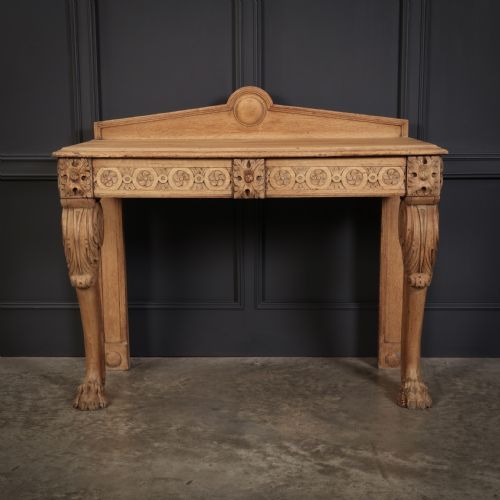
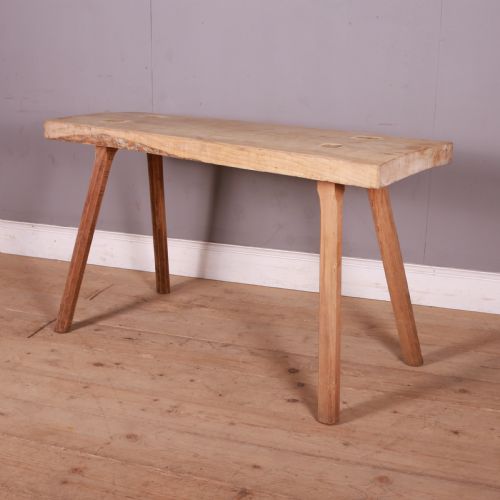
The finesse of the joinery and the balance of proportions distinguish standard utility furniture from finer regional examples, such as carved bleached oak or primitive ash preparation tables. Depth of character accumulates through authentic wear rather than decorative artifice.
The Natural Timber Console Table Glossary
- Console table
- A table designed to stand against a wall, frequently supported by brackets or trestle legs. These pieces suit narrow hallways and living spaces.
- Trestle table
- A table featuring a horizontal beam supported by two trestles or upright frames. This construction provides robust stability for heavy domestic tasks.
- Scrubbed finish
- A timber surface washed repeatedly with soap and water over generations, removing soft grain to leave a clean, pale texture. This treatment is common on dairy and kitchen tables.
- Primitive
- A descriptive term for furniture made locally without sophisticated workshop machinery, prioritising direct utility over academic style.
Natural Timber Console Table: Frequently Asked Questions
Where should I place a natural timber console table?
These tables fit naturally in entrance halls, living rooms, or kitchens where narrow footprints and surface utility are required. Their varied timber tones complement both traditional and modern interior schemes.
Positioning them against a wall provides a stable surface for lamps, books, or decorative objects while keeping walkways clear.
How do I care for a scrubbed timber top?
Maintenance involves gentle cleaning with mild soap and warm water, avoiding harsh chemical polishes that penetrate the open grain of unsealed wood. Regular dusting preserves the dry, tactile quality of the surface.
Allowing the timber to breathe maintains the authentic patina developed over centuries of domestic use.
What is the difference between a console and a side table?
Console tables are specifically proportioned to stand flat against a wall, historically serving decorative or functional display purposes in halls and reception rooms. Side tables are generally more freestanding and versatile in placement.
Both forms appear frequently in regional timber variations across the nineteenth and early twentieth centuries.
How can I tell older pine tables apart?
Examination of tool marks, joinery methods, and the depth of surface wear helps distinguish nineteenth-century examples from later twentieth-century pieces. Older items often display hand-cut joints and irregular timber shrinkage.
Original scrubbed finishes or traces of early paint provide further clues to a piece's age and working history.