
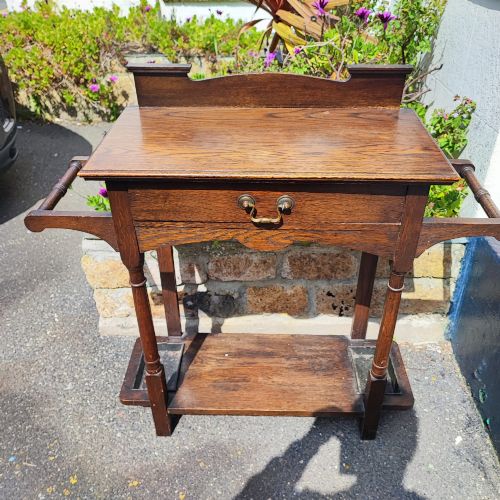
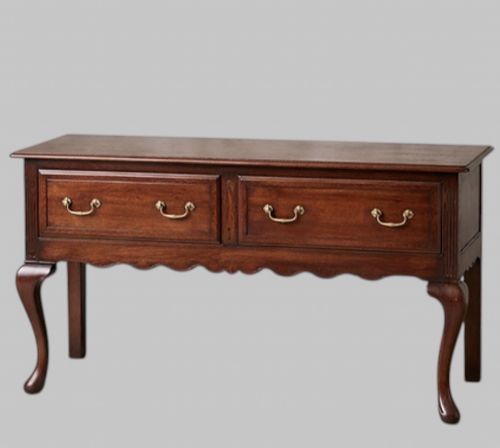


Oak Entry Hall Table
An oak entry hall table provides a sturdy practical surface for daily use while setting a period tone in a corridor or reception space.
Oak Entry Hall Table
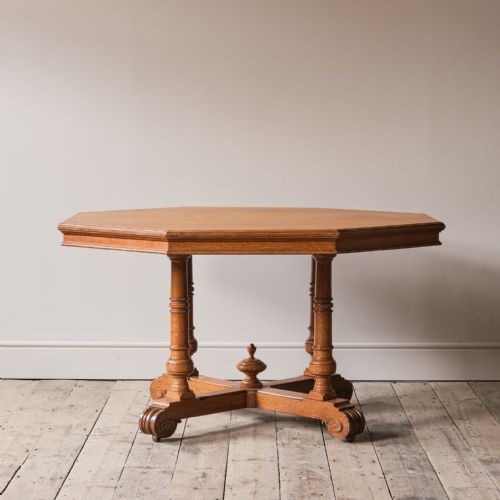
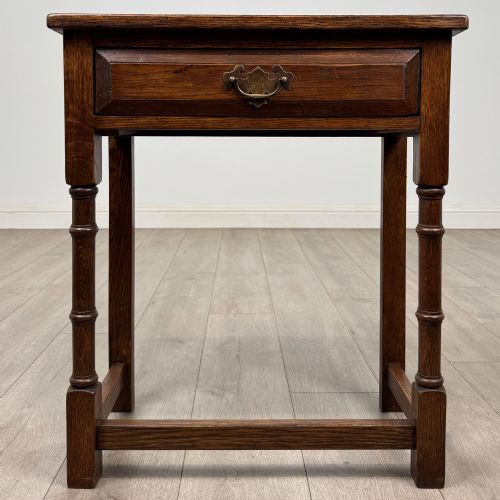
An oak entry hall table encompasses console tables, side tables, centre tables, and hall benches designed to furnish transitional spaces. These items appear across nineteenth-century, Edwardian, and twentieth-century production, incorporating styles such as Jacobean Revival, Gothic Revival, and Regency.
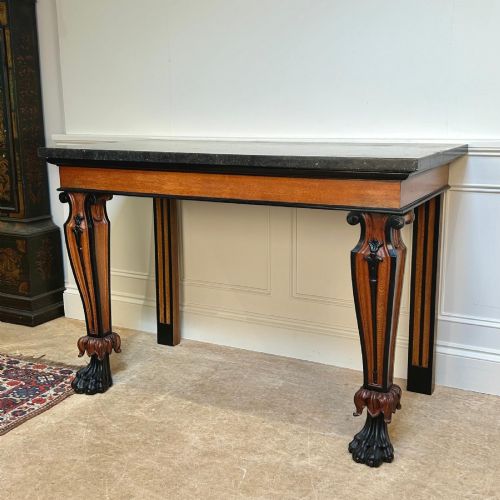
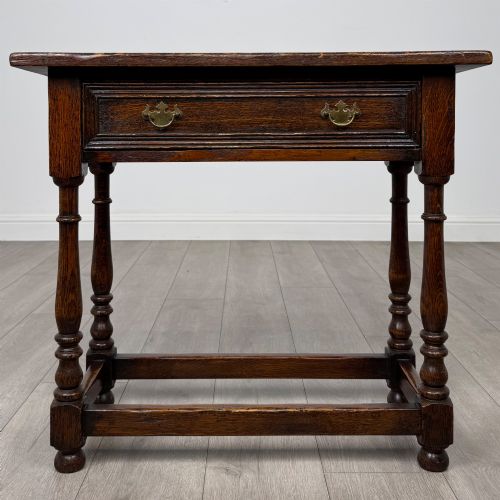
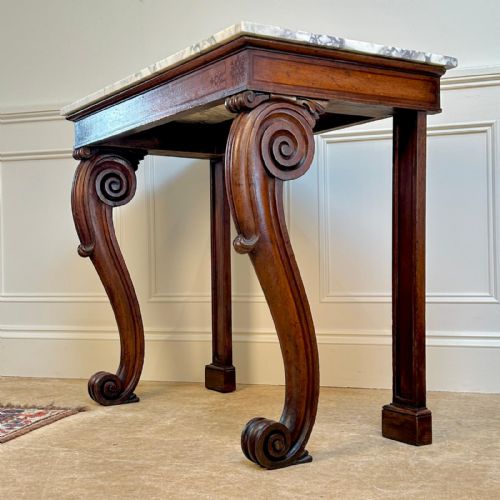
The versions most commonly met on this page include narrow side tables and console tables constructed from solid timber. Makers adapted these forms to fit narrow corridors, often combining timber surfaces with marble inserts or brass fittings.
How they were made
Construction relies primarily on solid oak, frequently paired with secondary timbers like walnut and mahogany, alongside contrasting materials such as marble, brass, and iron. Artisans utilised traditional joinery methods to assemble heavy frameworks capable of withstanding daily hallway use.
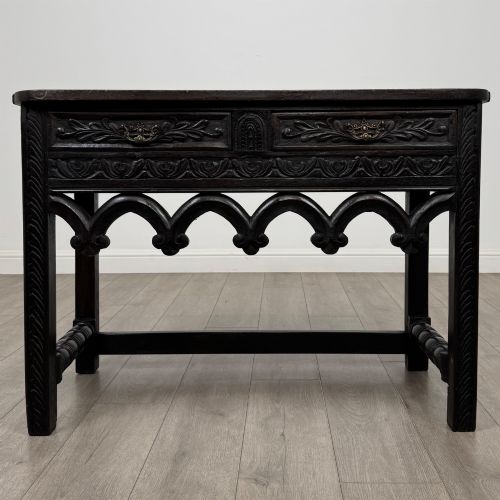
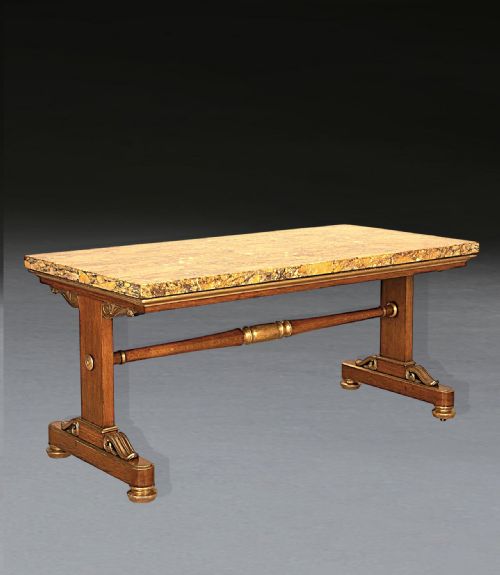
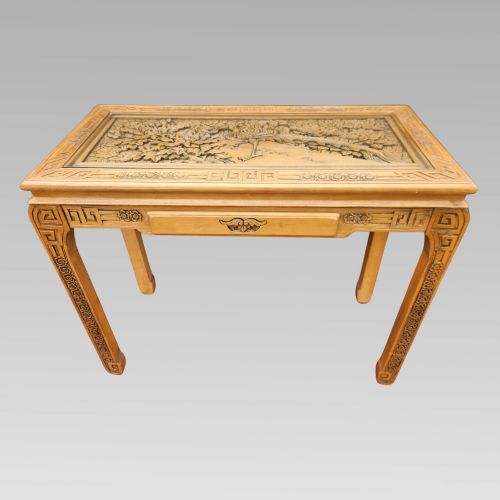
Surface decoration ranges from restrained plain grain finishes to deep hand-carving in Jacobean and Gothic styles. Selected examples integrate polished Siena marble tops or giltwood elements, demonstrating diverse workshop capabilities across different periods.
Several monks benches on offer double as impromptu seating for muddy boots and stealthy spots to hide hallway clutter.
What varies in quality
Quality depends upon the selection of timber grain, the crispness of the hand-carved ornamentation, and the structural integrity of the frame. Superior examples display carefully matched timber boards and robust joinery that maintains stability without modern reinforcement.
The refinement of secondary materials, such as heavy brass hardware or properly fitted marble inserts, distinguishes standard production from finer workshop pieces. Proportions also dictate value, with narrower side tables and balanced console forms commanding specific utility in domestic settings.
The Oak Entry Hall Table Glossary
- Console table
- A table designed to stand against a wall, frequently supported by wall brackets or console legs. These pieces serve narrow entrance spaces where floor depth is restricted.
- Monks bench
- A multifunctional furniture item featuring a hinged back that converts from a seat into a table top. This form provides hidden storage beneath the seat for domestic items.
- Lowboy
- A small side table equipped with drawers, originating in the early eighteenth century. These pieces function well as compact writing desks or hall surfaces.
- Giltwood
- Wood that has been treated with gold leaf or gold paint to simulate solid gold enrichment. This technique appears on decorative trims and mounts of finer period tables.
- Trestle table
- A table consisting of horizontal beams supported by two vertical trestles or feet. This robust construction style underpins many French provincial and rustic dining or hall boards.
Oak Entry Hall Table: Frequently Asked Questions
Where should I place an oak entry hall table?
Position your table against a primary wall immediately inside the front door to catch post, keys, and daily essentials. Narrow console variants suit restricted corridors without obstructing movement.
Ensure adequate clearance for doors to open fully around the piece. Pairing the table with a wall mirror creates a balanced focal point for guests entering the home.
How do I maintain an antique oak surface?
Dust the timber regularly with a soft, dry cloth to prevent grit accumulation in carved recesses. Apply a quality beeswax periodically to nourish the grain and maintain a natural sheen.
Avoid placing untreated timber directly beneath strong heat sources or damp items. Use coasters and protective mats beneath any metallic or wet objects left on the surface.
What is the difference between a console and a side table?
A console table traditionally fastens to a wall or relies on brackets for additional stability, designed specifically for display against vertical surfaces. Side tables stand independently on four legs and offer greater flexibility for moving around rooms.
In modern usage, the terms frequently overlap within antique listings. Both formats provide functional surface area in narrow circulation spaces.
How can I identify a Gothic Revival hall table?
Gothic Revival pieces incorporate architectural motifs such as pointed arches, quatrefoils, and heavy linenfold panelling. These designs reflect nineteenth-century romanticism inspired by medieval architecture.
Such tables usually feature dark-finished oak and robust, structural carving. The overall aesthetic emphasises vertical lines and substantial proportions suited to grand entrance halls.