



Entryway Coat Stick Stand
An entryway coat stick stand greets guests with purpose, combining hat hooks, umbrella wells, and mirrors in a single hall fixture.
Entryway Coat Stick Stand
An entryway coat stick stand serves as the primary drop-off point for outdoor garments and walking accessories upon entering a home. These hall pieces combine hat hooks, coat pegs, and drip pans for umbrellas into a unified piece of furniture.
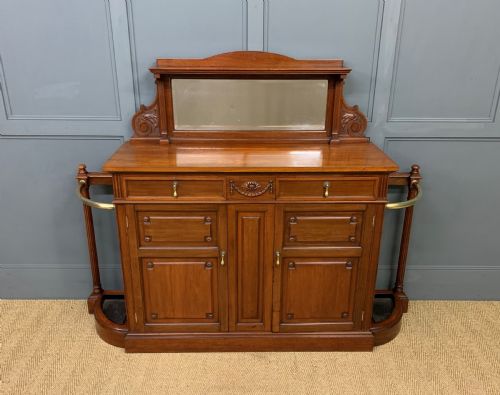
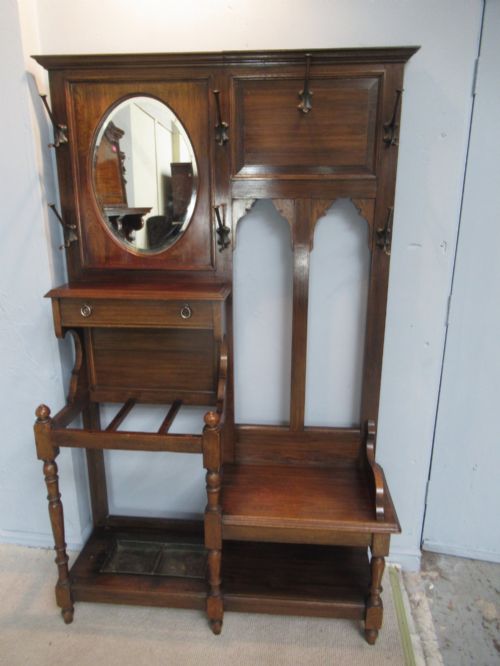
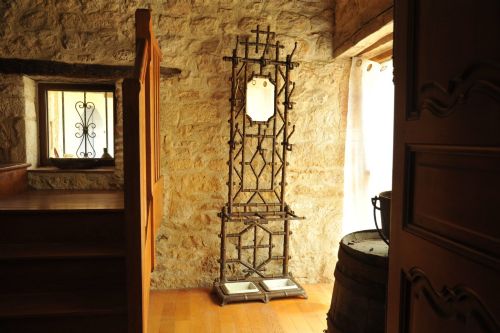
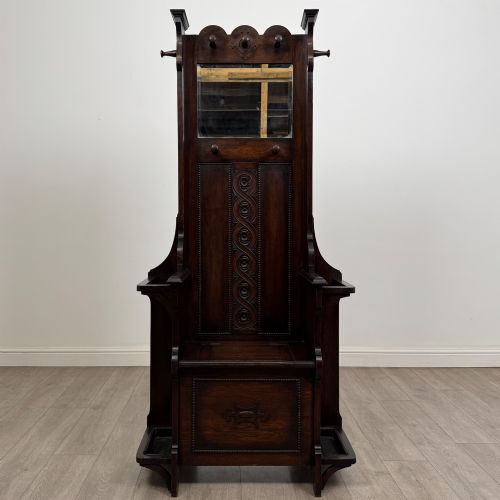
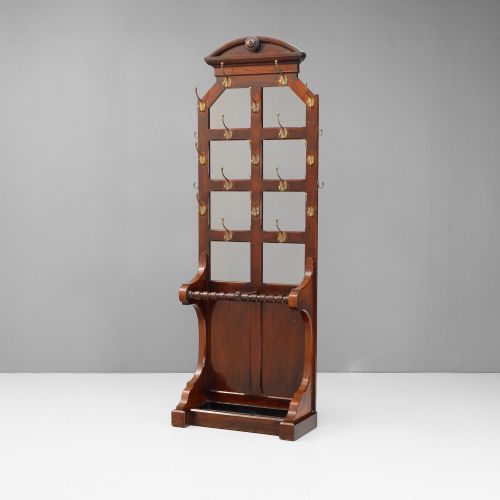
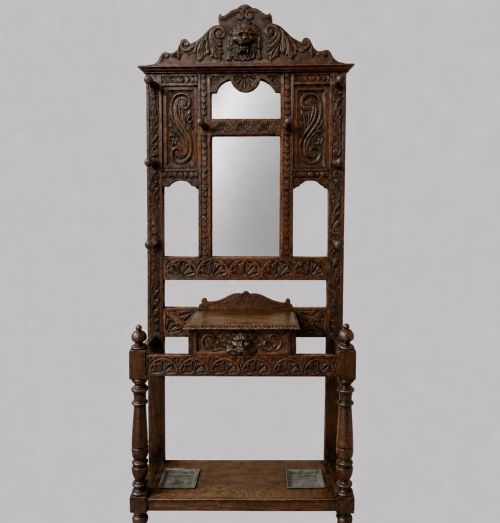
Victorian and Edwardian examples dominate the selection, spanning oak, mahogany, walnut, and cast iron. Many pieces incorporate central mirrors and small glove drawers or integrated seats.
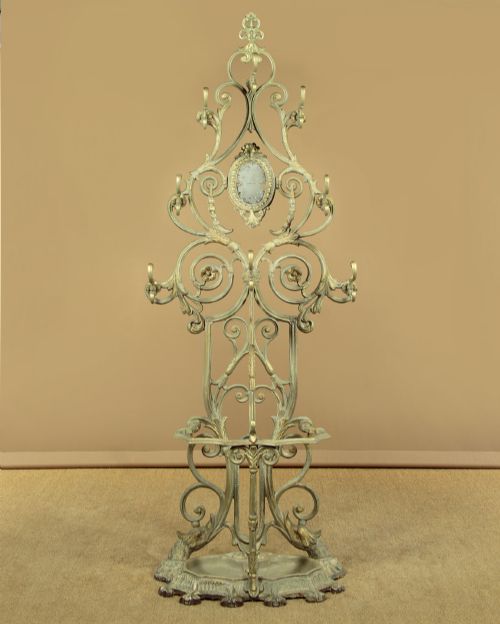
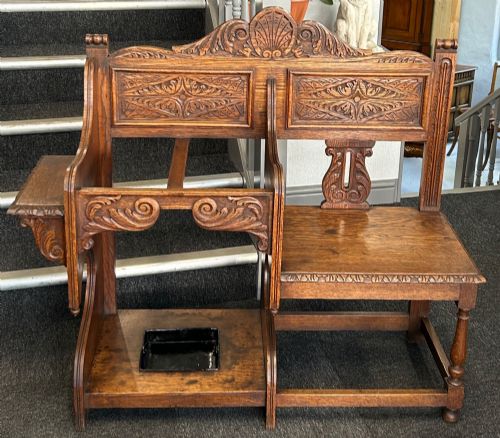
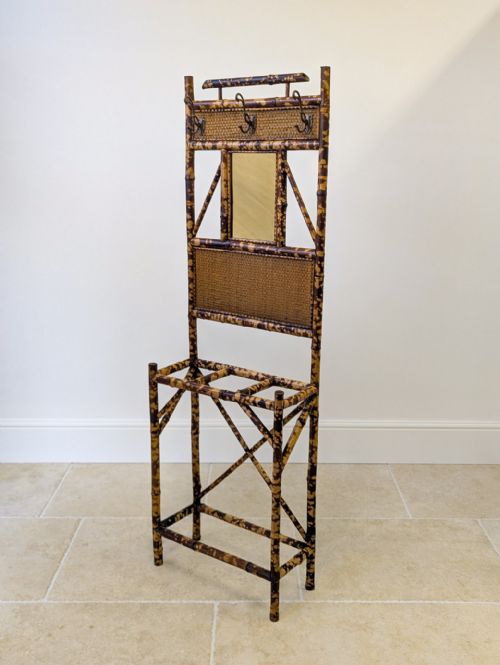
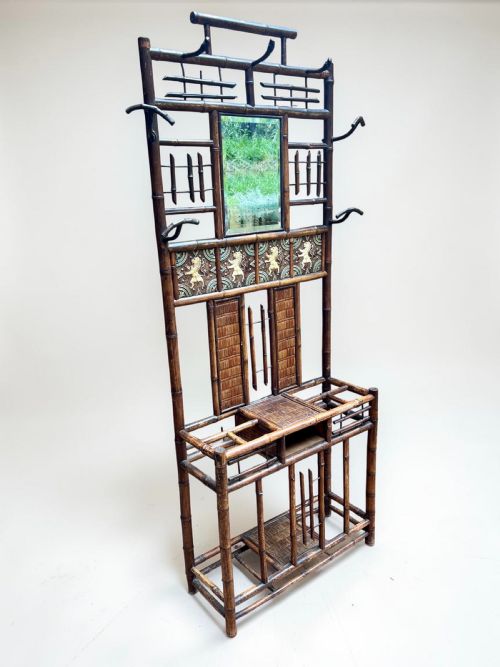
Stylistic expressions range from heavy Gothic Revival carvings to lighter Aesthetic Movement bamboo and Arts and Crafts golden oak designs. French Chateau and Black Forest carved bear motifs also appear among the forms.
How they were made
Cabinetmakers utilised solid timbers such as oak, mahogany, and walnut, often applying deep relief carving to back panels and bench arms. Joinery techniques included pegged mortise and tenon construction to withstand the weight of heavy winter overcoats.
Foundries cast iron and brass components in moulds to produce ornate umbrella grids, drip trays, and sturdy coat hooks. Metal elements were frequently bolted directly to wooden backboards or integrated into freestanding cast frames.
Bamboo construction relied on bent stems joined with pinned dowels, paired with lacquered panels or glass inserts for decorative effect. Bevelled mirror plates were secured into carved wooden frames with timber backing boards.
Materials recorded across the selection include oak, mahogany, walnut, cast iron, brass, metal, glass, and bamboo.
What varies in quality
The selection of timber grain and the depth of hand-carved detail distinguish standard production pieces from finer workshop commissions. Heavier stock timbers and substantial cast iron frameworks indicate superior structural integrity.
Fittings such as heavy brass hooks, original cast iron drip pans, and bevelled mirror glass elevate a piece. The presence of documented maker stamps or foundry marks adds historical substance to the construction.
Shoolbred & Co.·Falkirk Foundry
The Entryway Coat Stick Stand Glossary
- Hall Stand
- A tall piece of furniture designed for an entrance hallway to hold coats, hats, and walking sticks. It typically incorporates a mirror and umbrella wells.
- Faux bamboo
- Turned and painted wood simulating natural bamboo canes. This technique became popular during the Victorian period for lighter hall furniture.
- Drip pan
- A shallow metal tray placed at the base of a stick stand to catch moisture from wet umbrellas. They are frequently removable for emptying.
- Aesthetic Movement
- A late nineteenth-century design style emphasising visual beauty over narrative subject matter. Pieces often utilised bamboo and lacquered panels.
- Black Forest carving
- Highly detailed wood carving originating from central Europe, known for naturalistic animal motifs. Bears holding card trays or umbrella rings are characteristic forms.
Entryway Coat Stick Stand: Frequently Asked Questions
What is an entryway coat stick stand?
An entryway coat stick stand is a multifunctional hall furnishing designed to organise outdoor apparel. It brings together hat pegs, coat hooks, mirror glass, and umbrella storage in one vertical footprint.
These pieces were placed in entrance halls to receive the hats, coats, and walking sticks of residents and visitors alike. They kept hallways tidy while offering a final mirror check before leaving the house.
How were they used in the past?
In period homes, these stands functioned as the primary drop zone for outdoor wear immediately inside the front door. Wet umbrellas went into the base trays, hats hung on upper pegs, and visiting cards rested in small ledges.
Their placement in the hall made them the first item encountered upon entry. They served both a practical storage role and a decorative function to impress callers.
How do I live with one today?
An entryway coat stick stand anchors a modern hallway with practical storage and period character. The upper hooks hold everyday jackets, while the lower wells accommodate umbrellas and walking poles.
Ensure the piece is secured safely against the wall if it carries significant height or weight. The integrated mirror brightens smaller corridors and provides a convenient reflection point.
How do I tell Victorian from Edwardian stands?
Victorian stands tend to feature heavier timbers, darker finishes, and dense, ornate carvings including Green Man motifs or Gothic details. They often display more robust proportions and darker walnut or mahogany.
Edwardian examples frequently shift towards lighter golden oak, simpler lines, and Arts and Crafts influences. The construction is often airier, reflecting changing interior tastes at the turn of the century.