
Tray Top Tea Table
A tray top tea table combines the firm surface needed for serving with a raised rim that keeps china secure.
Tray Top Tea Table
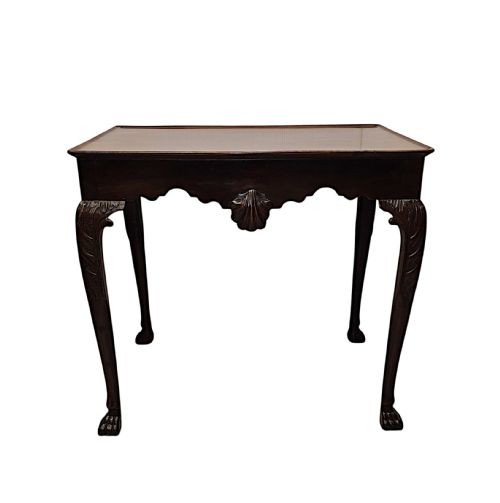
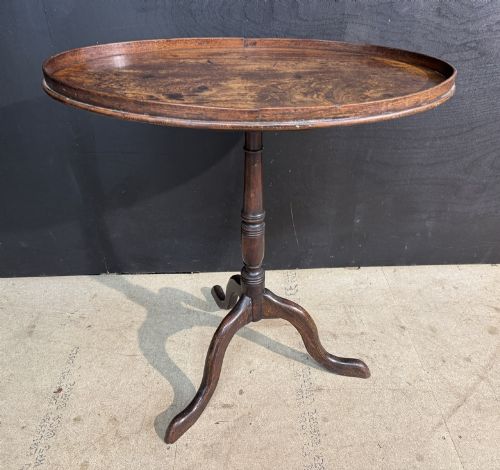
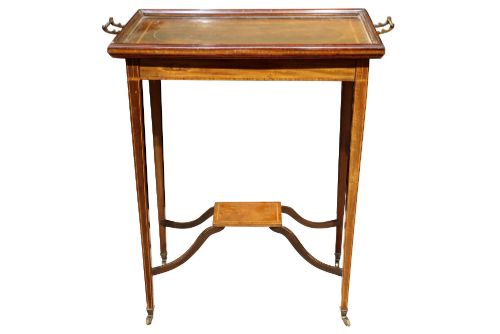
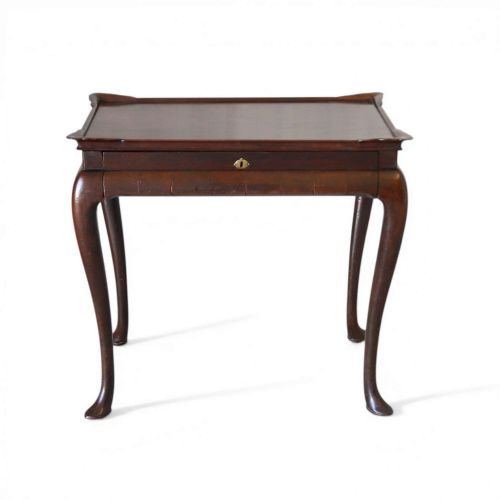
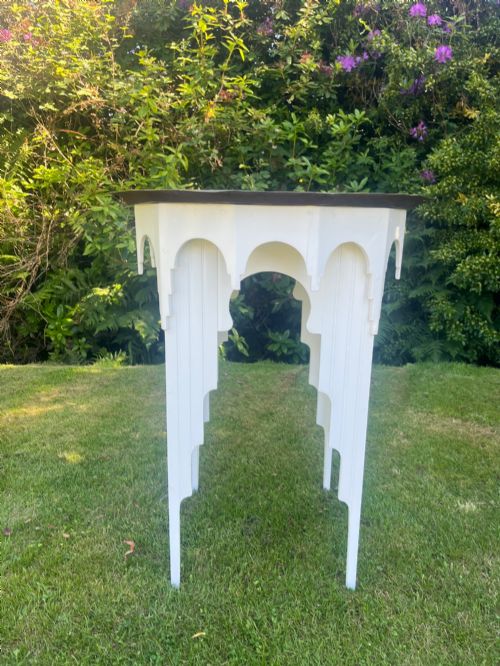
A tray top tea table serves as a dual-purpose piece designed for holding cups and pots securely while offering the convenience of a removable or fixed upper surface. When you search for a tray top tea table, you encounter diverse forms ranging from 18th century silver tables to Edwardian occasional pieces and later coffee table adaptations.
The most common versions met on this page date from the Georgian and Edwardian eras, constructed in mahogany, walnut, or lacquer with distinct raised edges. These tables bridge the gap between functional serving items and decorative furniture for the sitting room.
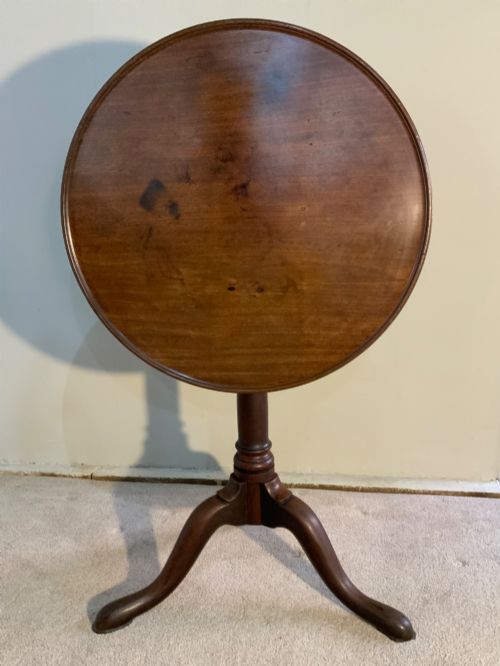
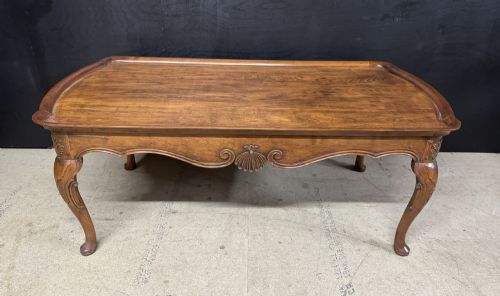
The format includes tripod bases, folding stands, and low coffee tables, reflecting how domestic habits shifted from formal afternoon tea service to relaxed modern entertaining.
Materials and construction
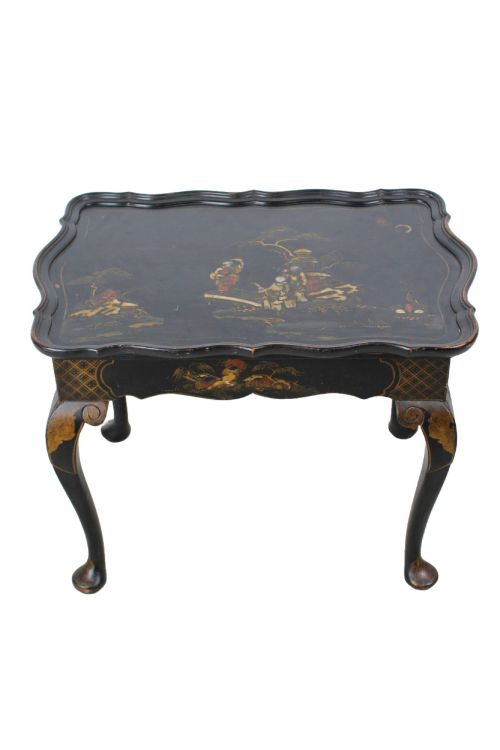
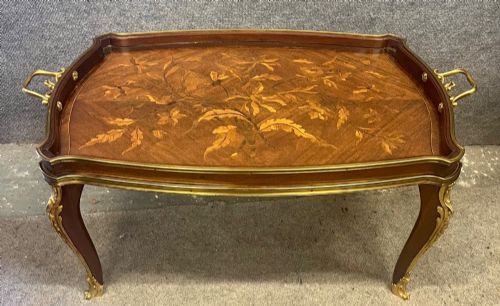
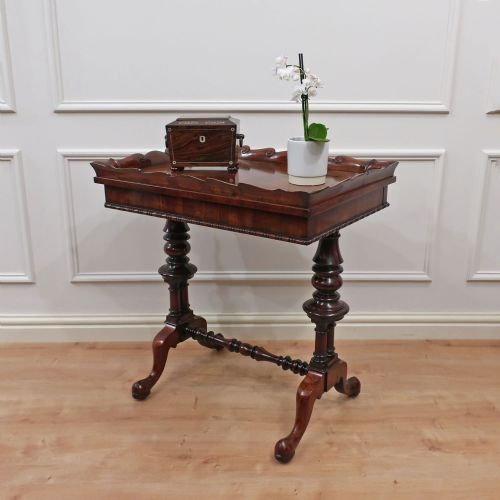
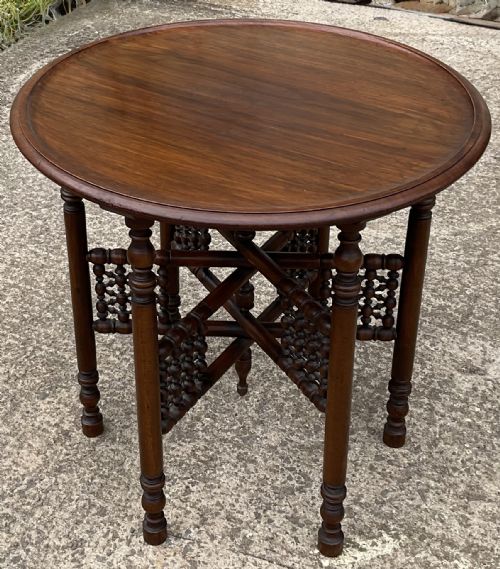
Makers utilised dense timbers such as mahogany, walnut, and teak, often shaping them with solid raised borders or gallery rims to contain porcelain and silver. Inlaid details, marquetry, and lacquering appear frequently on Edwardian and 19th century examples.
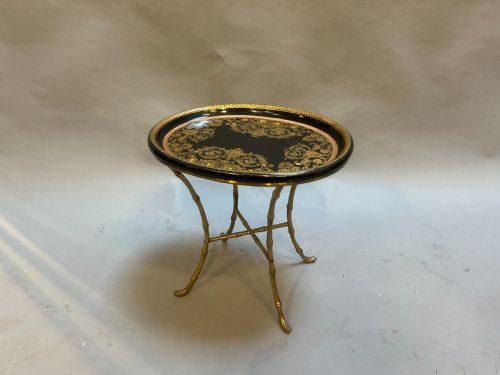
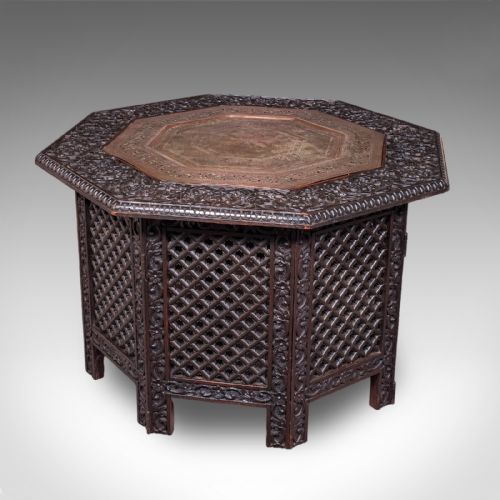
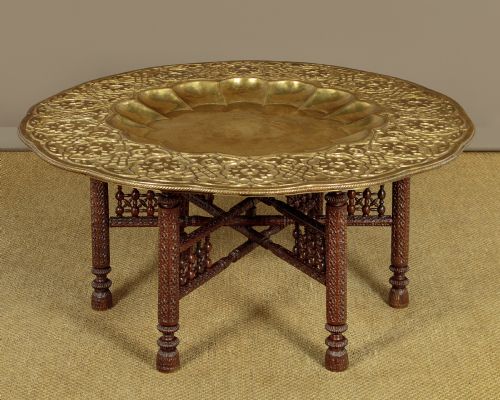
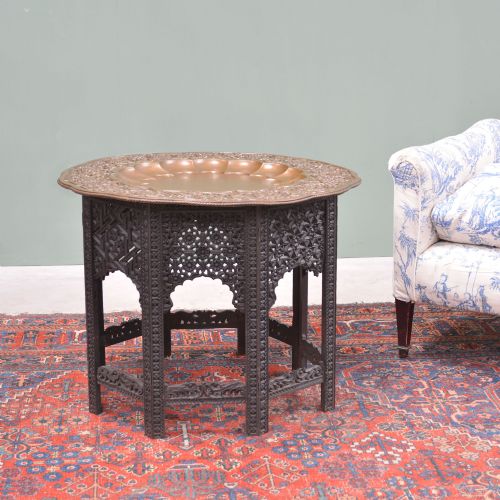
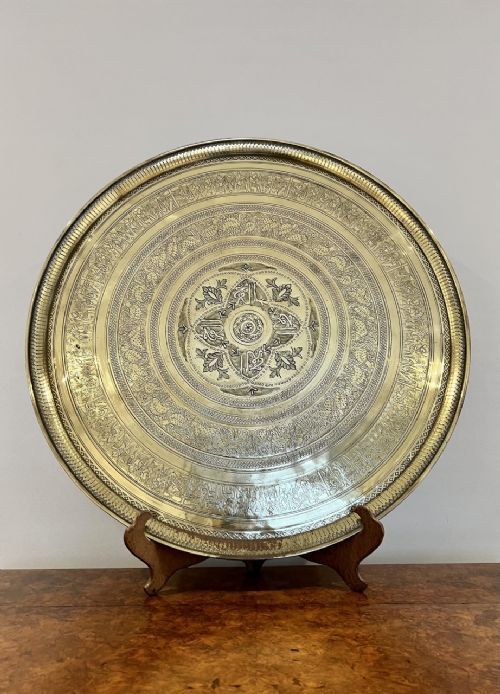
Metal tops in brass and copper, sometimes associated with Anglo-Indian or Cairoware production, sit upon folding wooden or carved stands. Papier-mâché and painted finishes provide lighter alternatives to heavy timber construction.
Listings feature woods including mahogany, walnut, teak, and lacquered papier-mâché, spanning the 18th, 19th, and 20th centuries.
Assessing quality
Quality reveals itself in the crispness of the timber carving, the snugness of the fit between tray and stand, and the integrity of any inlaid or marquetry decoration. Higher grade examples display careful timber selection, such as figured mahogany or burr walnut, matched across the surface.
Lower quality pieces often show crude joints, mismatched grain patterns, or later adaptations where a standard tray has been paired with an unrelated base. The weight and stability of the supporting stand also separate standard production from superior craftsmanship.
Gillows·Zwiener
The Tray Top Tea Table Glossary
- Tripod table
- A small circular table supported by a pillar on three legs. This form often incorporates a tilt top mechanism.
- Silver table
- An 18th century form with a raised gallery edge designed specifically for displaying or serving silver tea services. It represents a refined precursor to later tea tables.
- Marquetry
- The art of applying pieces of veneer to a structure to form decorative patterns. Dutch examples frequently employ floral and bird motifs.
- Gallery
- A raised ornamental border surrounding the edge of a table or tray. It prevents items from sliding off during service.
- Papier-mâché
- A composite material made of paper pulp reinforced with glue, moulded and lacquered. It provides a lightweight base for painted Chinoiserie decoration.
Tray Top Tea Table: Frequently Asked Questions
What is a tray top tea table?
A tray top tea table is a piece of furniture featuring a flat surface with a raised edge or gallery, designed originally for serving tea and preventing cups from sliding off.
Over time, these tables evolved from formal 18th century silver tables into Edwardian occasional pieces and low coffee tables used in modern living spaces.
How were these tables used originally?
In Georgian and Victorian households, they served during afternoon tea to transport cups, teapots, and silver service items safely from the kitchen to the parlour.
Some designs featured removable trays that allowed servants to clear away the entire tea service at once without disturbing guests.
Are the trays removable on all models?
No, tray top tables are divided between those with fixed tops permanently secured to the base and those with loose trays that lift off.
Loose tray versions often rest on folding wooden stands or conforming frames, making them practical for dual use as serving trays and occasional tables.
How do I date a tray top tea table?
Dating relies on timber choice, leg style, and decorative techniques such as inlay or lacquer work. Georgian examples often feature mahogany with cabriole legs, while Edwardian pieces frequently show satinwood inlay or Chinoiserie finishes.
Comparing the construction of the underside and the joinery of the gallery rim provides further clues to the period of manufacture.