


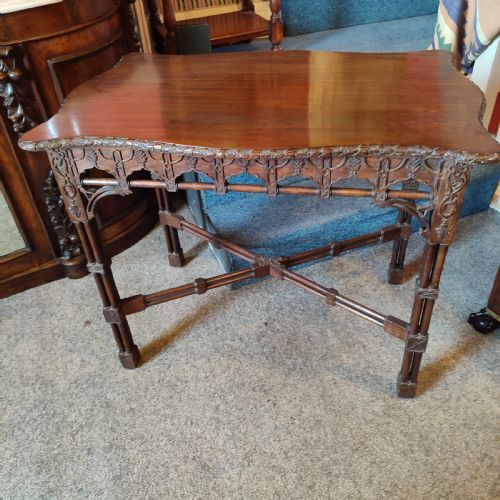
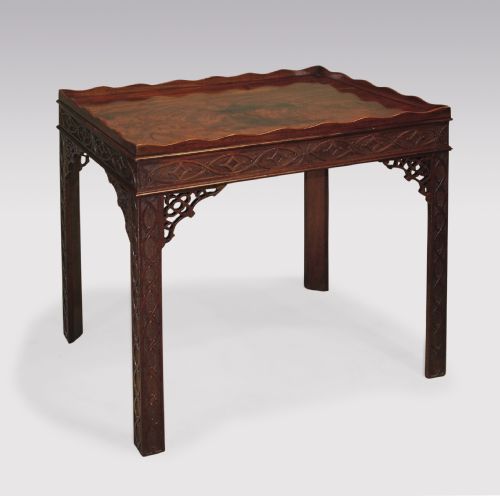
Carved Mahogany Silver Table
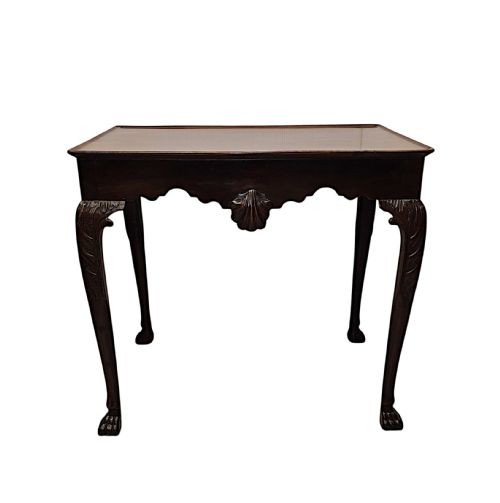
A carved mahogany silver table is a display piece built for entertaining, prized for its raised gallery and fine timber.
Carved Mahogany Silver Table
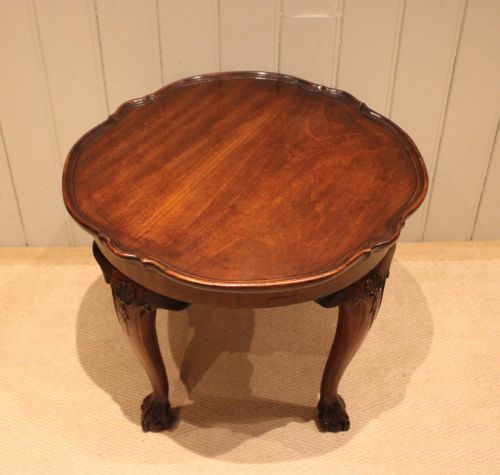
A carved mahogany silver table serves as an occasional display piece, drawing on Georgian roots and later revival periods. The form frequently emerges in Irish variants alongside Chippendale and George II styles.
Makers shaped these side and centre tables from the eighteenth century onwards, with later interpretations appearing through the Victorian, Edwardian and early twentieth century eras. Examples range from tilt-top reception designs to heavily carved console forms.
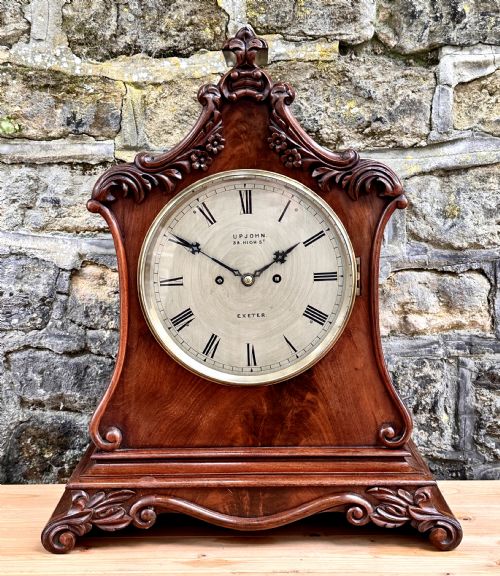
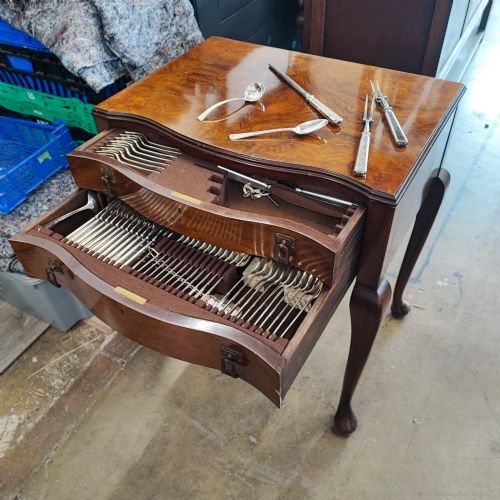
The evidence shows these tables constructed primarily in rich timber, often accompanied by related items such as bracket clocks, wine coasters and cutlery canteens sharing similar period aesthetics.
How they were made
Makers utilised solid mahogany and burr walnut, applying skilled carving techniques to borders, legs and friezes. Brass fittings and glass elements appear alongside the primary timber.
Construction methods draw on traditional cabinet-making, incorporating detailed fretwork and jointing suitable for display furniture intended to hold silver and glass items.
Listings span the 18th century, Georgian, Victorian, Edwardian, and 1930s periods, executed in mahogany, brass, glass, and burr walnut.
What varies in quality
Depth and crispness of the carved detail separate standard production from superior pieces, particularly along the raised edges and leg ornament. The choice of mahogany grain and the proportion of the frame dictate visual presence.
Irish examples and pieces from the mid-eighteenth century display distinct structural and decorative traits that influence desirability among collectors.
Elkington & Co·Goldsmiths & Silversmiths London
The Carved Mahogany Silver Table Glossary
- Silver table
- An occasional or centre table featuring a raised gallery edge designed to hold tea services or silver display pieces. These forms date back to the Georgian era.
- Gallery
- A raised ornamental border around the top of a table or tray designed to prevent items from sliding off. This feature is characteristic of silver tables.
- Chippendale manner
- A decorative style inspired by the designs of Thomas Chippendale, featuring carved cabriole legs, claw and ball feet, and intricate fretwork. It spans eighteenth-century production and later revivals.
- Fusee
- A conical pulley used in clock movements to maintain equal power as the mainspring unwinds. This mechanism appears in period timepieces associated with these collections.
- Wine coaster
- A small circular tray, often in silver or mahogany, designed to hold a bottle on the dining table. Pairs of these items accompany the wider furniture offerings.
Carved Mahogany Silver Table: Frequently Asked Questions
What is a silver table used for?
A silver table functioned historically as a display surface for silver tea services and precious objects during social gatherings.
The raised gallery edges kept delicate items secure while guests conversed in a reception room or parlour.
How do I identify a Georgian silver table?
Look for timber quality, hand-carved fretwork details, and traditional joinery typical of the eighteenth century.
Irish variants often display distinctive carving motifs on the knees and frame that distinguish them from standard English pieces.
Are all silver tables from the eighteenth century?
While the form originates in the Georgian period, many examples date from later revival eras including Victorian, Edwardian and the 1930s.
Revival pieces adopted the Chippendale and George II styles popular among earlier makers.
Can these tables be used as coffee tables?
Their height and delicate proportions align more closely with side tables or occasional display furniture than standard modern coffee tables.
Placing them in a drawing room or hallway preserves their intended function as decorative display surfaces.