

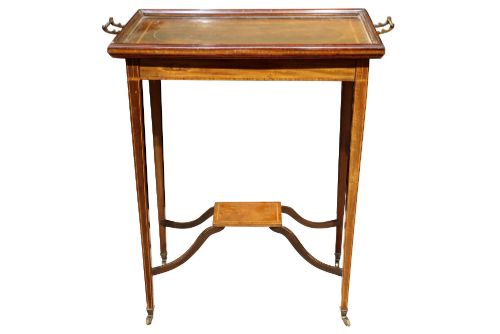
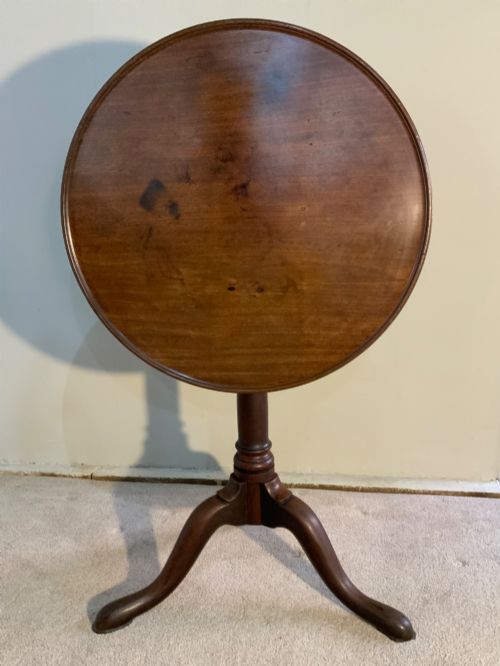
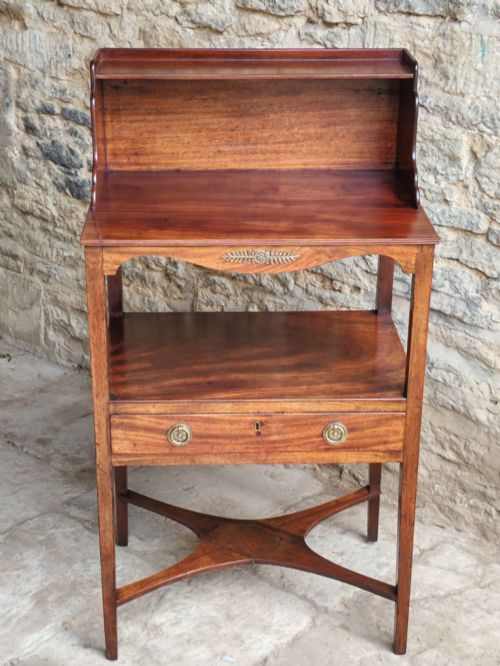
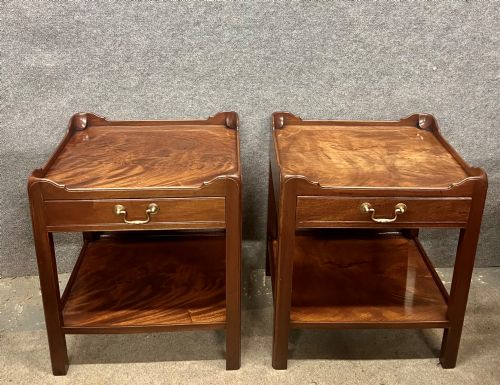
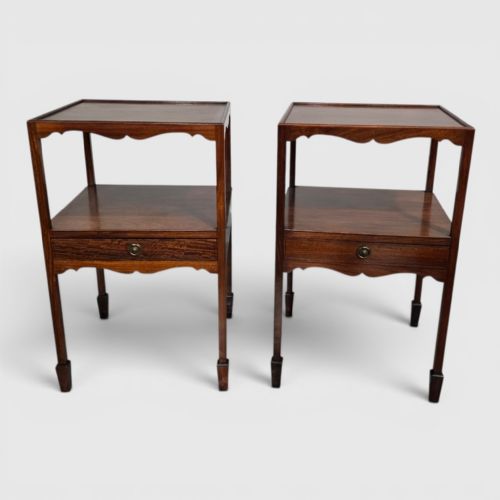

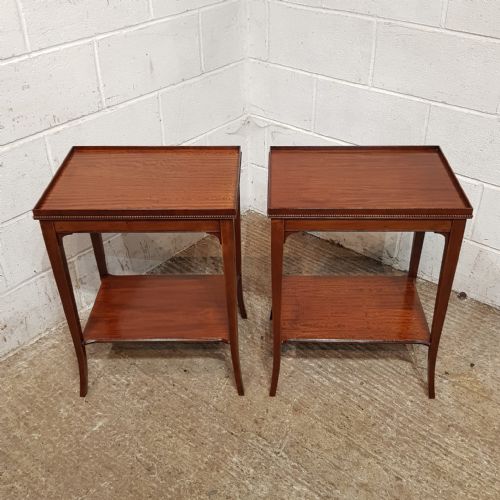
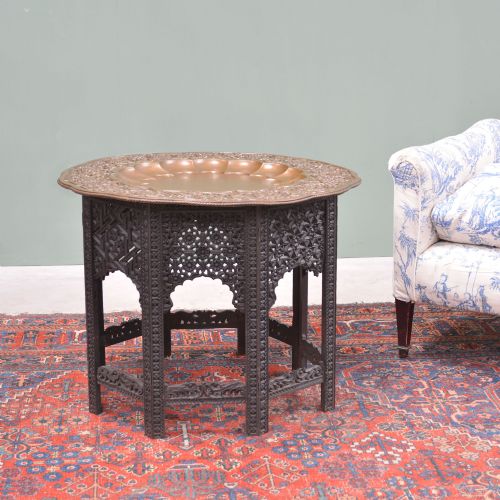
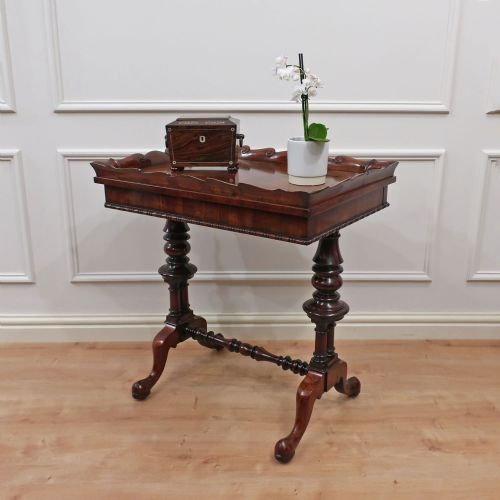
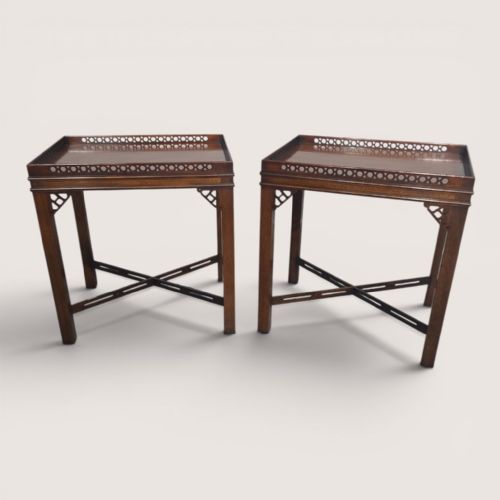
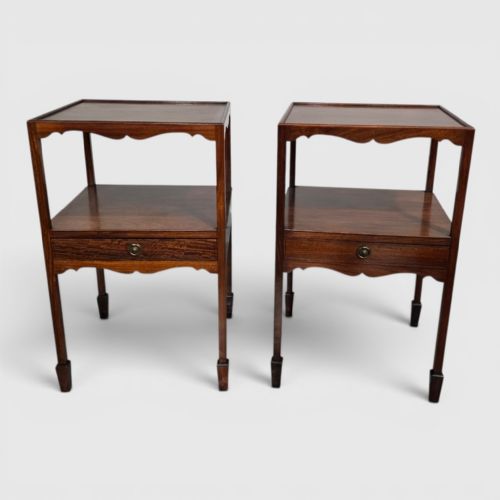
Tray Top Side Table
When you select a tray top side table, you introduce a portable serving surface fixed to a sturdy base that manages clutter with raised edges.
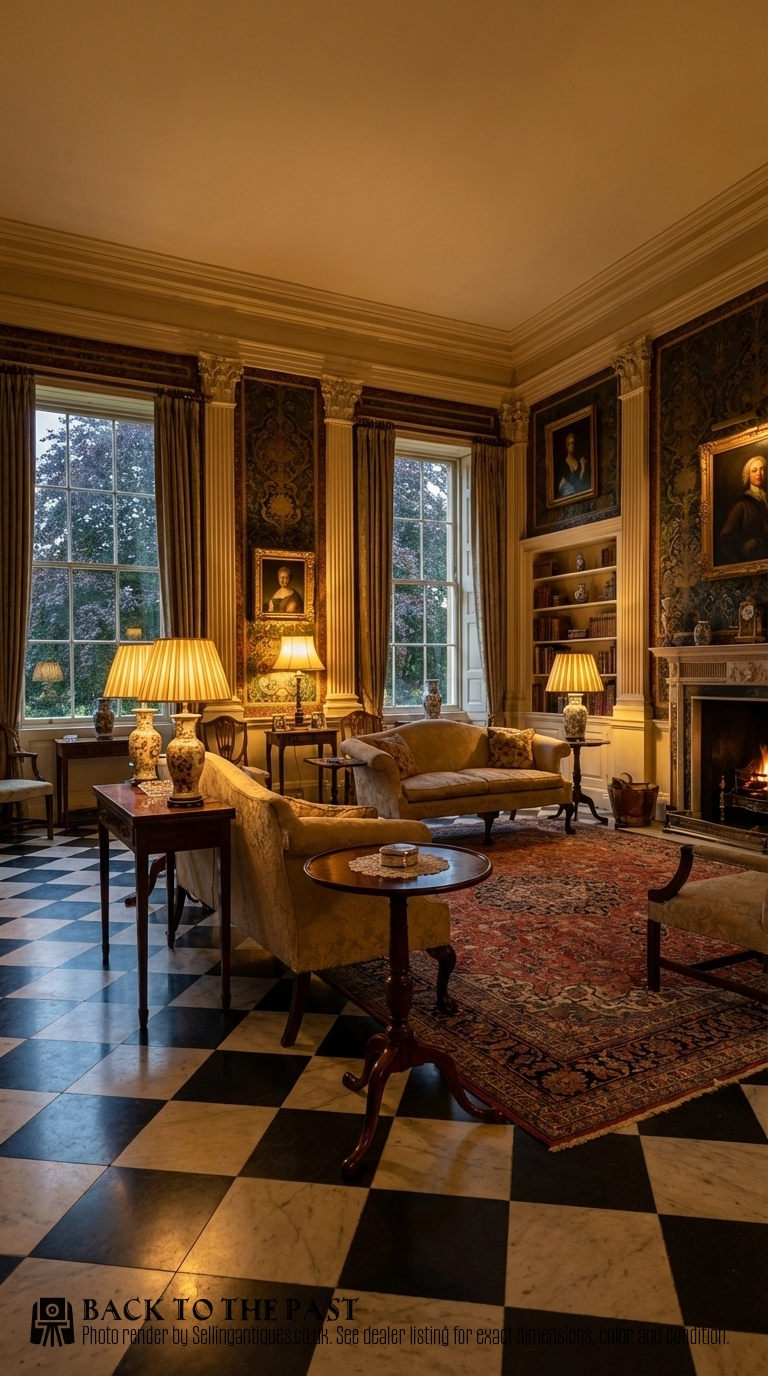
Tray Top Side Table
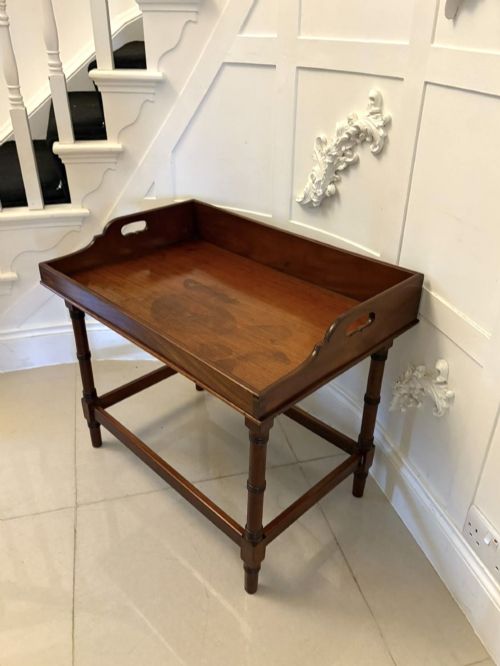
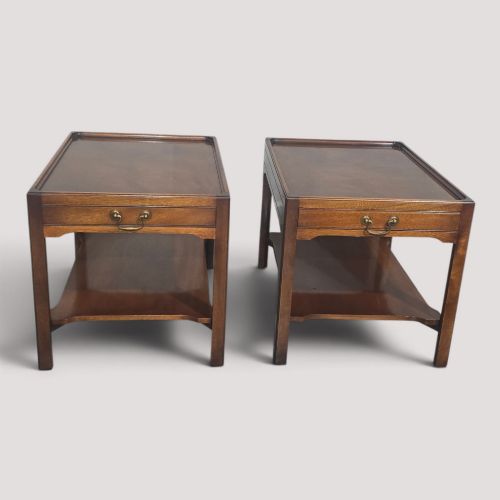
A tray top side table combines a raised-rim surface with a supporting frame, appearing frequently in mahogany, burr walnut, and oak across this selection. These pieces function as compact serving stands, lamp tables, or bedside storage units depending on their height and internal fittings.
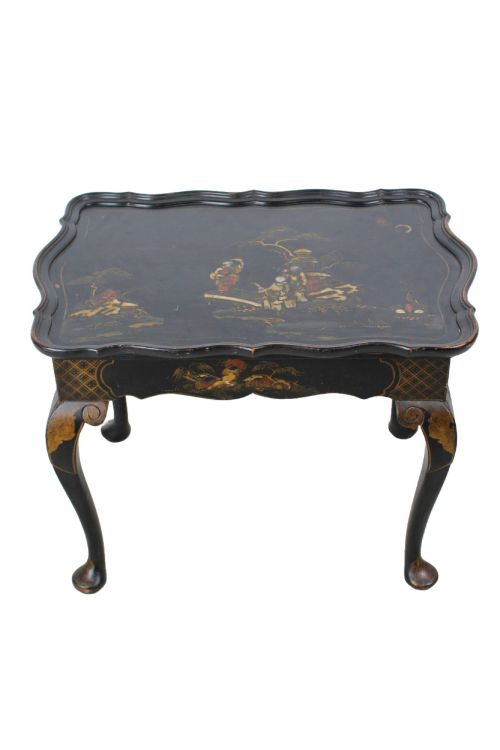
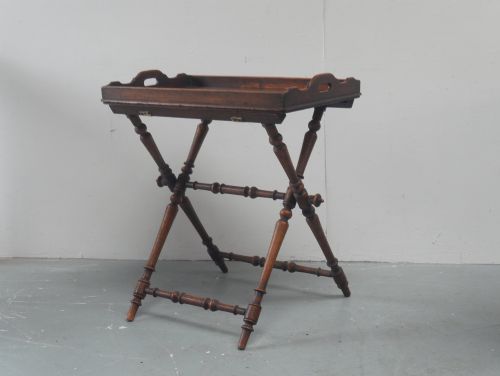
The format ranges from formal Georgian silver tables and George III butlers' trays on folding stands to Edwardian inlaid occasional tables and 1920s walnut variations. Most examples meet the buyer as rectangular or circular bedside tables and small lamp stands equipped with shaped gallery edges.
Origins span standard English cabinet-making traditions alongside Anglo-Indian and continental European workshops. Buyers encounter both detachable trays resting on separate folding stands and unified tables where the tray top is permanently fixed to the base.
Materials and Construction Methods
Makers utilised solid timbers and veneers, predominantly relying on mahogany, walnut, satinwood, and oak to build the frames and surfaces. Cabinet-makers shaped the raised tray rims from single boards or joined curved mouldings to retain items placed on the top.
Leg structures vary from simple square-section supports and cabriole legs with pad feet to turned pillars on tripod bases. Joinery techniques include precise dovetailing on drawers and pegged mortise and tenon joints on the accompanying folding or fixed stands.
Tray Top Side Table Retail Price Guide 2026
Typical asking prices for tray top side table among the pieces listed under this phrase on Sellingantiques today, from the lower quarter to the upper quarter. They describe what is for sale here now, not the wider market.
Cartographers once utilised specialised folding tray tops decorated with European maps for planning routes across the drawing room floor.
Distinctions in Quality and Execution
Quality rests upon the selection of timber figures, such as flame mahogany or burr walnut grains, and the crispness of any inlaid stringing or marquetry work. Superior pieces display seamless joints around the gallery corners and retain their original supporting stands rather than married components.
Finer examples incorporate functional details like pull-out slides, finely turned pillars, or carved edges such as pie crust mouldings. The weight of the timber and the stability of the tray seating its frame distinguish standard utility furniture from workshop pieces.
The Tray Top Side Table Glossary
- Tray top
- A tabletop finished with a raised moulded border or gallery designed to prevent items from sliding off. This feature defines the primary function of the surface.
- Butlers tray
- A portable wooden tray, often featuring hinged or shaped sides with cut-out handles, traditionally lifted off its stand for serving. It pairs with a folding X-frame or fixed base.
- Silver table
- An 18th-century form of serving table featuring a raised gallery edge specifically designed to display and hold silver tea services. These examples often stand on cabriole legs.
- Marquetry
- Decorative veneer work created by fitting pieces of different woods, ivory, or shell into a background veneer to form floral or pictorial patterns. It appears frequently on Dutch and Edwardian pieces.
- Tripod base
- A central pillar support resting on three spreading legs, commonly utilised on smaller occasional and lamp tables to maximise floor stability.
Tray Top Side Table: Frequently Asked Questions
What is a tray top side table used for?
These pieces serve primarily as functional lamp tables, bedside cabinets, or small coffee tables where raised edges secure small objects. Their portable surfaces originally accommodated tea service or washing equipment.
Today, they function easily beside armchairs and beds as compact storage and display surfaces that occupy minimal floor space.
How do I date an antique table?
Dating relies upon examining the timber species, secondary woods used in drawer linings, joint construction, and overall stylistic flourishes. Georgian and Regency pieces display hand-cut dovetails and dense Cuban mahogany, while Edwardian versions often feature lighter satinwood and machine-cut elements.
Comparing the turned leg profiles and hardware against known period characteristics confirms the approximate decade of manufacture.
Are the trays removable on all models?
Not all tray tops lift off their stands; many late 19th-century and 20th-century variations feature fixed tops where the gallery is permanently integrated into the table frame. Traditional butlers trays separate completely from their folding X-stands for easy carrying.
Examining the underside reveals whether the surface sits loose within a frame or fastens securely with screws and dowels.
How do I care for polished mahogany surfaces?
Maintenance requires keeping wooden surfaces away from direct sunlight and excessive heat sources that cause timber to dry and split. Regular dusting with a soft, dry cloth preserves the polished finish without building up heavy wax residues.
Applying a traditional beeswax polish periodically nourishes the grain and maintains the natural lustre of the wood.