




Tray Top Commode
A tray top commode offers practical bedside storage disguised in the refined proportions of Georgian and Regency cabinetry.
Tray Top Commode
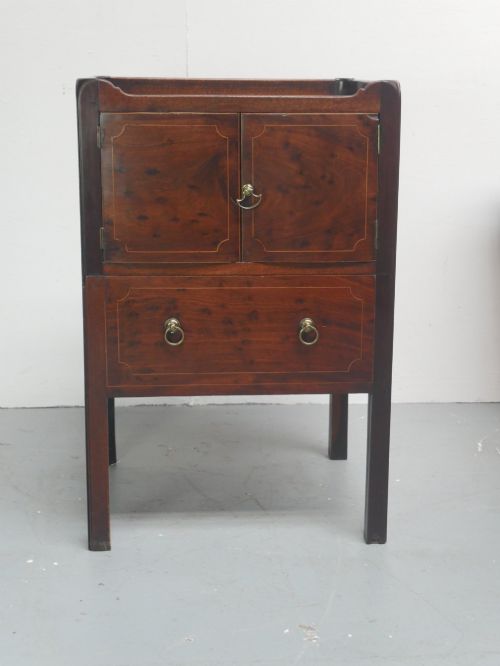
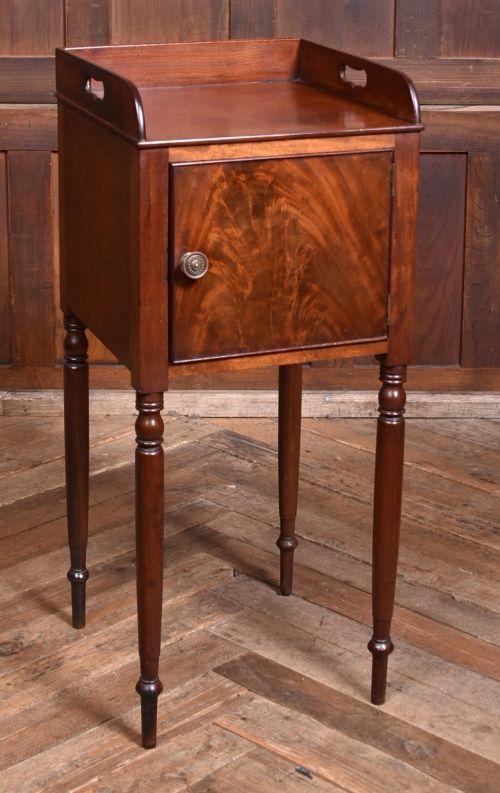
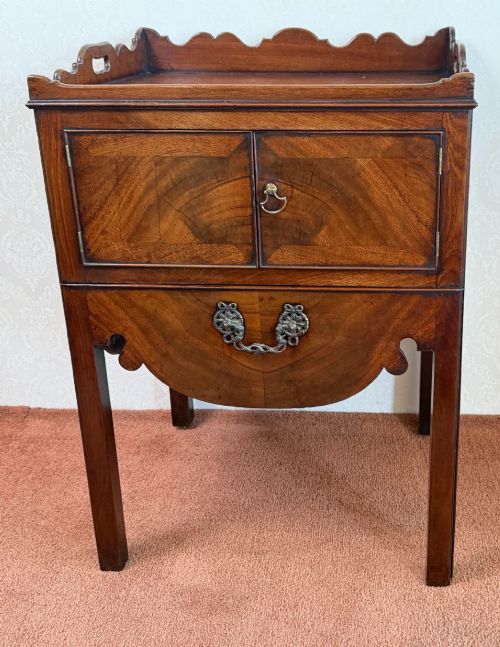
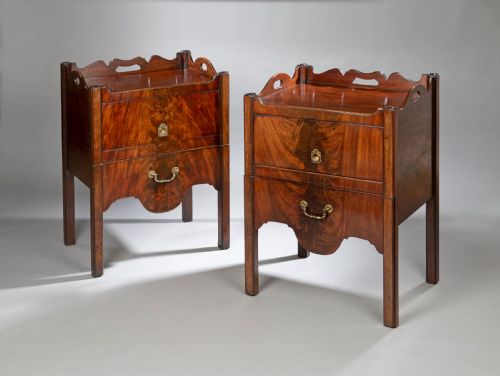
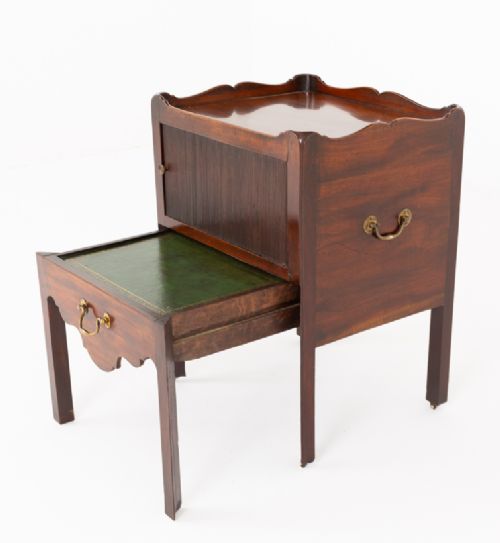
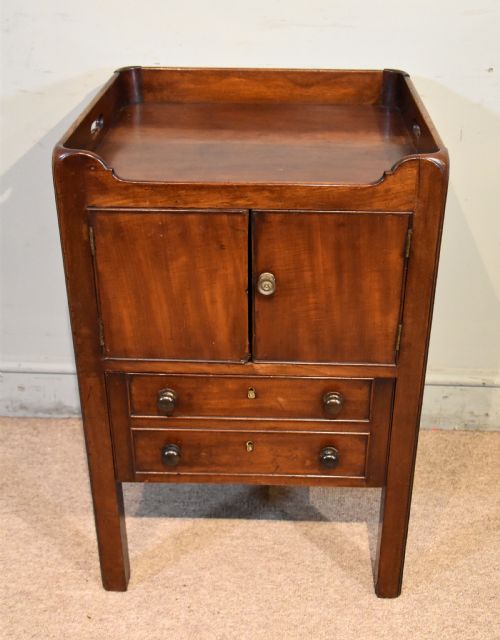
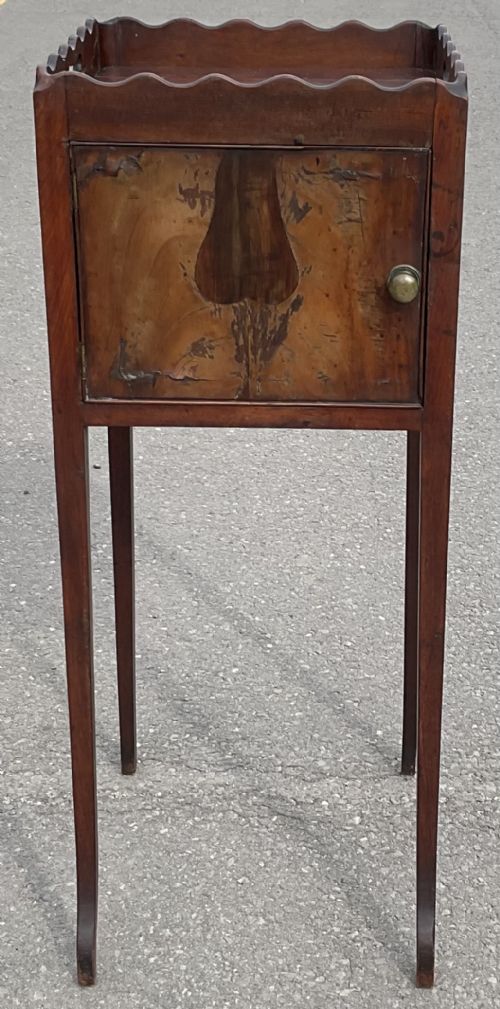
A tray top commode is a small enclosed bedside table, frequently identified as a nightstand, pot cupboard, or bedside cabinet in the evidence. These pieces date principally from the Georgian, 18th Century, and Regency periods, carrying names like George III, Chippendale, and Sheraton in their style definitions.
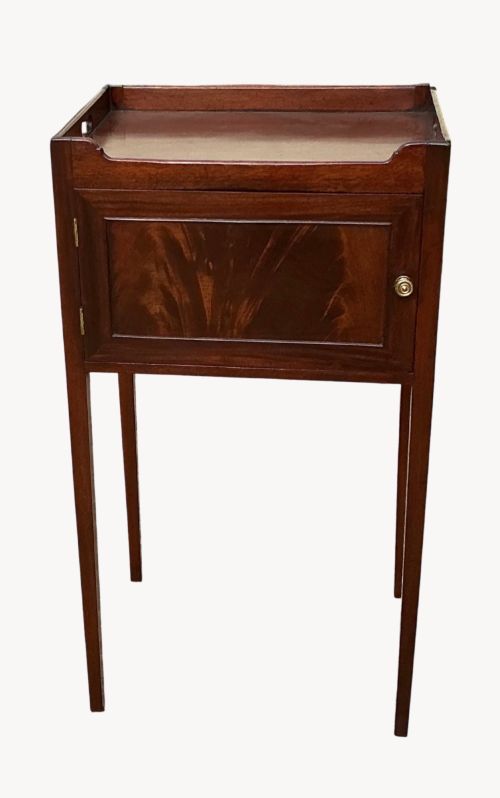
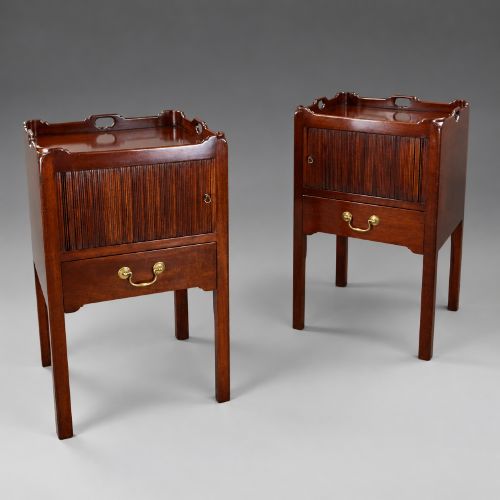
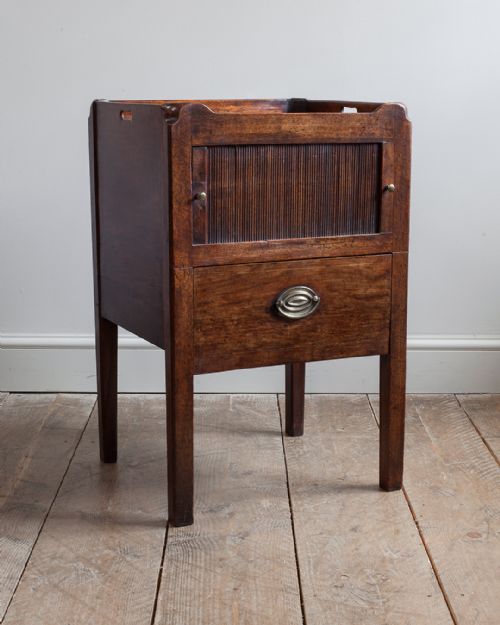
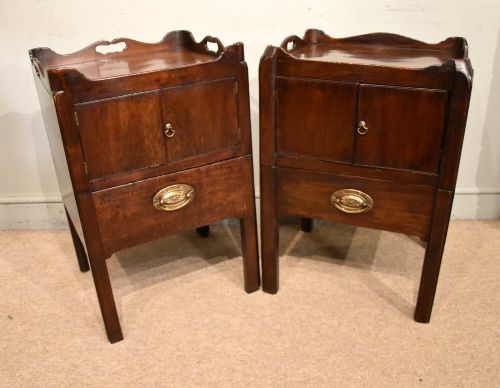
The version most commonly met on this page is constructed from mahogany, often featuring a raised shaped gallery edge around the top surface to secure items placed upon it. Below this top tray edge, the cabinet typically contains a cupboard door, sometimes paired with a sliding tambour front or a pull-out section.
These items were originally designed for the bedroom to house chamber pots or personal items discreetly, though today they function primarily as bedside tables and lamp tables. Their compact footprints and enclosed storage make them versatile additions to modern rooms needing period character.
Materials and construction
Cabinetmakers relied heavily upon solid mahogany and flame mahogany veneer, selected for deep grain patterns and structural durability. Secondary woods provided internal framing, while boxwood inlay and satinwood added decorative contrast in linear banding or geometric motifs.
Hardware such as brass handles, hinges, and pulls functioned practically while accentuating the timber tones. Joinery techniques included dovetailed drawer construction and precise framing to accommodate sliding tambour doors made of narrow wooden slats.
Forms include bedside cupboards, nightstands, and tambour front commodes with distinctive tray top edges.
Judging quality and proportion
Quality rests in the crispness of the carved details around the tray top gallery and the figuring of the mahogany veneer selected for the exterior surfaces. Well-executed pieces display balanced proportions, tight joints, and original brass hardware that integrates harmoniously with the cabinet design.
Variations appear in the complexity of the mechanism, such as the smooth operation of a tambour sliding door versus a standard hinged cupboard door. The presence of secondary decorative elements like boxwood and marquetry inlay distinguishes standard utility cabinets from finer examples made in recognised styles.
The Tray Top Commode Glossary
- Tray top
- A raised rim or gallery surrounding the upper surface of a cabinet, designed to prevent objects from rolling off the edge.
- Tambour
- A flexible shutter door formed of narrow vertical strips of wood glued to a canvas backing, allowing it to slide smoothly around a curved track.
- Commode
- A low enclosed cabinet or chest of drawers, originating in the 18th century and frequently adapted for bedroom use.
- Flame mahogany
- A veneer cut from the branch junction of a mahogany tree, displaying a distinctive undulating flame-like grain pattern.
- Boxwood inlay
- Narrow strips or geometric patterns of pale boxwood embedded into a darker wood surface for contrast.
Tray Top Commode: Frequently Asked Questions
What is a tray top commode used for today?
These cabinets serve mainly as bedside tables, lamp tables, or small side cabinets in living spaces. The enclosed cupboard space hides clutter, while the raised tray surface safely holds lamps, books, and glasses.
Their modest dimensions allow them to fit easily beside lower modern beds and tight corners where standard tables might overwhelm the room.
How do I identify a George III commode?
George III pieces typically date from the second half of the 18th century and exhibit restrained classical proportions, premium mahogany timber, and subtle bracket feet. Look for hand-cut dovetails and traditional cabinetmaking methods characteristic of the period.
Stylistic cues such as Chippendale frets or Sheraton satinwood crossbanding often accompany these 18th-century pieces.
Are tambour doors difficult to maintain?
Tambour doors operate through a series of wooden slats running along hidden grooves, which require gentle handling and occasional cleaning of the tracks. Well-adjusted tambour fronts slide freely without catching.
When maintaining these mechanisms, avoid heavy moisture and use appropriate cabinet wax to keep the wooden slats moving smoothly.
What is the difference between a commode and a nightstand?
In historical terms, a commode usually denotes an enclosed cabinet with doors or drawers, whereas a nightstand can describe any small table kept beside a bed. Many 18th-century commodes were built specifically to enclose chamber pots.
Today, these terms are often used interchangeably on the market to describe compact bedroom storage furniture.