
Travelling Carriage Clock
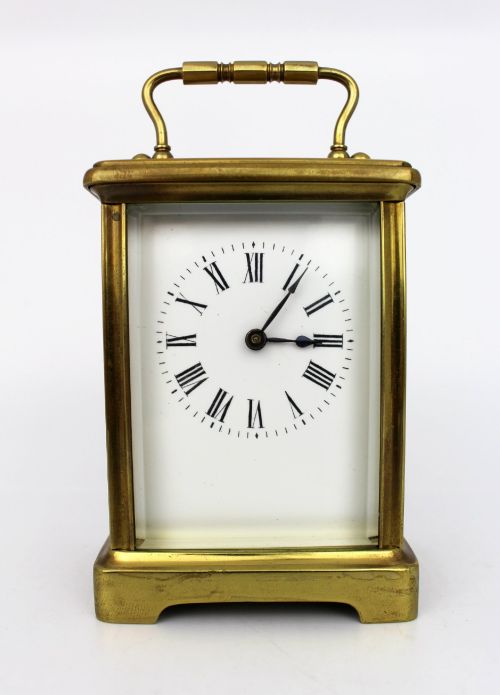
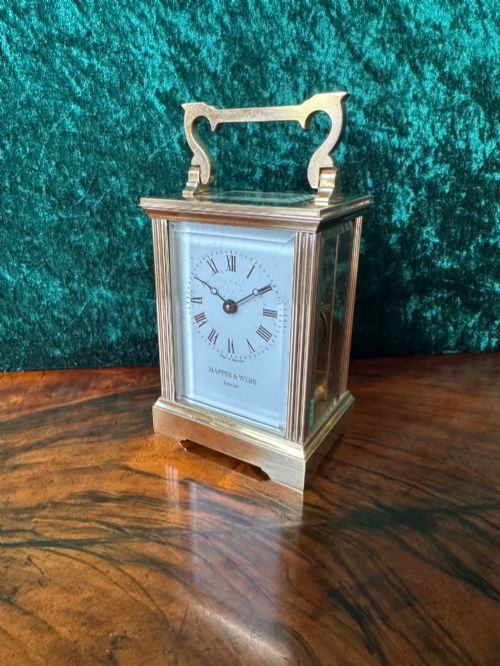
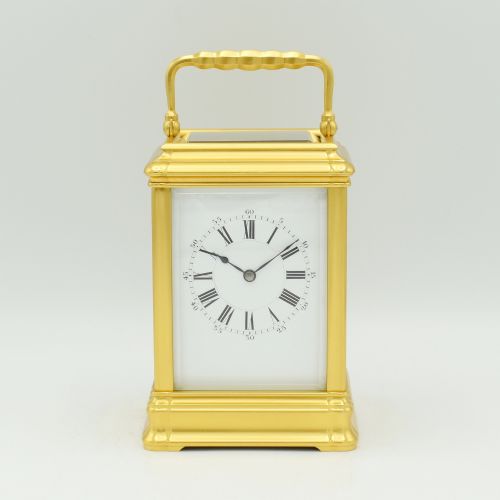
These pieces are travelling carriage clocks, portable timepieces designed for the road, offering precision timekeeping in robust brass and glass cases.
Travelling Carriage Clock
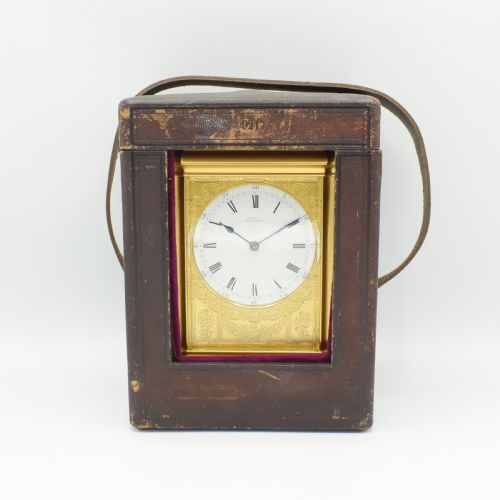
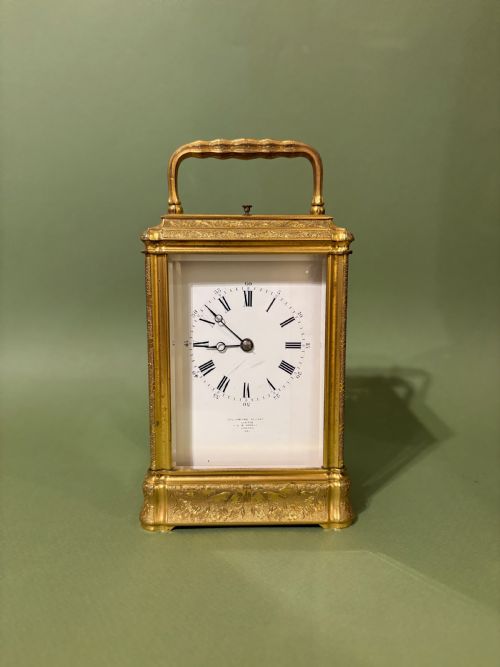
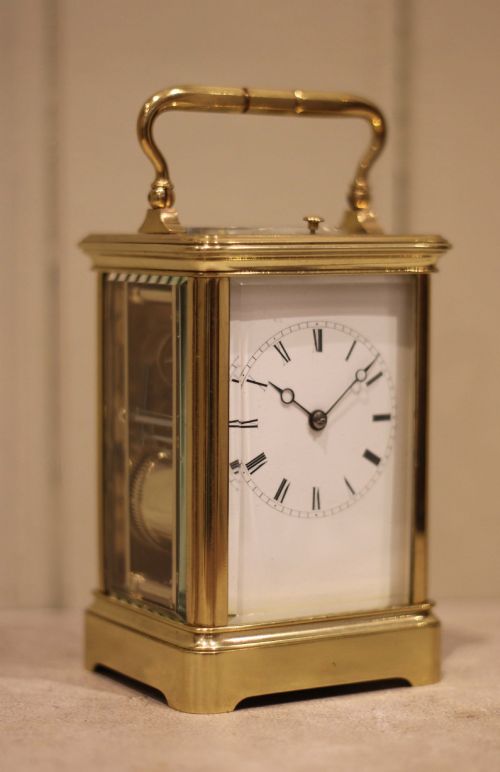
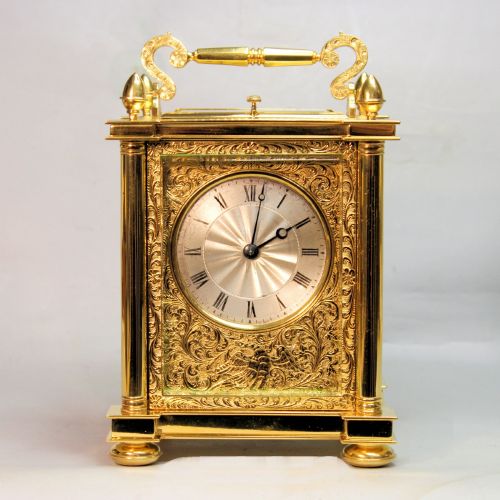
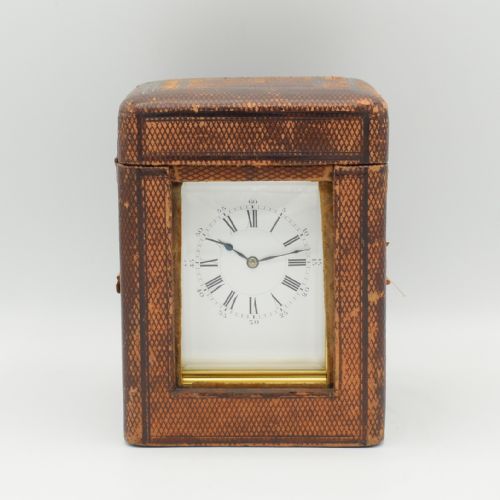
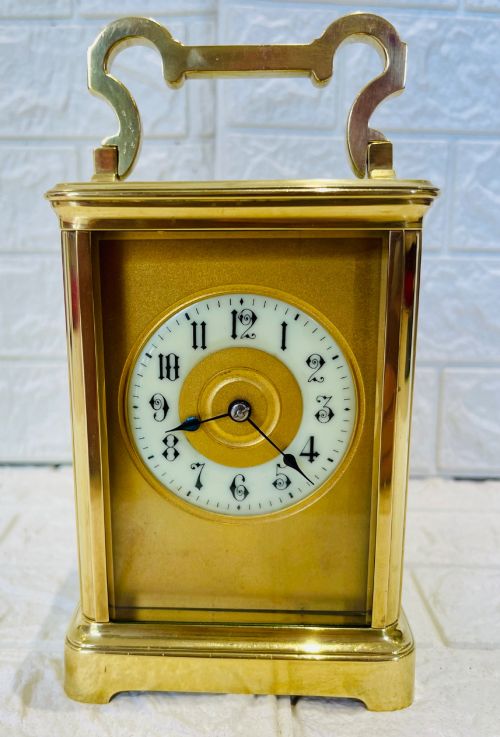
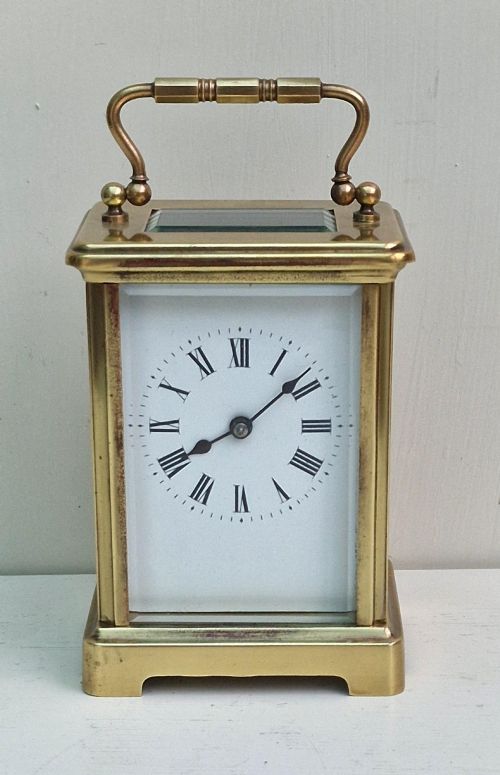
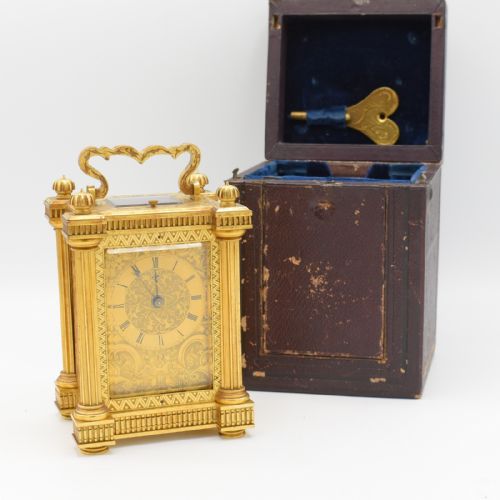
A travelling carriage clock is a portable timepiece housed in a protective metal and glass case, often accompanied by a fitted leather travel case. These clocks date primarily from the nineteenth and early twentieth centuries, spanning Victorian and Edwardian periods.
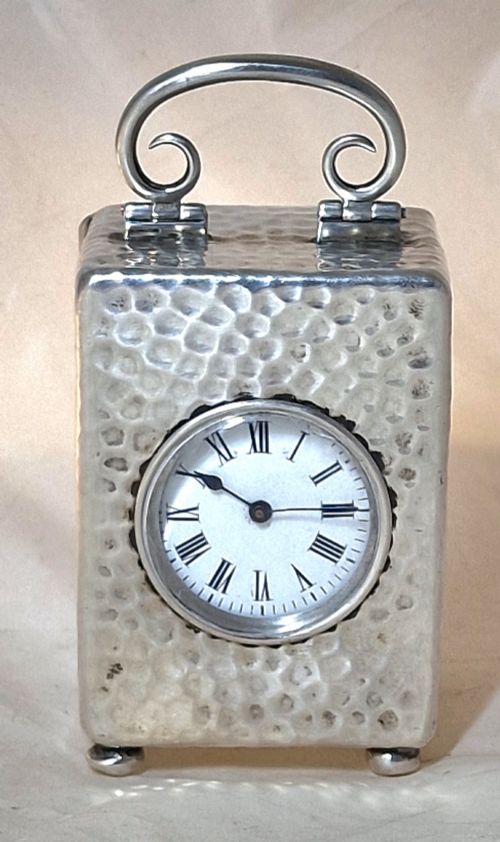
The majority of pieces encountered here originate from French workshops or London makers, encompassing simple timepieces alongside striking and repeating mechanisms. Forms range from standard sizes to large or miniature examples.
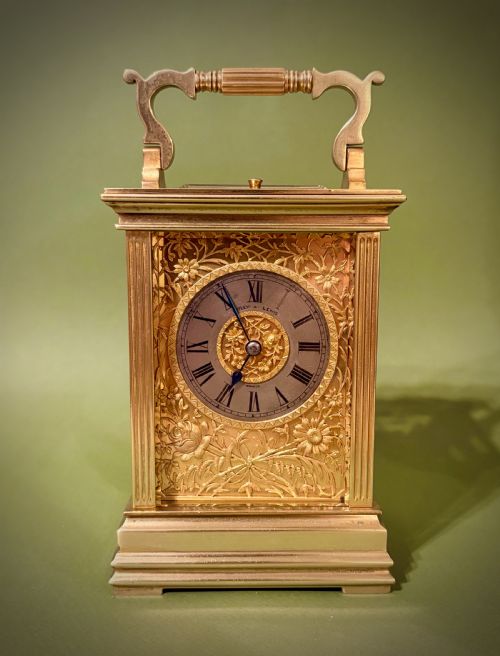
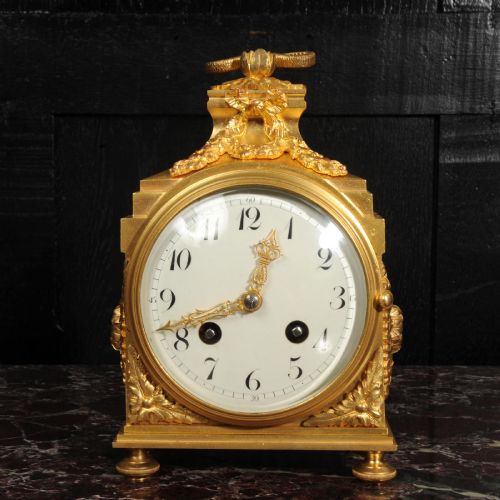
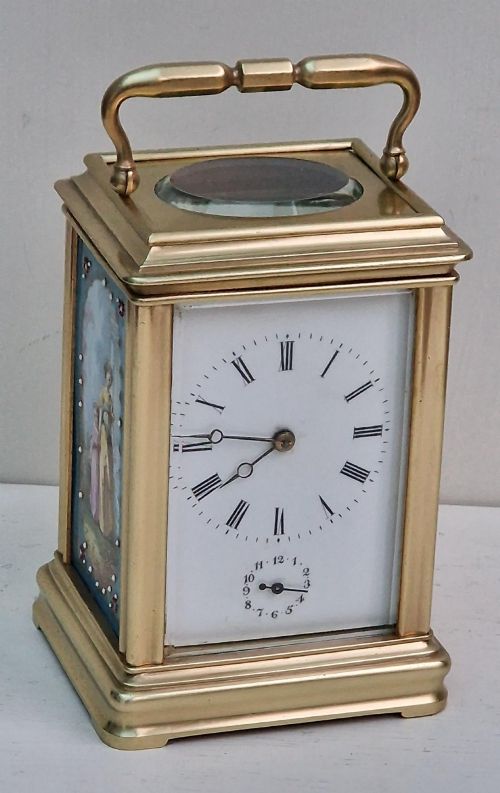
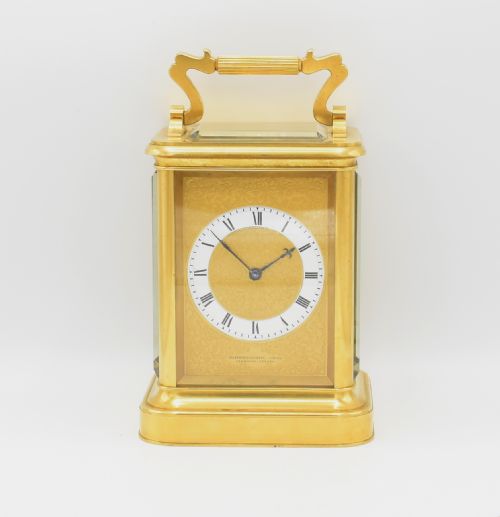
Collectors encounter variations including porcelain panel mounts, ormolu finishes, and fully engraved gilt brass cases. Many retain their original travel boxes or leather cases.
Distinctions in quality
Quality rests in the complexity of the movement, distinguishing standard timepieces from striking and repeating mechanisms produced by notable makers. The crispness of hand engraving on gilt brass and ormolu cases further separates workshop tiers.
Survival of original elements, including fitted leather travel cases and matching keys, elevates an example. The weight and substantial feel of the brass gorge case indicate superior nineteenth-century manufacturing standards.
Listings feature brass, gilt brass, leather, and glass, spanning Victorian, Edwardian, and nineteenth-century French periods.
HENRI JACOT·COUSENS & WHITESIDE·Howell & James London·Mappin and Web·Pickford of London·Drocourt Paris·T. Martin & Co·C. Detouche Paris
The Travelling Carriage Clock Glossary
- Gorge case
- A distinct rectangular brass case style featuring stepped mouldings to the top and bottom frame, commonly found on nineteenth-century examples. This housing protects the internal movement while displaying the glass panels.
- Repeater
- A mechanism that chimes the hours and quarters on demand when a pendant or button is pressed. This complication allowed travellers to check the time in darkness.
- Striking clock
- A timepiece that automatically sounds the hours and half-hours on a bell or gong. Such movements require additional gear trains within the brass frame.
- Pendule d'officier
- An early French military-style desk or travelling clock featuring a prominent carrying handle and robust proportions. These precursors set the pattern for later carriage clocks.
- Fusee
- A conical pulley used in English movements to maintain equal driving force as the mainspring unwinds. This device ensures consistent timekeeping accuracy across the power reserve.
Travelling Carriage Clock: Frequently Asked Questions
How do I wind a travelling carriage clock?
Most examples use a dedicated winding key inserted into arbours on the backplate. Turn the key gently until resistance indicates the mainspring is fully tensioned.
Take care not to overwind the movement, as older springs require steady handling to preserve their integrity.
What is the difference between a strike and a repeater?
A striking clock sounds the hours and quarters automatically as the time passes. A repeating mechanism allows the owner to press a button and hear the last hours and quarters chimed on demand.
Many French and English pieces combine both functions within the brass case.
Are original travel cases important?
Original leather travel boxes and outer cases enhance the historical completeness of the piece. They show how these objects were transported during the nineteenth century.
Clocks retaining their fitted boxes remain particularly sought after by collectors.
How do I date a brass carriage clock?
Dating relies on maker signatures, serial numbers, case styles, and dial design conventions. Nineteenth-century French and English pieces often display specific escapement types and engraving styles characteristic of their decade.
Consulting maker records helps narrow the production period.