
Travel Carriage Clock
A travel carriage clock is a portable timepiece designed for mobility, prized by collectors for its precise mechanical movement and elegant brass and glass housing.
Travel Carriage Clock
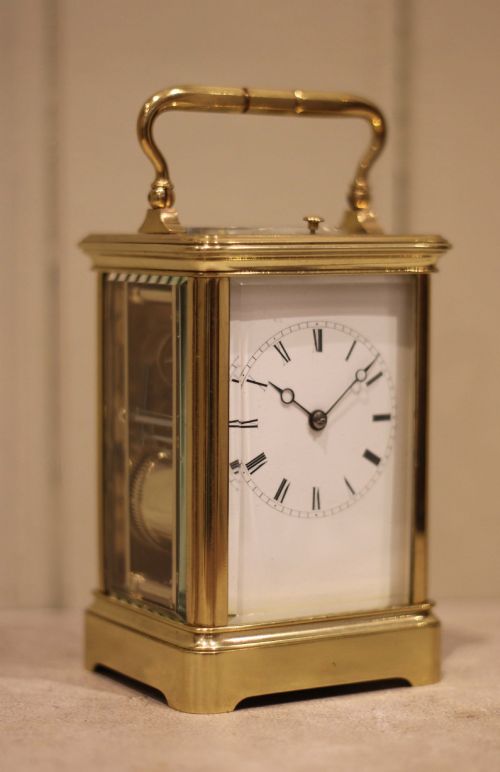
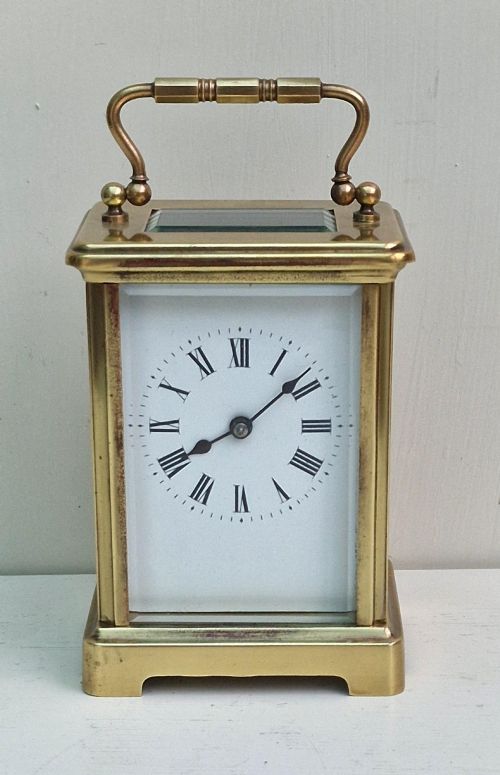
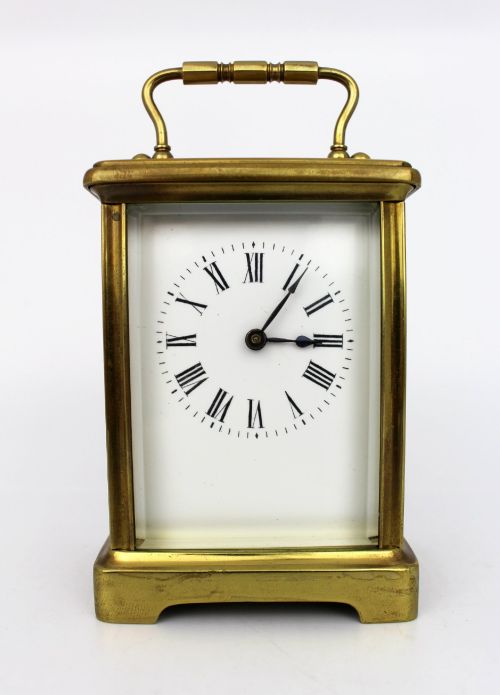
When you search for a travel carriage clock, you encounter portable timepieces produced primarily during the nineteenth and early twentieth centuries. These objects combine mechanical clockwork with robust protective housings suited for transit.
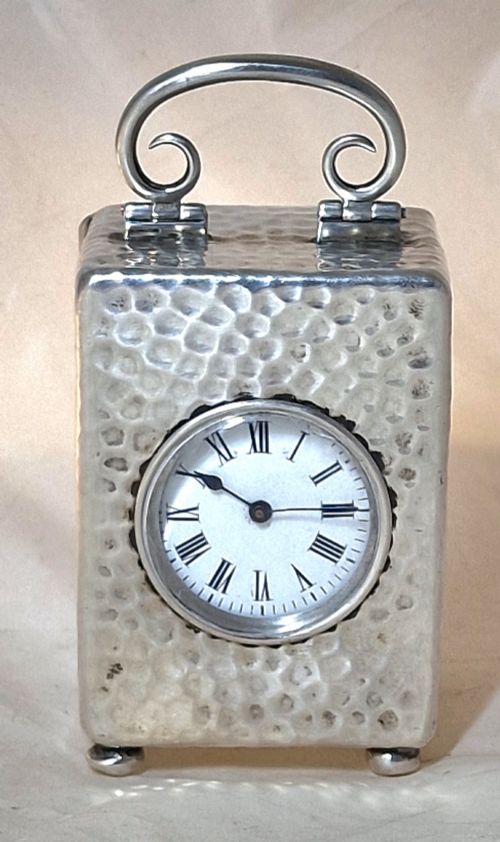
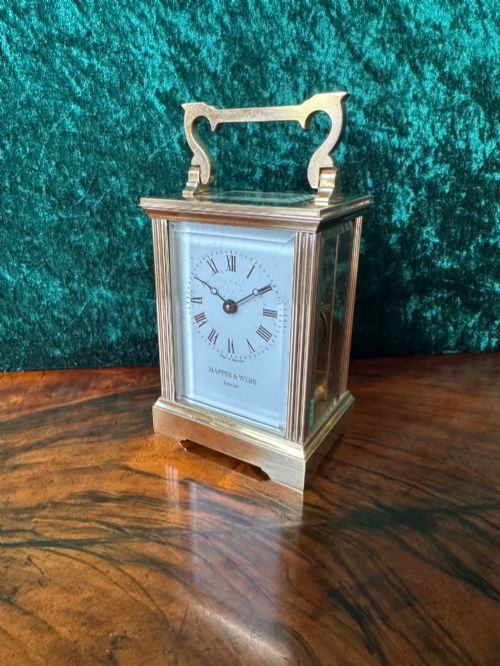
The versions most commonly met on this page originate from French workshops or British makers dating from the Victorian and Edwardian eras. They range from standard striking models to miniature desk clocks and examples fitted with travel cases.
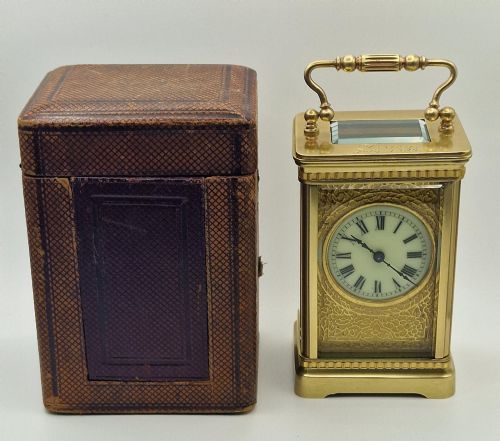
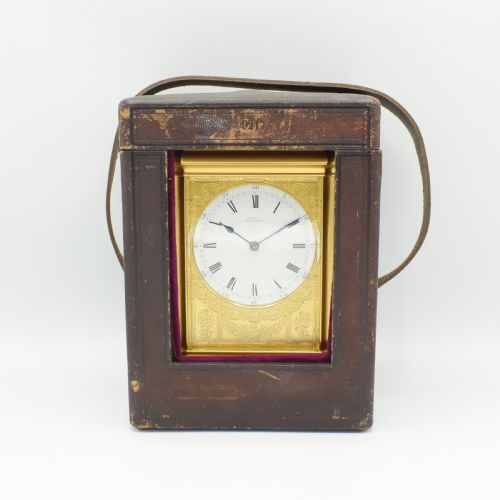
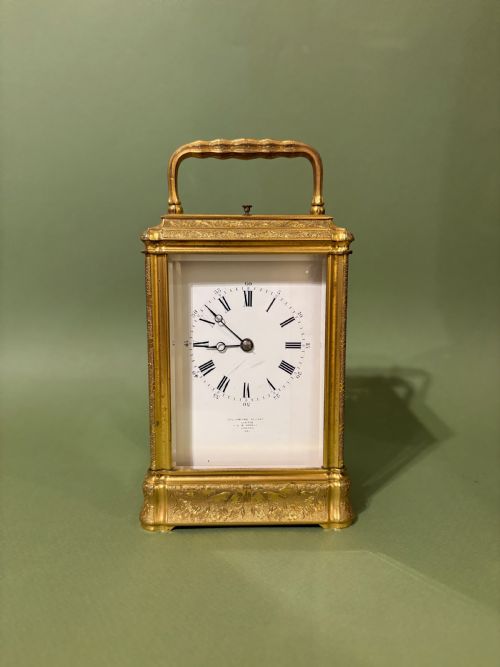
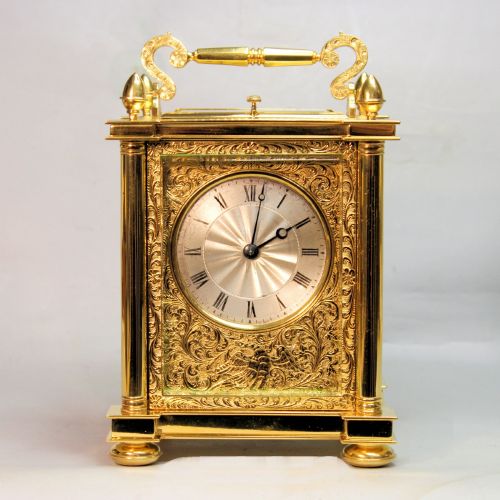
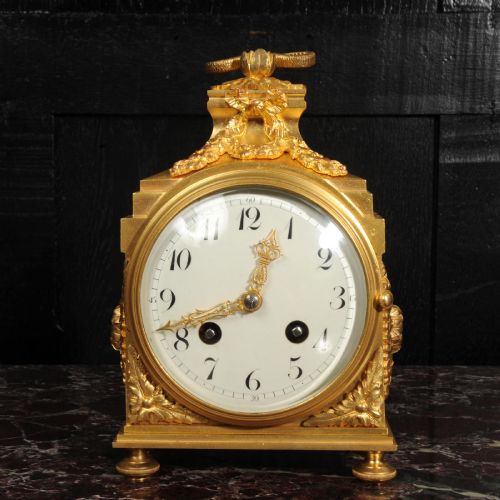
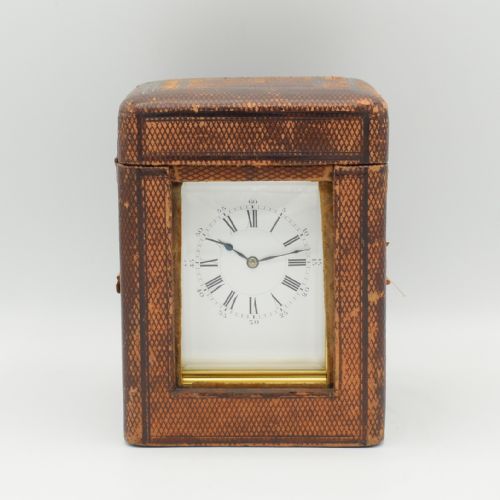
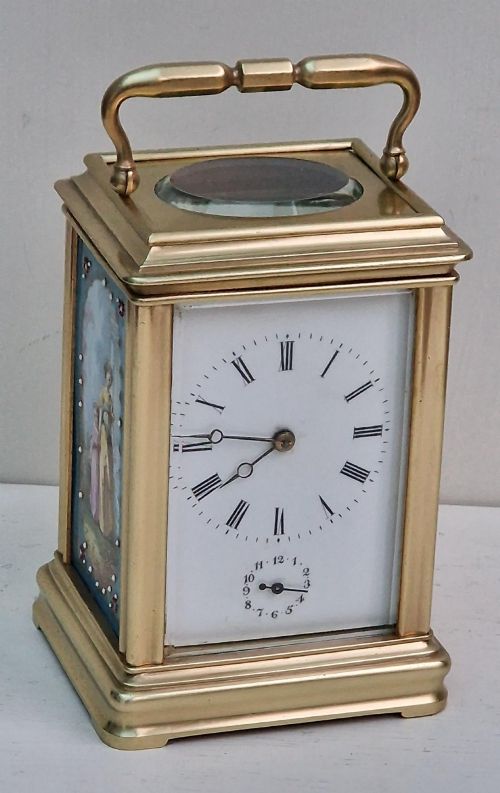
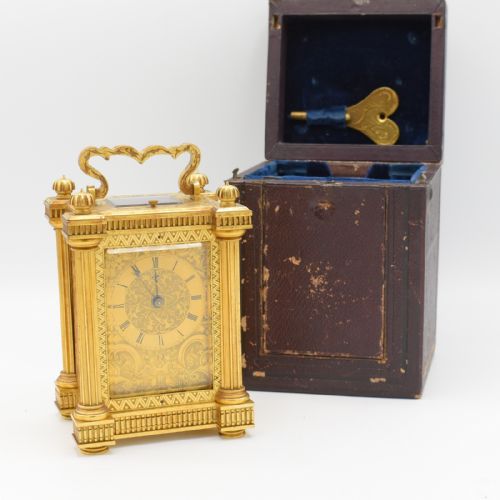
Makers housed these movements in glass and brass or gilt brass frames, occasionally incorporating porcelain panels or silvered metal details. Many survive alongside their original leather travelling cases or boxes.
What varies in quality
The distinction between an ordinary travel carriage clock and a superior example lies in the complexity of its movement and the refinement of its case. Complications such as quarter striking, repeating functions, and alarm mechanisms elevate a piece above a basic time-only movement.
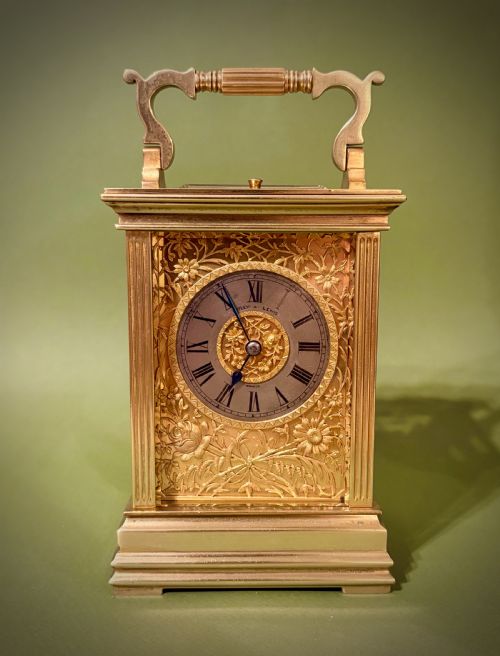
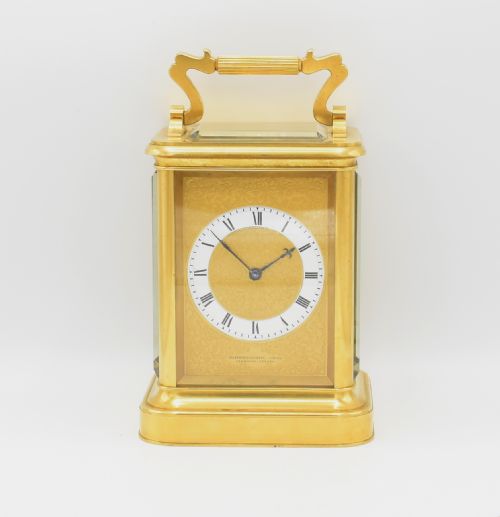
Craftsmanship in the metalwork also separates items within the range. Finely engraved gilt brass cases, detailed porcelain panels, and the survival of an original leather travel case contribute significantly to the standing of an individual clock.
Listings feature travel carriage clocks spanning from the mid-nineteenth century through the Edwardian period, constructed primarily in brass, glass, and leather.
HENRI JACOT·COUSENS & WHITESIDE·Howell & James·Mappin and Web·Pickford of London·DROCOURT·C. Detouche·T. Martin & Co·Goldsmiths Alliance Ltd
The Travel Carriage Clock Glossary
- Carriage clock
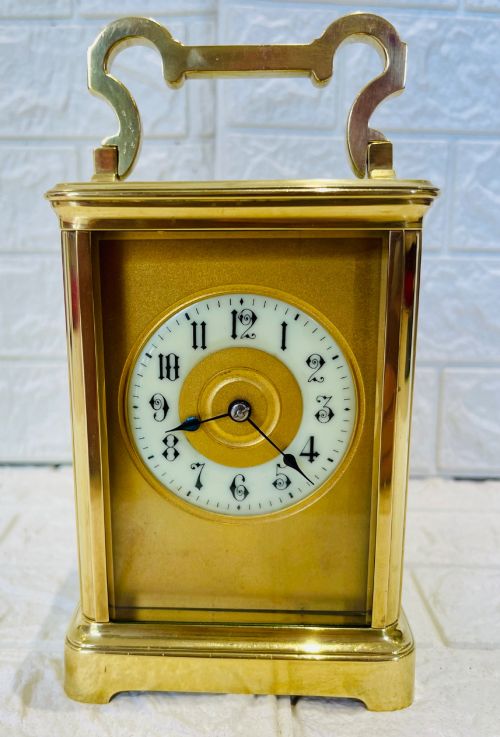
- A portable spring-driven timepiece originally designed for travellers during the nineteenth century. These clocks typically feature a rectangular brass frame with glass panels.
- Gorge case
- A specific style of brass carriage clock case featuring a stepped or moulded cornice at the top and base. It is frequently associated with fine French makers.
- Repeating mechanism
- A complication in a clock that sounds the hours and quarters upon the pressing of a button or cord. This allows the user to tell the time in darkness.
- Fusee
- A conical pulley used in some British clocks to maintain even tension on the gear train as the mainspring unwinds. This mechanism improves the timekeeping accuracy of the piece.
- Pendule d'Officier
- A French term for an early form of military or officer travel clock. These pieces often exhibit robust construction and distinctive case silhouettes.
Travel Carriage Clock: Frequently Asked Questions
What is a travel carriage clock?
A travel carriage clock is a portable mechanical timepiece enclosed in a brass and glass case, built to withstand movement.
These clocks were traditionally carried by travellers in fitted leather cases to ensure accurate timekeeping away from home.
How do I wind my carriage clock?
Most carriage clocks are wound using a dedicated square-ended key inserted into arbours located on the backplate of the movement.
Care must be taken not to overwind the mainspring, turning the key only until firm resistance is met.
Are all carriage clocks French?
While a large proportion of surviving carriage clocks originated in France during the nineteenth century, British makers also produced notable examples.
British pieces often feature distinct mechanical differences, such as fusee movements, compared to their continental counterparts.
Why do some clocks have travel cases?
Original leather or wooden travel cases were designed to protect the delicate glass panels and brass housing during journeys.
Finding a carriage clock with its matching travel box is valued by collectors as evidence of completeness.