






Traditional Wood Nesting Tables
Traditional wood nesting tables offer space-saving versatility without sacrificing period charm, sliding neatly away when floor space matters most.
Traditional Wood Nesting Tables
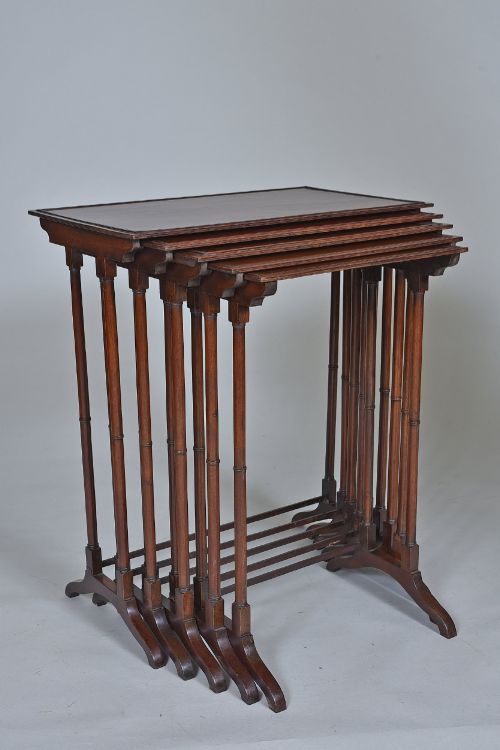
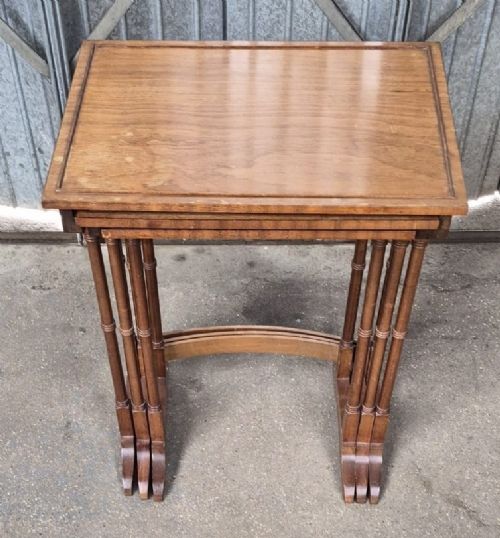
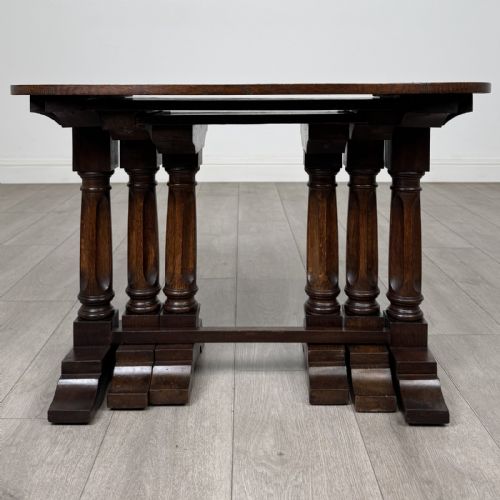
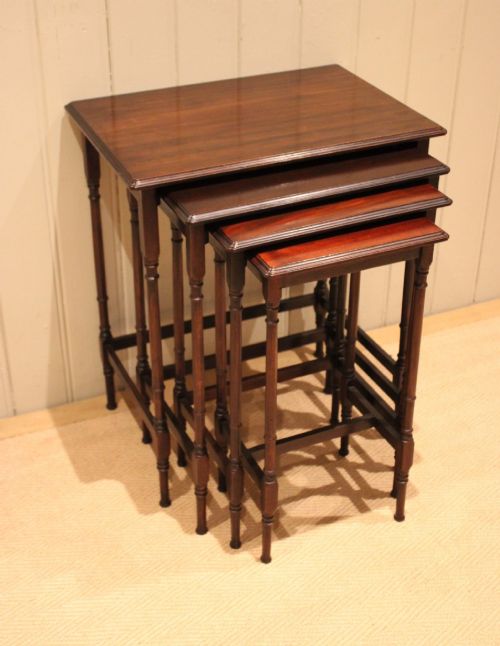
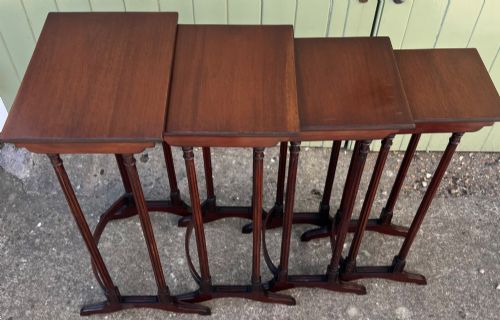
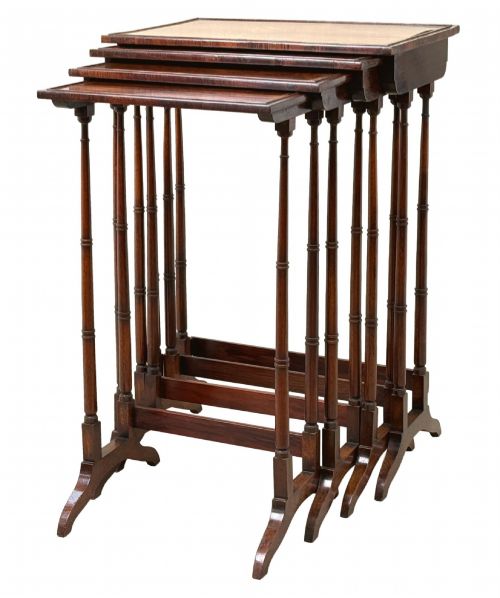
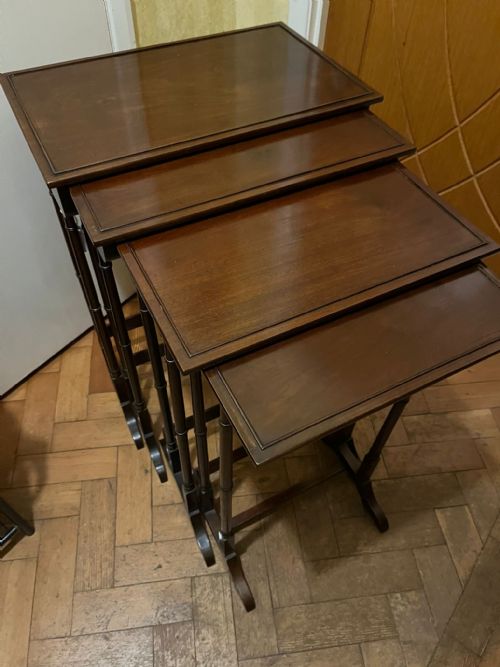
Traditional wood nesting tables comprise sets of graduated surfaces designed to fit one beneath another, serving as practical occasional furniture. When searching for traditional wood nesting tables, buyers encounter sets containing three or four individual tables that pull out for serving or display.
The selection ranges widely across eras and stylistic influences, spanning Edwardian and Victorian pieces alongside Georgian style reproductions and Chinese export furniture. Mahogany remains the dominant timber, accompanied by rosewood, walnut, oak, and hardwood.
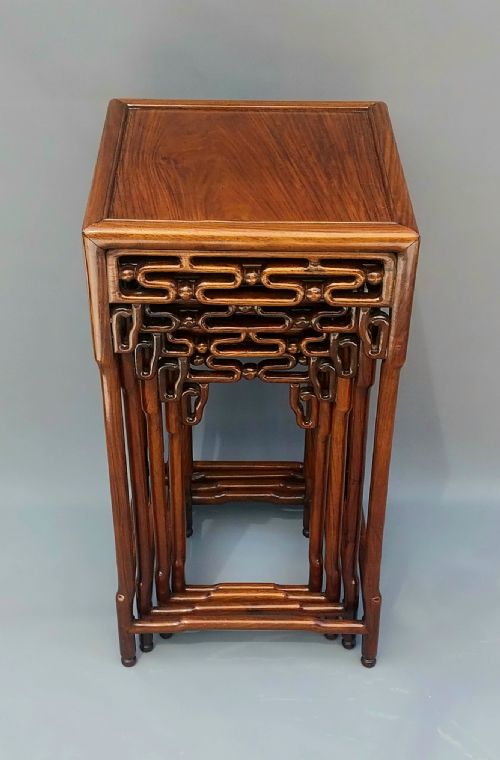
Most examples originate from the late nineteenth century through to the 1930s, encompassing Edwardian satinwood inlay, Chinese hardwood sets, and classic quartetto forms. These pieces function reliably as side tables or coffee tables in contemporary rooms.
How they were made
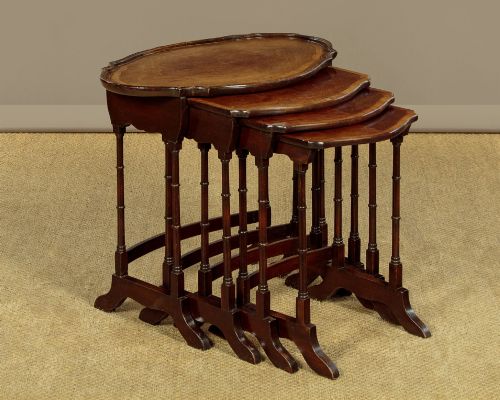
Cabinet makers utilised dense timbers such as mahogany, rosewood, and walnut to construct sturdy frames capable of supporting daily use. These woods were often shaped into round, oval, or rectangular tops supported by slender legs.
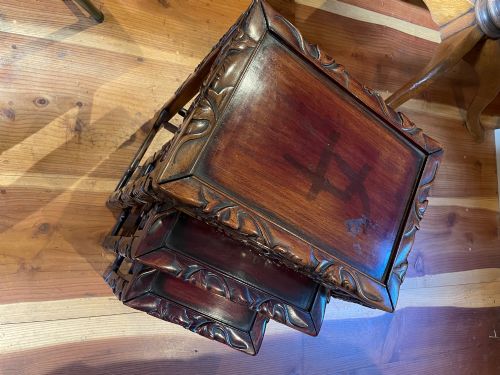
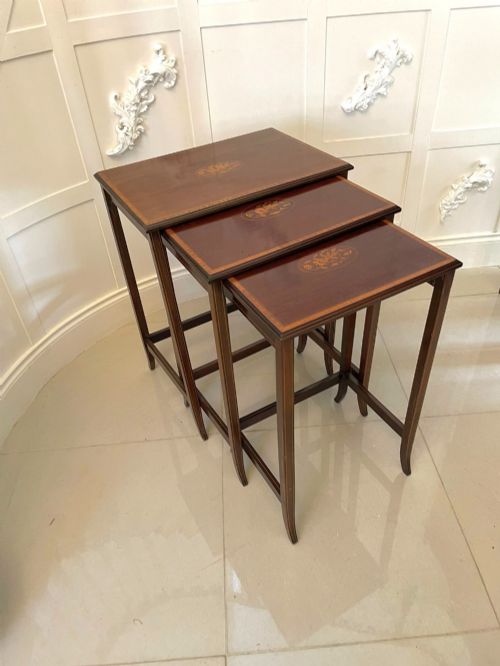
Decoration relied heavily on veneer work, marquetry inlay, and parquetry patterns, particularly on Edwardian and Sheraton revival examples. Chinese export pieces frequently employed traditional joinery to build graduating sets from dense rosewood and hardwood without relying on metal fixings.
Traditional Wood Nesting Tables Retail Price Guide 2026
Typical asking prices for traditional wood nesting tables among the pieces listed under this phrase on Sellingantiques today, from the lower quarter to the upper quarter. They describe what is for sale here now, not the wider market.
Design styles represented include Chinese export, Georgian style, Sheraton revival, and Queen Anne style alongside standard Edwardian and Victorian formats.
What varies in quality
The precision of the joints where the smaller tables slide into position determines the structural success of a set. Superior examples glide smoothly without binding, showing careful proportion in the graduated heights and depths.
Surface ornamentation reveals the maker's hand, from crisp marquetry inlay and balanced mahogany grain to finely carved Chinese hardwood details. Poorer specimens exhibit clumsy proportions and loose fits that compromise the stability of the stack.
The Traditional Wood Nesting Tables Glossary
- Quartetto
- A matched set of four graduating occasional tables designed to nest together. This term appears frequently in nineteenth-century and Edwardian cataloguing.
- Chinoiserie
- European artistic style reflecting Chinese motifs and decorative techniques. It often appears on Queen Anne style occasional tables.
- Parquetry
- Geometric mosaic woodwork used for flooring or tabletop surfaces. Sets decorated this way display intricate repeating patterns of wood blocks.
- Hongmu
- A traditional Chinese term for dense hardwoods, often translated as red wood. These heavy timbers form robust sets of graduating tables.
Traditional Wood Nesting Tables: Frequently Asked Questions
How many tables come in a set?
Most sets consist of either three or four individual tables that graduate in size. The smaller pieces slide completely beneath the largest top surface.
Four-table sets are frequently described as quartetto tables, particularly in nineteenth-century and Edwardian examples. Three-table sets provide a slightly more compact footprint for smaller rooms.
Can these tables be used as coffee tables?
Certain variations feature lower proportions specifically suited for use as coffee tables. Round and oval mahogany top formats work well in central seating layouts.
Traditional side table heights remain common, designed to sit beside armchairs or sofas. Pulling the nested tables out provides extra surface area when entertaining guests.
What woods were used to make them?
Mahogany is the predominant timber found across English Edwardian and Victorian pieces. Walnut, oak, and satinwood also appear regularly in period listings.
Chinese export examples utilise dense rosewood and hardwood. Marquetry inlay and veneer work frequently embellish the primary timber surfaces.
How do I identify an Edwardian set?
Edwardian sets typically date from around 1900 to 1910 and often incorporate mahogany with delicate inlaid decoration. They reflect lighter proportions influenced by earlier Sheraton revival styles.
These pieces frequently carry the designation of quartetto tables or simple nests of three. Their refined legs and neat dimensions suit both traditional and modern interiors.