



Three Tier Nested Tables
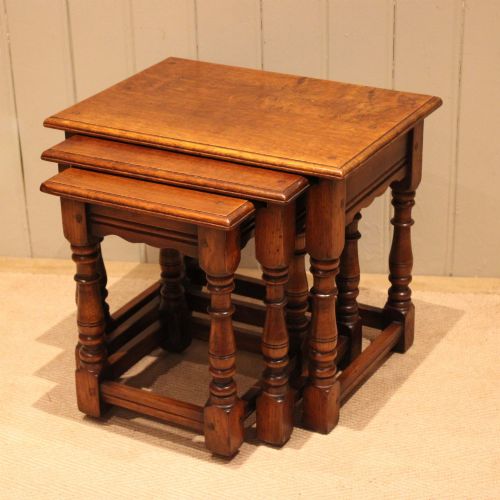
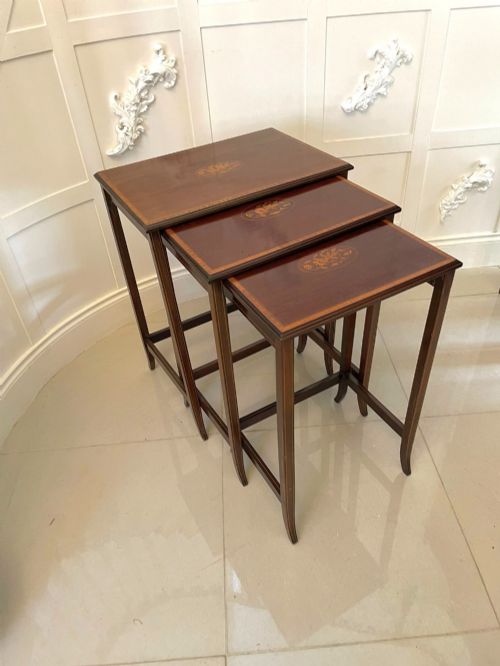
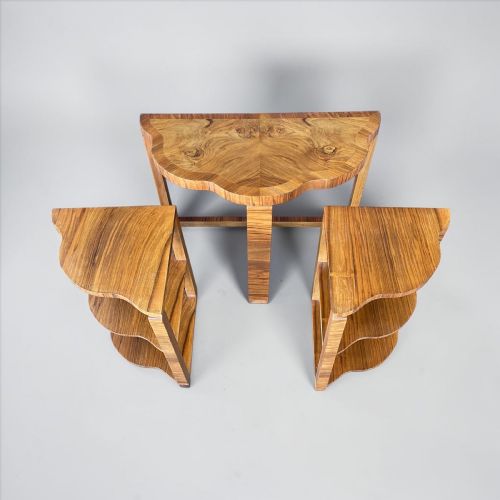
These three tier nested tables offer compact utility with sliding surfaces, ranging from Edwardian mahogany to Art Deco forms.
Three Tier Nested Tables
A set of three tier nested tables provides graduating surfaces that slide together to save floor space when not in active use. Buyers searching for three tier nested tables will encounter examples primarily from the Edwardian era through to the 1940s.
The physical forms include rectangular occasional tables, shaped tops, and oval coffee tables. Materials range from traditional timbers like mahogany, oak, and walnut through to exotic veneers.
Edwardian pieces and 1920s French revival designs dominate the selection. Most configurations group three graduating tables designed to fit neatly beneath the largest surface.
How they were made
Construction relies heavily on solid hardwoods and decorative timber veneers applied to supportive carcases. Mahogany and oak form the structural backbone for many pieces, supplemented by walnut and satinwood.
Surface ornamentation utilises marquetry inlay, parquetry tops, and intricate timber veneer patterns. Ormolu mounts appear on specific continental revival pieces to accent the frame.
Joinery techniques secure the legs and shaped tops while maintaining the precise tolerances required for the smaller tables to slide smoothly beneath one another.
Three Tier Nested Tables Retail Price Guide 2026
Typical asking prices for three tier nested tables among the pieces listed under this phrase on Sellingantiques today, from the lower quarter to the upper quarter. They describe what is for sale here now, not the wider market.
Listings span five distinct periods from Edwardian to 1940, showcasing mahogany, oak, walnut, satinwood, and kingwood timbers.
What varies in quality
Quality rests upon the selection of timber and the precision of the veneer work on the primary surfaces. Finer examples display carefully matched grain patterns and crisp marquetry inlay rather than plain boards.
The structural integrity of the frame and the smoothness of the nesting action distinguish better pieces. Solid timber mouldings and restrained decorative brass or ormolu mounts elevate the standard of manufacture.
The Three Tier Nested Tables Glossary
- Nest of tables
- A set of graduating tables designed to slide one beneath another to save space. They function as occasional surfaces that deploy when guests visit.
- Marquetry inlay
- Decorative patterns formed by fitting small pieces of contrasting veneer into a prepared surface. This technique creates pictorial or geometric designs on the tabletop.
- Ormolu
- Gilt bronze mounts applied to furniture for decorative enrichment. This material is frequently found on French revival pieces.
- Parquetry
- Geometric wood mosaic work used to pattern tabletops. Small pieces of timber are arranged to create repeating patterns.
Three Tier Nested Tables: Frequently Asked Questions
How do three tier nested tables work?
These sets consist of three graduating tables designed so the smaller surfaces slide neatly beneath the largest one. This arrangement provides extra surface area when needed while occupying the footprint of a single small table.
They serve well as occasional tables in sitting rooms for drinks or books. Users simply pull out the individual tables as required and slide them back when finished.
What periods do these tables come from?
The selection spans from the Edwardian period through the 1910s and 1920s up to the 1940s. Edwardian examples and pieces from the 1920s form the bulk of the available designs.
Stylistic influences range from English country oak to Louis XV and Louis XVI French revivals, alongside Art Deco pieces. Each era brings distinct timber choices and decorative treatments.
Which woods were used for these tables?
Mahogany is the most frequent timber, appearing in plain, inlaid, and shaped top variants. Oak and walnut also feature prominently, alongside satinwood and kingwood.
Many pieces utilise timber veneers to create decorative surfaces. Marquetry inlay and parquetry tops further enhance the visual appeal of the wood.
Are oval or rectangular tables better?
Oval coffee tables and rectangular occasional tables serve different room layouts and aesthetic preferences. Oval tops soften room angles, whereas rectangular tables offer traditional lines.
Selection depends entirely on the surrounding furniture and available floor space. Both shapes maintain the practical three tier nesting function.