
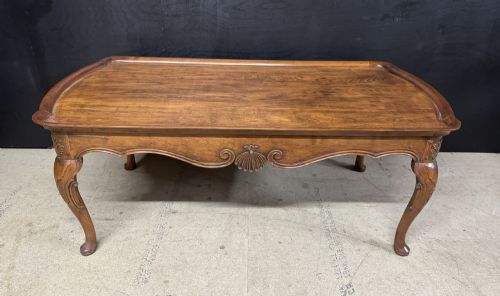

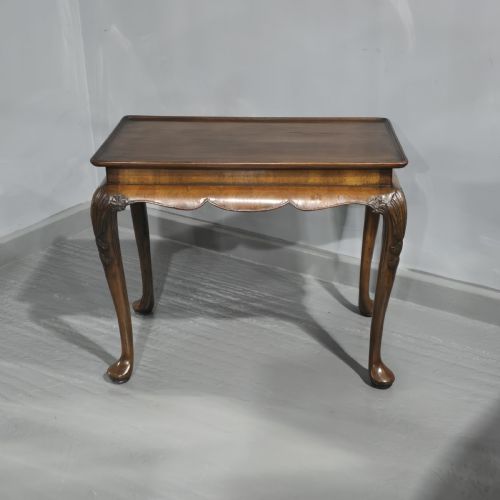


Traditional Walnut Coffee Table
A traditional walnut coffee table brings rich timber grain and classic revival forms straight to the centre of the room.
What these pieces are
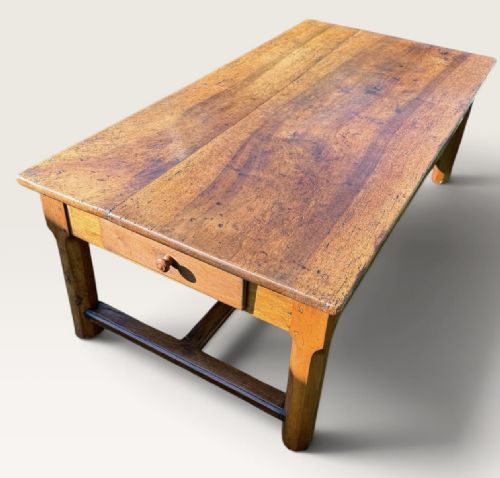
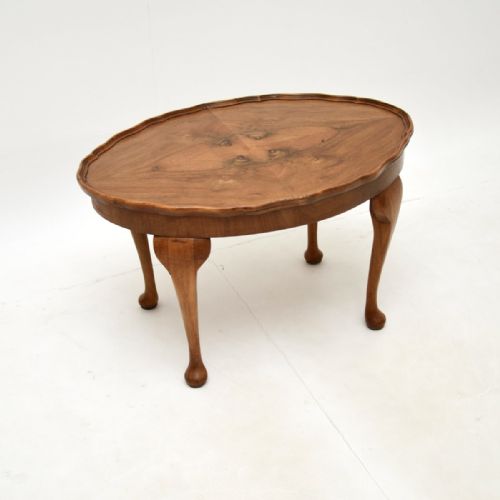
A traditional walnut coffee table combines low-level living room proportions with historical revival aesthetics spanning the nineteenth and early twentieth centuries. These low tables draw on Queen Anne, Carolean, and Victorian design traditions, adapting earlier formal furniture heights for modern domestic use. Pieces appearing here range from plain timber constructions to elaborate tray-topped examples.
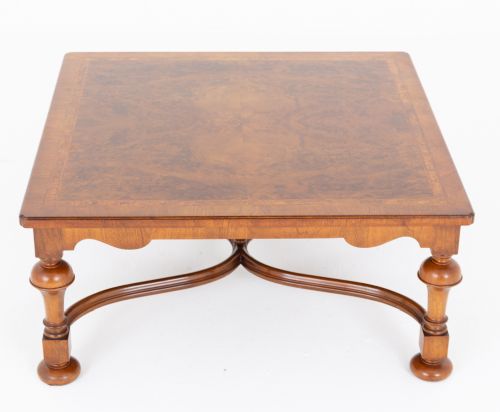
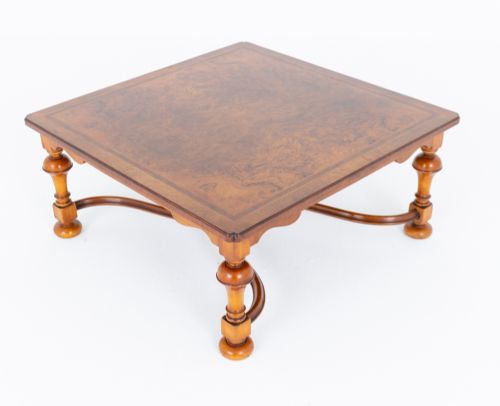
Burr walnut veneer surfaces and pie crust mouldings frequently appear among the selections, alongside carved Carolean revival details. Nineteenth-century items sit alongside pieces from the 1910s, 1920s, and 1930s, offering a steady supply of revival craftsmanship. Buyers encounter both large antique formats and smaller scaled items suitable for varied seating arrangements.
How they were made
Advanced woodworking techniques of the period include raised pie crust edging and intricate revival carving. Makers applied skilled veneering methods to stretch precious timber reserves across expansive surfaces, securing stable joints within the underlying timber framework.
Retail Price Guide 2026
Typical UK retail prices for traditional walnut coffee table, calculated from the Sellingantiques database of over a million retail prices indexed since 2003. This retail price guide relies exclusively on Sellingantiques data; no external sources or auction records are used, so the figures do not describe the wider market.
Current selections span the nineteenth century, 1910, 1920, and 1930, utilising walnut, burr walnut, timber, and brass.
What varies in quality
The sophistication of the timber selection and veneer matching defines the upper tier of these tables. Richly figured burr walnut panels demonstrate superior raw material choice compared to plain timber surfaces, elevating the visual weight of the design. The precision of the carved revival details, whether Carolean scrolls or Queen Anne cabriole influences, separates standard workshop production from finer cabinet work.
Structural refinement also distinguishes the range, visible in the crispness of moulded edges like pie crust borders and the clean integration of tray tops. Tables retaining crisp carved definition and stable, well-applied veneers represent the more accomplished end of period manufacture.
The Traditional Walnut Coffee Table Glossary
- Burr walnut
- A highly figured timber veneer sliced from the growth warts or burls of walnut trees. This material yields swirling, organic patterns prized for tabletops.
- Pie crust edge
- A raised, decoratively carved moulding around the perimeter of a tabletop. The undulating rim resembles the traditional pastry edge of a pie.
- Carolean style
- A British design aesthetic originating from the reign of Charles II, characterised by rich carving and scrolling motifs. Revival iterations recreate these seventeenth-century flourishes on later low tables.
- Tray top
- A tabletop featuring a raised lip or gallery around the edge to contain items. This practical form appears frequently on early twentieth-century examples.
- Queen Anne revival
- A design movement looking back to the early eighteenth century for inspiration. It brings characteristic cabriole shapes and understated walnut elegance into later domestic furniture.
Frequently Asked Questions
What is a traditional walnut coffee table?
A traditional walnut coffee table is a low domestic furniture piece constructed from walnut timber or veneer, styled after historical design periods.
These tables date from the nineteenth and early twentieth centuries, incorporating revival aesthetics such as Carolean carving or Queen Anne forms.
How do I date a walnut coffee table?
Dating relies on examining the construction methods, timber preparation, and stylistic revival cues present in the piece. Evidence spans the nineteenth century through the 1930s, showing shifts in veneer work and edge detailing.
Comparing the decorative vocabulary against established furniture periods helps narrow down the decade of manufacture.
How do I care for burr walnut veneer?
Burr walnut veneer requires protection from direct sunlight and excessive moisture to prevent warping and fading. Regular dusting with a soft, dry cloth preserves the polished timber finish.
Avoiding extreme temperature fluctuations keeps the underlying glue and veneer stable over time.
Where did coffee tables come from?
Low tables designed specifically as coffee tables emerged in Western interiors during the late nineteenth and early twentieth centuries. Earlier forms of occasional or tea tables were often adapted or built lower to suit changing social habits.
By the 1910s and 1920s, dedicated low tables in styles like Carolean revival became standard domestic furnishings.