


Traditional Uzbek Wall Textile
A traditional uzbek wall textile brings vibrant Central Asian needlework and rich dyed patterns directly into modern domestic spaces.
Traditional Uzbek Wall Textile
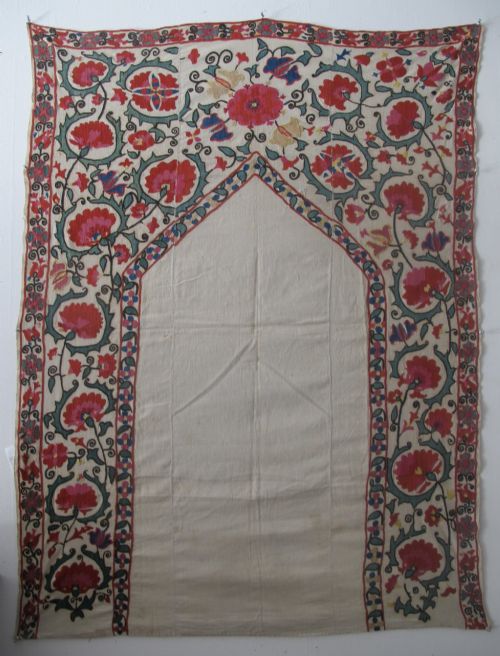
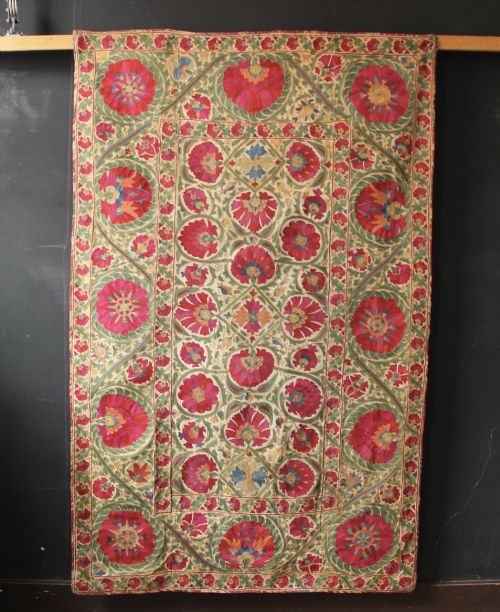
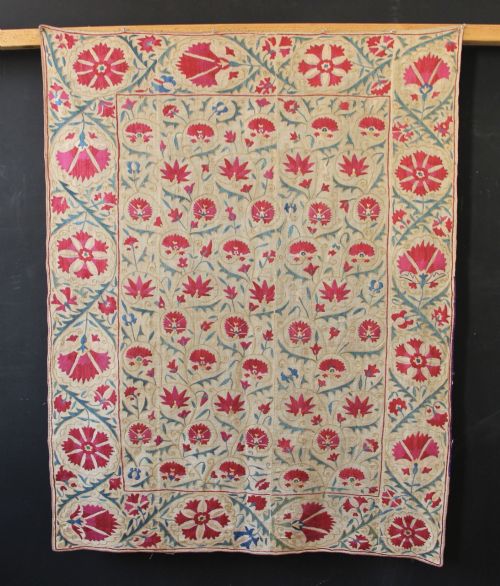
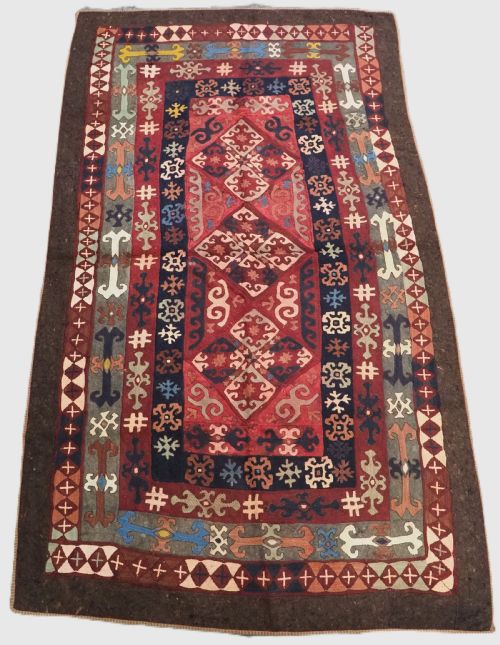
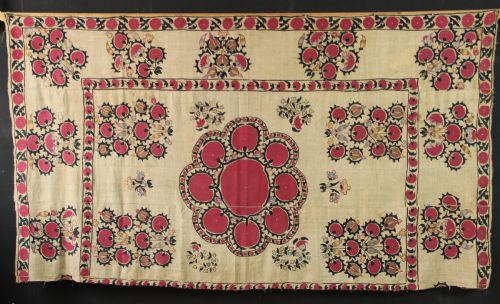
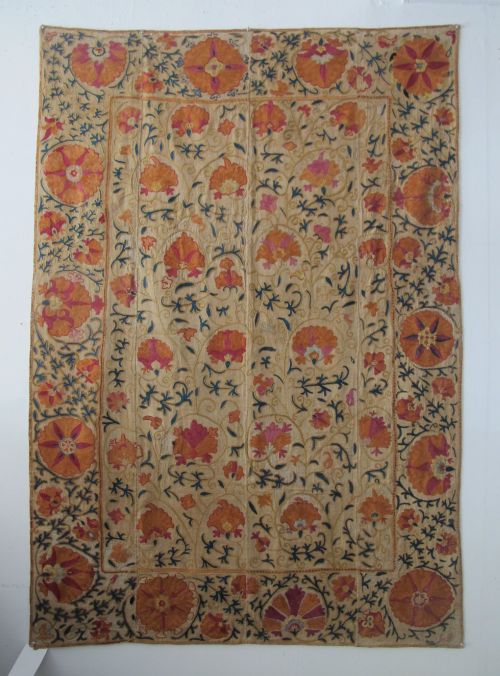
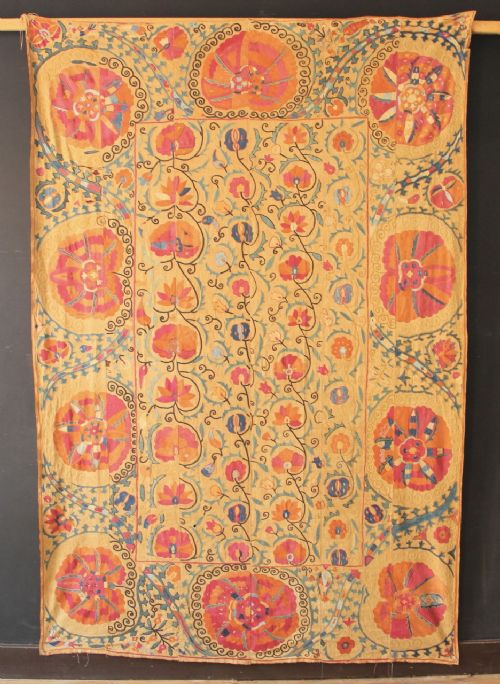
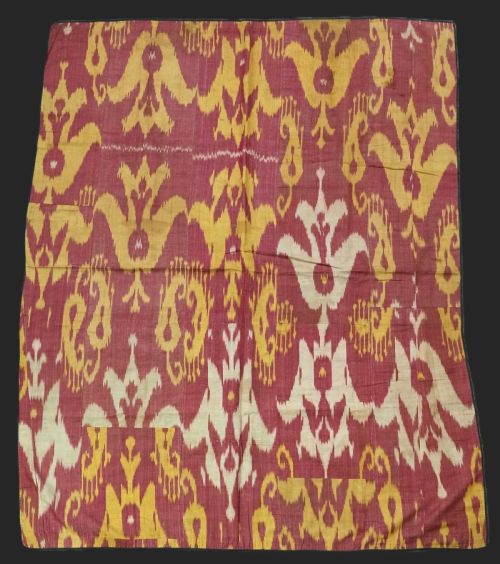
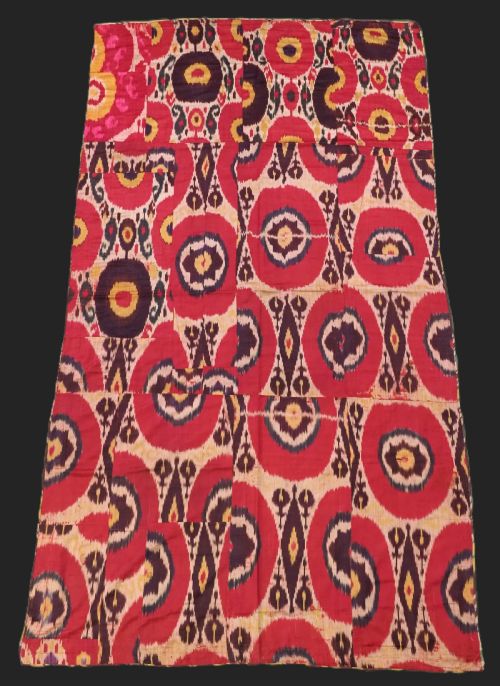
A traditional uzbek wall textile encompasses heavily embroidered wall hangings, panel fragments, and patterned loom-woven fabrics originating from Central Asia. The most common examples seen here are suzanis, which are large decorative embroideries executed in silk thread upon cotton, linen, or wool foundations. Additional forms include ikat fabric panels and tribal rugs created across historic centres such as Bokhara, Samarkand, and Tashkent.
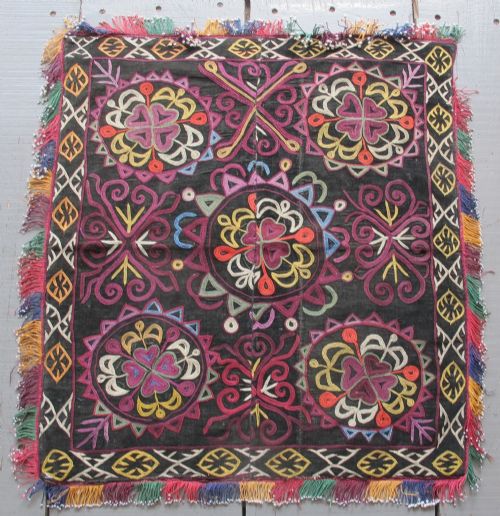
These textiles served traditional domestic functions, operating as marriage dowry items, bed covers, mirror covers, and architectural wall hangings within nomadic and settled households. Regional groups, including Lakai and Tajik makers, contributed distinct geometric and floral motifs that identify the specific origin of each piece. Surviving examples span from the nineteenth century into the early twentieth century.
Panel variations range from full-work suzanis completely covered in needlework to smaller nim suzanis and architectural designs. Woven ikat textiles utilise a resist-dyeing technique on warp threads prior to weaving, producing blurred, dynamic patterns on cotton and silk blends known as adras. Each format reflects the utilitarian artistry and ceremonial traditions of the region.
Materials and construction
Makers utilised natural fibres including hand-spun silk, cotton, linen, wool, and felt as foundations for both embroidered and woven items. Silk embroidery threads provide the lustrous surface detail seen on suzanis, while base fabrics often consist of locally woven cotton or wool grounds. Glass beads occasionally supplement the textile surface in specific tribal works.
Needlework techniques rely primarily on tambour hook work or surface embroidery stitches executed by hand over drawn designs. Ikat panels require meticulous tie-dyeing of warp threads in predetermined patterns before mounting on the loom, creating the characteristic feathered outlines upon weaving. Quilted and padded layers appear in functional garments and specific winter covers.
Some gentleman's coats were heavily padded with cotton for winter warmth, turning elaborate patterns into sturdy cold-weather wear.
Assessing the execution
Quality separates across these textiles according to the density of the needlework and the complexity of the compositional layout. Fully embroidered pieces require immense labour, whereas sparser designs leave more of the foundation ground visible. The fineness of the silk thread and the precision of the stitching dictate the visual depth of the final surface.
Colour saturation and dye stability differentiate master examples from standard workshop production. Natural dye palettes yield rich, harmonious tones that age gracefully across the cotton and silk grounds. The structural integrity of the base fabric and the preservation of original borders further distinguish superior survivals.
The Traditional Uzbek Wall Textile Glossary
- Suzani
- A large, traditionally hand-embroidered tribal hanging from Central Asia. These pieces typically feature floral or medallion designs worked in silk on a cotton or linen ground.
- Ikat
- A dyeing and weaving technique where yarn is resist-dyed prior to mounting on the loom. This process creates distinctive, slightly blurred pattern edges.
- Adras
- A traditional hybrid fabric woven with a silk warp and a cotton weft. It combines the lustre of silk with the durability of cotton.
- Nim Suzani
- A smaller scale variant of the standard suzani wall hanging. These compact textiles were often utilised for specific domestic spaces.
- Lakai
- A distinct tribal group within Central Asia known for bold, geometric embroidered felt rugs and small decorative panels. Their work often employs heavy wool and silk detailing.
Traditional Uzbek Wall Textile: Frequently Asked Questions
How were these textiles used?
These pieces functioned primarily as dowry items, wall decorations, bed covers, and architectural hangings within traditional households.
Families also utilised quilted coats and smaller covers for daily wear and ceremonial presentations.
What is an ikat panel?
An ikat panel is a woven textile created by resist-dyeing warp threads before the weaving process begins.
This technique produces characteristically feathered and dynamic patterns across silk and cotton fabrics.
How do I care for antique textiles?
Protect delicate silk and cotton fibres from direct sunlight to prevent dye fading and material degradation.
Mount pieces professionally using non-destructive methods that distribute weight evenly across the backing fabric.
Where were these pieces made?
Production centred in historic Central Asian regions including Bokhara, Samarkand, Tashkent, and Shakrisabz.
Different towns and tribal groups developed recognisable stylistic signatures in their embroidery and weaving.