

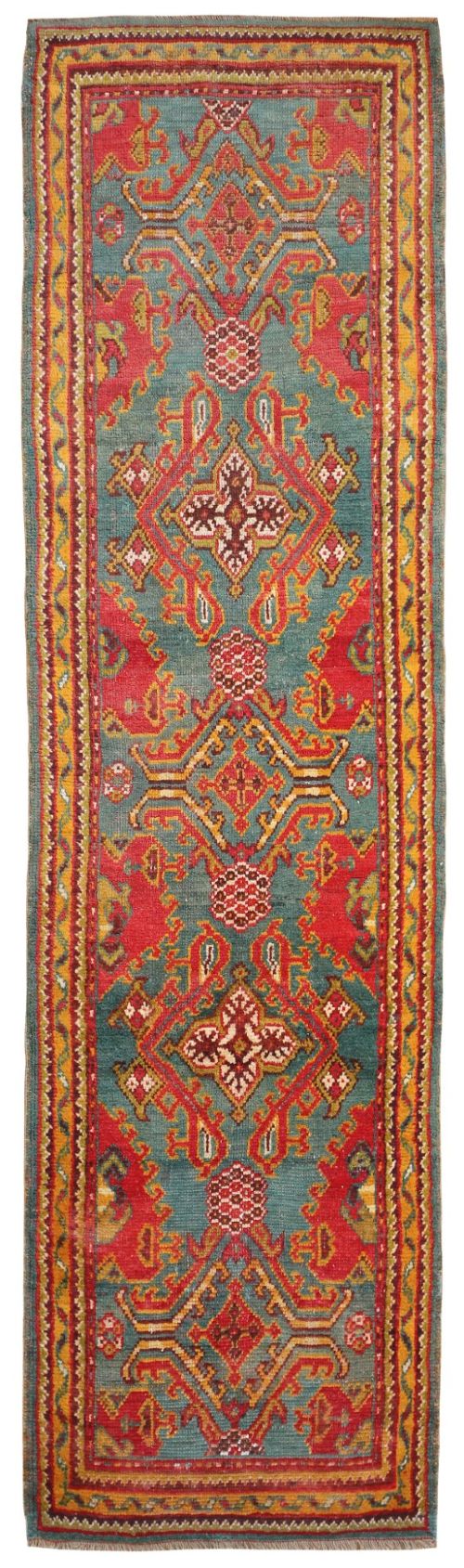



Traditional Ushak Wool Runner
These traditional ushak wool runner examples are classic Anatolian floor coverings sought after for their distinctive wool pile and Ottoman design heritage.
Traditional Ushak Wool Runner
A traditional ushak wool runner is a long, narrow floor covering originating from Anatolia, designed to fit corridors and narrow spaces. These pieces span the late nineteenth and early twentieth centuries, encompassing production dates from eighteen eighty through to nineteen twenty.
The format appears primarily as runner rugs and long carpets, alongside related forms like kilims and area rugs. They carry Ottoman and Turkish stylistic influences, often featuring star ushak designs across the field.
Buyers will encounter items described simply as antique ushak runners, as well as oversized pieces and matched pairs. The range includes specific regional variations such as angora ushak creations.
How traditional ushak wool runner items were made
The construction relies fundamentally on natural wool, occasionally incorporating angora wool for a softer handle and distinct lustre. Foundation threads utilise cotton alongside wool to build a durable base for the knotted pile.
Weavers in the Anatolian region executed these pieces by hand, applying traditional Ottoman motifs and star patterns. The materials are tied securely onto the textile foundation, resulting in resilient floor coverings built to endure heavy foot traffic.
Traditional Ushak Wool Runner Retail Price Guide 2026
Typical asking prices for traditional ushak wool runner among the pieces listed under this phrase on Sellingantiques today, from the lower quarter to the upper quarter. They describe what is for sale here now, not the wider market.
Current listings feature pieces dated across the late nineteenth and early twentieth centuries, specifically from eighteen eighty to nineteen twenty.
What varies in quality
Quality separates through the fineness of the knotting and the handling of the wool material. Angora wool examples offer a different tactile experience compared to standard wool constructions.
Design clarity and the precision of the Ottoman star motifs distinguish superior examples. The integrity of the foundation materials and the preservation of the pile determine the overall standing of each runner.
The Traditional Ushak Wool Runner Glossary
- Ushak
- A term designating rugs and carpets produced in or associated with the town of Ushak in western Anatolia. These textiles are renowned for distinct patterns and high wool quality.
- Kilim
- A flat-woven carpet or rug produced without a pile. These pieces rely on interlocking weft techniques to create geometric patterns.
- Angora Wool
- A fibre sourced from angora goats, noted for its softness and silky sheen. It appears in select antique pieces to impart a specific texture.
- Ottoman
- Pertaining to the design traditions and motifs of the Ottoman Empire. This style heavily influences the floral and star medallions found in these runners.
Traditional Ushak Wool Runner: Frequently Asked Questions
Where were these runners made?
These runners were produced in Anatolia, specifically centred around the traditional weaving hub of Ushak in Turkey.
The production methods reflect long-standing Ottoman craft traditions passed down through generations of local weavers.
How do I care for my rug?
Vacuum gently without a rotating brush roll to protect the delicate wool and cotton fibres over time.
Professional cleaning suited to antique textiles ensures the natural dyes and materials remain stable for decades.
What rooms suit a long runner?
Narrow formats fit naturally into hallways, corridors, and long entryways where floor protection is needed.
They also work well alongside kitchen islands or placed beside beds to add warmth underfoot.
How old are these pieces?
The available examples date from the late nineteenth century through to the early decades of the twentieth century.
Production periods in this collection span specifically from eighteen eighty up to nineteen twenty.