
Traditional Upholstered Reading Chair
These traditional upholstered reading chair examples offer deep comfort and robust frames, built for hours of quiet study or repose.
Traditional Upholstered Reading Chair
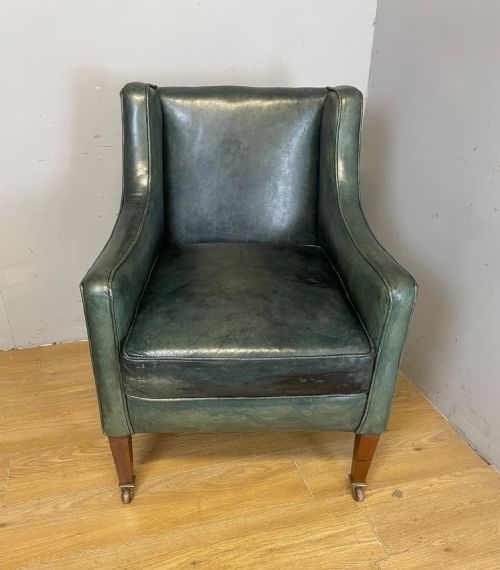
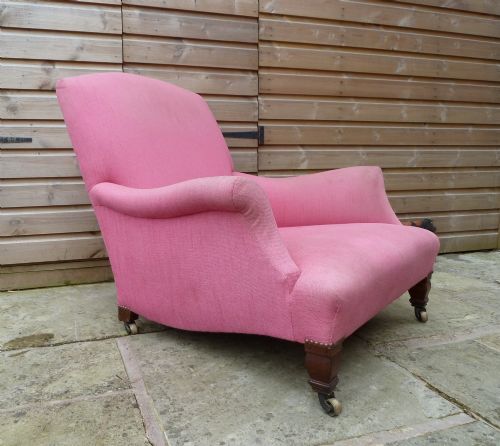
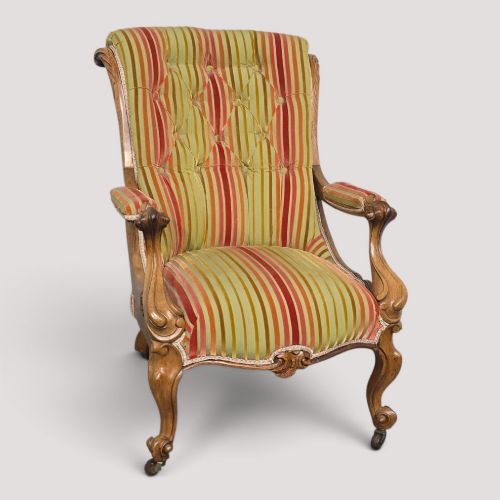
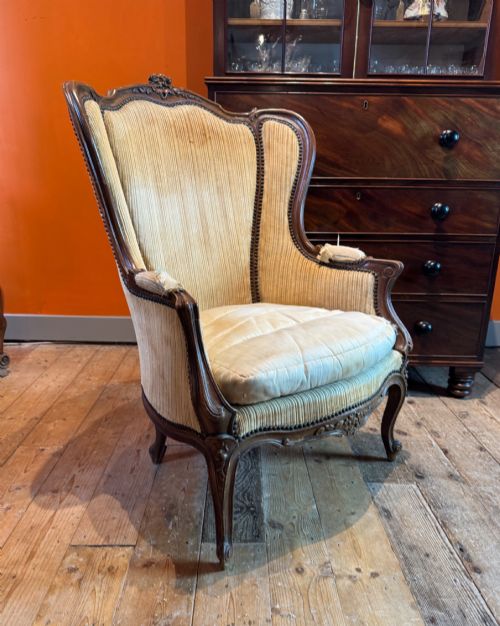
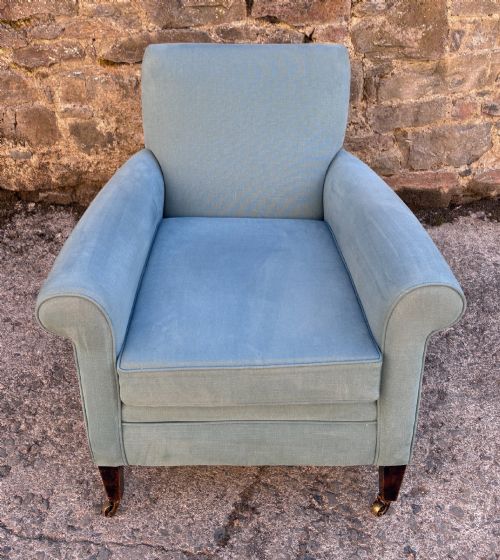
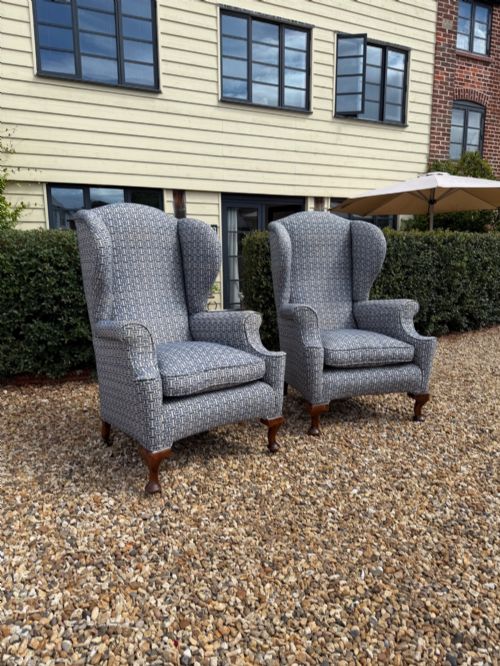
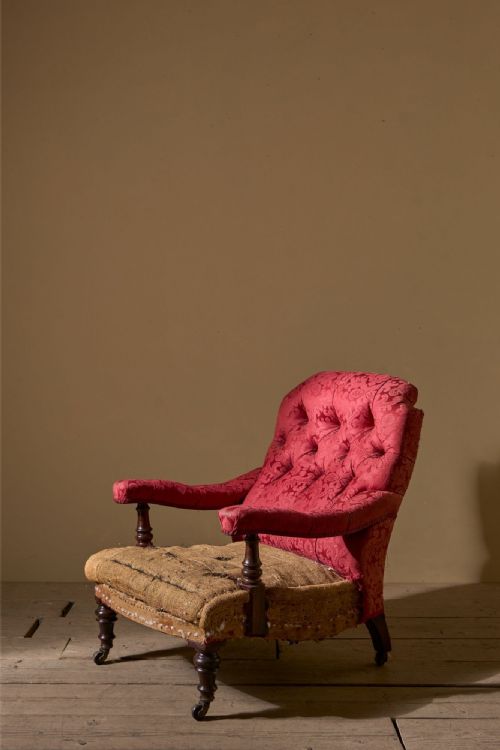
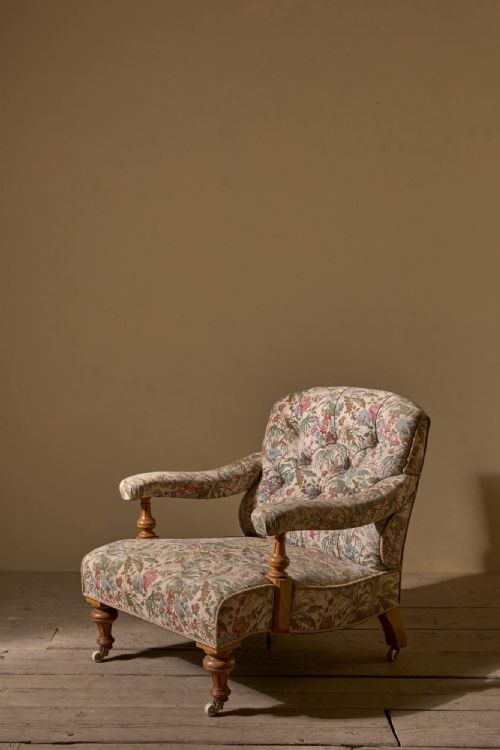
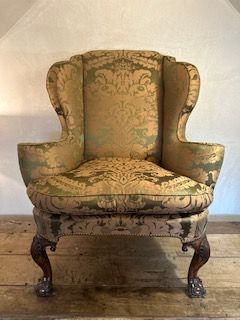
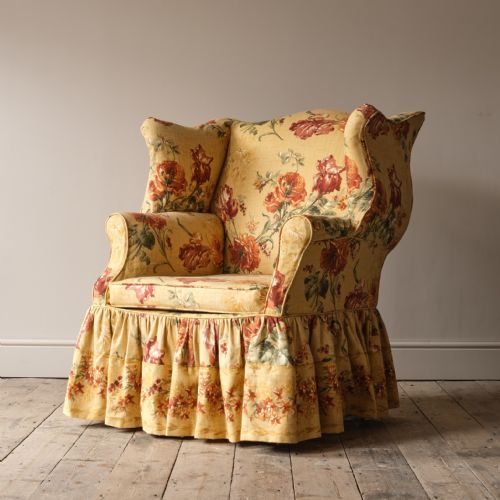
A traditional upholstered reading chair brings together generous seating proportions and supportive armrests designed for long hours of study or repose. Buyers searching for a traditional upholstered reading chair most frequently encounter mahogany or walnut framed library and wingback armchairs originating from the Georgian, Victorian, and Regency periods.
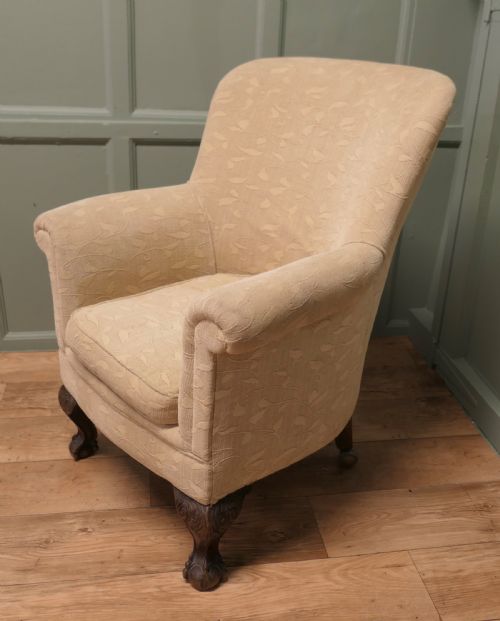
The selection ranges from large scale English country house open armchairs to diminutive bucket and barrel back shapes upholstered in fabric, velvet, hessian, and calico. Many examples display specific regional characteristics, such as Scottish country house armchairs or pieces executed in the distinct manners of George III and Queen Anne.
Makers and workshops including Howard and Sons, Gillows, Morris and Co, and Morison and Co appear among the listings, alongside numerous pieces influenced by Shoolbred or the aesthetic movement. These armchairs often feature exposed wooden frames in mahogany, walnut, or rosewood paired with feather filling or traditional stuffing.
Materials and construction methods
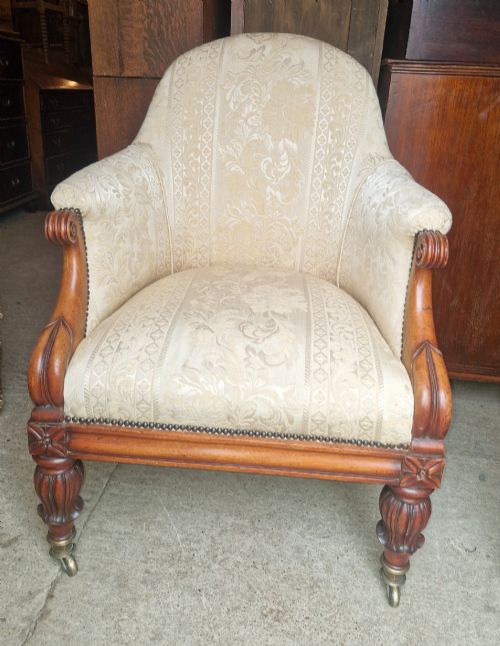
Frames are constructed from solid hardwoods such as mahogany, walnut, and rosewood, often featuring carved details, reeded legs, or brass castors. These structural woods provide the necessary strength to support deep seating and heavy use over centuries.
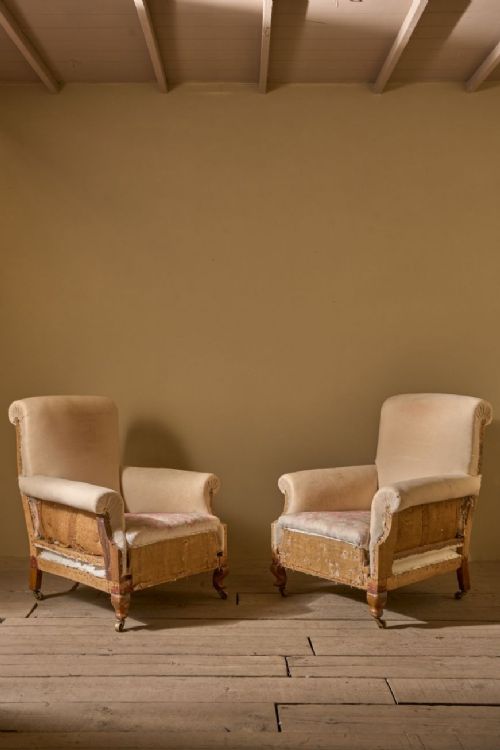
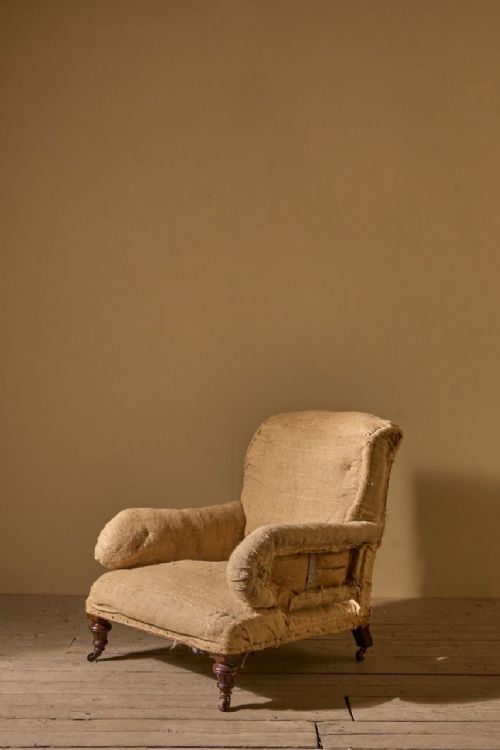
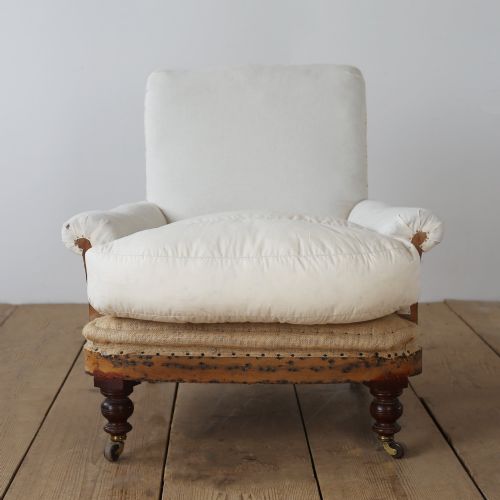
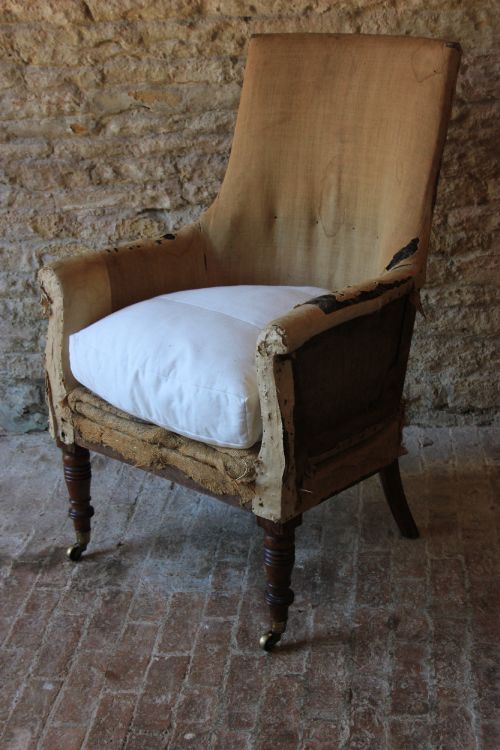
Upholstery relies on traditional stuffing materials beneath outer layers of fabric, velvet, calico, hessian, and wool plaid. Feather filling is frequently employed to ensure a soft seat, while exposed wooden elements showcase the joinery and grain of the chosen timber.
Some Edwardian barrel back chairs are delightfully diminutive in scale, looking rather like miniature armchairs made for exceptionally tidy readers.
Distinctions in craftsmanship and design
The quality of a traditional upholstered reading chair rests on the integrity of its wooden frame and the precision of its joinery. Pieces by established workshops like Howard and Sons or Gillows demonstrate superior timber selection and refined carving on legs and arm supports.
Upholstery execution also defines the upper tier, where hand-stitched internal stuffing and high grade outer fabrics such as silk velvet or wool maintain their shape and support far better than lesser commercial restorations.
Howard and Sons·Morris and Co·Morison and Co·Gillows
The Traditional Upholstered Reading Chair Glossary
- Wingback
- An armchair with side panels, or wings, attached to the back of the chair designed to shield the user from draughts and trap heat from a fireplace.
- Bergère
- An enclosed armchair with stuffed upholstery on the back and armrests, typically featuring an exposed wooden frame.
- Library chair
- A heavy, comfortable armchair designed for reading rooms, frequently framed in mahogany or walnut with padded armrests.
- Hessian
- A coarse woven fabric, often made from jute or hemp fibres, traditionally utilised beneath outer upholstery layers as a foundation for stuffing.
- Calico
- A plain-woven textile used as a tight under-upholstery layer to contain interior stuffings before the application of decorative top fabrics.
- Reeded
- A decorative moulding consisting of parallel convex strips resembling bundled reeds, commonly carved into chair legs during the Regency and Victorian eras.
Traditional Upholstered Reading Chair: Frequently Asked Questions
How do I date a traditional upholstered reading chair?
Dating relies on examining the timber species, leg profiles, joinery methods, and upholstery foundations visible beneath the fabric.
Earlier pieces from the Georgian era utilise dense mahogany and hand-carved details, while later Victorian and Edwardian examples introduce factory-turned legs and varied internal stuffing materials.
Where were these chairs used?
These armchairs were primarily situated in private libraries, studies, and drawing rooms of large country houses.
They provided comfort for reading and writing, positioned near fireplaces or tall bookshelves where their high backs and upholstered wings protected against draughts.
How should I care for a traditional upholstered reading chair?
Care involves protecting the exposed wooden frame from direct sunlight and dry indoor heat to prevent timber splitting.
Upholstery requires regular gentle vacuuming with a soft brush attachment, and professional cleaning for delicate textiles like velvet or silk blends.