

Traditional Upholstered Lounge Chair
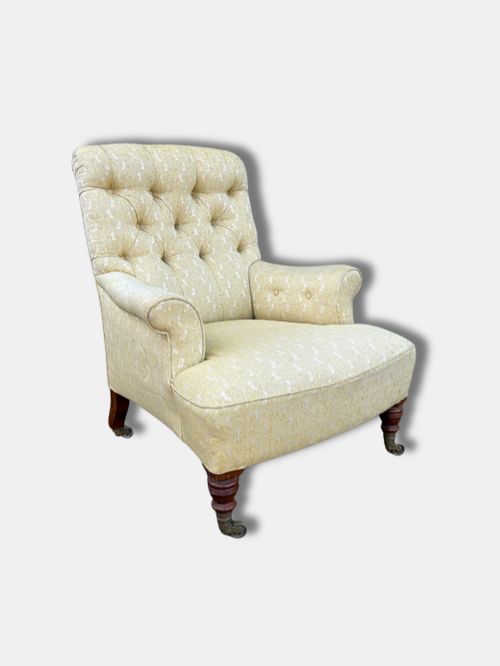
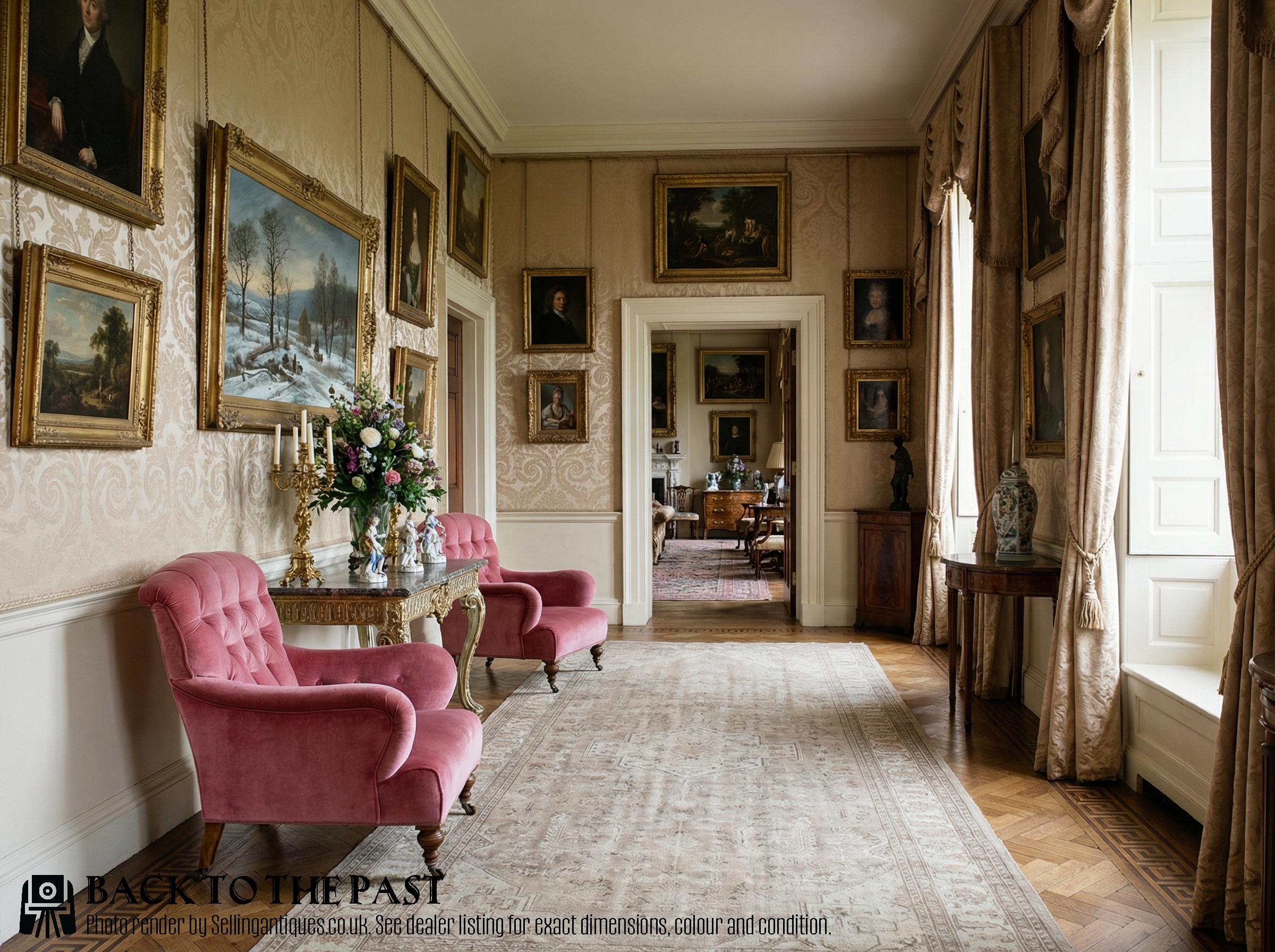
A traditional upholstered lounge chair brings deep seating comfort, robust timber frames and period character into a sitting room.
Traditional Upholstered Lounge Chair
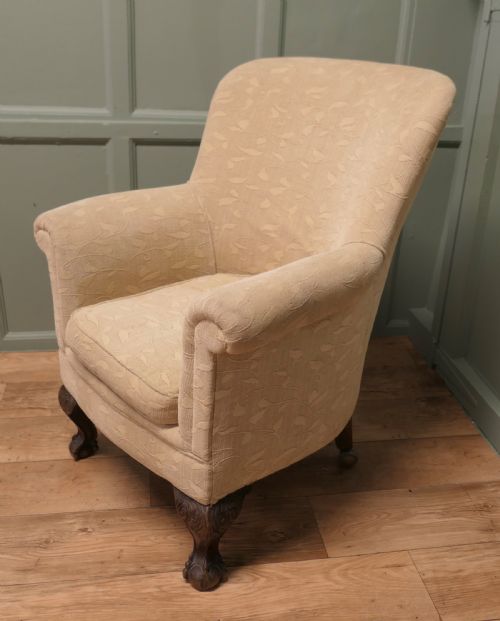
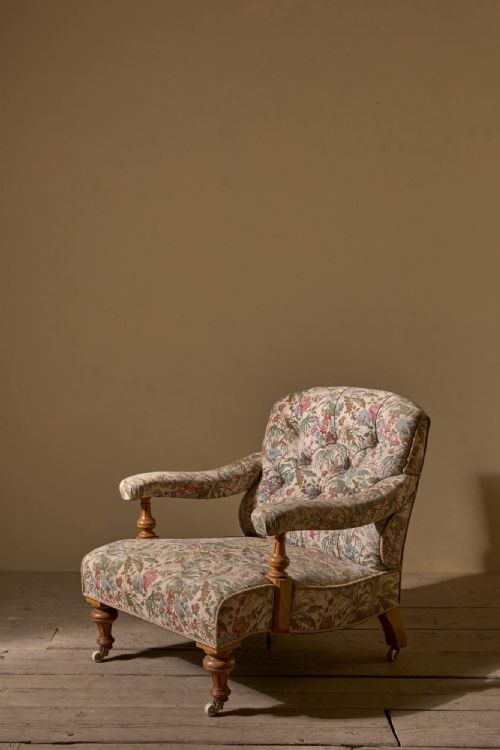
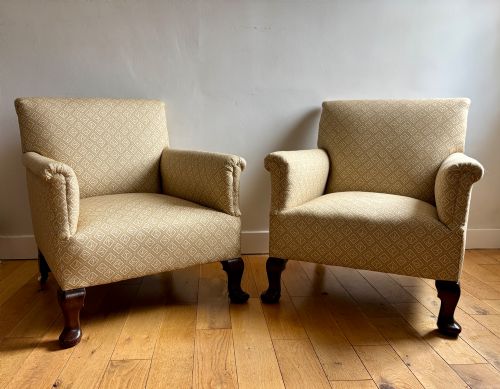
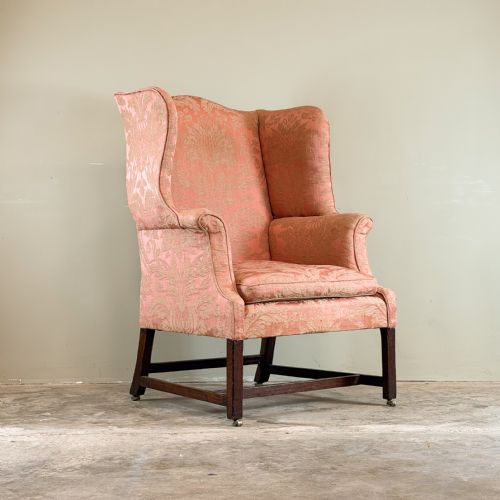
A traditional upholstered lounge chair spans heavy Victorian wingbacks, low-slung Edwardian easy chairs and deep-sprung country house armchairs. These pieces combine exposed wooden frames in mahogany, walnut, oak or rosewood with fully padded seats designed for sustained comfort.
Most examples found here date from the nineteenth and early twentieth centuries, including revival styles that draw on Queen Anne, Regency and Carolean designs. Makers such as Howard and Sons, Whytock and Reid, and Morris and Co shaped the standard for sprung comfort and tailored fabric finishes.
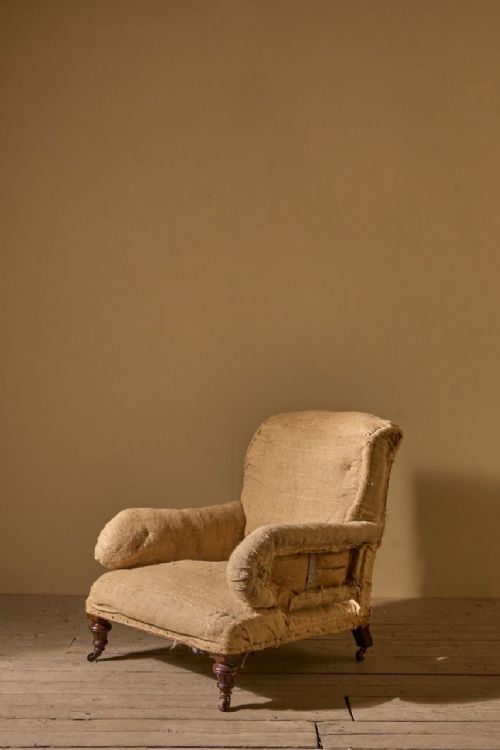
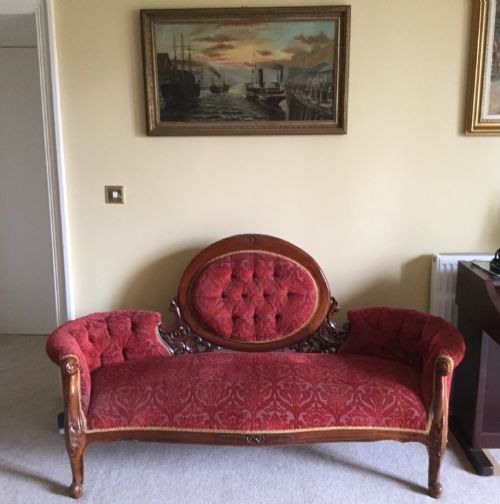
Beyond standard armchairs, related seating types appear across the inventory, including daybeds, slipper chairs, chaise longues and matching sofas. Buyers encounter both thoroughly restored pieces ready for daily use and frames retaining older calico or hessian foundations.
Materials and construction methods
Frames rely on sturdy hardwoods like mahogany, walnut, oak and beech, providing a rigid skeletal structure capable of supporting complex interior springing. Joinery methods prioritise traditional tenons and dowels to withstand the outward pressure of heavy coil springs over decades of use.
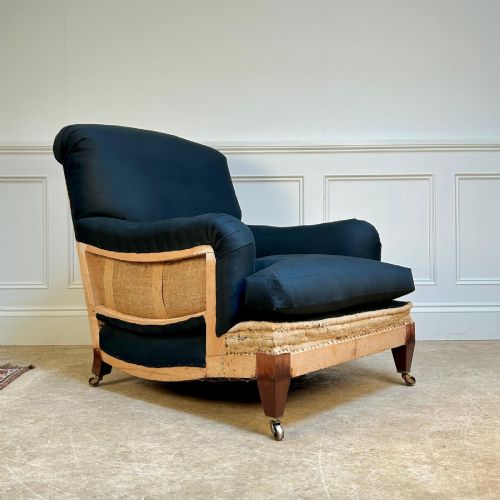
Traditional upholstery builds up layers using hessian webbing, coiled steel springs hand-tied with twine, and stuffings such as horsehair or feather filling. Outer covers range from contemporary wool plaids and deep pile brocade to velvet, silk and traditional cotton calico.
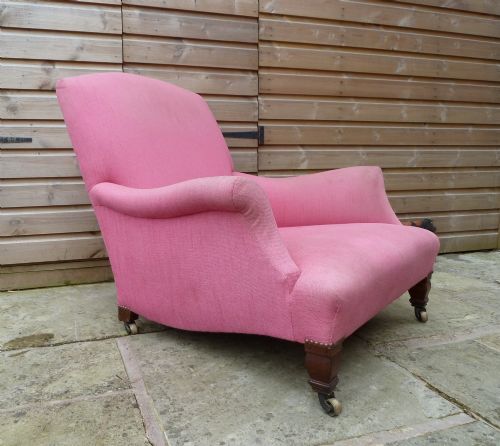
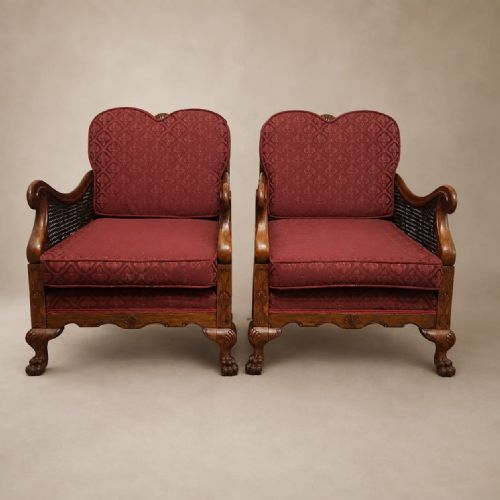
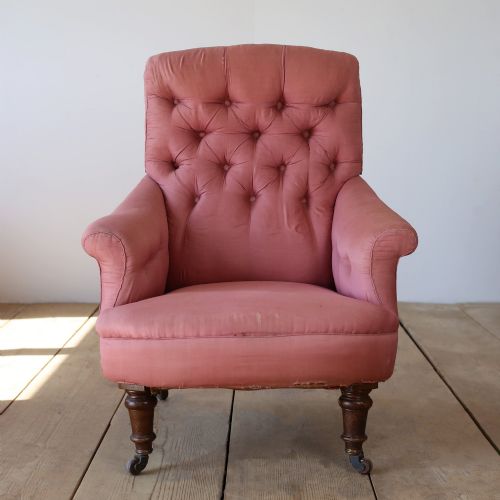
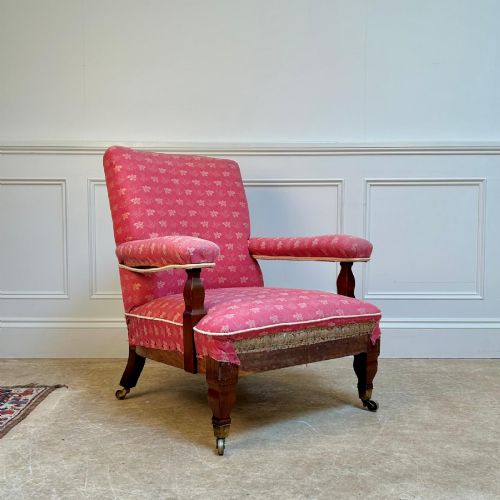
Exposed wooden elements feature hand-carved details, polished mahogany frames or split cane bergère panels. Brass castors frequently finish the feet of heavier Victorian and Edwardian armchairs to ease movement across heavy carpets.
Listings include French Provincial and Regency styles alongside British country house armchairs and daybeds.
Assessing craftsmanship and condition
Quality rests heavily on the integrity of the underlying frame and the retention of traditional sprung interiors rather than modern foam blocks. Superior pieces exhibit tight hand-tied coil spring systems that distribute weight evenly without sagging.
The precision of the exterior textile work marks the difference between average production and high workshop standards. Hand-pleated rolls, precise pattern matching across cushions and piping, and durable feather fillings distinguish workshop pieces from later utility upholstery.
Original timber condition, including untouched polished mahogany or walnut frames without structural splits, elevates a piece. Makers' stamps on castors or frame rails provide definitive proof of origin from workshops like Howard and Sons or Hampton and Sons.
Howard and Sons·Whytock and Reid·Morris and Co·Hampton and Sons
The Traditional Upholstered Lounge Chair Glossary
- Bergère
- An enclosed armchair with stuffed upholstery and cane-panelled sides or back. The wooden frame is usually exposed and polished.
- Wingback
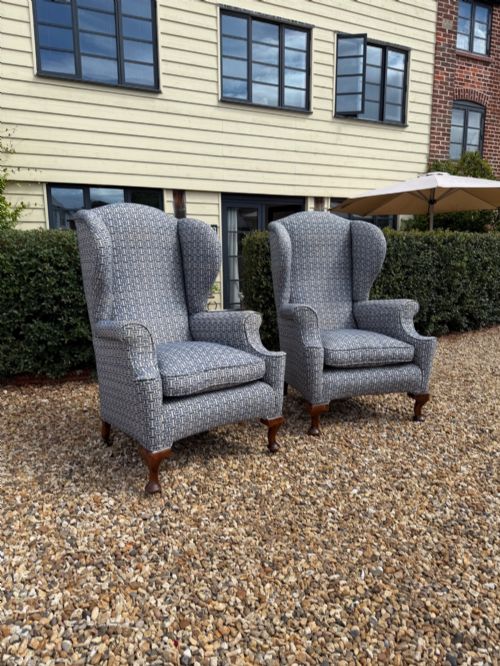
- An armchair featuring side panels attached to the arms and framing the back. These wings originally blocked draughts and retained heat from a fireplace.
- Calico
- A plain-woven cotton textile used as an inner lining beneath top covers. Antique armchairs often retain historic calico underneath newer decorative fabrics.
- Hessian
- A coarse woven fabric made from jute fibres, utilised as strong webbing support beneath interior seat springs and stuffing.
- Feather filling
- A soft interior stuffing derived from bird feathers used in cushions to provide pliable comfort. High-end traditional lounge chairs frequently employ feather pads for seat and back cushions.
Traditional Upholstered Lounge Chair: Frequently Asked Questions
What defines a traditional upholstered lounge chair?
These seats combine exposed timber frames with deep-sprung interiors, heavy padding and heritage textile covers. They originate mostly from Victorian, Edwardian and early twentieth-century workshops.
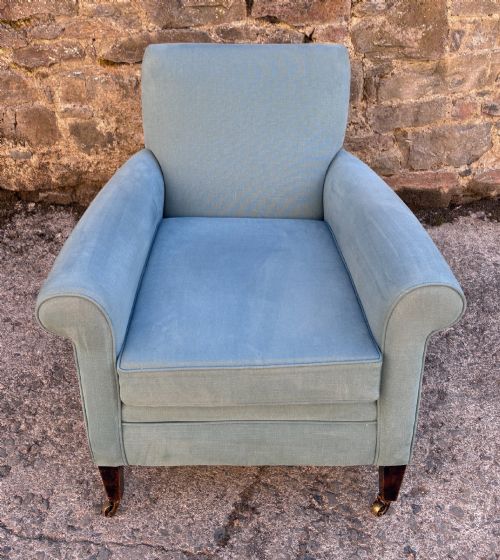
Such chairs prioritise ergonomic comfort and substantial proportions, often featuring rolled arms, deep seats and turned wooden legs fitted with brass castors.
How do I identify Howard and Sons armchairs?
Authentic pieces by this maker often feature stamped leg numbers, brass castor stampings and signature webbed foundations designed for deep comfort. Their proportions are distinctively low and deep.
Many later armchairs borrow this specific aesthetic, so checking for maker stamps on the back legs or castors is essential for attribution.
Are these chairs suitable for daily seating?
Most antique lounge chairs are built with robust hardwood frames and resilient coil springs that withstand regular use. Many listings feature recent reupholstery in durable fabrics like wool plaid or velvet.
If a piece retains fragile antique silk or delicate brocade, careful placement or professional re-covering in sturdy material ensures longevity in a busy room.
How do I tell Victorian from Edwardian chairs?
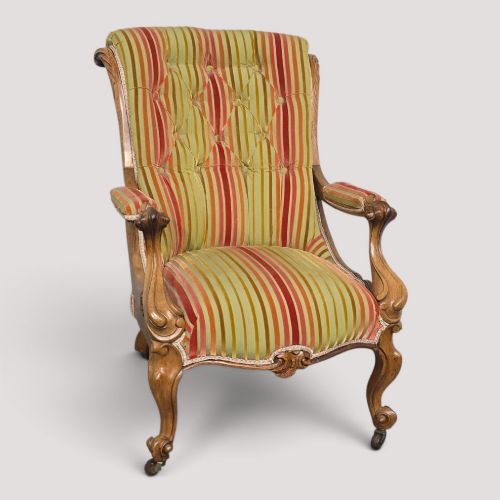
Victorian armchairs tend to feature heavier proportions, darker polished mahogany or walnut frames, button-backed upholstery and grand velvet finishes. They lean towards formal presence.
Edwardian examples often display lighter frames, split cane bergère panels, relaxed cushion arrangements and brighter woods, reflecting a shift toward informal country house comfort.