


Castor Footed Armchair
These castor footed armchairs combine deep-seated comfort with period upholstery, offering enduring support for any traditional drawing room or study.
Castor Footed Armchair
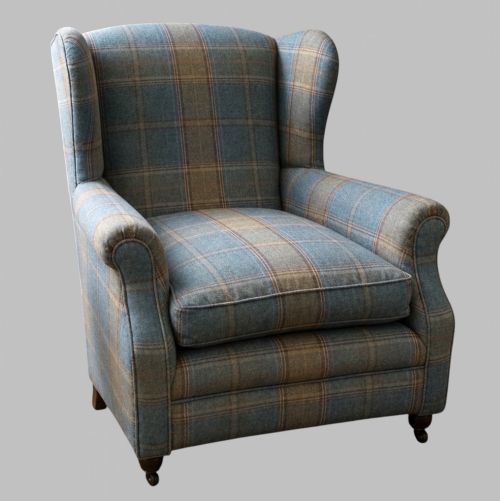
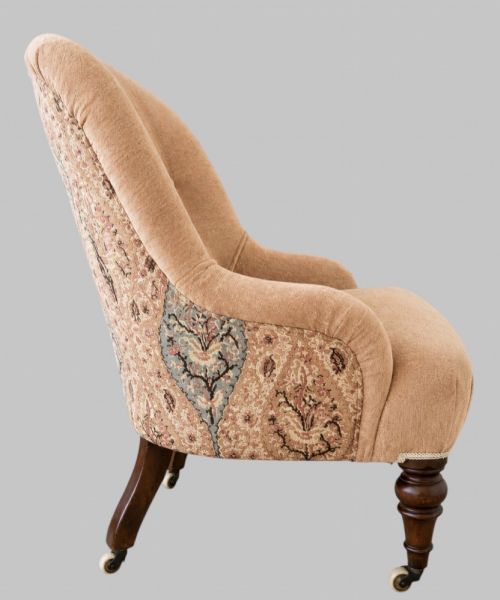
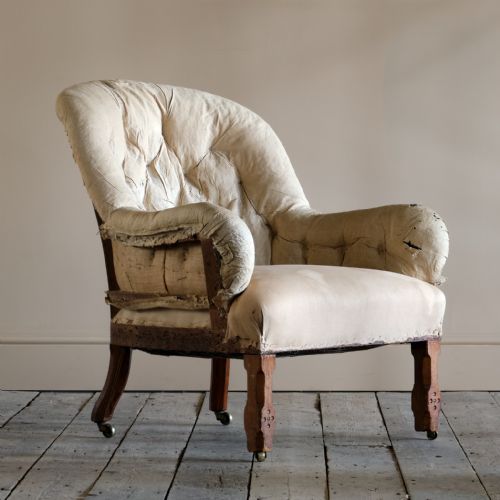
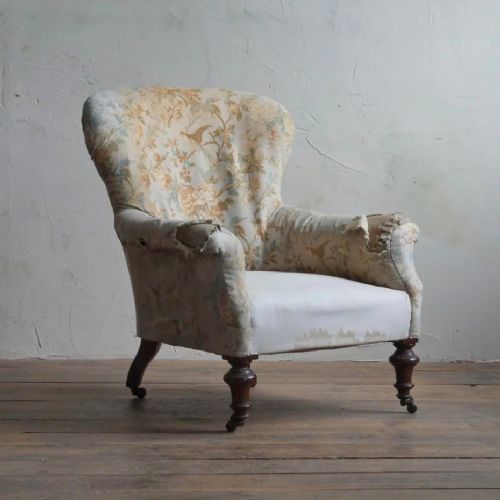
When searching for a castor footed armchair, buyers encounter nineteenth-century and Edwardian seating designed for deep-seated domestic comfort. The selection includes wingback chairs, nursing chairs, and open armchairs mounted on small castors for mobility.
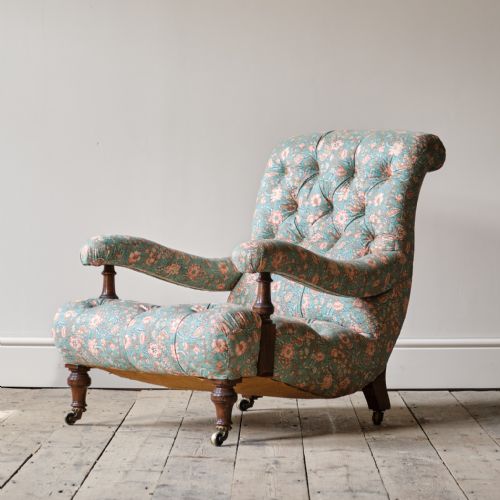
Victorian and Edwardian examples dominate the listings, alongside English country house pieces and mid-nineteenth-century library seating. These chairs often feature upholstered frames in velvet, calico, or patterned fabric supported by hardwood structures.
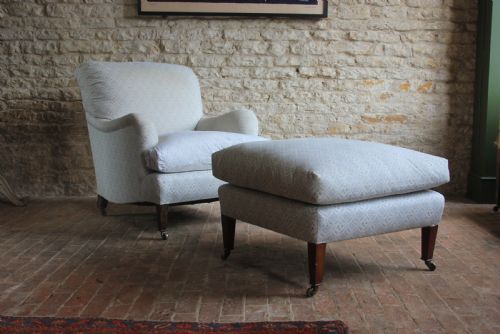
Makers such as Holland & Sons and Gillows appear in the record, alongside stamped pieces and Howard and Sons designs. Forms range from button-back gentleman's chairs to low occasional chairs and deep armchairs with matching footstools.
Materials and construction
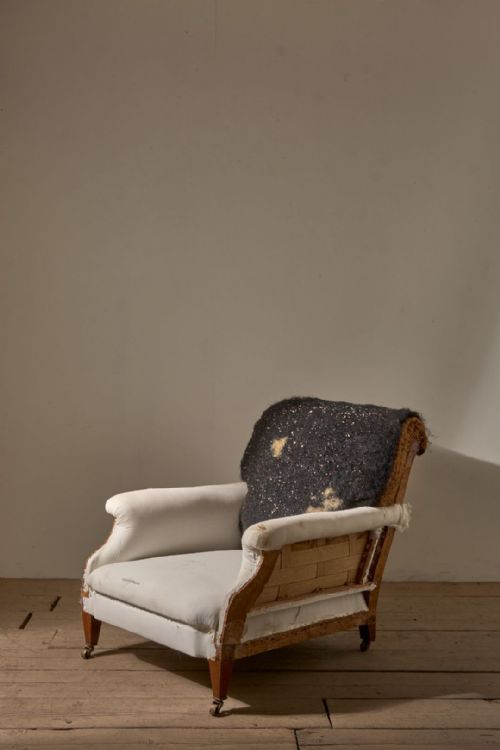
The internal frames utilise solid hardwoods such as mahogany, paired with iron-back supports in specialised nursing chairs. Traditional upholstery methods employ hessian webbing, springs, and stuffing beneath top covers of velvet, damask, or woven wool fabric.
Metal castors, typically fashioned from brass, are fitted to the base of the wooden legs to allow smooth movement across heavy carpets. Exposed timber elements receive polish or wax finish to highlight the grain of the underlying wood.
A few armchairs come with matching footstools, proving that Victorian loungers took their afternoon repose very seriously indeed.
Factors of quality
Quality rests upon the integrity of the underlying hardwood frame and the tautness of the traditional sprung upholstery. Maker attributions or legible stamps on the timber or castors elevate an armchair above standard commercial production of the period.
The balance of proportions between the deep seat, the height of the back, and the scale of the brass castors dictates visual harmony. Superior examples retain their original internal stuffing and retain supportive tension across the arms and back.
Holland & Sons·Howard & Sons·Gillows
The Castor Footed Armchair Glossary
- Castor
- A small wheel mounted on a swivel assembly at the foot of a chair leg to permit easy rolling. These are commonly cast in brass and attached to nineteenth-century seating.
- Wingback
- An armchair featuring side panels attached to the arms and rising to the back to deflect draughts. This form provides substantial head and shoulder support.
- Button-back
- An upholstery technique where depressions are formed in the padding by stitching through to the frame and securing with cloth buttons. This creates a diamond pattern across the backrest.
- Spoonback
- A chair back shaped in a concave curve resembling the bowl of a spoon, popular during the Victorian period. This profile fits the natural contours of the sitter's spine.
- Nursing chair
- A low-seated upholstered chair designed for comfort near a nursery hearth or bedroom fire. The low profile allows the occupant to tend to infants with ease.
Castor Footed Armchair: Frequently Asked Questions
What is a castor footed armchair?
A castor footed armchair is a nineteenth-century or Edwardian upholstered seat raised on small wheels for mobility. These pieces range from low nursing chairs to deep country house armchairs.
They combine robust hardwood frames with sprung upholstery and heavy fabric covers, designed for prolonged comfort in domestic reception rooms.
How do I identify Victorian armchairs?
Victorian armchairs are identified by characteristic forms such as spoon backs, button-tufted upholstery, and turned wooden legs fitted with brass castors. The proportions tend to be generous and heavy.
Construction details often include exposed mahogany or hardwood frames, iron-back supports, and traditional horsehair or spring stuffing beneath velvet or calico.
Where were these armchairs used?
These armchairs served primarily in private libraries, drawing rooms, and bedrooms of large English country houses and town residences. Low nursing chairs were specifically placed in nurseries or intimate sitting rooms.
Their mobility on castors allowed servants or residents to reposition heavy seating easily for fireside warmth or conversation.
How do I care for antique upholstery?
Care for antique upholstery requires regular gentle vacuuming with a soft brush attachment to remove dust from velvet and woven fabrics. Keep the seating away from direct sunlight to prevent fabric fading.
Period brass castors benefit from occasional dry wiping, and exposed wooden legs can be treated sparingly with a traditional beeswax polish.