
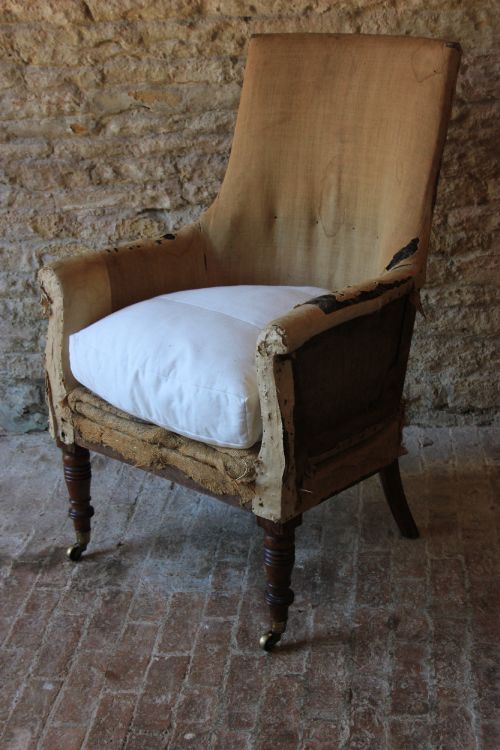
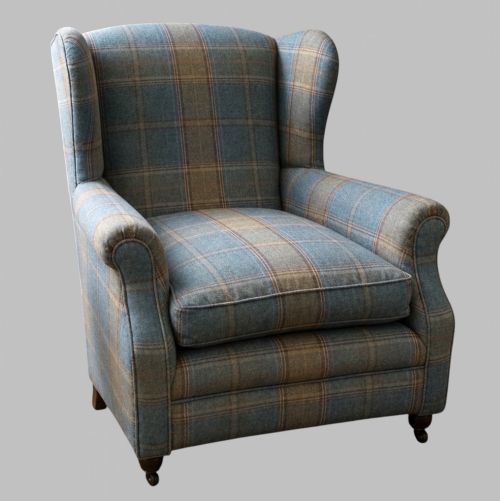
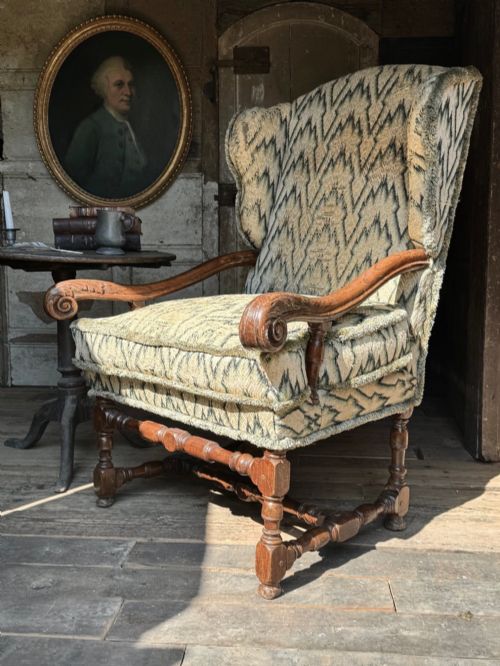


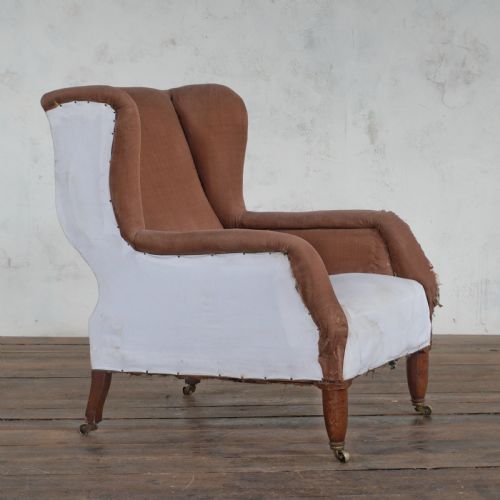


Turned Leg Wingback Chair
These turned leg wingback chairs offer high-backed draught exclusion and upright comfort, spanning multiple centuries of English and continental seating design.
Turned Leg Wingback Chair
A turned leg wingback chair provides deep seating protection from draughts through its characteristic upholstered wings and sturdy wooden support framework. Buyers encountering this search phrase will find examples ranging across the eighteenth, nineteenth, and early twentieth centuries.
The materials span from durable oak and rich mahogany to walnut, paired with diverse textiles including velvet, leather, calico, hessian, and ticking fabric. Forms vary between traditional upright wingbacks, barrel back variants, and occasional Howard style proportions.
Origin points stretch from English country houses to French provincial workshops and Regency libraries. Pieces often carry specific regional markers or workshop attributions from makers such as Thomas Sopwith and Howard & Sons.
Construction and materials
Makers shaped the structural frames using solid hardwoods such as oak, mahogany, and walnut, turning the lower support legs on a lathe to create cylindrical or profiled shafts. These robust wooden skeletons supported heavy upholstery stuffing held beneath outer layers of fabric, velvet, leather, or hessian.
Upholstery techniques involved securing natural textiles like calico and ticking directly to the internal webbing and padding before applying decorative outer covers. Brass elements occasionally appeared in castors or structural hardware fixed to the wooden bases.
Early draught-busting wings doubled as gossip mufflers, keeping secrets safe beside the hearth.
Assessing craftsmanship and condition
Quality rests upon the structural integrity of the timber frame and the precision of the turned leg joinery. Superior examples maintain rigid stability in the arms and back without movement in the joints.
The standard of upholstery work and textile selection dictates the finish of each piece. Original materials, whether aged leather, silk velvet, or sturdy ticking, reveal the authenticity of the period execution.
Howard & Sons·Thomas Sopwith
The Turned Leg Wingback Chair Glossary
- Wingback
- An armchair featuring protective side panels attached to the arms and back to shield the sitter from draughts. These upholstered extensions became standard in domestic seating from the seventeenth century onward.
- Turned leg
- A wooden support shaped on a lathe to produce cylindrical, bulbous, or fluted profiles. This decorative woodworking technique appears frequently on chair and table bases across various historical periods.
- Barrel back
- A seating form where the upholstered back curves continuously around to form enclosed armrests. This design creates a semi-circular enclosure that enhances warmth and privacy.
- Ticking
- A tightly woven, durable cotton or linen fabric traditionally used to contain feather or down stuffing. Its striped pattern often serves as an authentic under-upholstery layer in period seating.
Turned Leg Wingback Chair: Frequently Asked Questions
What defines a turned leg wingback chair?
This seating combines upholstered side wings designed to block room draughts with lathe-turned wooden legs supporting the frame. The proportions usually feature a high back and generous armrests.
Such chairs evolved to keep sitters warm near fireplaces in older properties, retaining their enclosed silhouette through successive stylistic periods.
How do I date an older wingback chair?
Dating relies upon examining the timber species, the turning style of the legs, and the internal upholstery construction methods. Earlier examples tend to utilise solid oak frames, while later Victorian and Edwardian pieces frequently employ mahogany or walnut.
Makers' stamps, paper labels, or specific textile choices also help establish the chronological origin of individual pieces.
Where were these chairs used historically?
They served primarily in drawing rooms, libraries, and country house parlours where draughty stone or timber floors required effective windbreaks. The high wings trapped heat around the head and shoulders of the occupant.
Library spaces favoured reading chairs upholstered in leather or heavy wool fabrics for durability and comfort.
How should I care for antique upholstery?
Maintenance involves gentle vacuuming with a soft brush attachment to remove dust from delicate textiles like velvet, wool, or ticking. Direct sunlight should be avoided to prevent fabric fading and timber degradation.
Leather surfaces benefit from appropriate conditioning treatments to keep the material supple without blocking its natural grain.