



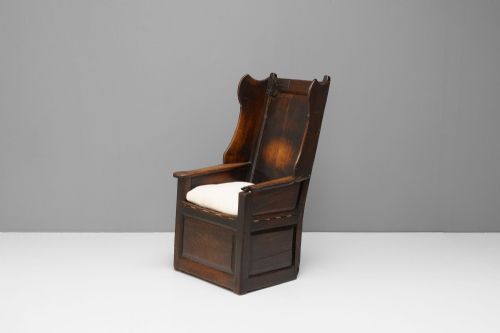


English Wingback Seat
An english wingback seat brings deep comfort and traditional craft to a room, offering sheltered seating shaped by centuries of social habit.
English Wingback Seat
An english wingback seat is a traditional upholstered armchair designed to shield the sitter from drafts and retain fireplace warmth. The pieces found here range from eighteenth-century examples to pieces from the early twentieth century, including Edwardian and nineteen-thirties models.
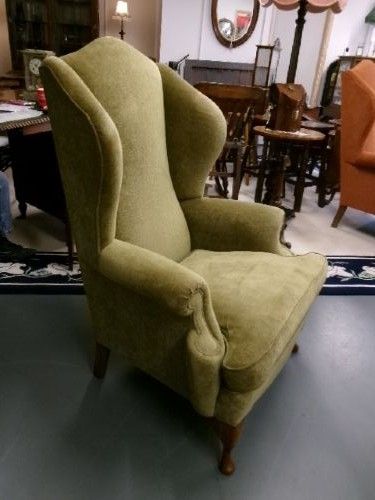
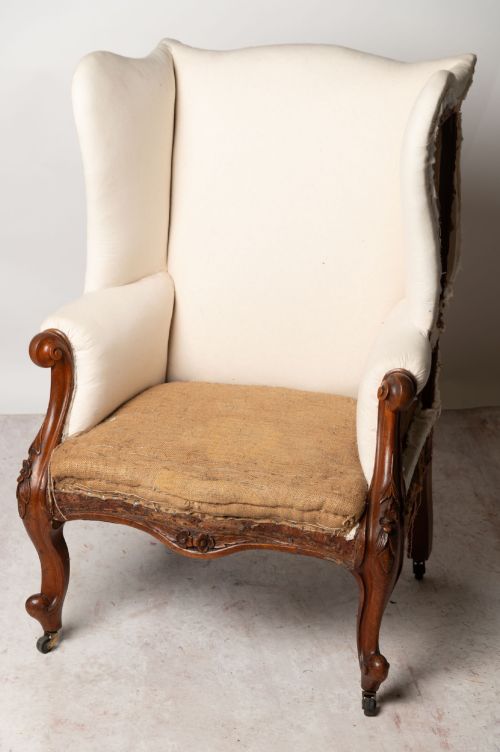
The form appears in several distinct stylistic interpretations on this page, including Queen Anne style, Victorian Rococo Revival, and Georgian style. Buyers also encounter related seating forms such as children's chairs, settees, and lambing chairs.
Most entries showcase upholstered finishes in fabric, leather, or velvet, supported by traditional timber frames in oak or mahogany. A buyer seeking an english wingback seat will find both antique origins and revival pieces built to enduring proportions.
How they were made
Makers built the structural frame from hardwoods like oak and mahogany, ensuring rigid support for daily use. Timber forms the legs and internal skeleton, often supplemented by brass details on specific models.
Traditional upholstery techniques applied fabric, leather, or velvet over layered stuffing, with certain twentieth-century pieces utilising feather filling for added softness.
English Wingback Seat Retail Price Guide 2026
Typical asking prices for english wingback seat among the pieces listed under this phrase on Sellingantiques today, from the lower quarter to the upper quarter. They describe what is for sale here now, not the wider market.
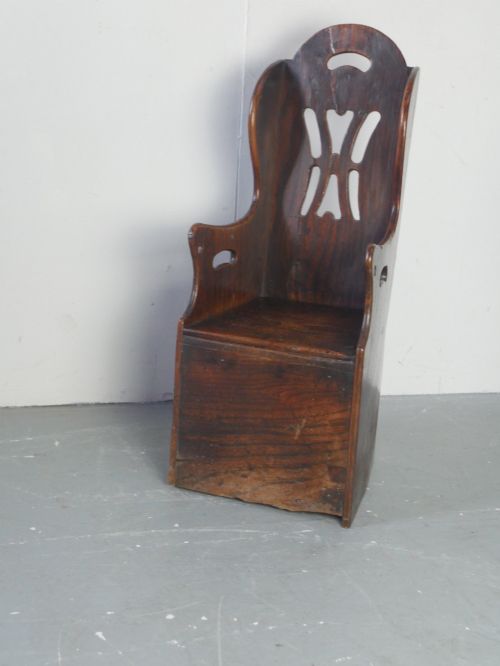
The selection includes a tiny eighteenth-century child's chair, proving that comfort and draft protection mattered just as much for the youngest family members.
What varies in quality
The distinction between standard and superior pieces rests on the integrity of the timber frame and the depth of the upholstery work. Hand-finished frames in dense hardwood demonstrate greater structural resilience than later revival counterparts.
Upholstery materials also dictate the character of the piece, where heavy woven fabrics, supple leather, or rich velvet reflect higher initial investment and careful upkeep over the decades.
The English Wingback Seat Glossary
- Wingback armchair
- An upholstered seat featuring characteristic side panels attached to the arms to deflect drafts. This form evolved to protect sitters near open hearths.
- Georgian style
- A design aesthetic drawing upon the classical proportions of the eighteenth century. Pieces of this style often reappear in later revival periods.
- Lambing chair
- A traditional form of enclosed seat often constructed with timber and upholstered elements. These items offer a rustic alternative to standard parlour armchairs.
- Victorian Rococo Revival
- A nineteenth-century revival movement characterised by ornate carved woodwork and flowing lines. It represents a more decorative approach to domestic seating.
English Wingback Seat: Frequently Asked Questions
What is an english wingback seat?
An english wingback seat is a high-backed upholstered armchair featuring protective side panels designed originally to keep drafts away from the head and shoulders.
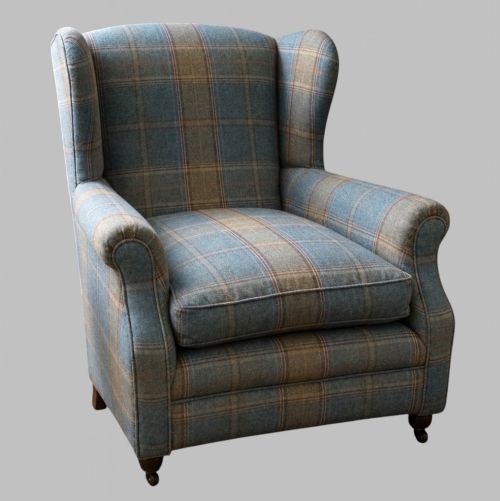
Over the centuries, cabinetmakers and upholsterers adapted the form through various periods, resulting in styles ranging from eighteenth-century models to twentieth-century plaid and leather interpretations.
How do I date an antique wing chair?
Dating requires examining the underlying timber of the frame, the upholstery methods, and stylistic cues characteristic of specific periods like the Edwardian era or the eighteenth century.
Revival pieces often borrow earlier motifs, so looking closely at the wood species and construction joints helps clarify whether a piece is an original antique or a later reproduction.
What materials were used for these chairs?
Makers constructed the structural frames using hardwoods such as oak and mahogany, supplemented occasionally by brass components.
The exterior surfaces feature upholstered finishes in fabric, velvet, or leather, paired sometimes with internal fillings like feathers for softness.
How should I live with vintage upholstery?
Living with vintage upholstered seating involves gentle regular care, protecting fabrics and leather from direct sunlight, and respecting the structural limits of older frames.
These pieces integrate smoothly into modern sitting rooms, providing both a focal point and a comfortable place to sit.