
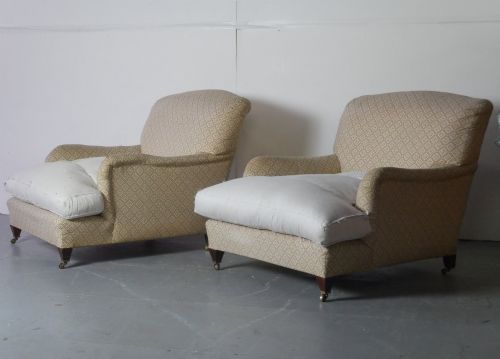
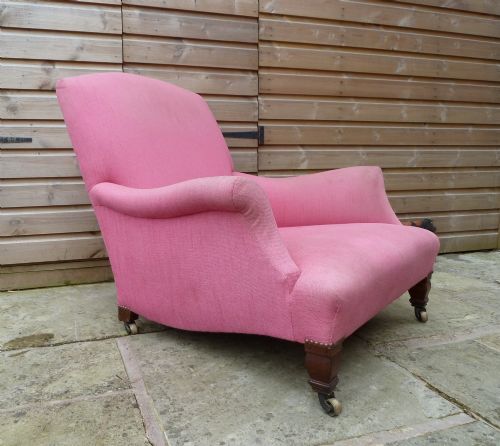
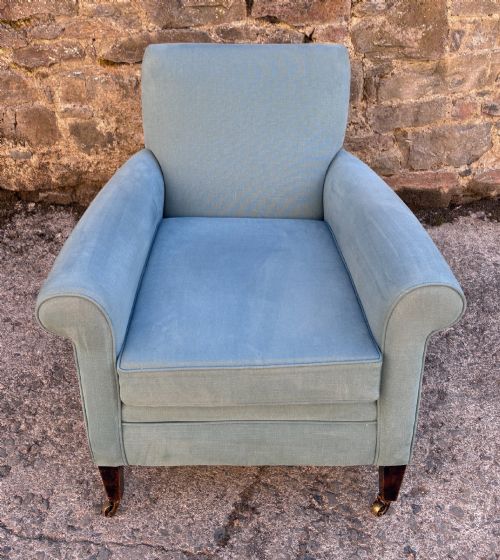
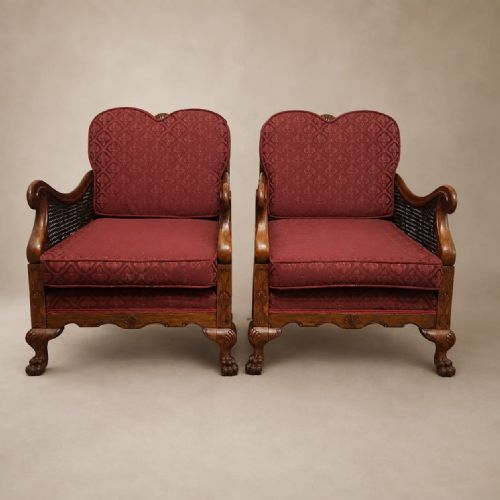
Edwardian Deep Seated Armchair
An edwardian deep seated armchair offers generous proportions and low-slung comfort, making it a staple for relaxed sitting rooms.
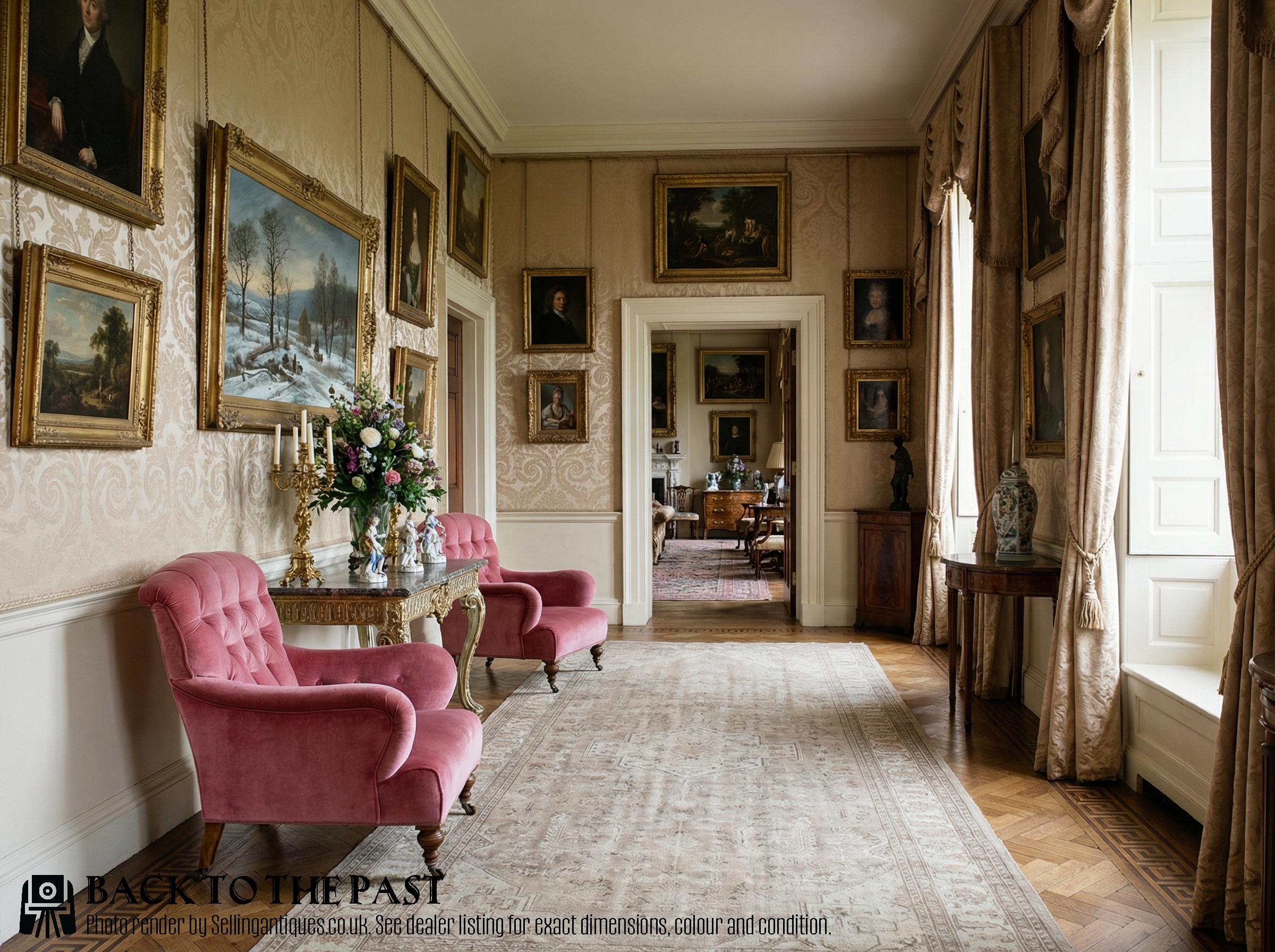
Edwardian Deep Seated Armchair
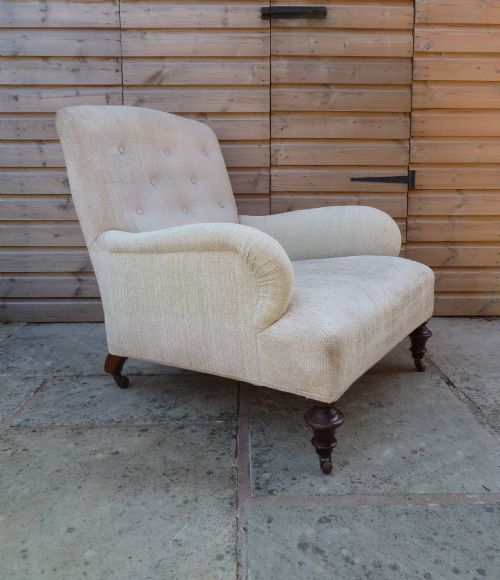
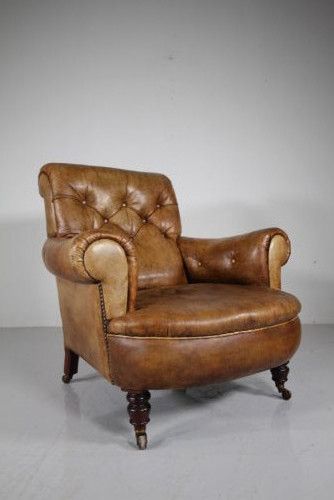
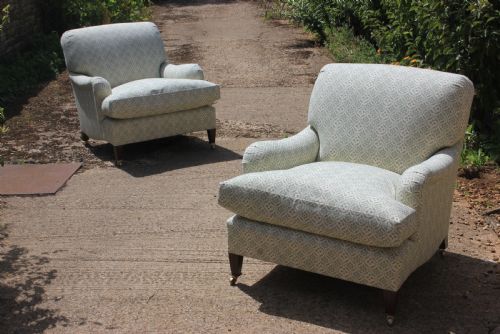
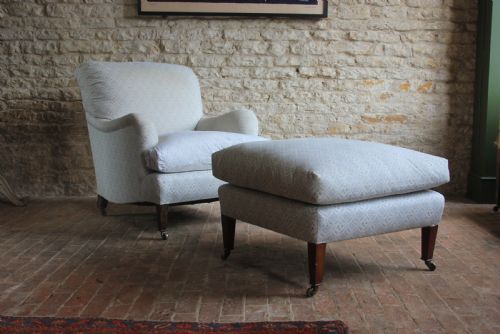
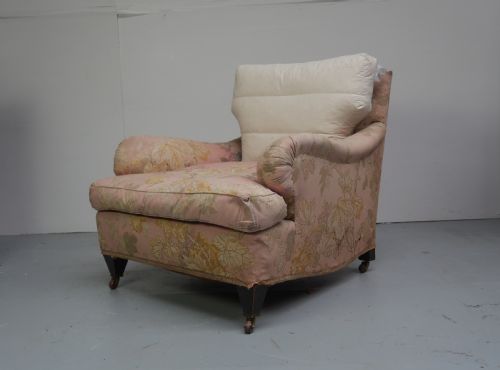
The edwardian deep seated armchair provides a low, generous platform designed for relaxed lounging, appearing frequently in country house and club styles. These seating pieces span the late nineteenth century through to the 1920s, incorporating variations like button backs, library chairs, and easy armchairs.
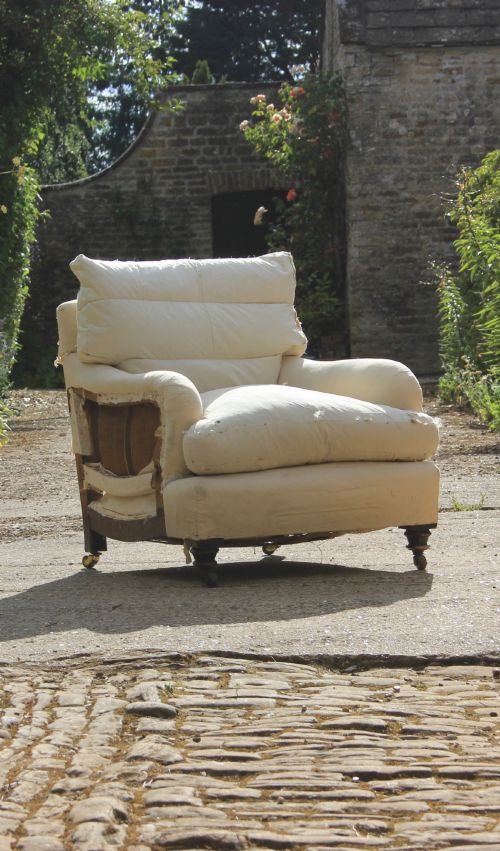
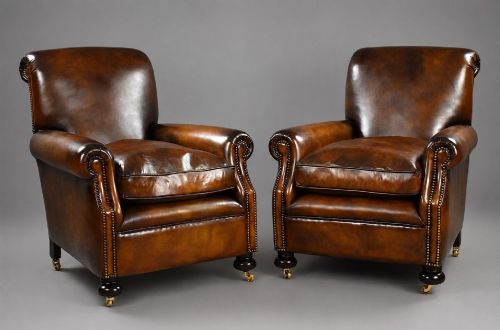
Makers and workshops of the period utilised robust hardwood frames, often shaping them into low club forms or library chairs upholstered in fabric, calico, hessian, or leather. Many examples follow the well-known Howard and Sons aesthetic, prioritising deep springs and low profiles over rigid formality.
How they were made
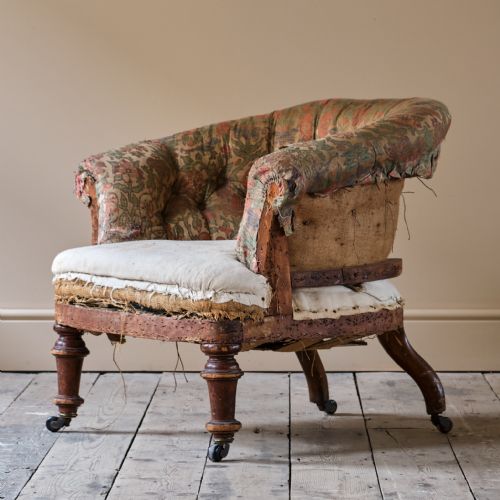
Frames rely on sturdy timbers such as mahogany, walnut, oak, and general hardwood, joined to withstand the internal tension of heavy springing. Brass castors frequently support the feet, allowing movement for these heavy timber structures.
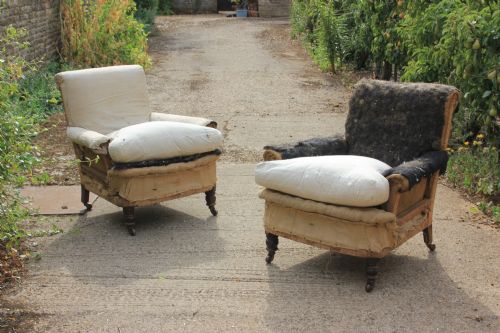
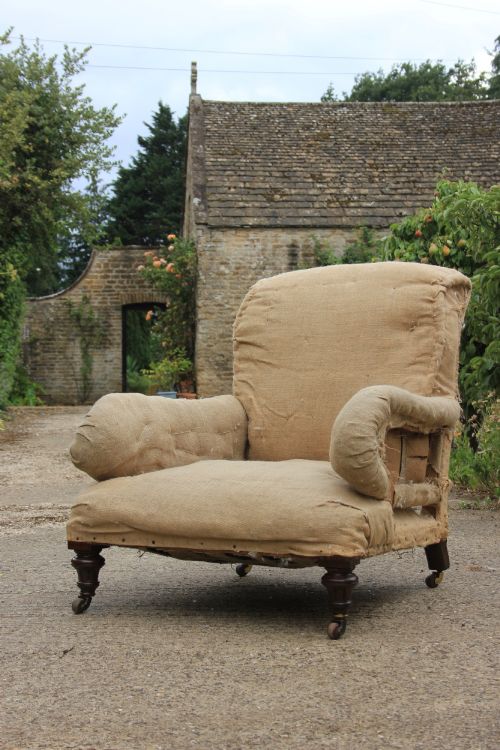
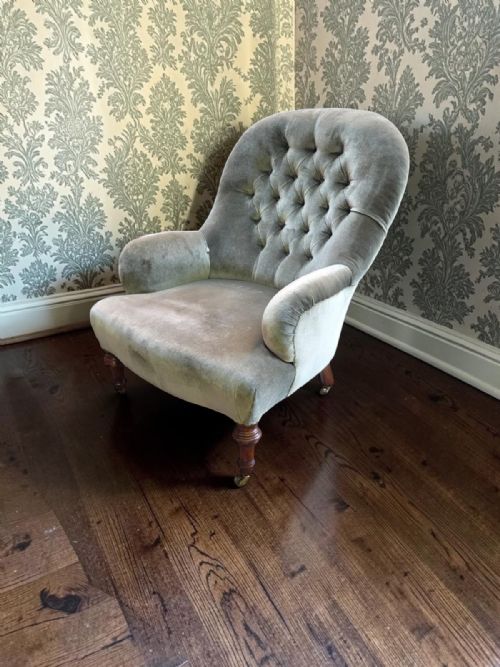
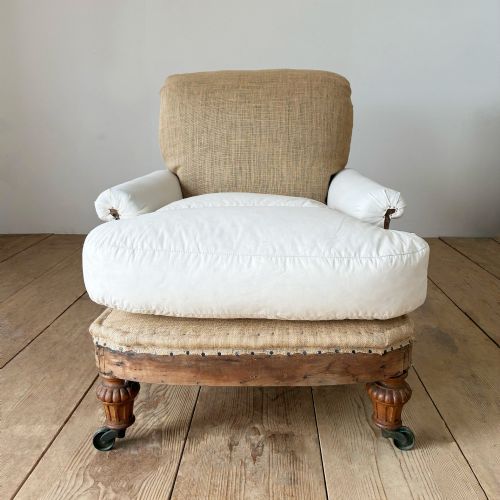
Traditional upholstery methods involve internal layers of hessian and calico supporting fabric, velvet, or leather surfaces. Deep buttoning and sprung seats provide the characteristic low, cushioned comfort of the period.
Listings for this phrase feature frames built from mahogany, walnut, oak, and general hardwood, alongside upholstery in leather, velvet, calico, and hessian.
What varies in quality
The integrity of the internal wooden frame and the depth of the springing dictate the structural standard of each piece. Heavier timber frameworks and authentic maker stamps elevate certain examples above standard workshop output.
The choice of covering materials, ranging from plain calico and hessian to fine leather or velvet, reflects the original tier of production. Pieces retaining stamped maker details or specific model designations show superior provenance.
Howard and Sons·SF Cullen·Trollope and Sons·Sopwith
The Edwardian Deep Seated Armchair Glossary
- Calico
- A plain-woven cotton fabric commonly used as an under-upholstery layer on traditional chairs. It often serves as a base covering ready for top upholstery.
- Hessian
- A coarse woven fabric made from jute fibres, utilised inside traditional upholstery to support stuffing and springs. It provides the hidden structural tension beneath the outer cover.
- Bergere
- An upholstered wooden-framed armchair with panelled cane work on the back or sides. Walnut and mahogany frames frequently carry this lighter woven technique.
- Club Chair
- A heavily upholstered low armchair designed for deep comfort, typically finished in leather or thick fabric. These pieces originated in gentlemen's clubs and country houses.
- Castor
- A small wheel fitted to the foot of a chair leg to ease movement across floors. Brass fittings are common on nineteenth-century and Edwardian seating.
Edwardian Deep Seated Armchair: Frequently Asked Questions
What is an edwardian deep seated armchair?
An edwardian deep seated armchair is a low, generously proportioned seat built for relaxation, often associated with English country house interiors. These chairs combine sprung upholstery with substantial wooden frames.
They appear in various forms, including club chairs, library chairs, and low easy chairs, dating from the late nineteenth century through the early decades of the twentieth century.
How do I identify a Howard style armchair?
Howard style armchairs are recognised by their low profiles, rolled arms, and deep, sprung seating designed for maximum comfort. Many examples bear specific enterprise names or follow the distinct proportions established by nineteenth-century makers.
Original pieces often feature stamped brass castors or maker signatures on the back legs, distinguishing them from later reproductions.
What materials were used for these armchairs?
Frames are constructed from hardwoods such as mahogany, walnut, and oak, providing a rigid skeleton for heavy internal springing. Brass castors are frequently fitted to the base of the legs.
Upholstery materials include leather, velvet, fabric, calico, and hessian, depending on whether the chair is finished for display or prepared for recovering.
Where were these armchairs placed?
These seating pieces traditionally occupied libraries, drawing rooms, and studies within large English country houses. Their low, deep proportions suited relaxed domestic spaces.
Today, they function well in sitting rooms and studies, pairing easily with matching footstools or occasional tables.