


Traditional Turkmen Bag
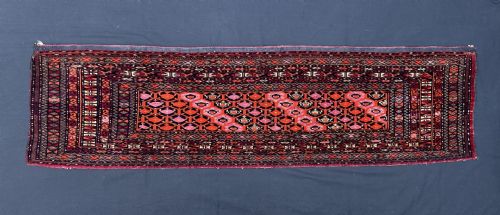
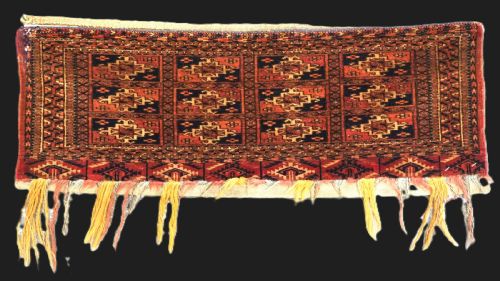
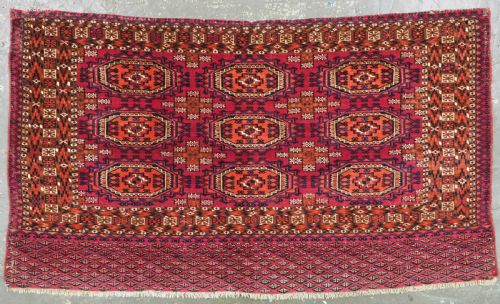
These traditional turkmen bag examples are nomadic wool weavings from Central Asia, valued for tribal motifs and rich natural dyes.
Traditional Turkmen Bag
A traditional turkmen bag is a nomadic wool weaving originating from Central Asian tribes such as the Tekke, Saryk, Yomut, and Ersari during the nineteenth century. These utilitarian items served specific domestic functions within the yurt, functioning as storage sacks for bedding, belongings, or tent gear.
The pieces appearing on this page include various functional forms like torbas, chuvals, mafrashes, jollars, and okbashs. Many survive as complete examples with their plain weave wool backs intact, while others exist as decorative bag faces intended for hanging.
Tribal weaving styles dominate the selection, showing distinct regional patterns across Turkmenistan and surrounding areas. Collectors encounter formats ranging from small spindle bags to large storage chuvals spanning the 1850s to the 1900s.
Materials and Technique
Weavers constructed each traditional turkmen bag primarily from sheep wool, utilising cotton for supplementary details or structural elements where appropriate. Natural dyes provided the deep red, madder, and contrasting palette seen across the tribal pieces.
The technique combines pile knotting with flat-woven plain weave backs and elaborate elem panels. Skilled hands tied dense knots, producing durable surfaces designed to withstand daily nomadic life.
Nomadic weavers occasionally included tiny protective amulets hidden within the pile to ward off the evil eye.
Quality and Variation
Knot density and structural fineness separate standard utility pieces from exceptional tribal weaving. A very fine weave demonstrates the weaver's precision and patience at the loom.
Completeness alters the character of a piece, as examples retaining their original plain weave backs or paired sets offer greater historical integrity. The clarity and saturation of natural dyes further distinguish superior examples from ordinary production.
Sariq Tribe·Tekke Tribes·Yomut Tribe·Ersary Tribes
The Traditional Turkmen Bag Glossary
- Torba
- A small tent bag used by Turkmen nomads for storage. These rectangular wall hangings typically feature primary guls and detailed borders.
- Chuval
- A large tent bag used for storing household goods and bedding within the yurt. They often display repeated guls across the main field.
- Gul
- A primary medallion motif used in Turkmen rug and bag design. Each tribal group favoured distinct geometric configurations.
- Elem
- The lower horizontal panel of a Turkmen bag or rug, frequently decorated with distinctive secondary motifs or floral derivatives.
- Mafrash
- A rectangular storage bag or chest cover produced by nomadic tribes. These items formed part of the necessary household furnishings.
Traditional Turkmen Bag: Frequently Asked Questions
What is a traditional turkmen bag used for?
Nomadic families utilised these wool bags inside tents for storing clothing, blankets, and household belongings. They served practical storage needs while displaying tribal identity through traditional patterns.
Today, collectors appreciate these textiles as decorative wall art or floor displays. Their durable wool construction allows them to transition easily into modern interiors.
How do I identify a Tekke bag?
Tekke pieces typically display precise octagonal guls arranged in strict rows across a deep red field. Their design work often incorporates secondary motifs like the curled leaf.
Examining the weave reveals the tight knotting characteristic of Tekke tribal work. Many examples also feature distinctive banded elem panels at the lower border.
What is the difference between a chuval and a torba?
A chuval is a large storage bag designed to hold bulky household goods inside the nomadic tent. These pieces generally feature multiple rows of primary guls.
By contrast, a torba is a smaller hanging bag meant for specific smaller items or provisions. Torbas often feature a wider format relative to their height.
Are these bags made with natural dyes?
Nineteenth-century tribal pieces relied on natural dyes extracted from plants and minerals. These colorants created the rich reds, madder tones, and contrasting accents seen in the wool.
Over time, natural dyes develop a soft patina that enhances the visual depth of the geometric patterns. This traditional colouring method remains a hallmark of antique Turkmen weaving.