
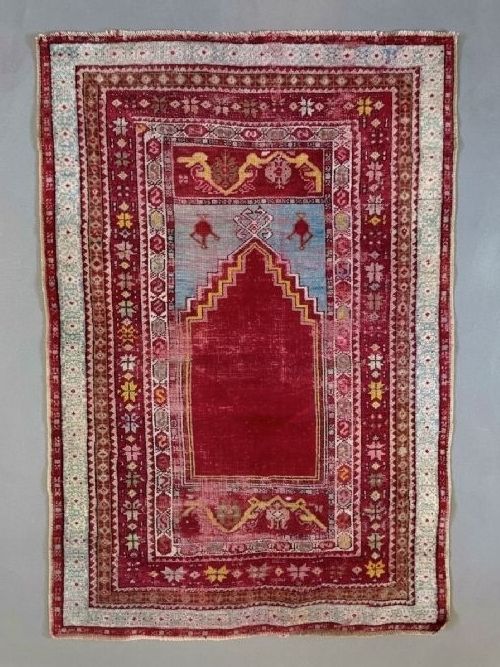
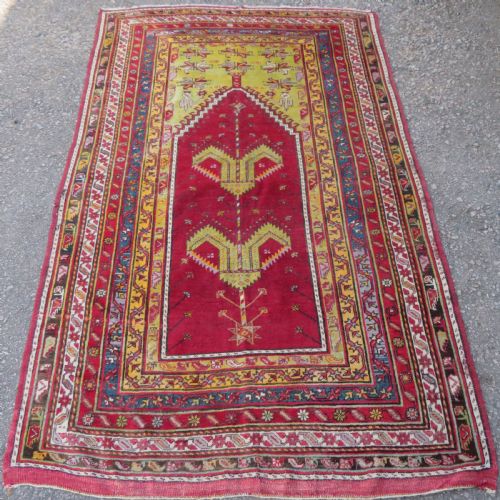


Traditional Turkish Prayer Mat
A traditional turkish prayer mat brings centuries of Anatolian weaving into a room, offering tactile connection and historic design.
Traditional Turkish Prayer Mat
A traditional turkish prayer mat is a woven textile designed for personal devotion, featuring distinct architectural motifs such as mihrabs that denote the direction of prayer. Buyers searching for this phrase encounter rugs originating from historic weaving centres across Anatolia, produced during periods spanning the eighteenth, nineteenth, and early twentieth centuries.
The pieces available here take the form of village and regional rugs, including specific historic types attributed to locations like Ghiordes, Ladik, Kirsehir, Milas, and Konya. These floor coverings and small carpets utilise traditional formats intended to frame the kneeling space during daily prayers.
Most examples date from the nineteenth century, reflecting the classic Ottoman styles and regional tribal patterns of western and central Anatolia. Collectors find both single-niche formats and multi-niche arrangements, known as safs, among the varied formats represented in the current selection.
How They Were Made
These textiles were produced using natural materials, predominantly wool, cotton, and silk, with hand-spun wool frequently forming the foundation and pile. Weavers knotted these fibres onto warp and weft structures to create durable floor coverings with dense surfaces.
Village workshops and domestic weavers utilised traditional hand-weaving techniques, incorporating wool and occasionally pure silk to achieve varied textures and pile depths. The materials reflect local agricultural practices and regional weaving traditions across Anatolia.
Materials across the listings include standard wool, cotton, silk, and specifically hand-spun wool.
What Varies in Quality
The standard of a traditional turkish prayer mat depends on the clarity of its design and the depth of its colour palette, such as pistachio and aquamarine grounds or soft secondary tones. Fineness of knotting and the crisp execution of regional motifs distinguish village works from standard commercial production.
Preservation of the original pile and borders determines the integrity of older pieces, particularly those originating from the eighteenth and nineteenth centuries. The balance of proportion within the central niche and the quality of the hand-spun materials dictate the overall standing of each rug.
The Traditional Turkish Prayer Mat Glossary
- Mihrab
- The arched niche design at the top of a prayer mat that mimics the mihrab of a mosque, orienting the worshipper during prayer. This architectural motif forms the central focal point of the textile.
- Saf
- A multi-niche prayer rug featuring a series of connected arches, allowing multiple individuals to pray side by side. These wider formats are less common than single-niche examples.
- Warp
- The vertical threads stretched tightly on the loom before weaving begins, forming the structural foundation of the rug. The exposed fringe at either end consists of these extension threads.
- Weft
- The horizontal threads passed alternately over and under the warp threads to bind the knots in place. This material secures the structure row by row.
Traditional Turkish Prayer Mat: Frequently Asked Questions
How do I use a prayer mat in a modern room?
These textiles function effectively as small area rugs, wall hangings, or accent pieces placed in low-traffic areas of a home. Their compact dimensions allow them to sit comfortably on wooden floors or be displayed vertically to protect the pile.
Positioning the rug where natural light highlights the hand-spun wool and regional colours enhances the visual texture of the room without overwhelming the existing layout.
How can I tell the age of a Turkish rug?
Dating relies on examining the specific wool types, the complexity of the natural dye palette, and structural characteristics typical of nineteenth-century or earlier weaving. Regional attributions to centres like Ghiordes or Ladik provide further clues to the period of origin.
Comparing the weave density and border motifs against documented examples helps narrow down whether a piece dates to the eighteenth, nineteenth, or early twentieth century.
What is the difference between village and city rugs?
Village rugs display geometric interpretations, spontaneous colour shifts, and coarser hand-spun wool characteristic of domestic production in regions like Milas or Bergama. City or workshop pieces often exhibit finer silk structures and more formal, curved floral designs.
Both categories fall under traditional Turkish weaving, but the spontaneous design choices in village pieces offer a different aesthetic compared to structured workshop carpets.
How should I clean and maintain an antique rug?
Gentle surface cleaning with a soft brush and occasional professional dusting preserve the natural wool and silk fibres without stripping the historic dyes. Avoiding direct, harsh sunlight prevents the natural colours from fading prematurely.
Ensuring the rug rests on a breathable underlay keeps the foundation stable and protects the cotton and wool structure from unnecessary friction against the floor.