





Traditional Tree Landscape Art
Traditional tree landscape art brings quiet countryside scenes into a room through oil and watercolour.
Traditional Tree Landscape Art
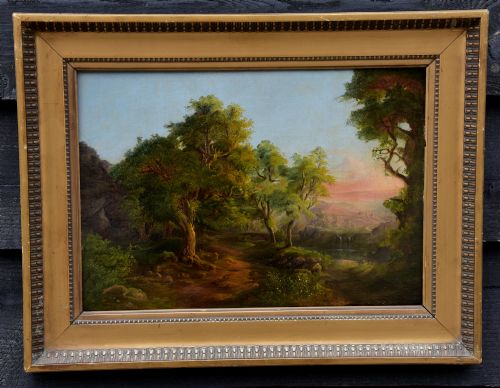
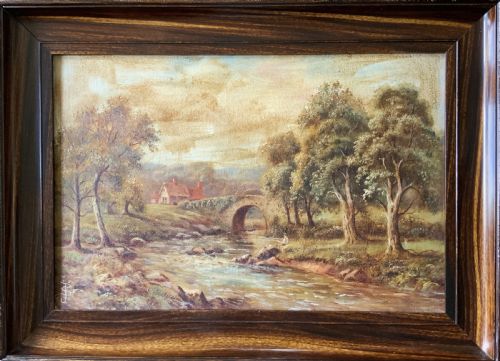
Traditional tree landscape art captures rural woodland, riverbanks, and country lanes across the nineteenth and twentieth centuries. These paintings range from Victorian and Edwardian watercolours to mid-century oil on canvas works depicting trees, streams, and cottages. Buyers encounter British Impressionism, romanticism, and realism alongside unassigned rural views.
The most common pieces on this page are oil paintings on canvas or board and watercolour paintings on paper, signed by period artists or left anonymous. Subjects focus on British waterways, woodland paths, and seasonal countryside scenes such as autumn woods or haymaking fields.
How they were made
Artists painted traditional tree landscape art using oil paint and watercolour pigment applied to canvas, wood panels, or paper. Oil paint allowed for layered brushwork and rich textures suitable for dense woodland foliage, while watercolour pigment created translucent washes for rivers and skies.
Supports varied from stretched canvas to solid wood boards and heavyweight paper sheets. Works were executed plein air or in studios from preliminary sketches, capturing light and atmosphere through British Impressionist and realist techniques.
Traditional Tree Landscape Art Retail Price Guide 2026
Typical asking prices for traditional tree landscape art among the pieces listed under this phrase on Sellingantiques today, from the lower quarter to the upper quarter. They describe what is for sale here now, not the wider market.
This selection spans from the late nineteenth century to the nineteen sixties, featuring oils and watercolours on canvas, board, and paper.
What varies in quality
Quality in traditional tree landscape art rests on the confidence of the brushwork and the handling of light through foliage and water. Skilled painters create depth in woodland scenes and riversides through subtle tonal shifts, whereas lesser works rely on flat colour application.
Composition and draughtsmanship separate accomplished regional artists from amateur practitioners. The balance of the trees against the sky, the perspective along a country lane, and the preservation of the original canvas or paper surface determine the standing of each piece.
William H Myers·George Graham·Alfred Young Nutt·Sydney Yates Johnson·Owen Bowen·Abraham Hulk Jnr·Charles James Adams·Frederick W Jackson·Everett W Mellor
The Traditional Tree Landscape Art Glossary
- Watercolour painting
- A work created using water-soluble pigments on paper supports. This medium produces transparent washes that suit luminous skies and gentle river landscapes.
- Oil on canvas
- Pigments bound in drying oil applied to a woven fabric stretched across a wooden frame. This method permits thick impasto texture and deep colour saturation.
- British Impressionism
- A painting style that developed in the late nineteenth and early twentieth centuries, focusing on natural light and loose brushstrokes. Artists captured outdoor scenes such as woodlands and rivers in fluctuating daylight.
- Nineteenth Century Realism
- An artistic approach that depicted rural subjects without idealisation or romantic exaggeration. Works in this style show everyday country lanes and working streams with factual observation.
Traditional Tree Landscape Art: Frequently Asked Questions
How old is traditional tree landscape art?
The works listed span from the late nineteenth century through the Edwardian period and into mid-century post-war decades. Most pieces date between eighteen ninety and nineteen sixty.
Dates are determined by artist signatures, stylistic movements like British Impressionism, and framing or canvas evidence from the period.
What subjects appear in these paintings?
Subjects include woodland paths, willow trees by rivers, cattle grazing under trees, and country lanes near cottages. Many works depict specific Yorkshire, Thames Valley, or Devon locations.
Artists focused on seasonal changes, capturing autumn foliage, haymaking fields, and spring primroses along riverbanks.
Are these paintings executed on canvas or paper?
The collection includes both oil paintings on stretched canvas or wood board and watercolours on paper. Oils offer heavier texture and durability, whilst watercolours provide delicate transparency.
Each medium was chosen by the artist to suit the atmosphere of the woodland or river scene being recorded.
How should I hang landscape art at home?
These paintings suit traditional interiors, country houses, and neutral walls where the natural greens and browns of woodland scenes can stand out. Adequate wall space allows larger oil canvases to anchor a room.
Keep watercolours away from direct sunlight to protect the pigments on paper from fading over time.