

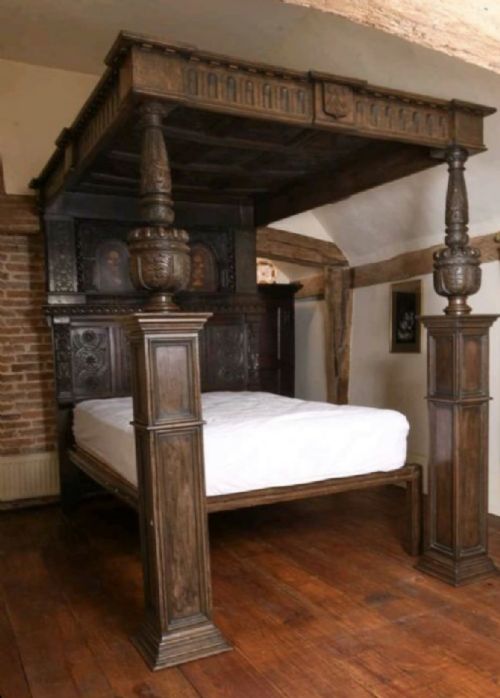


Traditional Tester Bed
A traditional tester bed brings architectural scale and presence to a room, offering the enclosed shelter of a historic canopy.
Traditional Tester Bed
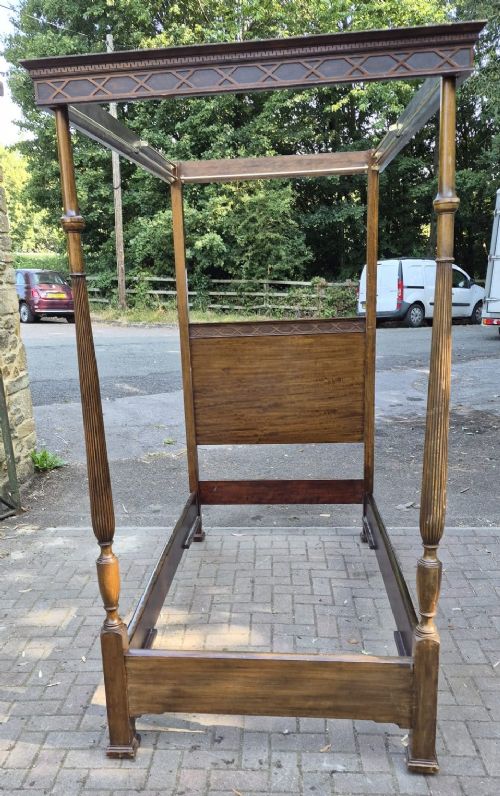
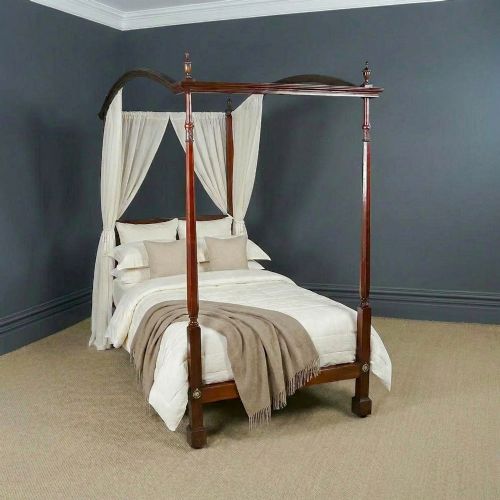
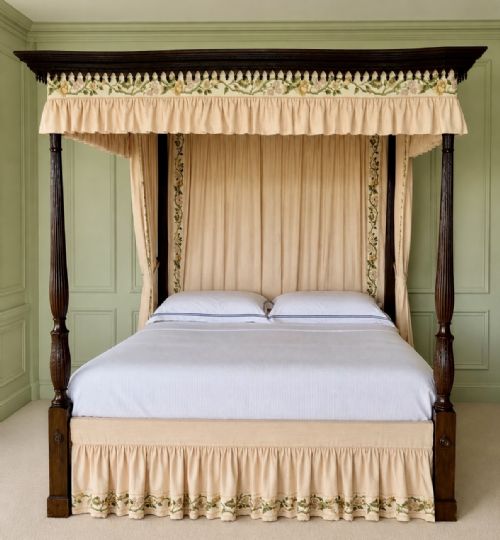
A traditional tester bed is a large wooden or metal bedstead defined by upright posts supporting an overhead canopy, known as a tester. The listings here present diverse examples ranging from early seventeenth-century oak frames to nineteenth-century mahogany and cast iron iterations.
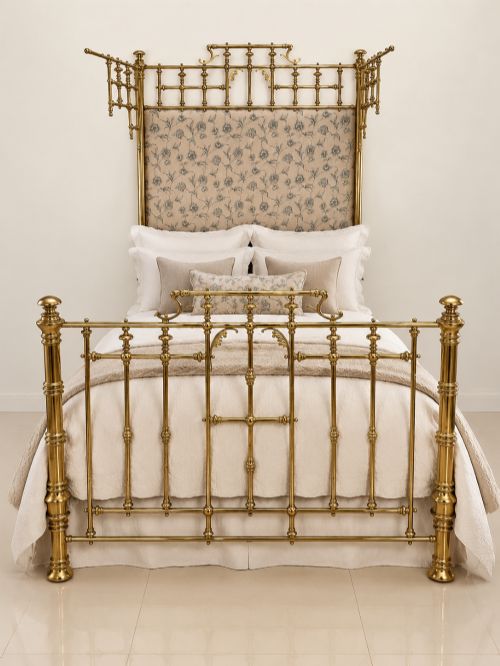
Buyers will encounter substantial seventeenth-century oak frames alongside Victorian brass half tester bedspreads and Edwardian mahogany designs in the Georgian style. These forms encompass both full testers with complete overhead canopies and half testers projecting from the wall or headboard.
Originating across multiple centuries, the selection includes regional variations such as colonial mahogany pieces alongside revival styles spanning the Victorian, Regency, and Elizabethan periods. Each piece demonstrates the shifting domestic architecture of sleeping quarters across British and international design traditions.
Materials and Construction
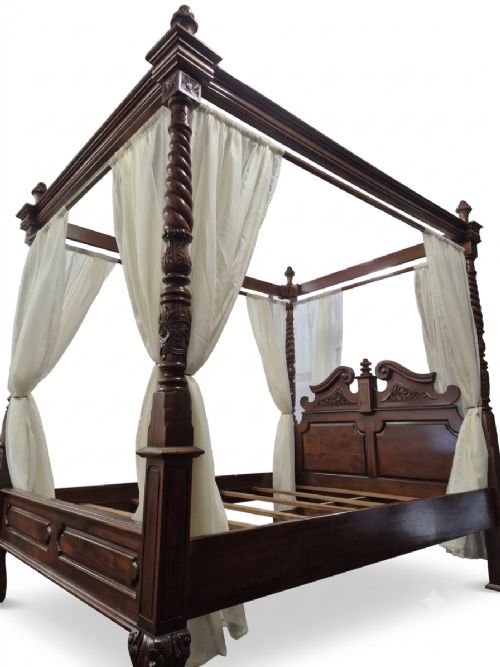
Construction relies heavily on timber framing, utilising dense hardwoods such as oak, mahogany, walnut, and fruitwood inlay. Cabinetmakers employed traditional joinery techniques, hand carving, and panel construction for seventeenth-century and revival pieces.
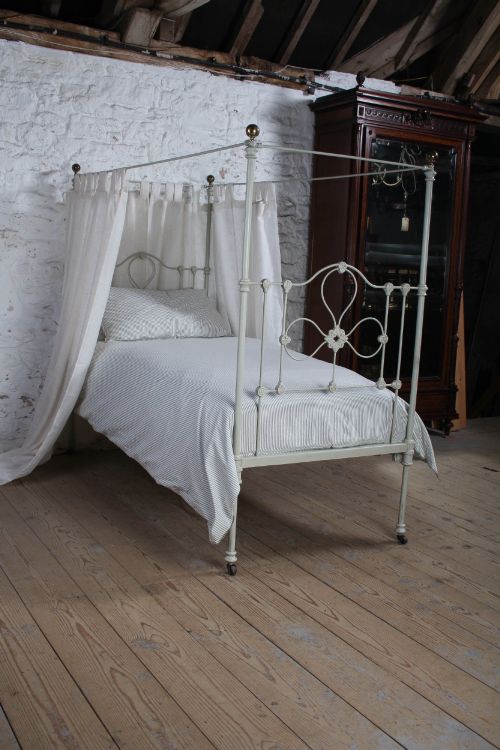
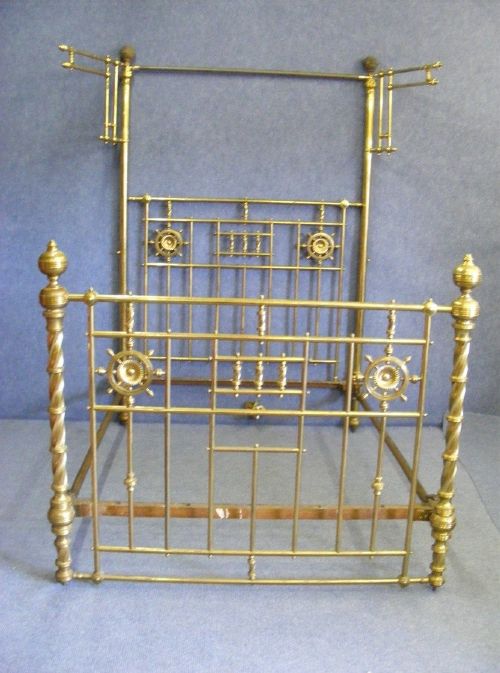
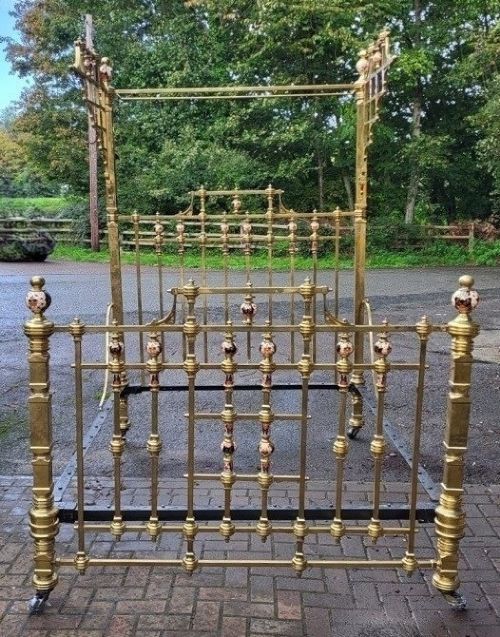
Metal structures form a distinct category within the listings, utilising brass, iron, and cast iron. These metallic bedsteads often feature combined elements of brass tubing and iron framing, sometimes accented with porcelain components.
Some nineteenth-century iron and brass frames incorporate delicate porcelain details alongside their imposing metallic columns.
Distinctions in Quality
Quality reveals itself in the depth and crispness of hand carving on wooden posts and headboards, where crisp execution distinguishes master workshops from simpler provincial carpentry. In metal frames, the gauge of the brass and the solidity of the iron castings dictate the structural integrity and visual weight of the piece.
The integrity of the timber and the retention of original components, such as cornices, posts, and side rails, govern the standing of a traditional tester bed. Exhibition quality pieces demonstrate superior material selection, such as burr walnut or figured mahogany, paired with refined proportions.
Heals of London·Howard and Sons·RW Winfield
The Traditional Tester Bed Glossary
- Tester
- The canopy frame positioned above a bed, supported by the corner posts. It frequently holds fabric hangings or decorative cornices.
- Half Tester
- A bedstead where the overhead canopy projects out from the headboard only, leaving the foot of the bed open. This form is common in Victorian brass and iron designs.
- Bedstead
- The complete structural framework of a bed, including headboard, footboard, and rails, designed to support a mattress.
- Cornice
- The ornamental moulding or framework running around the upper edge of the tester canopy.
- Post
- One of the vertical wooden or metal pillars supporting the tester canopy above the bed.
Traditional Tester Bed: Frequently Asked Questions
What is a traditional tester bed?
A traditional tester bed is a bed featuring four vertical posts that support an overhead canopy, or tester. These structures create a defined sleeping enclosure and have been built in various styles from the seventeenth century onwards.
They appear in heavy oak, polished mahogany, and ornate brass or iron, reflecting the dominant aesthetic of their respective periods.
How do I tell an oak tester from a Victorian one?
Seventeenth-century oak tester beds typically display dark patination, pegged joinery, panelled headboards, and heavy geometric hand carving. Victorian examples often utilise mahogany, walnut, cast iron, or gleaming brass, frequently incorporating revival styles or half tester configurations.
The absence of machine-cut marks and the presence of period-specific hardware help establish the correct era.
Are metal tester beds sturdy?
Metal tester beds utilising iron, cast iron, and heavy brass tubing offer exceptional structural rigidity. The components bolt together securely, providing a robust frame that easily supports modern weight distributions.
Exhibition quality brass frames combine decorative opulence with heavy-gauge metal construction designed for enduring stability.