


Traditional Suzani Panel
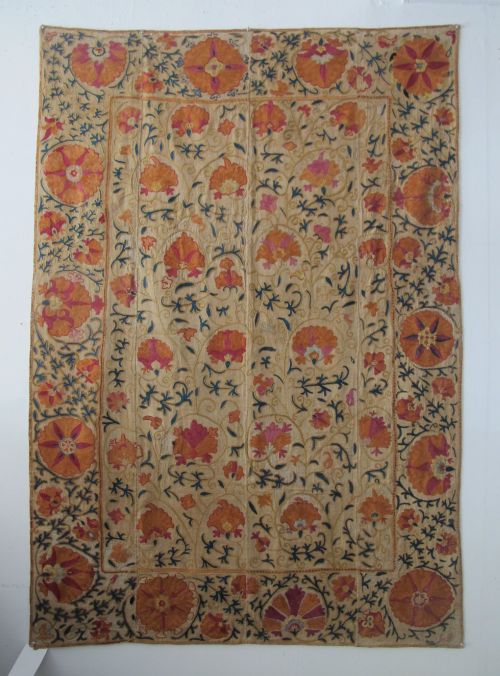
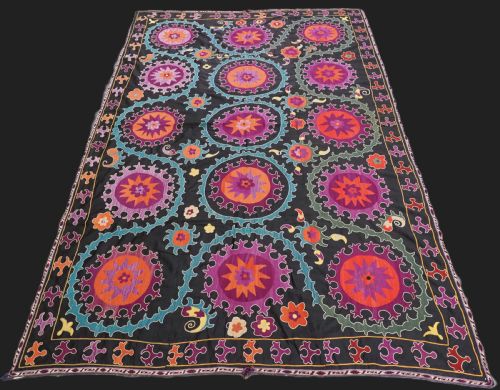
A traditional suzani panel is a heavily embroidered textile from Central Asia that brings rich colour and historic craft directly into a room.
Traditional Suzani Panel
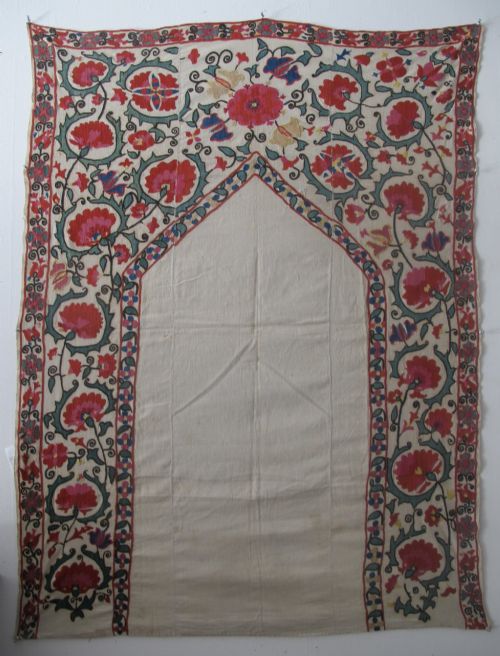
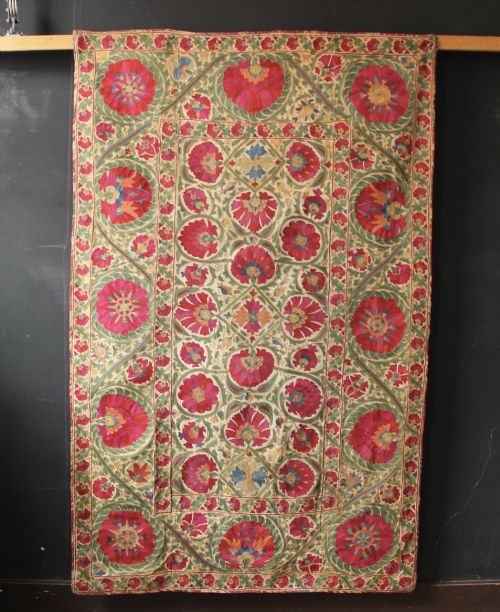
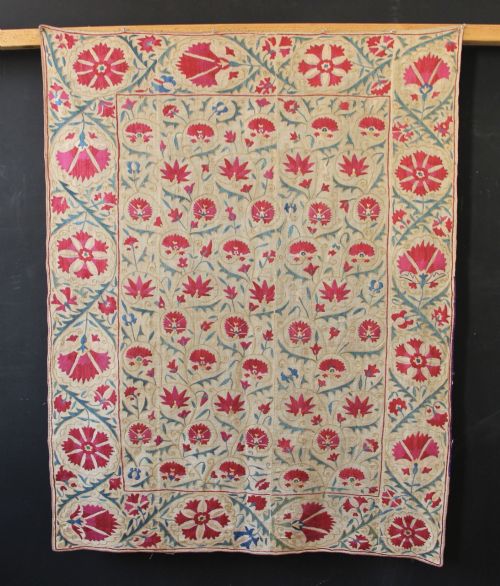
A traditional suzani panel is a large embroidered hanging or cover originating from Central Asia, most frequently associated with Uzbekistan and centres such as Bokhara, Nurata, and Shakrisabz. These textiles display distinct regional styles, ranging from expansive floral compositions to architectural designs and prayer formats.
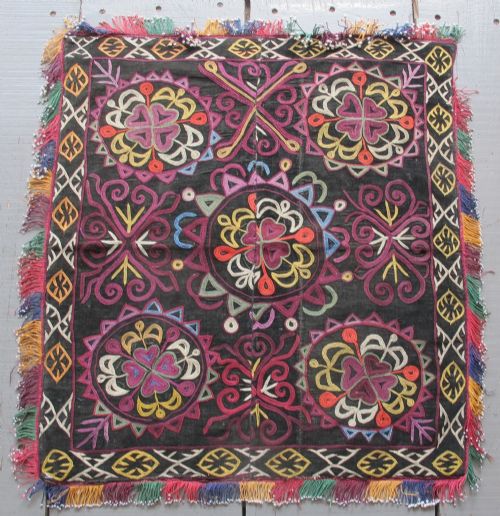
The pieces available here span from the mid-nineteenth century into the early twentieth century, encompassing full-scale wall hangings, smaller nim suzani formats, and specific regional forms like palak and torba ilgich pieces. They arrive as historic works of textile art created by skilled hands within traditional communities.
How they were made
Makers embroidered these textiles primarily using vibrant silk thread onto supportive foundations of cotton, linen, wool, or adras, which is a woven mixture of silk and cotton. Certain examples incorporate elements like velvet or glass beads to introduce varied texture and depth into the surface design.
The embroidery work relies on dense needlework techniques that cover the ground cloth with intricate floral, geometric, or figurative motifs. This patient hand-stitching creates the substantial weight and durable structure characteristic of these historic Central Asian pieces.
The listings here feature textiles from the nineteenth and early twentieth centuries, utilising cotton, silk thread, wool, and adras grounds.
What varies in quality
Quality in a traditional suzani panel rests upon the density of the embroidery and the complexity of the design layout. Pieces that feature fully covered grounds, such as palak examples, demand significantly more labour and technical skill than more open compositions.
The vibrancy and condition of the silk threads, alongside the precision of the needlework, separate standard examples from finer works. The harmony of the regional colour palette and the clarity of the underlying cotton or adras ground further define the standing of each piece.
The Traditional Suzani Panel Glossary
- Suzani
- An embroidered textile panel from Central Asia, traditionally made as part of a bride's dowry. The word derives from the Persian term for needlework.
- Nim suzani
- A half-size or smaller version of the standard embroidered panel. These pieces offer a more compact format while retaining the traditional motifs and needlework techniques.
- Palak
- A fully embroidered suzani type where the background cloth is densely covered with stitching. This style originates particularly from Tashkent and requires extensive labour.
- Adras
- A traditional hand-woven fabric made from a blend of silk and cotton threads. It serves as a textured ground material for embroidery in certain regional pieces.
- Torba ilgich
- A specific hanging or bag-related textile associated with Lakai Uzbek groups. These pieces showcase distinctive tribal patterns and material combinations.
Traditional Suzani Panel: Frequently Asked Questions
Where were traditional suzani panel pieces made?
These textiles were created across Central Asia, with historical production heavily concentrated in Uzbekistan. Major towns and regions like Bokhara, Nurata, Shakrisabz, and Tashkent developed distinct embroidery styles.
Maker groups such as the Lakai Uzbeks and Tajik communities also produced characteristic variations that reflect their local artistic traditions.
How were traditional suzani panel items used?
Historically, these panels formed an essential part of a bride's dowry, stitched collaboratively by family members. Families used them as wall hangings, bed covers, or ceremonial wraps during marriages and domestic celebrations.
Today, collectors primarily display them as textile art on walls or use them as decorative throws within interior spaces.
What is the difference between a suzani and a nim suzani?
The primary difference lies in the physical scale and format of the textile. A standard suzani is a large wall hanging or cover, whereas a nim suzani is a smaller version.
Despite the difference in dimensions, both types utilise similar silk embroidery techniques and regional motifs.
How do you care for an antique embroidered panel?
Antique textiles require gentle handling to preserve the delicate silk threads and historic ground fabrics. Displaying pieces away from direct sunlight prevents the natural dyes from fading over time.
Professional mounting provides proper support for heavier wall hangings, distributing the weight evenly across the structure.