
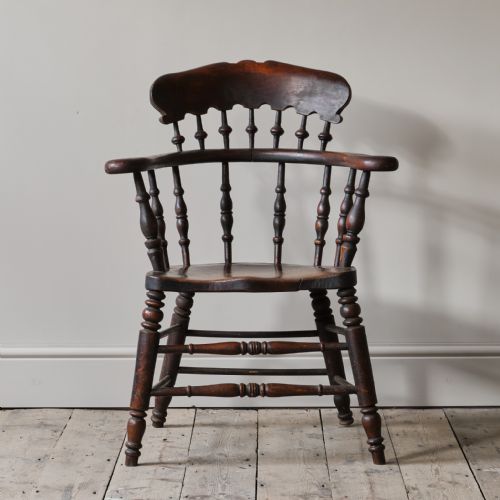
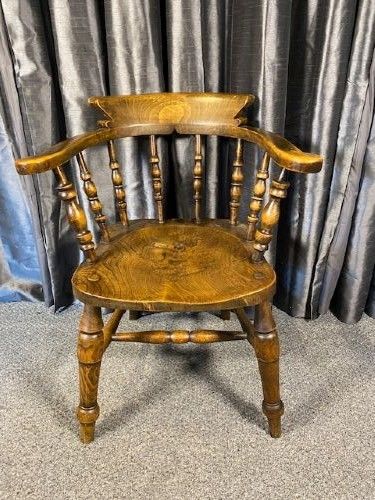
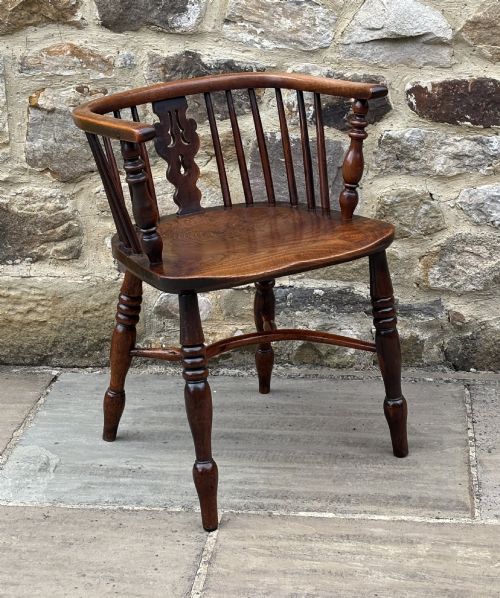
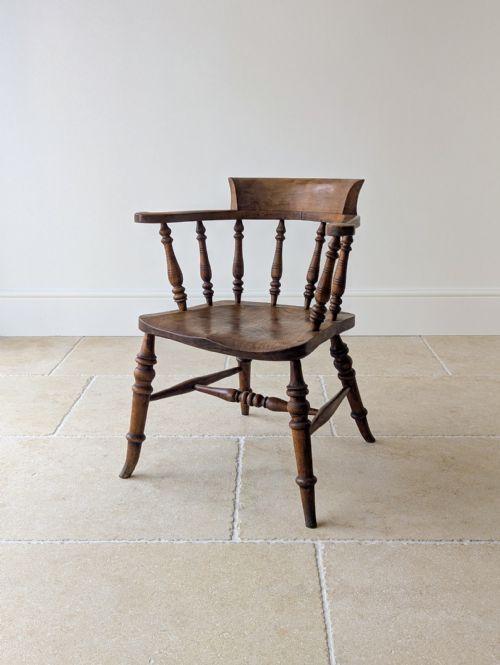
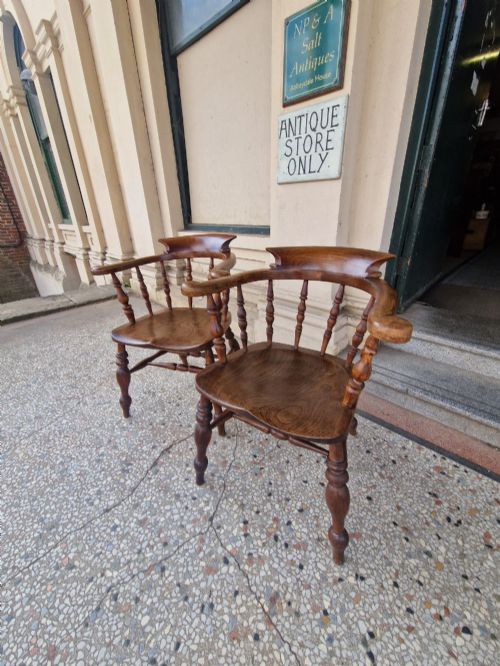
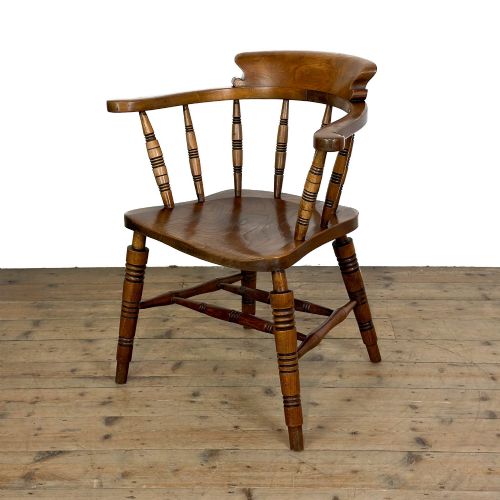
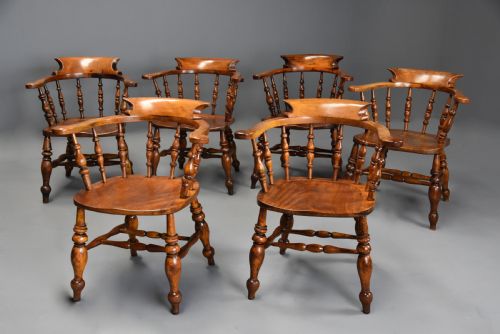
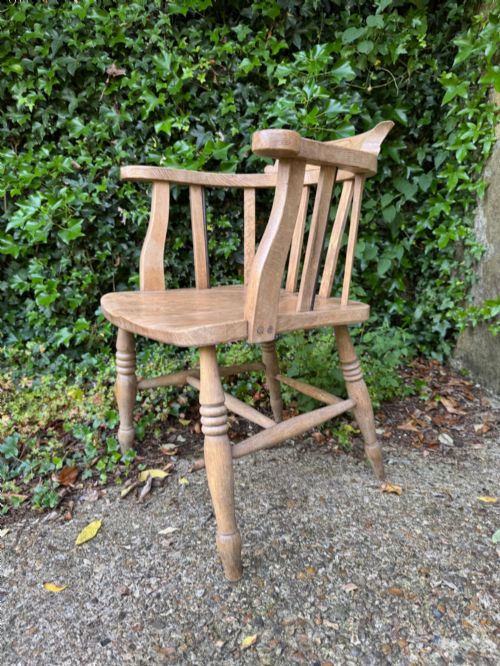
Traditional Smokers Armchair
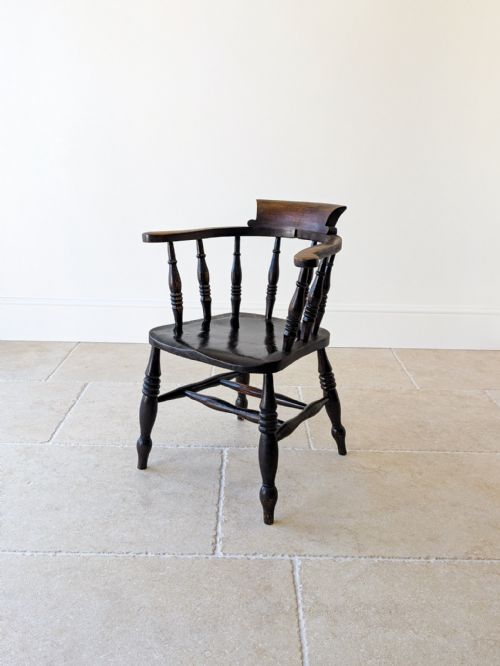
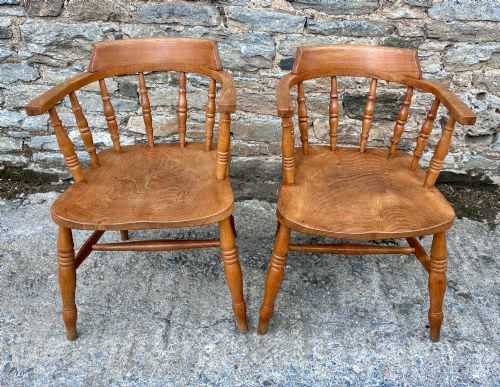
A traditional smokers armchair offers sturdy, low-backed seating rooted in English country houses and provincial workshops.
Traditional Smokers Armchair
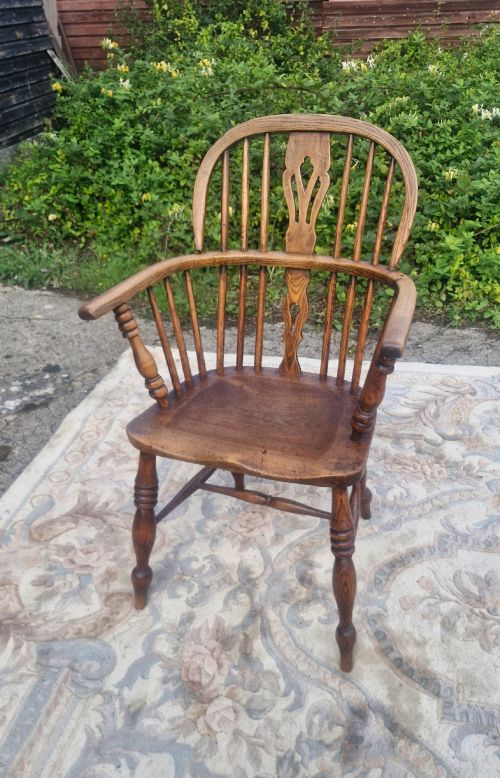
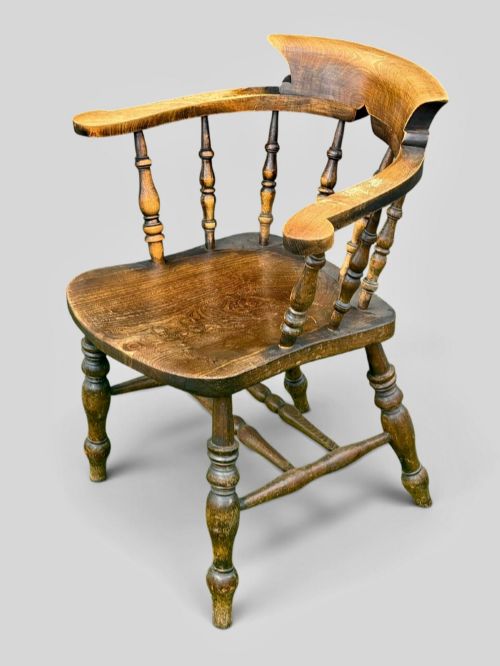
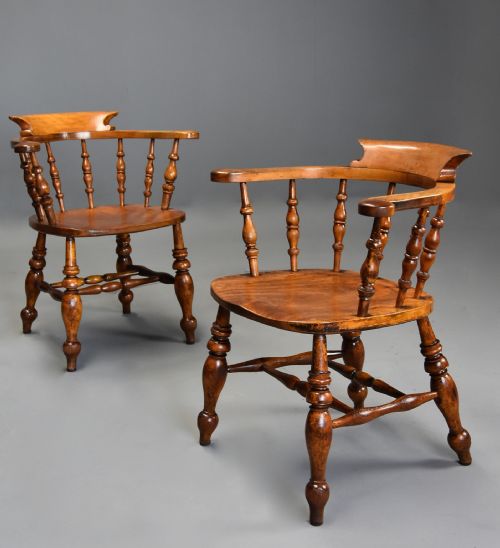
A traditional smokers armchair represents a sturdy category of low-backed seating often associated with the Windsor and captain's chair traditions. These pieces appear frequently in Victorian, Edwardian, and nineteenth-century country house guises.
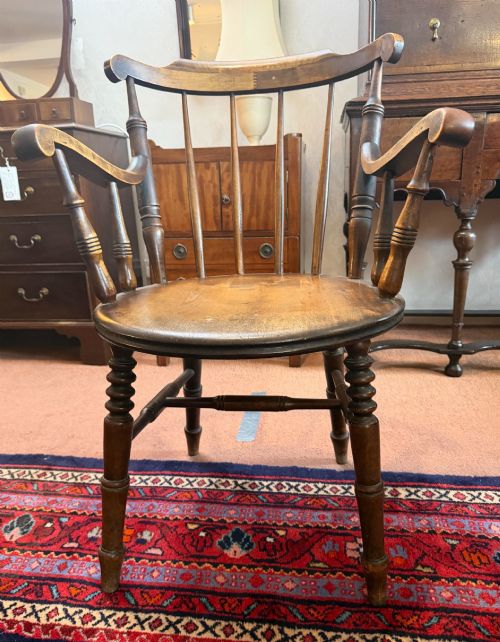
Makers shaped these chairs for comfort and durability in domestic and study settings, employing low profiles and robust arm rails. Examples range from simple farmhouse kitchen seats to refined desk armchairs with leather upholstery.
How they were made
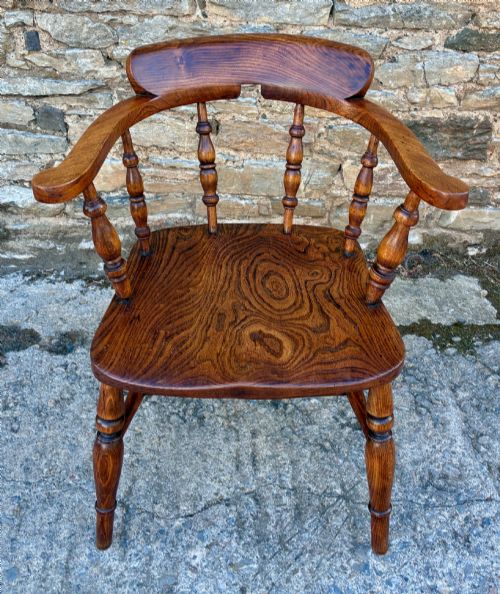
Craftsmen built traditional smokers armchairs using a combination of woods, most notably elm for sculpted seats alongside ash, beech, and occasional yew for spindles and legs. This multi-timber construction provided dense weight-bearing capacity where needed and flexible strength in the turned components.
Joinery relied on traditional Windsor framing techniques, inserting spindles and legs directly into thick wooden seats using wedged tenons. Many specimens feature steam-bent continuous arm rails curving around low backs for structural resilience.
The inventory combines low-back Windsor forms with desk armchairs and occasional leather-upholstered club seats.
What varies in quality
Quality rests primarily on the character of the timber and the depth of the seat carving. Deeply dished elm seats show superior hand-working compared to flat boards.
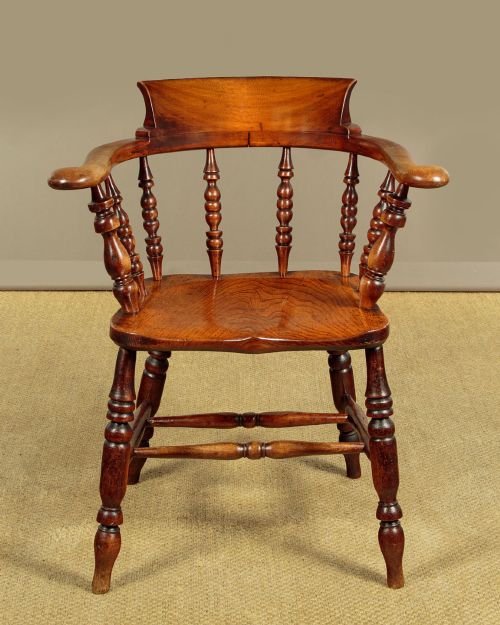
The crispness of the spindle turnings and the tightness of the leg joints distinguish finer provincial examples from utilitarian workshop output. Surface patina, developed through generations of use, elevates the visual presence of the wood.
The Traditional Smokers Armchair Glossary
- Smoker's bow
- A low-backed wooden armchair featuring a continuous curved arm rail supported by turned spindles above a saddle seat.
- Captain's chair
- A sturdy timber armchair with a low curved back, traditionally used in offices and libraries during the nineteenth century.
- Windsor chair
- A chair built with a solid wooden seat into which the legs and back spindles are separately driven.
- Saddle seat
- A wooden chair seat shaped with hollows and dips to mimic the contours of a riding saddle for seating comfort.
- Patina
- The deep surface sheen and colour acquired by aged wood through handling, polishing, and time.
Traditional Smokers Armchair: Frequently Asked Questions
What is a smokers bow chair?
A smokers bow is a low-backed wooden armchair featuring a curved rail resting on turned spindles above a solid timber seat.
These pieces developed from regional Windsor designs and served as common seating in nineteenth-century homes and smoking rooms.
How do I date a traditional smokers armchair?
Dating relies on observing construction methods, timber choices, and the profile of the turned spindles and legs.
Victorian and Edwardian examples often display specific wood combinations and wear patterns that help establish their period of origin.
Where were these armchairs used?
These armchairs served various roles across country houses, farmhouse kitchens, and studies as practical daily seating.
Lower backs allowed users to sit comfortably near fires or desks without restricting arm movement.
Are these chairs comfortable for daily use?
Solid elm saddle seats and curved wooden arm rails provide natural ergonomic support for upright sitting.
Many owners place them at desks or in living spaces where their sturdy proportions endure regular sitting.