

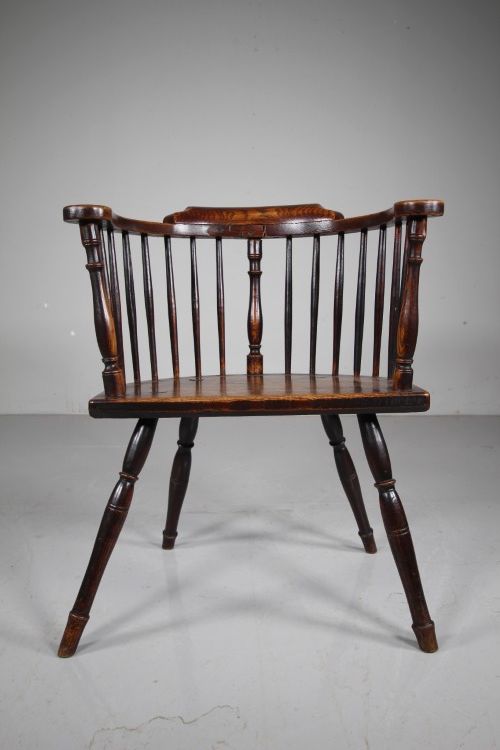


English Rustic Desk Chair
An english rustic desk chair combines honest domestic utility with the sculptural warmth of regional carpentry.
English Rustic Desk Chair
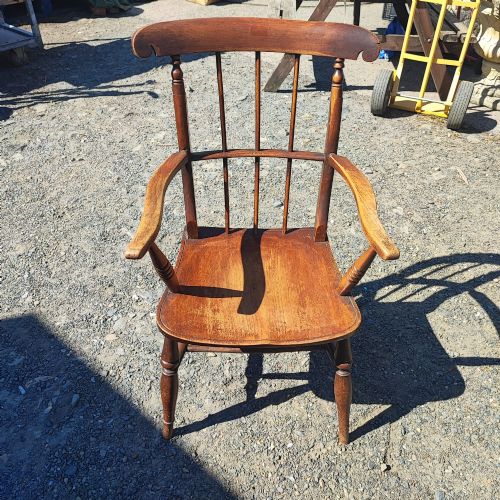
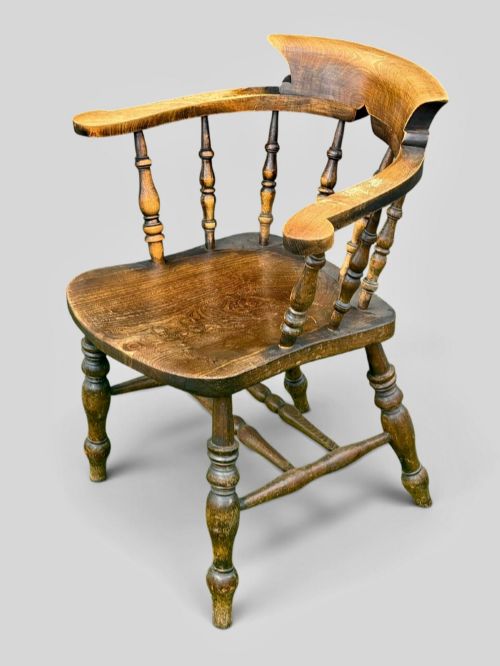
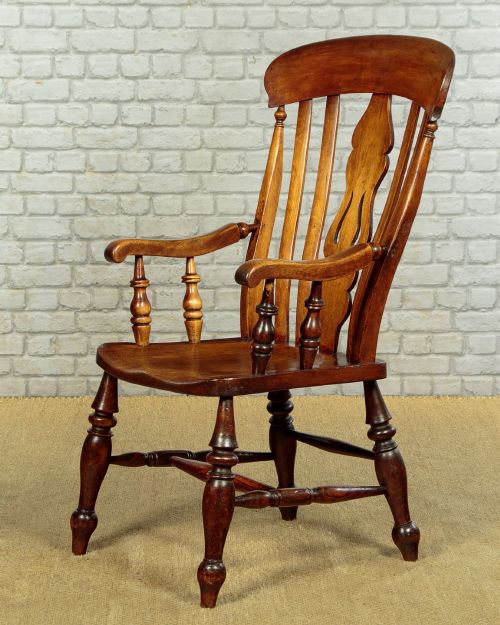
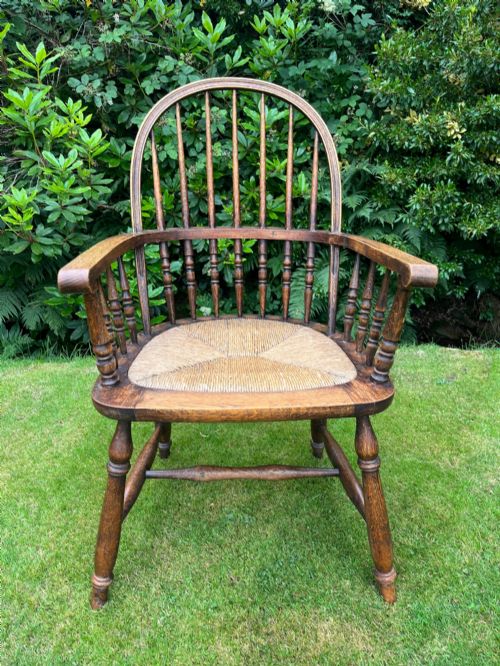
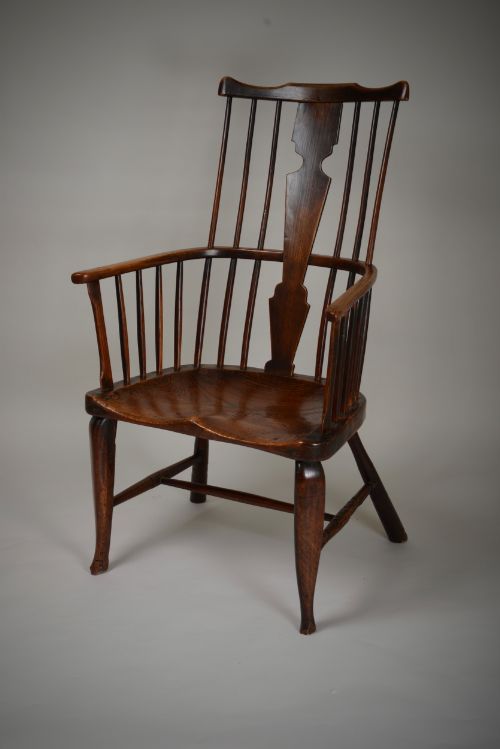
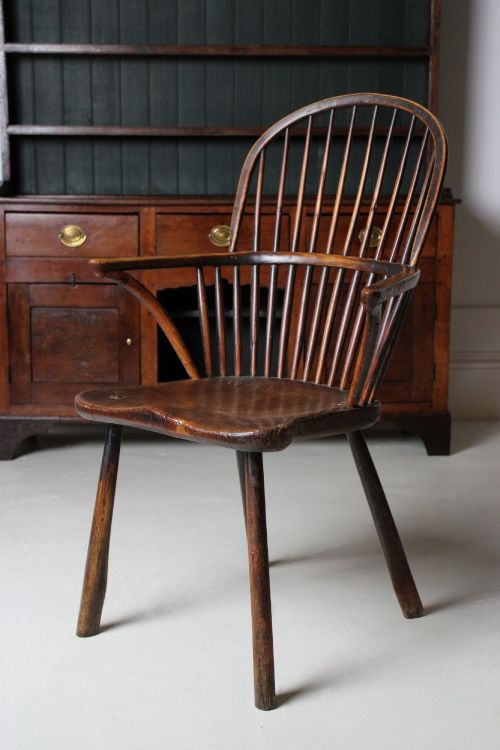
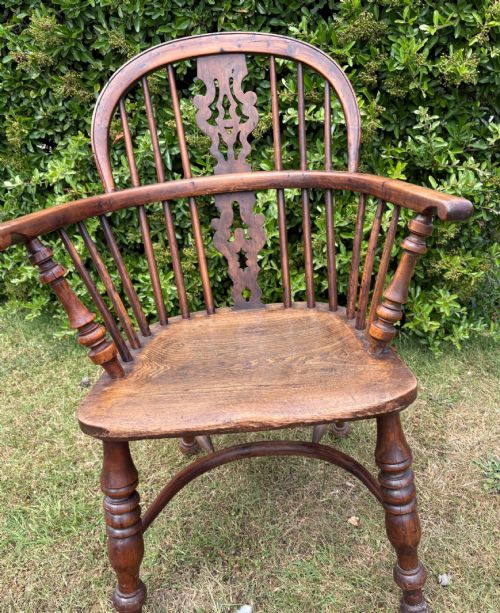
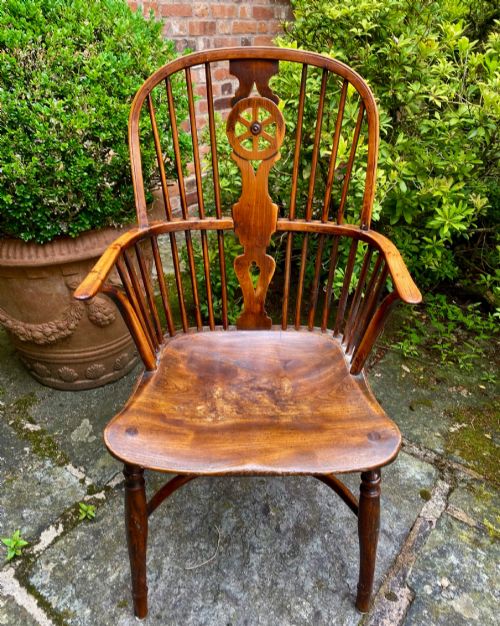
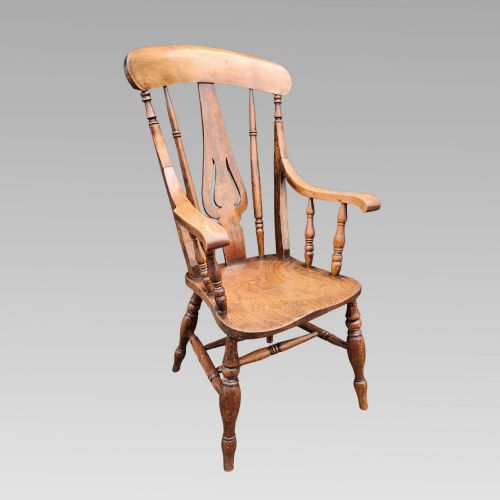
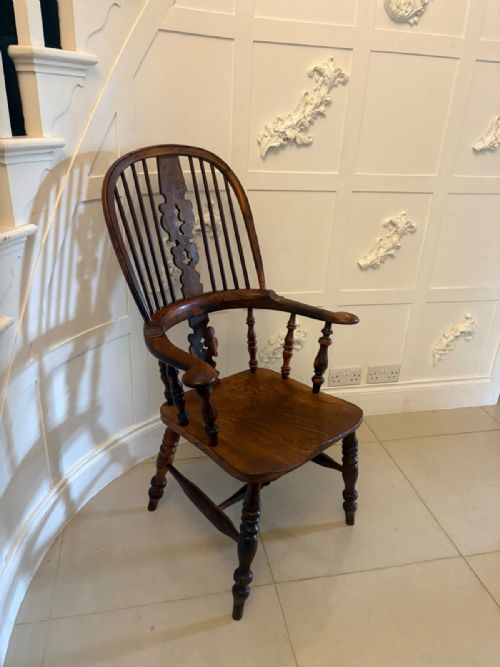
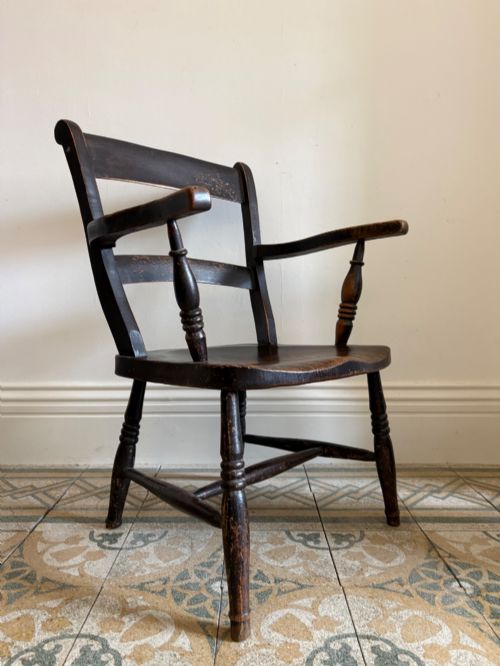
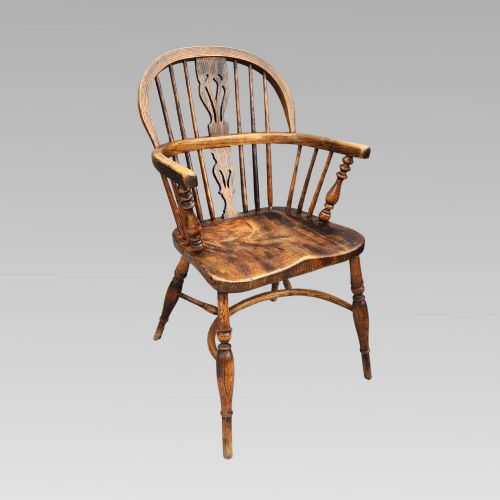
An english rustic desk chair is typically encountered as a Windsor armchair, a kitchen armchair, or a smokers bow originating from various English counties during the eighteenth and nineteenth centuries. These pieces were built for everyday domestic or commercial use in farmhouses, country houses, and provincial offices.
The selection on this page leans heavily toward nineteenth-century examples alongside eighteenth-century vernacular forms. Buyers frequently find combinations of elm seats paired with ash, beech, or yew wood frameworks, reflecting local timber availability and regional building traditions.
How they were made
Maker-joiners utilised a mix of solid native timbers, turning legs and spindles on a pole lathe while shaping thick plank seats from single slabs of elm. The saddle-shaped seat was typically scooped out using an adze and scorp to ensure comfort during long hours at a desk.
Framing members like hoops, bows, and arm supports relied on steam-bending green timber into continuous curves before wedging them into bored holes in the seat. This rigid yet resilient construction method allowed the timber to settle firmly as it dried over generations.
One chair bears the maker's stamp from Worksop, proving that provincial joiners were quietly signing their wooden masterpieces.
What varies in quality
The distinction between standard provincial seating and finer workshop production rests on the grace of the turnery and the selection of timber. Yew wood examples with distinct figuring command attention for their rich grain, whereas simpler utility chairs often employ straightforward ash or beech.
Structural harmony also dictates merit, seen in the balance of comb backs, spindle arrangements, and broad arm bows. Chairs retaining deep patination on unblemished elm seats represent the upper tier of surviving country craftsmanship.
Gabbitass Worksop maker·Ben Gilling·Benjamin Gilling
The English Rustic Desk Chair Glossary
- Windsor chair
- A chair built with a heavy solid wooden seat into which the legs, back, and arms are fitted directly rather than into a separate frame. These designs evolved distinct regional characteristics across England.
- Smokers bow
- A low-backed Windsor variant with a continuous curved arm rail and turned spindles, commonly found in nineteenth-century public houses and offices. It provides a compact silhouette suited for desk work.
- Elm
- A dense, interlocking timber chosen for chair seats because it resists splitting when nailed or bored. English country makers relied on its toughness for thick saddle-shaped bases.
- Hoop back
- A continuous bentwood bow forming the back and arms of a Windsor chair. This steam-bent member distributes weight evenly down to the solid wooden seat.
- Spindle
- A slender turned wooden upright used to fill the back or sides of an armchair. Makers shaped these on lathes to support the sitter while keeping the frame lightweight.
English Rustic Desk Chair: Frequently Asked Questions
Are english rustic desk chairs comfortable?
The saddle-shaped wooden seats are scooped out to fit the body, offering surprising support during extended periods of sitting.
While they lack modern upholstery, their ergonomic wooden contours and angled backs encourage an upright posture.
How do I date an english rustic desk chair?
Dating relies on observing construction traits, wood types, and tool marks left by regional joiners. Eighteenth-century versions often show broader proportions and simpler tool work, while Victorian examples introduce steam-bent components and varied spindle configurations.
Makers working in specific counties like Nottinghamshire or the Thames Valley utilised distinct turning patterns that help narrow down the period of origin.
Can I use an antique country chair at a modern desk?
Many of these pieces fit standard writing desks, though seat heights vary due to centuries of wear and regional designs. Checking the clearance beneath the desk drawer is essential before daily use.
Placing a simple pad on the wooden seat can also help adjust the sitting height for modern desk configurations.