



Georgian Low Back Windsor
A georgian low back windsor brings sturdy vernacular form and rich timber grain to any room, offering enduring comfort and honest construction.
Georgian Low Back Windsor
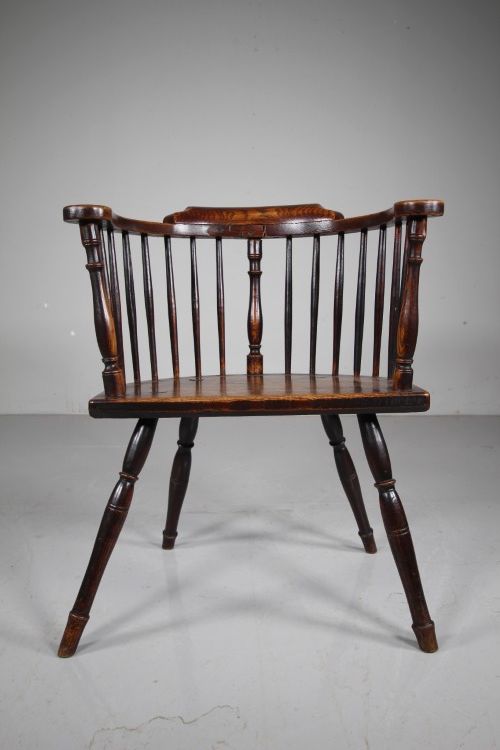
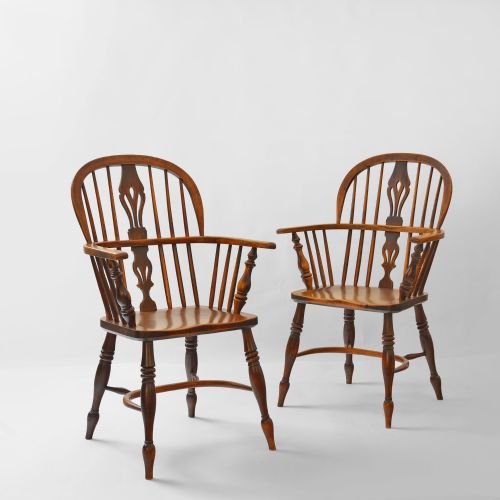
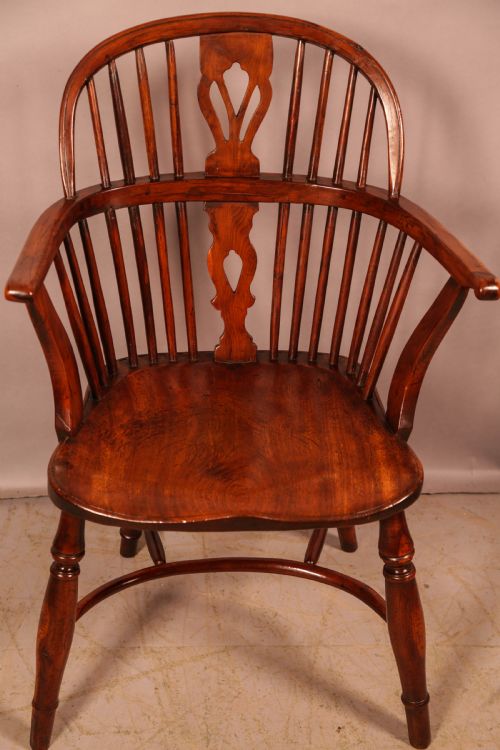
A georgian low back windsor is a traditional seating form defined by a low horizontal or fiddle back crest rail supported by spindles above a solid sculpted wooden seat. These chairs appear in dining chairs and armchairs, manifesting styles from english country to vernacular british.
The pieces seen here date across the eighteenth century, the nineteenth century, and the georgian period. Elm, ash, and yew wood dominate the selection, often paired in mixed timber construction where seats and backs utilise different woods.
Buyers most frequently encounter ash and elm combinations alongside rich yew wood examples featuring burr back splats. These sturdy forms serve admirably as desk chairs or occasional seating around a farmhouse table.
Materials and Construction
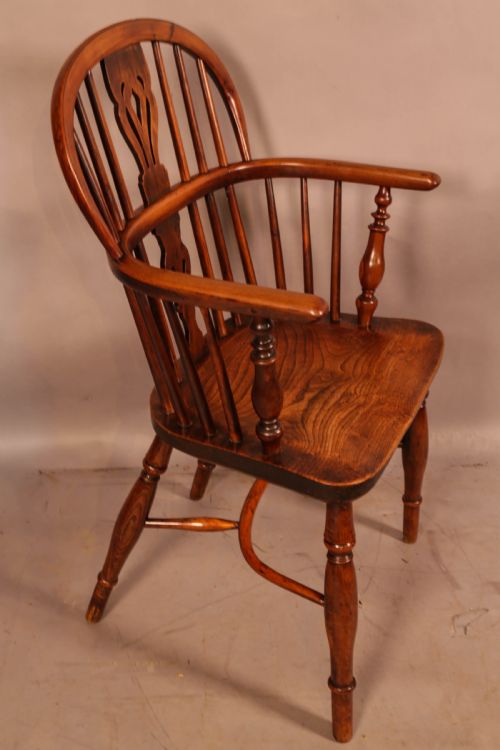
Craftsmen built these chairs using a combination of native timbers, selecting ash for flexible spindles and bending parts, and elm for the deep, dished plank seats. Yew wood frequently appears for its striking grain and lustrous appearance in the arms and upper backs.
The construction relies on traditional stick and spindle bracing, where turned legs and uprights fit directly into bored holes in the solid wooden seat. Beech and oak also appear occasionally in the framework and undercarriages.
Listings feature pieces spanning the 18th century, the 19th century, and the Georgian period, constructed primarily from elm, ash, and yew wood.
Assessing Quality and Character
Quality in a georgian low back windsor rests on the depth of the seat scalloping, the elegance of the spindle turnings, and the preservation of the original timber surface. Chairs with rich, untouched patination and tight joinery stand at the upper end of the range.
The choice of wood influences distinction, with highly figured yew wood and burr back splats commanding particular attention. The balance between the substantial saddle seat and the delicate rake of the legs determines the visual harmony of the piece.
Rockley Maker
The Georgian Low Back Windsor Glossary
- Windsor
- A traditional wooden chair constructed with upright spindles inserted into a solid carved seat rather than a framed back. This technique provides structural strength while maintaining a light profile.
- Fiddle back
- A shaped splat resembling the silhouette of a stringed musical instrument, positioned centrally in the back rail. This design element adds decorative refinement to country seating.
- Patina
- The surface sheen and colour developed by aged timber through decades of handling, light, and polishing. A fine patination enhances the visual depth of woods like yew and elm.
- Stick back
- A chair design where multiple plain turned rods form the back support without a central solid splat. This style is typical of utilitarian vernacular seating.
- Dished seat
- A wooden seat base carved into a concave depression to fit the human form. This ergonomic shaping makes the heavy plank seat surprisingly comfortable for prolonged sitting.
Georgian Low Back Windsor: Frequently Asked Questions
What is a low back Windsor?
A low back Windsor is a traditional wooden seating form characterised by a low crest rail and spindles mounted directly onto a solid plank seat.
These chairs offer a compact profile that fits easily beneath tables or desks while providing sturdy lower back support.
Where were these chairs made?
These chairs originated in rural English workshops, reflecting regional vernacular traditions across different shires.
Local bodgers and country chair makers utilised native hardwoods available in their immediate surroundings.
How do I care for antique elm and yew?
Keep wooden chairs away from direct heat sources and sudden temperature changes to prevent timber shrinkage and splitting.
Feed the dry wood occasionally with a traditional wax polish to maintain the surface lustre and protect the grain.
Are these chairs comfortable for daily use?
The heavily sculpted wooden seats provide surprising ergonomic support when paired with a well-angled back.
Many people use them as desk chairs or occasional seating where their sturdy frame handles daily activity with ease.