



Traditional Scottish Highlands Art
Traditional scottish highlands art captures dramatic mountain terrain, remote lochs and rural livestock through Victorian and early twentieth-century oil paintings.
Traditional Scottish Highlands Art
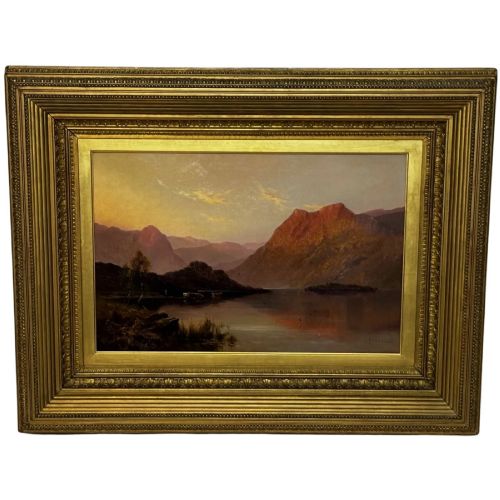
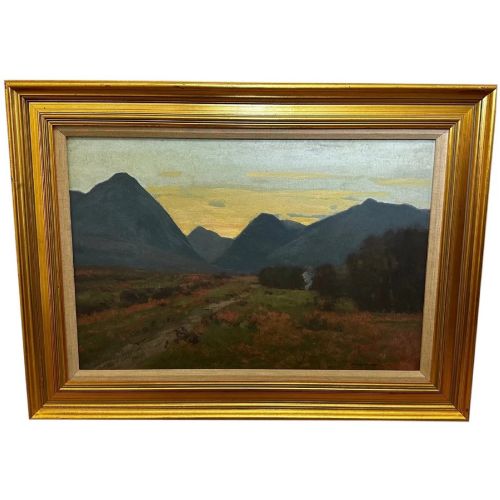
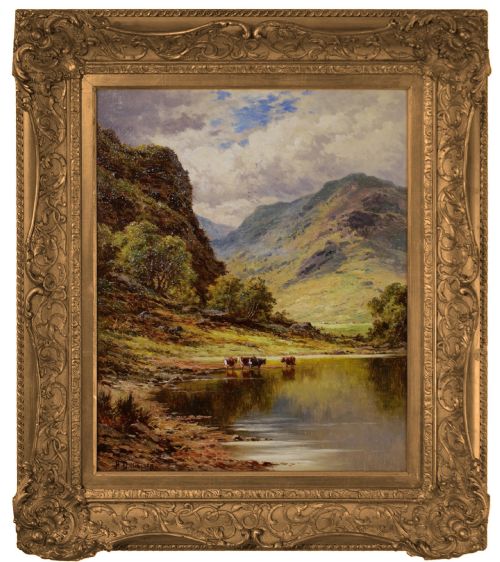
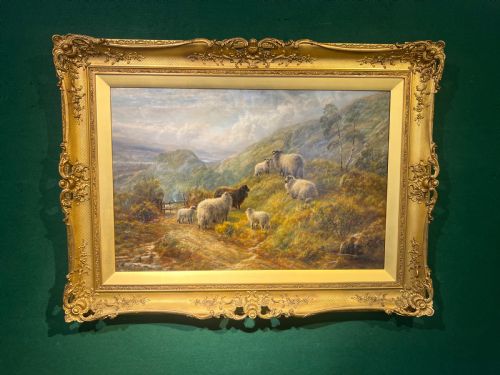
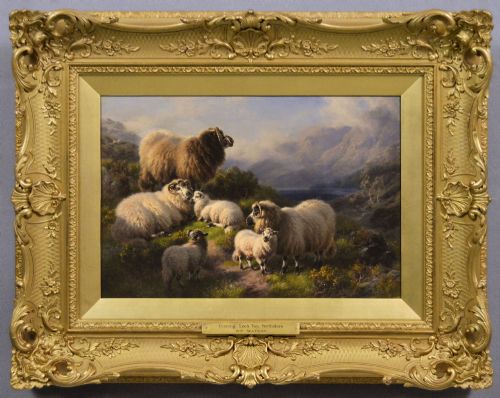
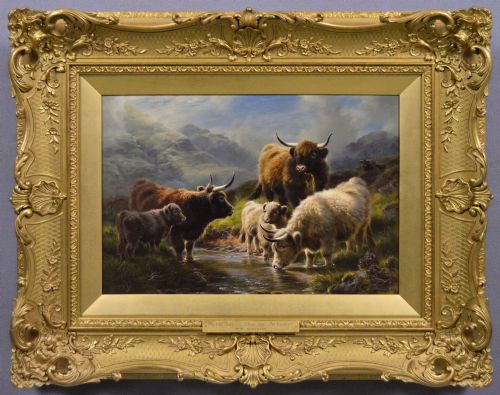
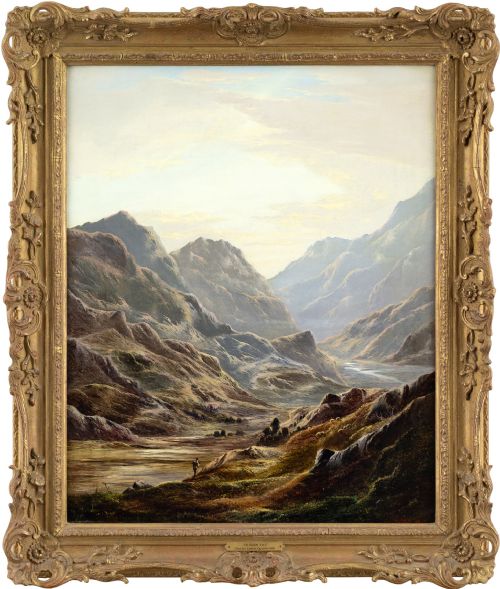
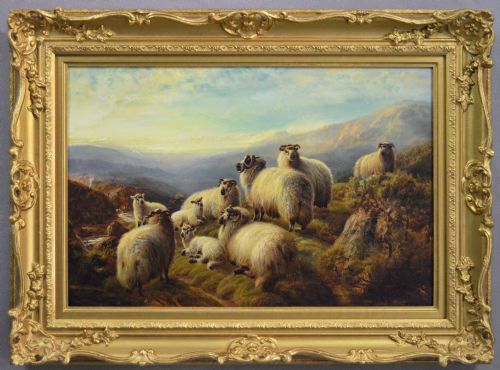
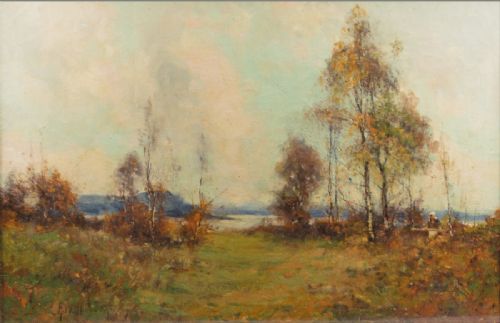
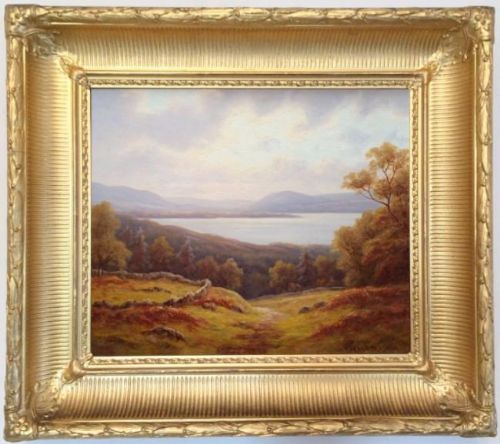
Traditional scottish highlands art primarily consists of oil paintings on canvas or wood panel originating from the nineteenth and early twentieth centuries. These works record regional landscapes, rural bothies and pastoral scenes featuring Highland cattle and sheep grazing by loch shores.
The dominant styles seen here span Victorian landscape, Scottish Impressionism and Post-Impressionism. Canvases frequently depict specific locations such as Loch Tay, Ben Lawers and Glen Tilt under changing atmospheric conditions.
Collectors encounter both expansive framed gallery pieces and intimate wood panel studies. Many examples combine topographical accuracy with romantic pastoral subjects characteristic of the period.
Materials and methods
Artists painted primarily with oil paint on stretched canvas or prepared wood panels, building texture with layered brushwork. Canvases were secured in decorative giltwood frames adorned with gesso moulding.
Pigments were applied to capture natural light across water and mountain mist, utilising both palette knife techniques and fine brush detailing for figures and animals.
Highland cattle stare from misty canvases across multiple centuries, seemingly unimpressed by the Scottish weather.
Determining quality
Quality rests upon the artist's command of light, atmospheric perspective and anatomical precision when rendering cattle and human figures. Superior canvases demonstrate confident brushwork that defines weather and terrain rather than relying on formulaic composition.
The preservation of the original oil surface and the integrity of the period giltwood and gesso frame influence the overall character of the piece.
William Beattie-Brown RSA·Tom Campbell·Alfred Fontville de Breanski Jr·George Houston RSA RSW·Henry H. Parker·Robert Watson·William Watson Jnr·Charles Leslie·Alexander Wellwood Rattray·Everett Watson Mellor·Archibald Kay RSA RSW·Henry Robinson Hall·W.E. Evans·Henry Hillier Parker·William Grant Murray·James Bell Anderson·Sidney Yates Johnson·John Charles Tunnard·Charles Jones·Nasmyth·George Melvin Rennie·George Turner·John W Morris·Alfred de Breanski Snr·AJ Thornton
The Traditional Scottish Highlands Art Glossary
- Giltwood
- Wood carved and coated with gold leaf or a gold-coloured metallic finish. This material forms the ornate frames typical of nineteenth-century paintings.
- Gesso
- A plaster-like mixture applied to wood frames as a base for moulding ornamental details. It provides the smooth white surface beneath guilding.
- Oil on Canvas
- Pigment mixed with drying oil applied to a woven fabric support. This combination allows for rich colour blending and textured impasto.
- Scottish Impressionism
- A painting style developed by artists adopting loose brushwork and vibrant light effects. It diverged from rigid academic realism while retaining local subject matter.
Traditional Scottish Highlands Art: Frequently Asked Questions
What periods do these paintings date from?
The available works span from the eighteenth century through to the mid-twentieth century, with a heavy concentration originating in the Victorian era and the early 1900s.
Artists working during these decades recorded the changing rural economy and romanticised landscapes of Scotland.
How should I care for an oil painting on canvas?
Keep paintings away from direct sunlight, high humidity and sudden temperature fluctuations to protect the canvas and paint layers. Dust the surface and ornate frames gently with a dry, soft brush.
Avoid using water or chemical cleaners on either the oil pigment or the gesso frame.
Are these works signed by the artists?
Many examples feature original signatures or monograms applied by the painter, often placed discretely in the lower corners of the canvas. Inscribed details on the reverse of the stretcher bars also provide clues.
Documentation such as exhibition labels occasionally accompanies the frame.
What framing is typically found on these pieces?
Most works are housed in period giltwood frames featuring moulded gesso ornamentation characteristic of Victorian and Edwardian framing styles. These heavy wooden surrounds complement the scale of the landscape.
Original frames maintain the historical context of the artwork.