

Scottish Landscape Original Art
When you search for scottish landscape original art, you enter a tradition of painted lochs, glens and coasts captured across the Victorian era into the mid-twentieth century.
Scottish Landscape Original Art
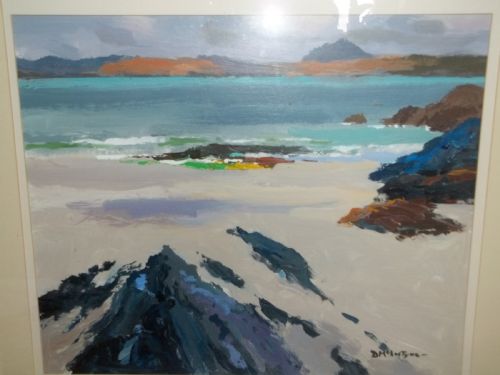
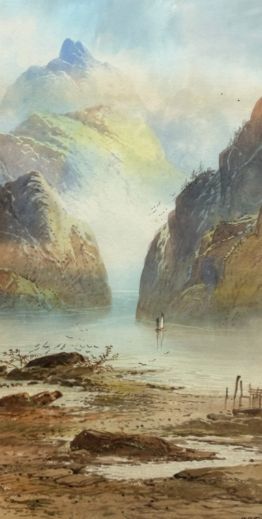
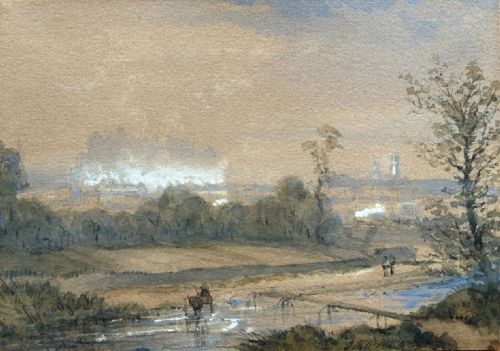
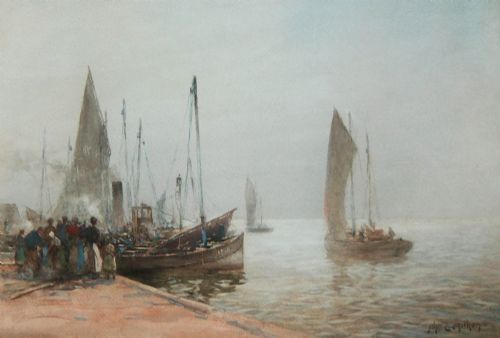
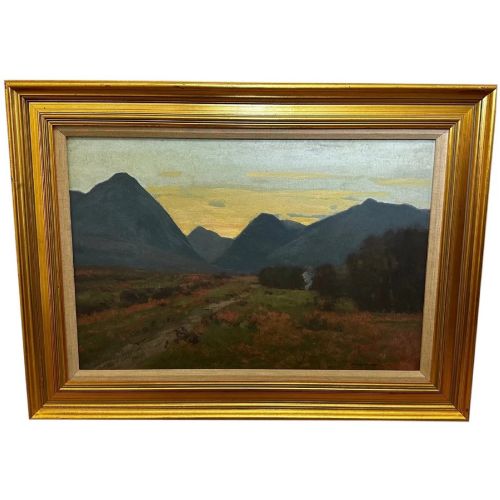
When looking for scottish landscape original art, you encounter works spanning the nineteenth and twentieth centuries, capturing locations from Loch Lomond to the Isle of Arran. The pieces range from intimate watercolour sketches to large oil paintings on canvas and wood panel.
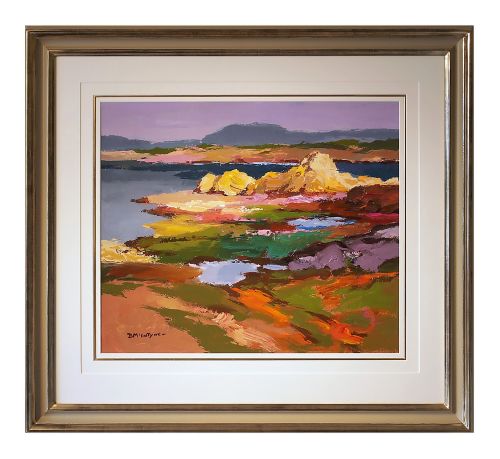
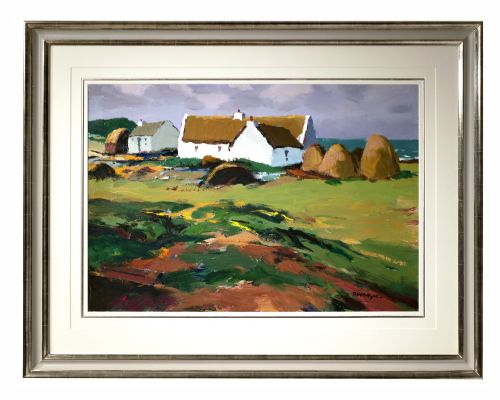
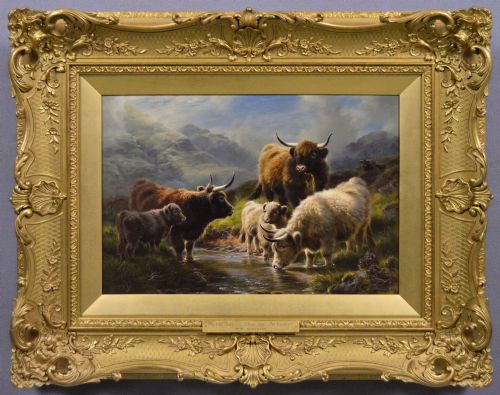
Victorian and Edwardian examples frequently depict Highland cattle, misty lochs and ruined castles under dramatic skies. Later works shift into Post-Impressionism, Scottish Impressionism and mid-century modern interpretations of coastal and crofting scenes.
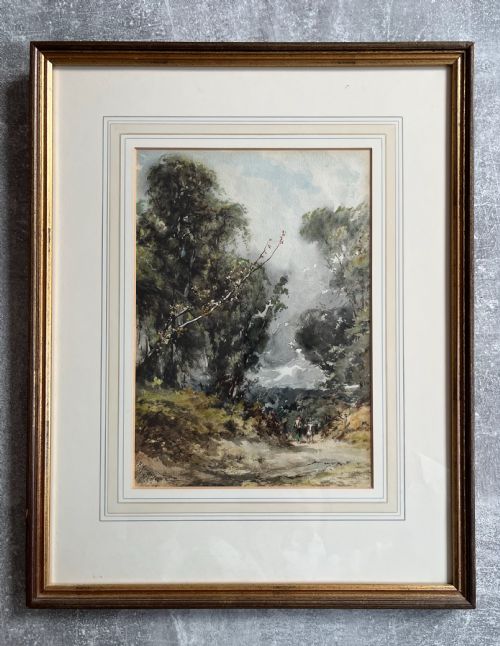
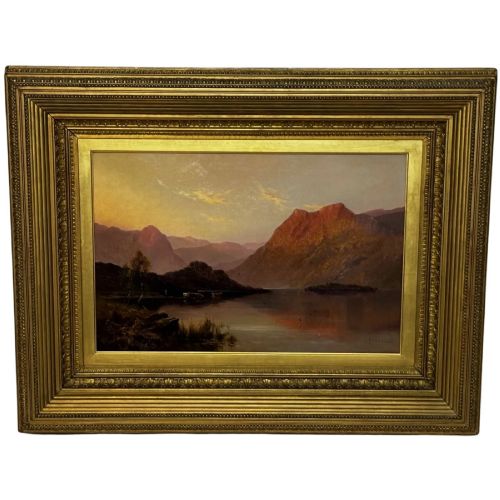
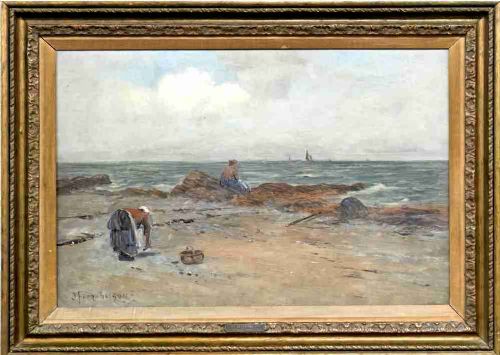
Watercolours on paper and oils on board or canvas dominate the selection. Most works are framed, often in period gilt moulding that complements the traditional subject matter.
How they were made
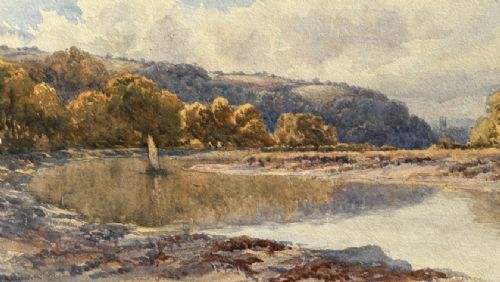
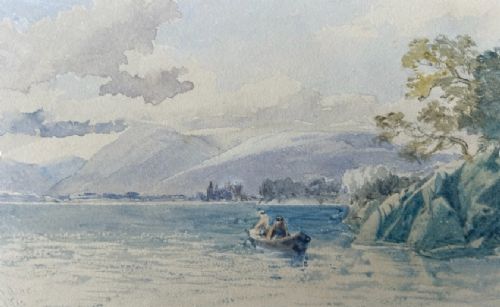
Painters utilised oil paint or watercolour applied to prepared canvas, wooden panels, board or heavyweight paper. Many nineteenth-century works build up transparent washes of watercolour to capture atmospheric Highland light and weather.
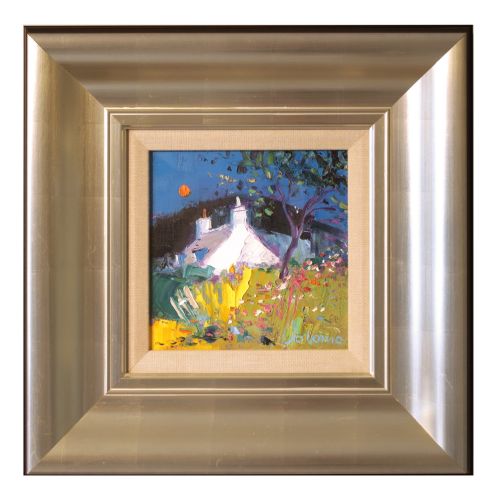
Oil paintings employ both smooth glazing techniques and heavier impasto application, particularly in later impressionist and mid-century works. Pigments are bound and layered to render the textures of stone, heather and water.
Substantial wooden frames, often gilded, house the paintings behind glass for watercolours or open to the air for oils. Signatures, monograms and dates are frequently inscribed directly into the pigment or onto the reverse support.
What varies in quality
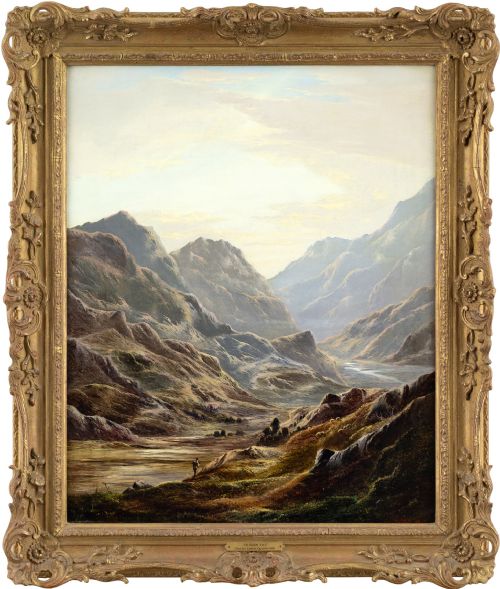
The handling of light and atmospheric depth distinguishes accomplished works from routine topographical records. Superior paintings manage tone and perspective to convey the vastness and mood of the terrain rather than mere geographical detail.
Brushwork mastery dictates the vitality of the surface, whether through the controlled precision of nineteenth-century watercolourists or the confident, energetic strokes of later impressionists. Material preservation also plays a part, with stable paint layers and minimal pigment fading maintaining the intended visual impact.
George Fotherly Hargitt·Thomas Miles Richardson Jnr·William Henry Earp·John R Prentice·Tom Campbell·Alfred Fontville de Breanski Jr·James E Aitken·George Houston·Donald McIntyre·John Lowrie Morrison·Joseph Farquharson·William Watson Jnr·Charles Leslie·Alexander Jamieson·Everett Watson Mellor·John Moxon·William George Tennick·Archibald Kay·Sir David Murray·Henry Hillier Parker·William Littlejohn·Frank Hider·H Wallace·William Grant Murray·John Douglas Perrett
The Scottish Landscape Original Art Glossary
- Impasto
- Paint applied thickly to a canvas or panel so that it stands proud of the surface and retains the marks of the brush or palette knife. This technique adds tactile dimension and captures light dynamically across the painted landscape.
- Watercolour
- A painting method where fine pigment is suspended in a water-soluble binder and applied to paper. It relies on the white of the paper shining through translucent washes to create luminosity.
- Wood Panel
- A rigid flat wooden support used instead of canvas for oil paintings, particularly common in nineteenth-century works. It provides a stable ground that prevents the cracking often found on aged fabric.
- Gilt Frame
- A wooden picture frame coated with gold leaf or metallic paint. Period examples are often heavily moulded and ornamented to suit Victorian and Edwardian fine art.
- Monogram
- A motif made by overlapping or combining two or more letters to form a single symbol, often used by artists to sign their work in place of a full signature.
Scottish Landscape Original Art: Frequently Asked Questions
What periods do these paintings cover?
The works span from the mid-nineteenth century through the Victorian and Edwardian eras into the mid-twentieth century. Earlier pieces lean towards traditional topographical and romantic Highland scenes, while later items embrace impressionist and modernist movements.
Dates and attributions are typically confirmed by signatures, monograms or exhibition labels recorded on the frame or reverse of the panel.
How should I care for an antique watercolour?
Watercolours are sensitive to light and moisture because they utilise paper and water-soluble pigments. They should be hung away from direct sunlight to prevent fading and kept in stable environmental conditions.
Glazed frames protect the paper surface from dust and atmospheric pollutants, so the original framing should be preserved where possible.
Are these paintings signed by the artist?
Many of the works bear the original signature, monogram or date inscribed by the artist within the composition. Some pieces also include inscriptions, titles or artist sketches on the reverse of the canvas or board.
Documentation of this nature helps establish the provenance and period of the artwork.
What subjects feature most often in these landscapes?
Common subjects include Highland cattle grazing near lochs, rugged mountain ranges such as Ben Lawers, and coastal views featuring ruined castles. Rivers, stone bridges and rural crofts also appear frequently across both watercolours and oils.
These motifs reflect the romantic fascination with the Scottish wilderness that developed during the Victorian period and persisted into the twentieth century.