




Vintage Moorland Landscape Painting
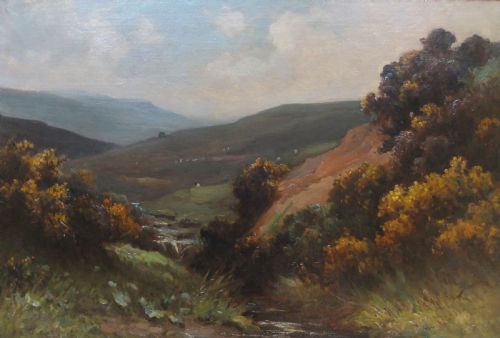
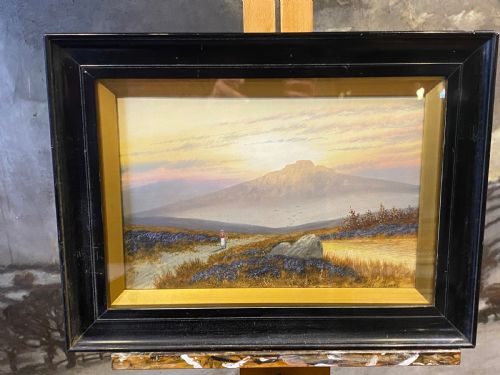
A vintage moorland landscape painting captures the open, heather-covered expanses of British hills through the precise brushwork of artists working across the Victorian and twentieth-century periods.
Vintage Moorland Landscape Painting
A vintage moorland landscape painting depicts remote terrain, hills, and upland expanses, frequently populated by sheep, ponies, or figures traversing paths. These works emerge from Victorian, Edwardian, and mid-twentieth-century traditions, spanning regional British schools from Scotland to the West Country.
The versions most commonly met on this page include oil paintings on wood panel, canvas, or board alongside watercolour paintings on paper. These pieces range from intimate framed watercolours to substantial oils.
Subjects often focus on specific locales such as Yorkshire, Dartmoor, or the Scottish Highlands, recording local terrain under shifting atmospheric conditions. Painters utilise distinct regional palettes to render the open skies and rolling ground characteristic of these habitats.
Materials and technique
Artists apply oil paint or watercolour using traditional methods on supports of canvas, wood panel, board, or paper. Oil paintings build up rich surface textures through layered brushwork, while watercolours rely on fluid washes applied to paper to capture atmospheric light.
Framing forms an integral part of these works, utilising gilt wood or simple wood frames that protect the paper or canvas beneath glass where appropriate. Surviving pieces retain these original or period mounts which complement the visual style of the composition.
Listings feature works spanning from the Victorian period through the 1960s, executed in oil paint and watercolour on paper, canvas, board, and wood panel.
What separates the best examples
Quality rests upon the artist's handling of light, atmosphere, and spatial depth, transforming a simple upland view into a compelling composition. Stronger works demonstrate confident brushwork and precise tonal balance, particularly in the depiction of expansive skies and weather.
The integration of livestock or figures into the wider landscape distinguishes finer examples, where animals are rendered with anatomical accuracy rather than mere suggestion. Preservation of the original surface, whether oil on panel or watercolour on paper, also governs the standing of a piece.
Tom Campbell·Charles Walter Simpson·Owen Bowen·James Orrock·John A Houston·Florence Hess·Joseph Farquharson·Ernest Higgins Rigg·Peter Jackson·Charles James Adams·Rowland Henry Hill·Robert Cleminson·Alfred Graham·Fred Lawson·Lewis Creighton·Brian Richardson·W H Dyer
The Vintage Moorland Landscape Painting Glossary
- Watercolour painting
- A work executed with water-soluble pigments on paper. This medium relies on the white of the paper showing through transparent washes to create light.
- Wood panel
- A rigid wooden support used by artists instead of canvas. These panels provide a smooth surface that holds fine detail in early twentieth-century works.
- Gilt wood
- Wood covered with a thin layer of gold leaf or metallic gilt finish. This material is standard for traditional picture frames enclosing Victorian fine art.
- British Impressionism
- A late nineteenth and early twentieth-century painting style focusing on natural light and loose brushwork. Artists working in this manner recorded transitory effects of weather on moorland.
- Scottish School
- A regional grouping of artists producing landscape and genre works north of the border. These painters often depicted highland terrain and coastal settings.
Vintage Moorland Landscape Painting: Frequently Asked Questions
How do I date a moorland painting?
Dating relies on stylistic evidence, materials, framing, and artist biographical details recorded on the piece or verso. Victorian works often feature heavier gilt framing and narrative elements, while mid-twentieth-century examples display looser brushwork on board.
Examining the backing paper, signatures, and any old gallery labels provides further chronological markers. Comparing the technique to known dated works by the same hand confirms the period.
Are watercolours as durable as oils?
Watercolours painted on paper require protection behind glass and avoidance of direct sunlight to prevent fading. Oil paint on canvas or wood panel presents a more robust surface that withstands normal indoor conditions.
Both mediums survive well when kept away from excessive moisture and extreme temperature fluctuations. Proper framing ensures the preservation of the paper or canvas support over generations.
Where should I hang these paintings?
These works suit rooms with stable humidity levels, away from direct sunlight and heat sources such as radiators. Positioning them at eye level in natural indirect light allows the details of the landscape to be appreciated.
Matching the frame to the surrounding interior helps integrate the piece into the room. Secure wall fixings are essential for heavier framed oil paintings on canvas or panel.
What subjects appear alongside the landscape?
Common secondary subjects include grazing sheep, highland cattle, and working dogs navigating the upland terrain. Figures such as drovers or walkers also populate the paths winding through the heather.
Game birds and wildlife frequently feature in pieces associated with sporting art traditions. These elements provide scale and narrative interest to the broad moorland views.