




Traditional Red Leather Carver
Traditional red leather carver chairs bring rich colour and commanding presence to a dining table.
Traditional Red Leather Carver
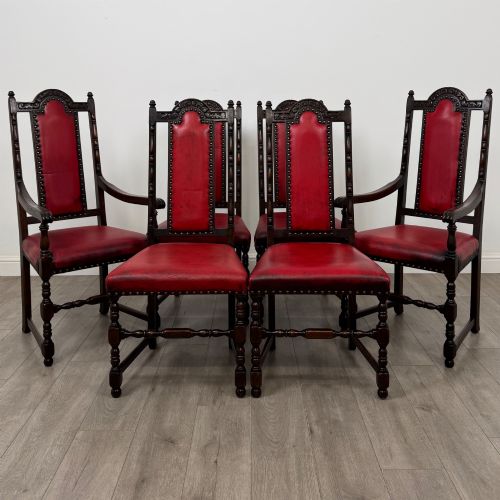
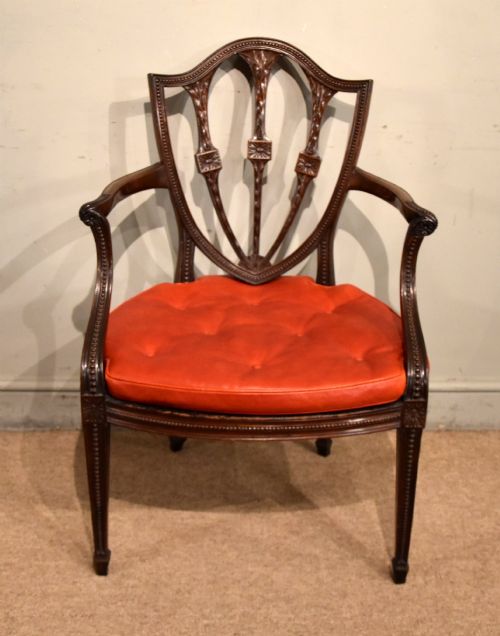
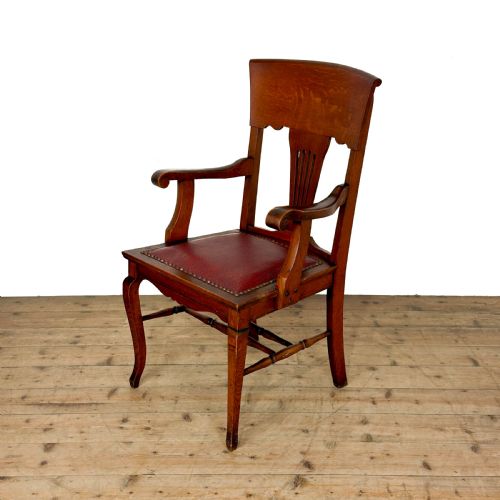
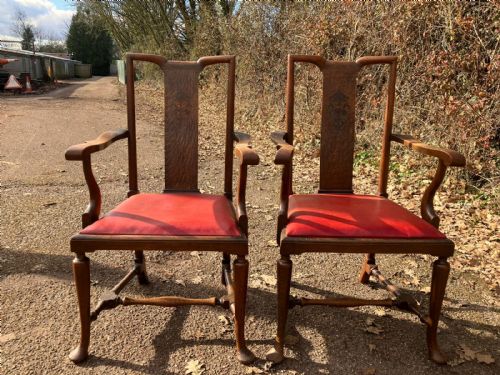
A traditional red leather carver is an armchair designed for the head of a dining table, upholstered in red leather and framed in timber. These pieces combine substantial timber armframes with supportive upholstered seats and backs, offering both comfort and visual weight.
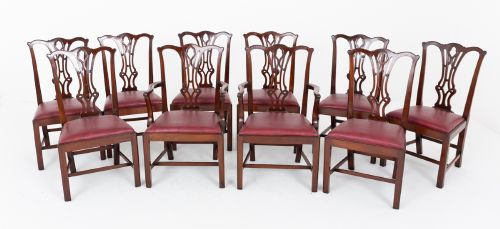
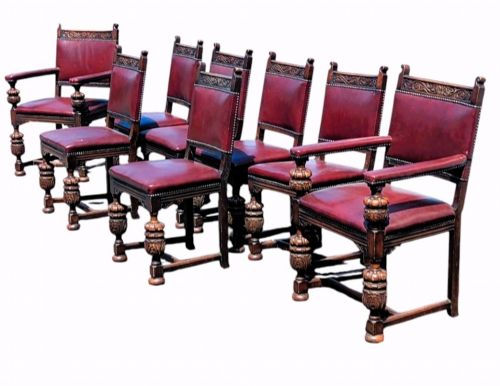
The selections available range widely across periods and revival styles, spanning Georgian and Regency origins alongside Edwardian, Victorian, and later revivals from the early twentieth century. Common timber frames include mahogany, oak, and walnut, frequently incorporating decorative elements like brass studs.
Buyers seeking a traditional red leather carver will encounter single chairs, pairs, and larger suites where carvers accompany matching side chairs. The form serves primarily as a dining armchair, though certain walnut and oak examples function equally well as desk or library seating.
How they were made
Makers constructed these frames using dense hardwoods such as mahogany, oak, and walnut, shaped through traditional joinery to support the weight of an armchair. Timber components often feature carved details, scroll arms, or revival styling that reflects the period of manufacture.
Upholstery relies on fitted leather hides secured directly to the wooden frame, frequently finished with brass studs along the seat or back edges. This combination of structural timber and durable leather provided the functional longevity required for daily dining use.
Listings feature timbers including mahogany, oak, walnut, and brass, spanning periods from the eighteenth century through to the 1930s.
What varies in quality
The distinction between tiers of quality rests upon the crispness of the timber carving and the architectural proportion of the frame. Superior examples demonstrate confident handling of styles like Chippendale or Regency, with balanced scroll arms and well-chosen wood grain.
Material selection further defines the piece, from the depth and grain of the mahogany or walnut to the quality and tanning of the red leather hide. Finer construction shows in the snug integration of the upholstery and the structural integrity of the arm supports.
The Traditional Red Leather Carver Glossary
- Carver
- An armchair designed specifically for the head of a dining table, distinguished by open arms that fit beneath the table rim.
- Scroll arm
- An armrest curved outward in a continuous volute scroll, commonly seen on Regency and revival dining chairs.
- Brass studs
- Small metallic fastening nails with domed heads used to secure leather upholstery directly to the wooden frame.
- Chippendale style
- A decorative aesthetic drawing on eighteenth-century cabinet-making designs, frequently characterised by carved mahogany frames.
Traditional Red Leather Carver: Frequently Asked Questions
How do I style a carver chair in a modern dining room?
Carvers work effectively as host chairs at opposite ends of a dining table while simpler side chairs run along the flanks. Their generous armrests and bold red leather provide a natural visual anchor for the dining space.
Beyond the dining room, sturdy oak or walnut carvers function well as desk chairs or reading seats in a study or library.
How can I tell different periods apart?
Period identification relies on timber choice, silhouette, and specific decorative vocabulary. Georgian and Regency pieces typically utilise mahogany with refined scrollwork or classical proportions, while Edwardian and later revival items often draw directly on these earlier forms.
Examining the construction methods within the frame and the style of the arm supports helps clarify whether a piece dates from an original historical period or a later revival.
Were these chairs always used at dining tables?
While primarily built as dining armchairs, many carvers served dual purposes in the home. Sturdier timber frames in oak or walnut were frequently utilised at writing desks or as occasional seating in reception rooms.
The inclusion of padded red leather made them comfortable enough for extended periods of sitting during meals or administrative tasks.