


Traditional Qashqai Carpet
When buying a traditional qashqai carpet, you are stepping into the rich, nomadic weaving traditions of south-west Persia.
Traditional Qashqai Carpet
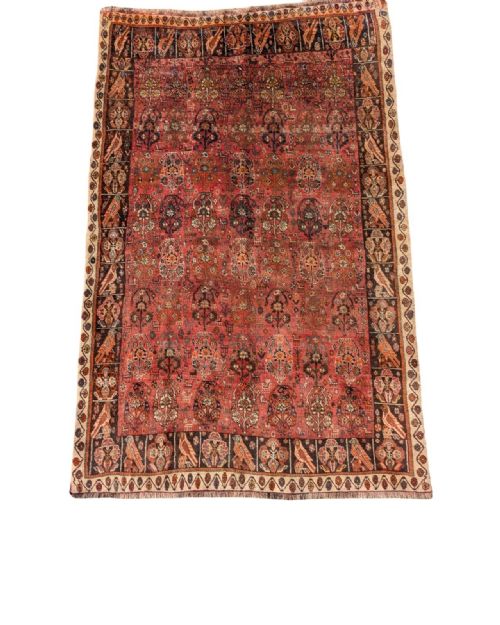
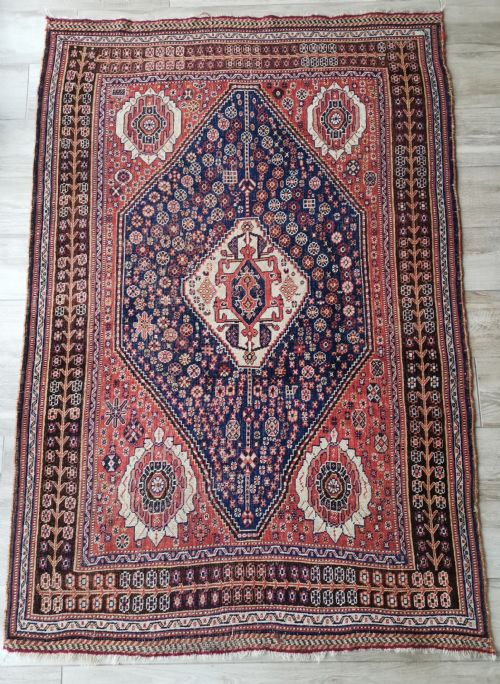
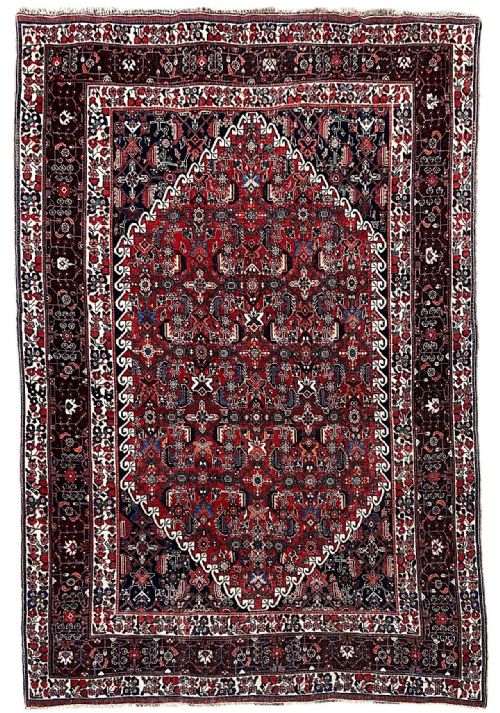
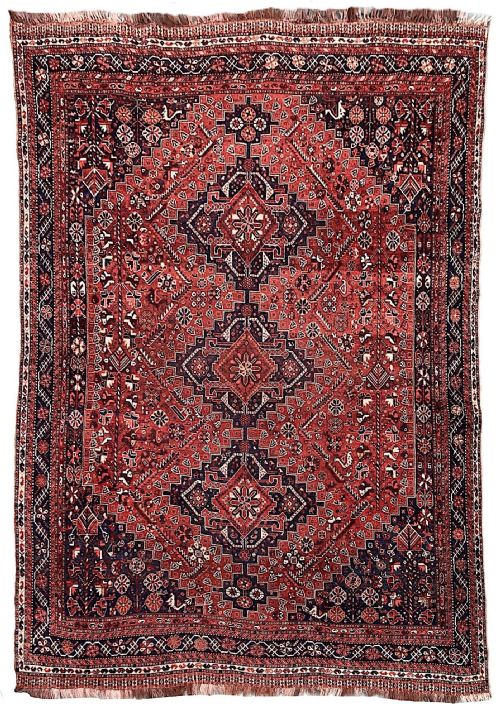
A traditional qashqai carpet is a tribal weaving originating from the nomadic peoples of south-west Persia. These pieces include rugs, runners, kelims, and larger carpets created for practical use within tribal life.
Most examples encountered on this page date from the nineteenth and early twentieth centuries, spanning periods from the 1880s to the 1930s. They frequently exhibit distinct tribal styles, encompassing Persian tribal, Gabbeh, Shekarlu, and Khamseh influences.
Makers utilised traditional formats, ranging from smaller area rugs to substantial kelleh carpets and flat-woven kelims. The designs often incorporate geometric motifs, tree of life patterns, and central medallions.
What varies in quality
Quality in these carpets rests upon the fineness of the weave, the integrity of the wool, and the depth of the natural dyes. Denser knotting and careful hand-spinning distinguish the finer examples from simpler village work.
Condition also plays a part, with full-piled surfaces and well-preserved borders maintaining greater visual impact. The vibrancy and stability of the natural colour palette further separate standard rugs from superior pieces.
Certain antique rugs feature hidden peacock motifs woven right into the geometric tribal fields.
The Traditional Qashqai Carpet Glossary
- Gabbeh
- A type of tribal rug known for a simpler, more open field design with long wool pile. These pieces often display minimal geometric patterns.
- Kelims
- Flat-woven rugs and carpets made without a pile, created by tightly interweaving warp and weft threads. They are lightweight and traditionally used as floor coverings or hanging partitions.
- Khamseh
- A confederation of tribes from south-west Persia whose weaving traditions overlap closely with Qashqai work. Pieces from this region share similar motifs and palette choices.
- Kelleh
- A specific format of long, narrow Persian carpet designed for traditional room layouts. They are intermediate in length between standard rugs and full room-size carpets.
- Shekarlu
- A sub-group style associated with Qashqai weavers, often recognised by distinct block or medallion arrangements on a red ground.
Traditional Qashqai Carpet: Frequently Asked Questions
How do I clean a traditional qashqai carpet?
Professional specialist cleaning is essential for antique wool and natural dye textiles. Avoid household detergents and vigorous scrubbing to protect the delicate fibres.
Regular gentle vacuuming without a beater bar helps remove dust and prevents grit from settling into the hand-spun wool pile.
Where were these carpets originally made?
These pieces were produced by nomadic and village tribes operating in south-west Persia. The makers moved seasonally, carrying their looms with them.
Their surroundings and cultural symbols directly influenced the geometric motifs and animal patterns woven into the wool.
Can I use an antique rug on the floor?
These carpets were built for daily functional use by tribal groups. Placing a quality underlay beneath the rug helps cushion the wool pile and prevents slipping.
Foot traffic is generally acceptable on sturdy, full-piled pieces, while fragile flat-woven kelims benefit from placement in lower-traffic areas.
How do I date an older carpet?
Dating relies on examining the specific wool texture, the chemical composition of the natural dyes, and the structural weave. Stylistic details like specific medallion layouts also provide clues to the period.
Pieces from the nineteenth century often show distinct hand-spun irregularities compared to later twentieth-century production.