



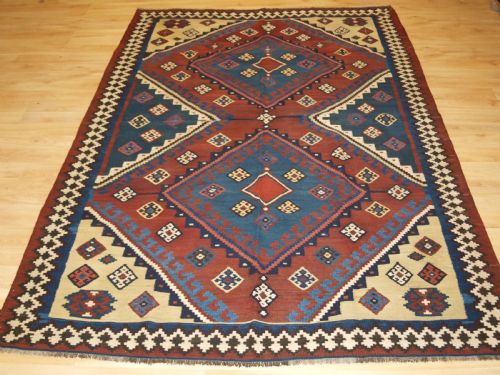
Handwoven Qashqai Kilim
These handwoven qashqai kilim pieces are flat-woven tribal textiles from South-West Persia that bring rich geometric patterns and authentic nomadic history into any room.
Handwoven Qashqai Kilim
When you search for handwoven qashqai kilim, you encounter flat-woven rugs, saddle-bags, and salt-bags originating from the Qashqa'i Confederacy and tribes in the Fars Province of South Persia. The examples you are most likely to meet on this page span the late nineteenth century and the early twentieth century, specifically from the 1870s through to the 1920s.
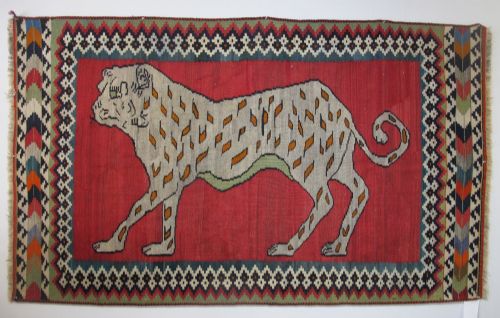
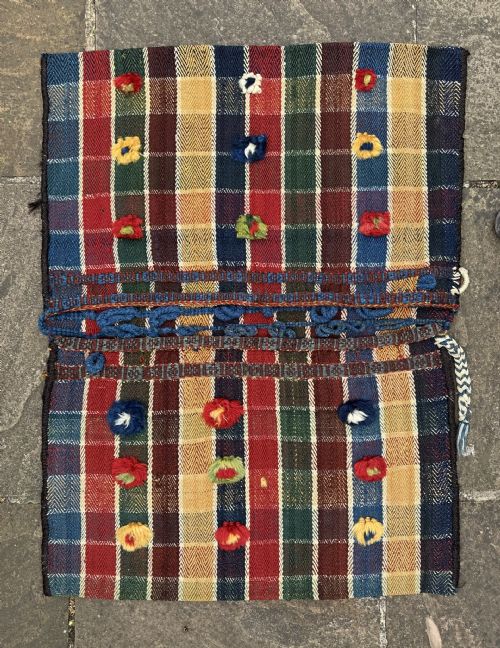
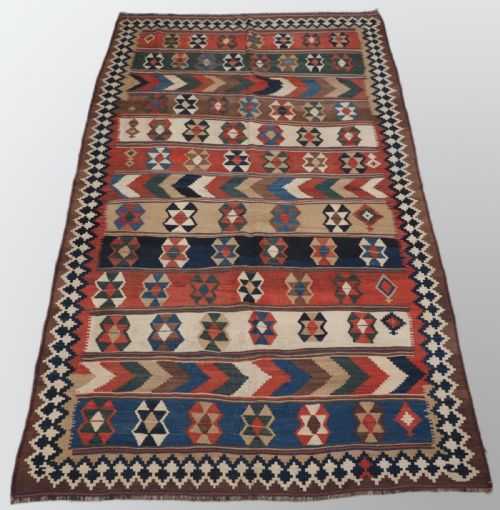
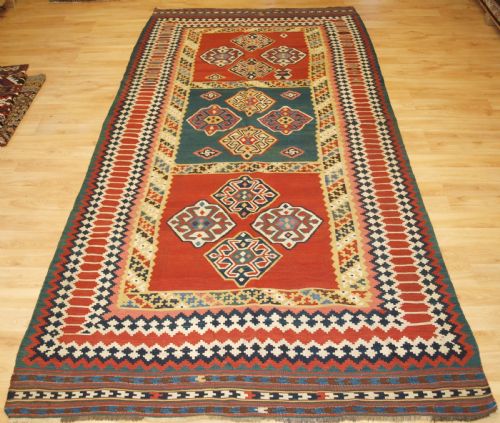
These textiles include distinctive regional forms such as tribal kilim rugs, saddle-bags attributed to specific groups like the Darrehshuri Tayefeh, and salt-bags associated with the Shekarlu Tayefeh. Designs range from banded and compartment layouts to eye-dazzler patterns and diamond medallions, alongside pictorial pieces featuring motifs like the lion.
Produced by nomadic and settled tribal groups in Persia, these items served practical daily functions within tribal life before entering the collector market. Their flat-woven structure lacks a pile, resulting in a lighter textile that distinguishes them from traditional knotted carpets.
How They Were Made
The materials recorded in these listings rely primarily on wool and hand-spun wool, often combined with cotton foundations or structural elements. Artisans utilised natural dyes to achieve the distinct colour palettes seen across the tribal and Persian tribal styles.
The manufacturing technique involves flat-weaving rather than knotting, creating a tapestry weave where the pattern is formed by interweaving the coloured weft threads tightly over the warp. This method produces crisp geometric boundaries and identical patterns visible on both sides of the textile.
Listings span the periods from 1870 to 1920, focusing entirely on South-West Persian tribal production.
What Varies in Quality
Quality in a handwoven qashqai kilim rests upon the fineness of the weave and the precision of the geometric execution. Tighter interweaving and more complex arrangements, such as multi-medallion layouts or intricate compartment designs, reflect greater technical skill by the weaver.
The choice of materials and dye purity also divide the range, with hand-spun wool and deeply saturated natural dyes producing richer visual depth. Specific tribal attributions and rarer pictorial elements, such as the lion motif, elevate certain pieces above standard geometric field designs.
The Handwoven Qashqai Kilim Glossary
- Kilim
- A flat-woven textile produced without a pile, traditionally utilised as a rug or utility hanging in Middle Eastern and Persian households. This construction method creates a lightweight fabric with geometric patterns.
- Qashqa'i
- A confederation of nomadic pastoralist tribes originating in the Fars province of South-West Persia. Their weavers are renowned for distinctive geometric designs and rich natural palettes.
- Tayefeh
- A sub-tribe or clan within the larger Qashqa'i tribal confederacy. Specific clan attributions help identify the hyper-local provenance of particular saddle-bags and kilims.
- Salt-Bag
- A small utility container woven by tribal groups to store salt for livestock, featuring a narrow neck and flat-woven construction. These functional pieces often display dense geometric ornamentation.
- Eye Dazzler
- A bold, high-contrast geometric design intended to create a striking visual vibration across the textile surface. This style appears on select tribal kilims from the turn of the twentieth century.
Handwoven Qashqai Kilim: Frequently Asked Questions
Where were they made?
These textiles originate in the Fars Province of South-West Persia, produced by various clans of the Qashqa'i Confederacy.
Specific sub-tribes, such as the Darrehshuri and Shekarlu, created distinct bags and rugs within the region.
How do I care for a flatweave?
Protect your kilim by using an appropriate underlay to prevent slipping and vacuum gently without using a rotating brush head.
Keep the textile out of direct sunlight to preserve the integrity of the natural dyes used in the wool.
What are tribal saddle-bags?
Functional containers woven in pairs by nomadic groups to transport belongings on pack animals across the Fars Province.
They feature intricate flat-woven faces that display the specific aesthetic of the sub-tribe that wove them.