



Traditional Prayer Carpet
These traditional prayer carpet examples bring centuries of weaving heritage into domestic interiors through defined architectural mihrabs and regional motifs.
Traditional Prayer Carpet
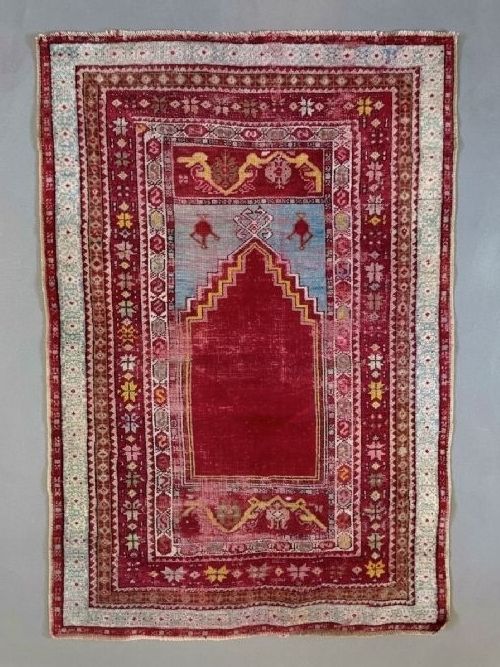
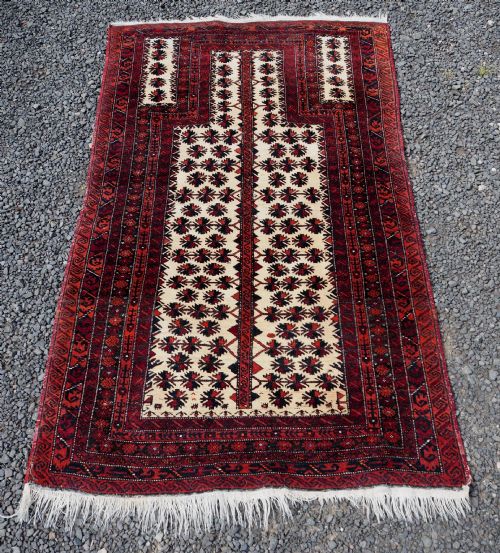
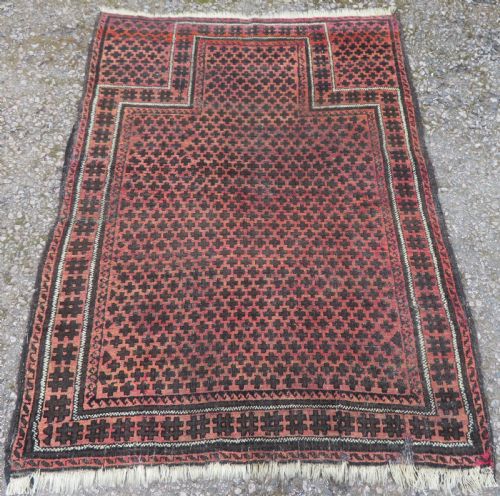
A traditional prayer carpet serves as a portable space for devotion, distinguished by a central arched niche known as a mihrab that directs the user toward Mecca. These textiles originate from diverse weaving traditions across Anatolia, the Caucasus, Persia, and Afghanistan.
The pieces appearing on this page span from the eighteenth century through to the early decades of the twentieth century, encompassing village and tribal workshops. Buyers will encounter format variations ranging from single mihrab designs to double mihrab and multi-tiered mosque layouts.
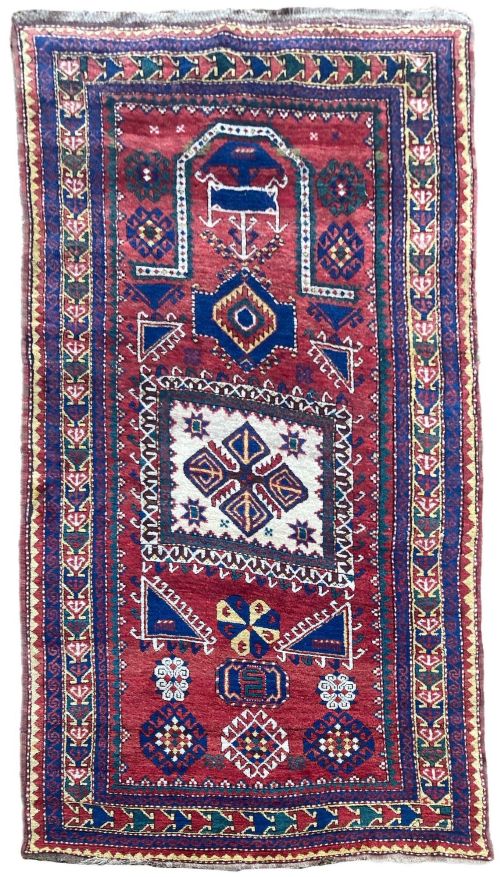
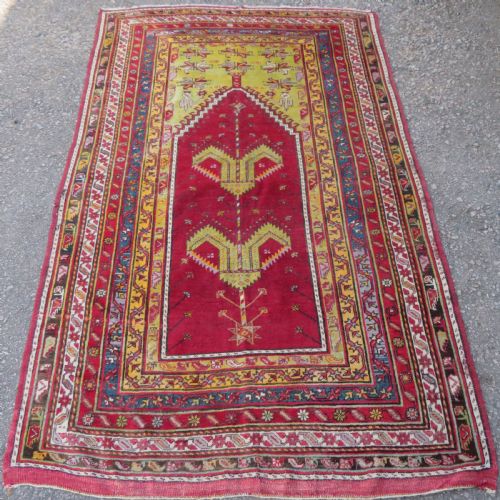
Regional aesthetics dictate the composition, with Anatolian examples often displaying Ghiordes, Ladik, or Kirsehir designs, while Caucasian and Afghan makers employ Kazak, Baluch, or Kizil Ayak vocabularies. Each piece reflects the specific cultural geometry and palette of its origin.
Materials and construction methods
Weavers constructed these textiles predominantly using wool, hand-spun wool, and cotton foundations, occasionally incorporating silk for fine detailing or goat hair and angora wool for specific tactile qualities. Natural dyes provided the deep reds, blues, and yellows that define the visual impact of the older examples.
The execution relies on hand-knotted pile techniques worked onto warp and weft foundations, requiring considerable labour and precision from individual artisans. Structural integrity depends on the tightness of the knotting and the quality of the wool preparation.
Listings feature traditional prayer carpet examples utilising materials such as hand-spun wool, cotton, silk, and natural dyes across multiple centuries.
Elements of distinction
Quality rests upon the crispness of the drawing within the mihrab and the saturation and depth of the natural dyes used across the field. Superior examples demonstrate a careful balance between the primary medallion or arch and the surrounding borders.
The fineness of the knot count and the handling of the wool contribute significantly to the durability and handle of the textile. Individual expression by the weaver elevates certain village and tribal pieces above standard workshop production.
The Traditional Prayer Carpet Glossary
- Mihrab
- The arched niche found at one end of a prayer rug, symbolising the direction of prayer.
- Ghiordes
- A notable Anatolian weaving centre and design style frequently characterised by tiered arches and floral motifs.
- Kazak
- A style of bold, geometric rug traditionally woven in the Caucasus region using saturated primary colours.
- Baluch
- A tribal weaving group originating from the borderlands of Persia and Afghanistan, known for dark palettes and intricate geometric fields.
- Warp
- The vertical threads stretched across the loom that form the structural foundation of the carpet.
Traditional Prayer Carpet: Frequently Asked Questions
How do I identify a prayer rug?
A prayer rug is immediately recognisable by its prominent arched mihrab design at one end, which directs the user during daily devotions. The field within the arch often remains uncluttered to provide a clean space for the knees and forehead.
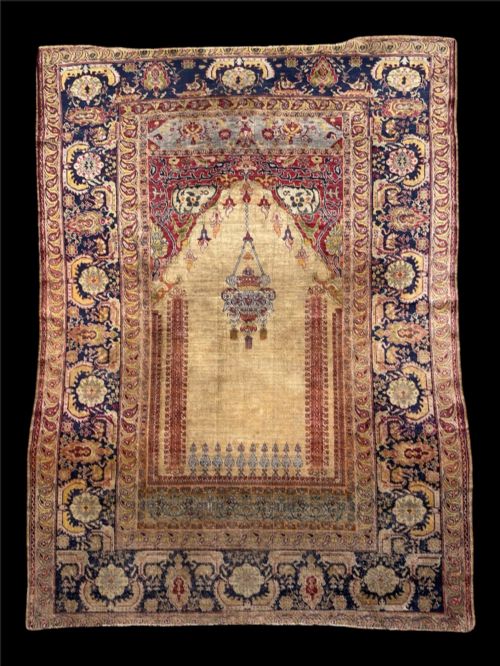
Additional indicators include small lamp or ewer motifs hanging within the arch, as seen in various Turkish and Afghan village pieces. These symbols distinguish devotional carpets from standard floor coverings.
Where were these carpets made?
The pieces originate from traditional weaving regions across Anatolia, the Caucasus, Persia, and Afghanistan. Specific towns and districts, such as Ghiordes, Kirsehir, and Kazak, developed distinct aesthetic signatures.
Village and nomadic tribal groups produced the majority of these examples, incorporating local materials and symbolic patterns passed down through generations. This regional diversity ensures no two weaving traditions are identical.
What materials are used?
Traditional construction relies heavily on sheep wool for the pile, often hand-spun to retain natural lanolin and durability. Cotton and wool foundations provide the underlying structural support for the knots.
Certain finer pieces incorporate silk highlights, while regional variations include goat hair and angora wool. Natural dye sources provide the characteristic colour palette across the older specimens.
How should I care for a antique rug?
Protect the textile by placing it in low-traffic areas away from direct sunlight to preserve the natural dyes and fibres. Regular gentle vacuuming without a rotating brush bar removes embedded dust safely.
Professional cleaning should be undertaken periodically by specialists familiar with antique wool and natural dyes. Avoid exposing the foundation to excessive moisture or harsh chemical treatments.