
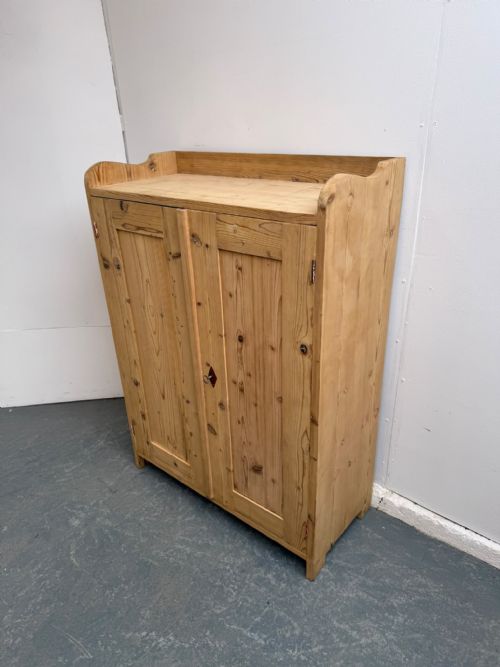


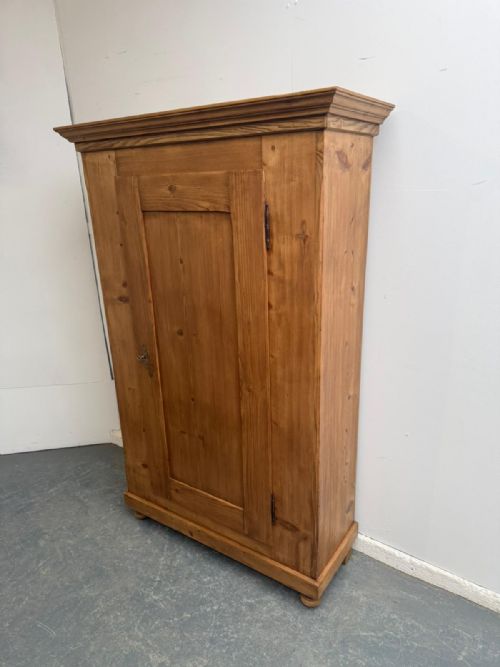
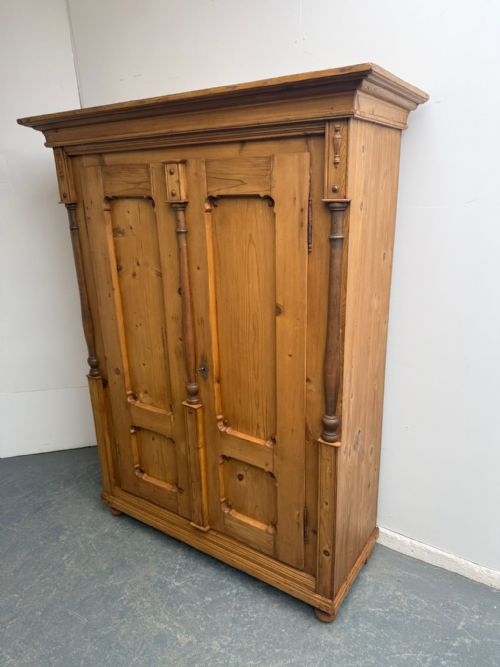
Traditional Pine Storage Press
A traditional pine storage press offers robust utility and honest charm, bringing generous proportions and warm character into domestic spaces.
Traditional Pine Storage Press
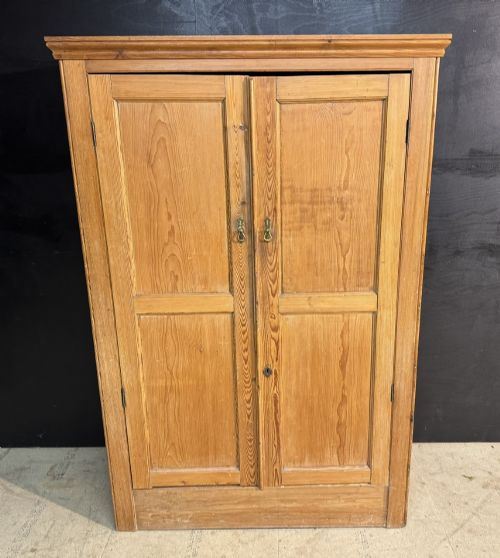
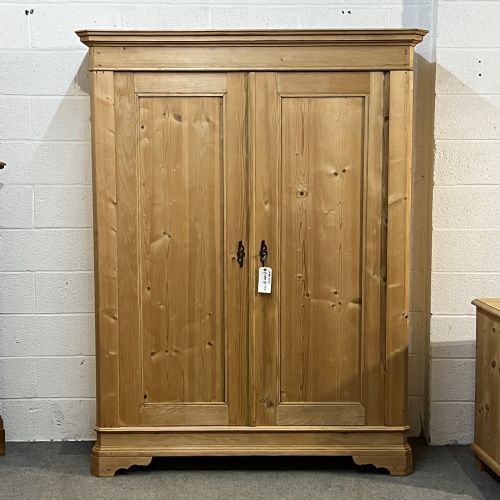
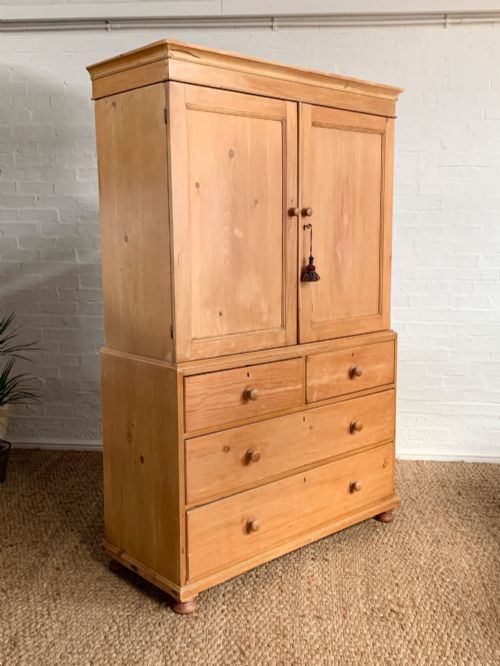
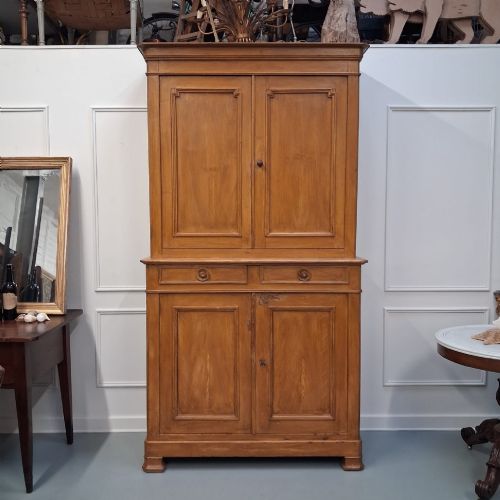
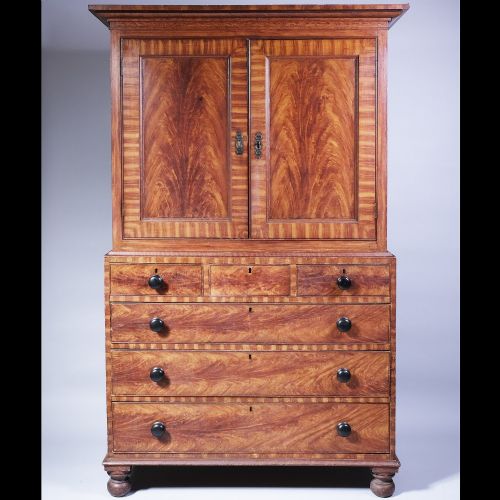
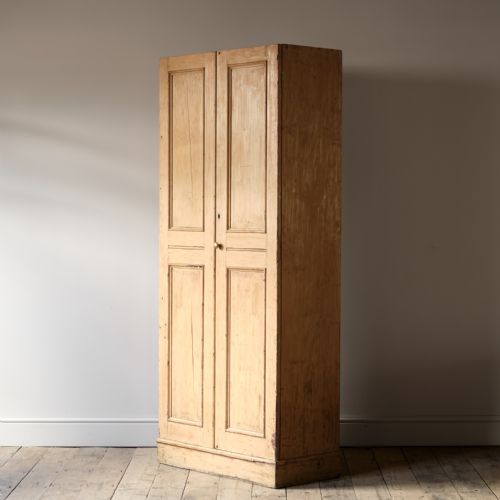
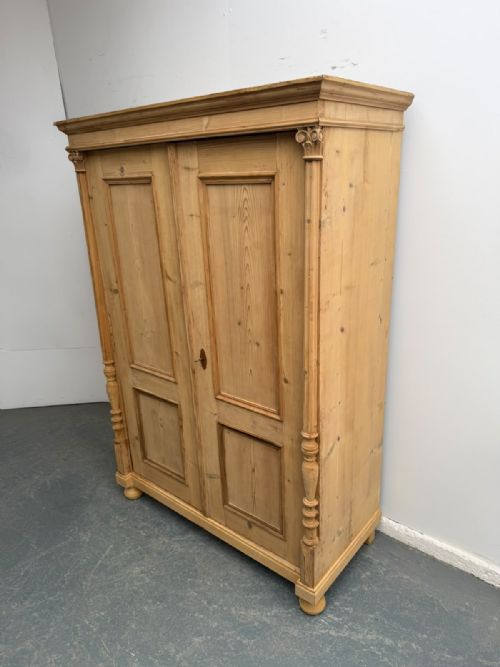
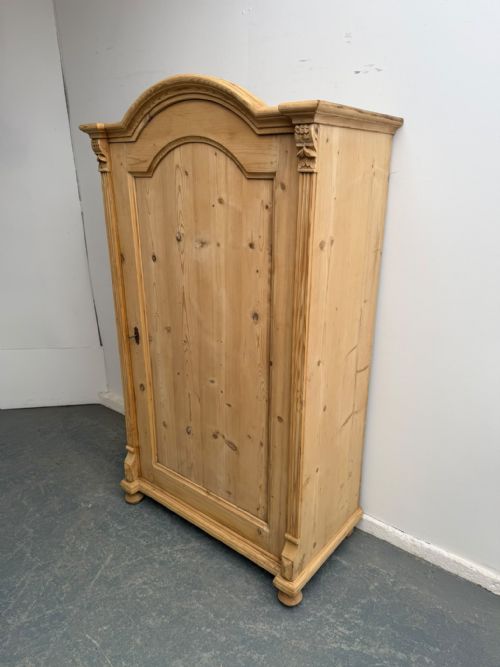
A traditional pine storage press encompasses large utilitarian furniture built to hold linens, garments, and household provisions, spanning periods from the eighteenth century through to the early twentieth century. Buyers encounter forms ranging from imposing housekeepers cupboards and knockdown wardrobes to larder cupboards and tall linen presses.
The pieces originating from English workshops appear alongside examples from France, Germany, Sweden, Hungary, and Eastern Europe, showing regional variations in cornice profiles and door construction. Many examples survive in their original painted finishes, while others present stripped or waxed surfaces that highlight the timber grain.
Domestic interiors benefit from these robust carcasses, which frequently divide into modular sections for ease of transport and placement. The heavier four-door and two-door variations provide substantial vertical storage capacity suited to contemporary bedrooms and utility rooms.
Materials and construction methods
Joiners built these presses primarily using solid pine, supported by iron hinges, brass escutcheons, and occasional bone fittings. Regional workshops employed pegged mortise and tenon joints to secure the heavy frames, ensuring stability across large double-door carcasses.
Surface treatments range from scumble painting and layered historic pigments to plain wax finishes that preserve the soft warmth of the softwood. Knockdown variations utilised clever peg-and-slot joinery so large wardrobes could travel between rooms and properties without structural damage.
Listings feature examples spanning from the eighteenth century through to the 1920s, constructed in pine, painted wood, and iron.
Assessing quality in pine storage
Construction integrity dictates value, distinguishing sturdy panelled doors that hang true from warped timbers that bind in their frames. Original backboards, intact cornices, and untouched interior shelving separate well-preserved examples from heavily altered pieces.
The presence of undisturbed original paint finishes or honest historical patination elevates a piece far above items that have undergone aggressive modern stripping. Subtle details such as hand-cut mouldings, original hardware, and tight corner joints reveal the care of the original maker.
The Traditional Pine Storage Press Glossary
- Knockdown wardrobe
- A large wardrobe designed to be dismantled into flat panels and separate cornices for transport. This clever construction allowed bulky furniture to move easily between houses before modern removal vans existed.
- Housekeepers cupboard
- A large multi-door storage unit traditionally used in large domestic kitchens or corridors for storing linens and dry goods. These substantial pieces often feature deep lower drawers and spacious upper shelving.
- Scumble painted
- A decorative surface technique where a translucent glaze is manipulated over a lighter base coat to imitate the grain of richer woods or create mottled texture. It was frequently used on pine to give humble furniture a more expensive appearance.
- Linen press
- A tall cupboard combining sliding trays or shelves in the upper section with deep drawers below. They were specifically designed to keep household sheets and table linens flat and orderly.
- Cornice
- The decorative moulded projection that crowns the top of a cabinet or wardrobe. It provides a finished architectural transition between the tall furniture body and the ceiling.
Traditional Pine Storage Press: Frequently Asked Questions
How do I dismantle a knockdown wardrobe?
These historical pieces utilise internal wooden pegs, wedges, or sliding tongue-and-groove joints to hold the sides, top, and base together without permanent iron fasteners. Carefully tapping out the structural pegs allows the panels to separate sequentially.
Mantels and cornices generally lift off first, followed by the side panels releasing from the heavy backboards and base plinth. Labelling each component during disassembly ensures straightforward reassembly in a new location.
Can I paint or wax a stripped pine press?
Raw stripped pine absorbs finishing products readily, making it simple to apply traditional beeswax to achieve a warm, honey-coloured sheen. Alternatively, modern breathable paints adhere well to prepared softwood surfaces without requiring heavy chemical priming.
Applying multiple thin coats of wax with a stiff brush builds a durable protective layer that resists everyday marks. Testing any new finish on an internal hidden surface first helps verify the final shade before treating the exterior.
Where were housekeepers cupboards used?
Housekeepers cupboards originally stood in the service corridors, linen rooms, and large farmhouses where domestic staff managed household provisions. Their substantial capacity made them ideal for storing folded bedding, table linen, and dried stores away from damp walls.
Today, these versatile cupboards find a second life in modern kitchens, boot rooms, and bedrooms as pantry units or spacious wardrobes. Their deep internal shelving accommodates bulky items that standard modern furniture cannot hold.
How do I date an antique pine cupboard?
Examining the construction marks, tool traces, and hardware provides clear indicators of age, with hand-sawn boards and hand-forged iron hinges pointing towards earlier manufacturing dates. Machine-cut mouldings and standard brass screws typically suggest late Victorian or Edwardian production.
Paint stratigraphy and timber shrinkage cracks also reveal the passage of time on softer woods like pine. Comparing the door panel configuration against regional styles helps narrow down whether a piece originates from an English country workshop or continental Europe.