





Traditional Piano Stool
A traditional piano stool offers a practical seat for the keyboard player while bringing period woodwork into the room.

Traditional Piano Stool
A traditional piano stool serves players at the keyboard while doubling as a seat in the home. These pieces appear in forms ranging from single rotating seats to long duet benches and hinged compartments.
The selections span the nineteenth century into the early twentieth century, taking in Victorian, Edwardian and Georgian revival styles. Mahogany and walnut dominate the construction, often accompanied by original fabric or needlework upholstery.
Buyers encounter single revolving stools alongside wider duet benches designed for two players. Many examples feature hinged seats that lift to reveal storage space for sheet music.
Materials and construction
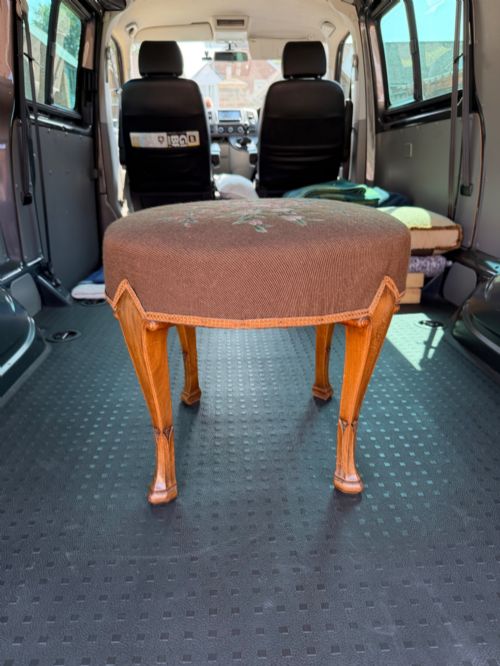
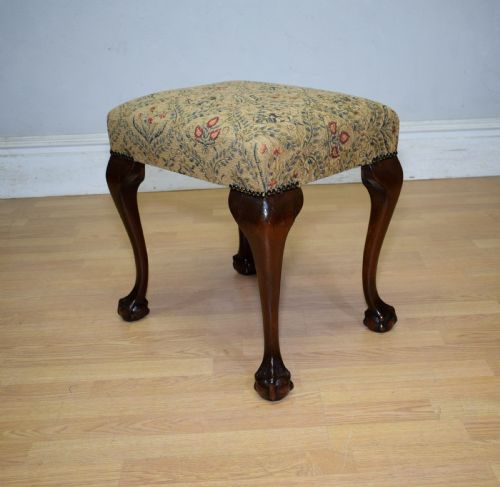
Cabinet makers utilised solid hardwoods such as mahogany and walnut to build the frames, frequently applying intricate inlay or ebonising for visual effect. Turning and carving shape the legs, sometimes incorporating ball and claw details.
Upholstery forms an essential part of the construction, utilising fabrics such as velvet, tapestry, and traditional textiles over deep buttoning. Brass mechanisms appear on revolving models to allow height adjustment.
Traditional Piano Stool Retail Price Guide 2026
Typical asking prices for traditional piano stool among the pieces listed under this phrase on Sellingantiques today, from the lower quarter to the upper quarter. They describe what is for sale here now, not the wider market.
The listings on this page span the 19th century through the 1930s, featuring mahogany, walnut, oak, and diverse upholstery fabrics.
Factors that define quality
The choice of timber and the crispness of the wood carving set finer examples apart from simpler workshop pieces. Solid mahogany and walnut frames with well-executed Queen Anne or Chippendale revival motifs show greater attention to detail.
Mechanical integrity defines the revolving stools, where smooth action in the brass screw mechanism indicates superior original engineering. The condition of the frame joinery and the retention of original fabric or deep buttoning add to the integrity of the piece.
The Traditional Piano Stool Glossary
- Duet stool
- A wider bench designed to seat two piano players side by side. These often incorporate hinged lift-up seats for storing music sheets.
- Revolving stool
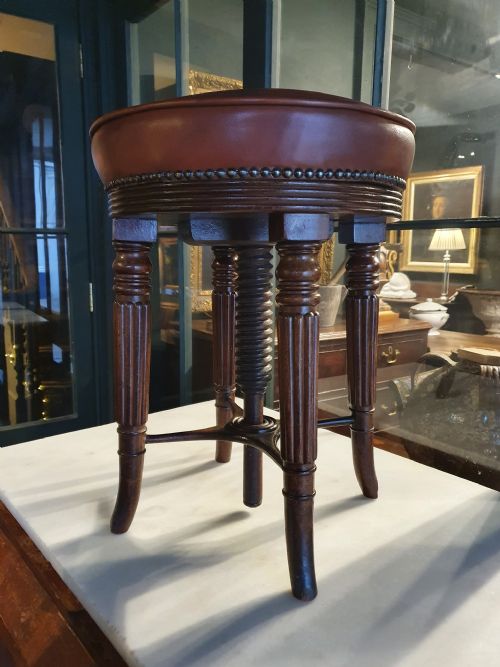
- A seat featuring a mechanical screw mechanism that allows the player to adjust their sitting height by spinning the top. These frequently incorporate brass fittings.
- Ebonised
- Wood finished with a dark stain or black lacquer to imitate the appearance of ebony. This treatment appears on several nineteenth-century pieces.
- Needlework
- Hand-stitched textile work utilised as upholstery on seat tops. Needlework covers often display floral or geometric patterns executed in wool or silk threads.
- Ball and claw
- A furniture foot design representing a bird's talon gripping a ball. This carved detail frequently characterises Chippendale and Queen Anne style legs.
Traditional Piano Stool: Frequently Asked Questions
How do I adjust a revolving piano stool?
Revolving piano stools adjust in height by physically turning the wooden seat top clockwise or anticlockwise. This action works a central wooden or metal screw thread concealed within the column.
Users should support the seat evenly while turning to prevent strain on the internal mechanism. Lubrication on the screw thread helps maintain a smooth motion.
What is the difference between a duet stool and a single stool?
A single piano stool provides a compact seat for one performer, often featuring a revolving mechanism or a simple fixed top. These take up minimal floor space in smaller rooms.
Duet stools offer a much wider bench surface intended for two people playing together. They frequently include a hinged lid that opens to reveal internal storage for books and scores.
How do I identify a Victorian piano stool?
Victorian piano stools typically feature dark hardwoods like mahogany or walnut, often with deep buttoned upholstery and turned legs. Many include brass castors for mobility on carpets.
Later Victorian and Edwardian examples show stylistic nods to earlier periods, including Queen Anne and Chippendale revivals. Inlaid decoration also becomes more common towards the end of the nineteenth century.
Can I use a piano stool as a dressing table seat?
Piano stools function well as dressing table seats due to their compact proportions and upholstered tops. Many Edwardian dressing stools share identical dimensions and stylistic traits with music seats.
Revolving models offer the added benefit of adjustable height to match different vanity table surfaces. Storage compartments in duet versions also provide practical utility for bedroom items.
How should I care for antique wood and fabric?
Antique wood frames benefit from occasional application of quality wax polish to nourish the grain and protect the finish. Avoiding direct sunlight prevents the timber from fading over time.
Upholstery requires gentle vacuuming with a soft brush attachment to remove dust. Original fabric seats should be treated with extra care to preserve historic textiles.