



Victorian Music Seat
A victorian music seat brings the functional elegance of the nineteenth-century drawing room directly to your piano or dressing table.

Victorian Music Seat
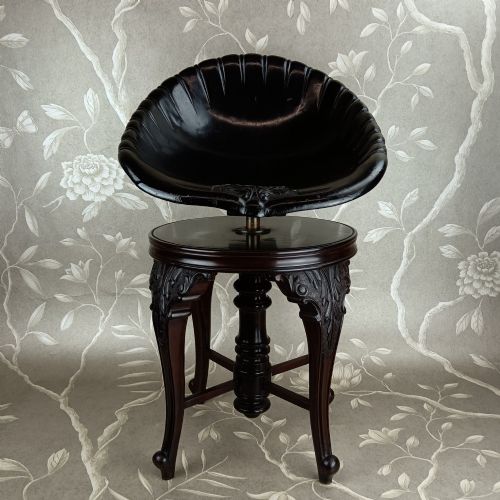
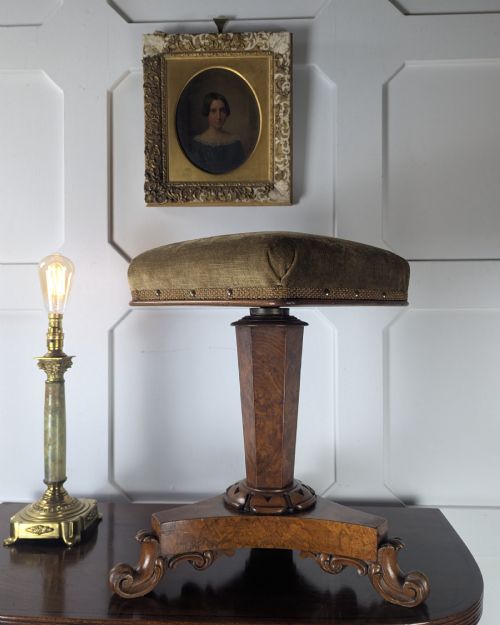
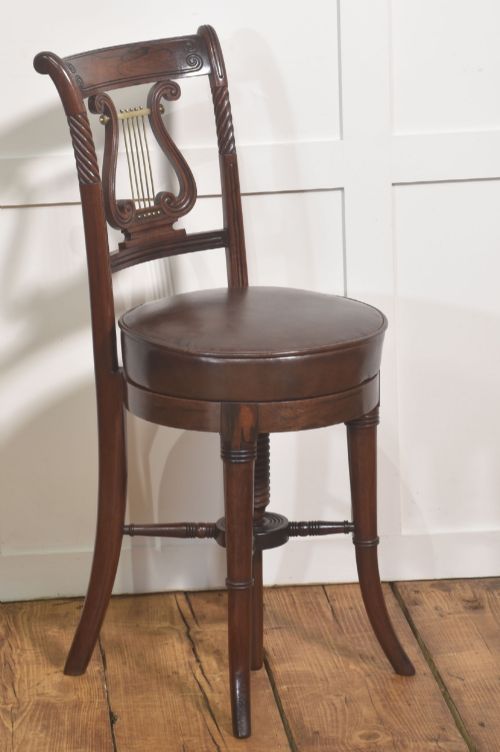
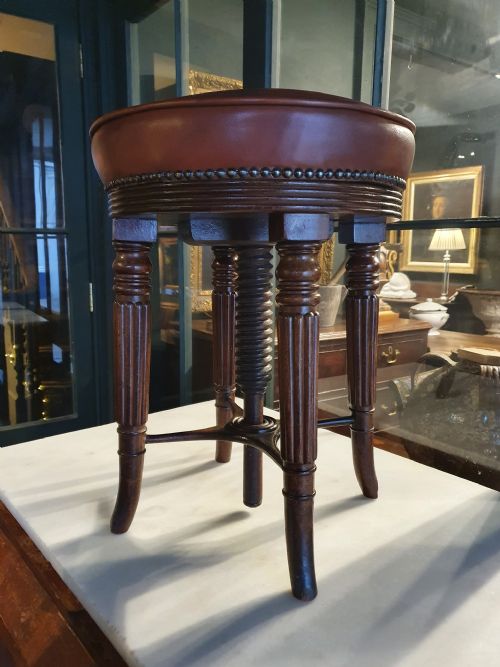
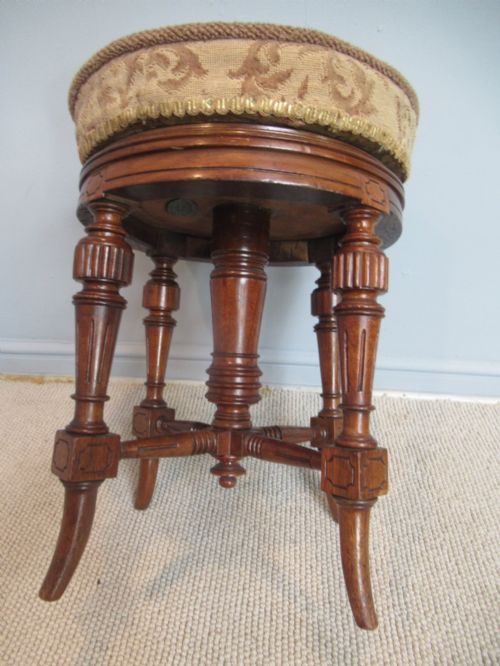
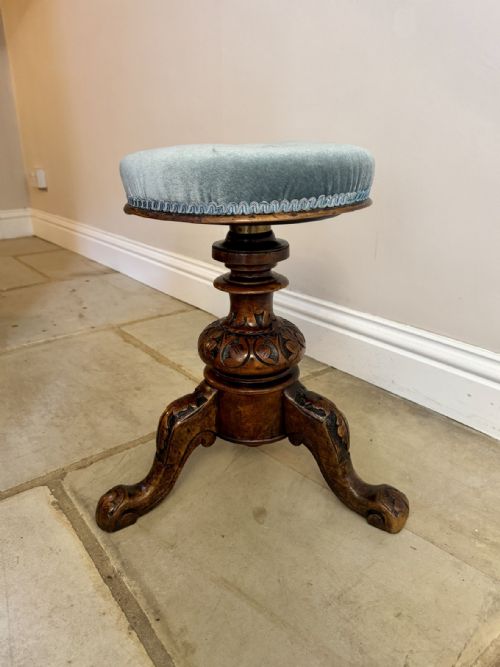
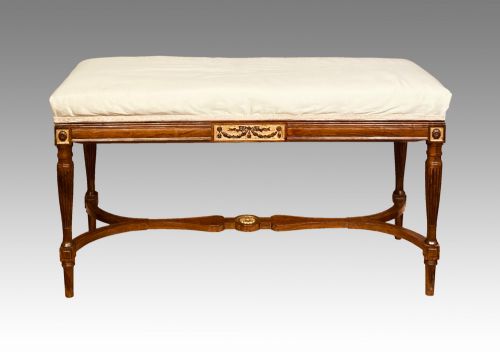
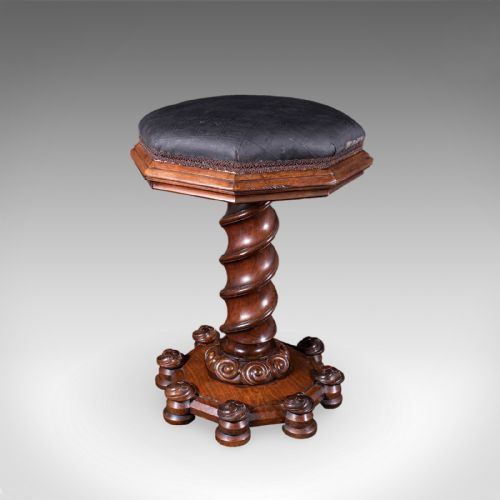
When you search for a victorian music seat, you encounter piano stools, harpist chairs, and duet benches designed for nineteenth-century domestic performance. The most common examples on this page are revolving piano stools and adjustable height seating originating from the Victorian, William IV, and Edwardian periods.
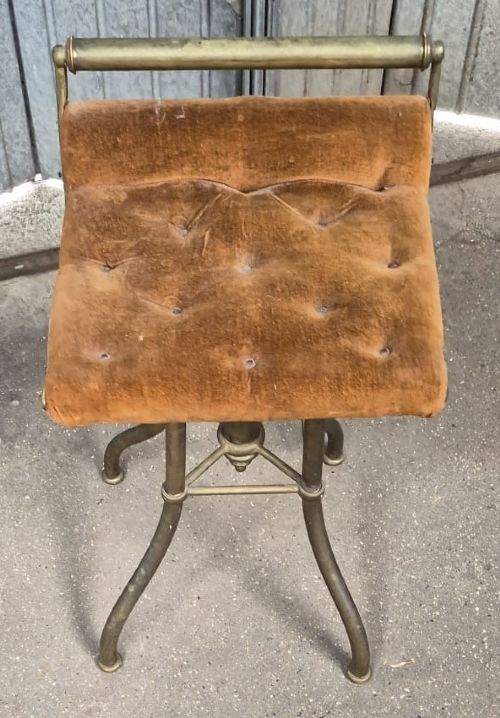
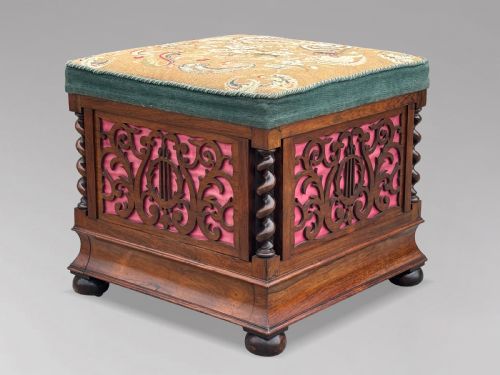
Makers produced these seating forms in mahogany, walnut, and rosewood, often incorporating swivel tops or screw mechanisms to suit the player. Alongside solo piano stools, the selection includes duet benches with hinged seats for storing sheet music, dressing table chairs, and specialised brass-framed harpist seats.
The styles span standard Victorian carving to Aesthetic Movement ebonising, Georgian revivals, and Arts and Crafts rosewood rises. Pieces appear in various configurations, from simple hardwood tripod bases to elaborate marquetry inlay and papier-mâché frames.
Materials and Technique
Cabinetmakers constructed these seats primarily using dense hardwoods such as mahogany, walnut, and rosewood, occasionally employing ebonised finishes or papier-mâché. Structural stability relied on traditional joinery combined with metal screw rods and brass swivels to permit height adjustment or rotation.
Upholstery techniques involved fabric, velvet, or leather coverings, sometimes featuring buttoned padding over supportive stuffing. Decorative touches included marquetry inlay, intricate wood carving, and painted frames.
Musicians sometimes encountered swivel tops that unscrewed entirely if spun too enthusiastically during a particularly passionate piano solo.
Evaluating the Pieces
The distinction between ordinary and superior pieces rests on the weight of the timber, the crispness of the wood carving, and the engineering of the adjustment mechanism. Fine examples display carefully figured veneers, robust turning, and smooth operation in the revolving or rise-and-fall screw action.
Secondary elements such as the quality of the upholstery fabric, the integration of marquetry, and the presence of makers' stamps elevate certain pieces. Better examples maintain structural integrity in the rotating joints and legs, showing thoughtful proportion alongside functional reliability.
Jennens & Bettridge·Charles Nosotti·Gillows·Jas Shoolbred
The Victorian Music Seat Glossary
- Rise & fall
- A mechanical system using a threaded screw column to raise or lower the seat height when rotated. This allows the player to adjust their sitting position precisely for the keyboard.
- Revolving
- A mechanism allowing the upper seat portion to spin in a full circle on a central axis. This feature aided musicians in shifting their position easily at the piano.
- Duet stool
- An elongated seating form designed to accommodate two players simultaneously for piano duets. These often include a hinged top opening to a music locker inside.
- Papier-mâché
- A composite material made from paper pulp or layers of paper reinforced with glue, moulded and lacquered. It provided a glossy dark surface suitable for decorative painting and inlay.
- Marquetry
- The art of applying decorative veneer pieces in wood to form intricate patterns or pictures on a surface. It appears frequently on nineteenth-century walnut furniture.
Victorian Music Seat: Frequently Asked Questions
How do I adjust the seat height?
Many nineteenth-century stools feature a central wooden or metal screw mechanism hidden beneath the upholstery. Rotating the top portion clockwise or anticlockwise raises and lowers the sitting platform.
Other variants employ rise and fall mechanisms or side handles to secure the desired level. Ensure the screw thread is clean and properly aligned before attempting to turn the top.
Were these seats only used for pianos?
While primarily designed for keyboard instruments, these versatile items served multiple roles in nineteenth-century homes. Harpists required specialised low or open-framed chairs to accommodate their instruments without obstruction.
Shorter variants also functioned as dressing table chairs or window seats in period bedrooms and drawing rooms. Duet benches provided practical seating where multiple performers gathered around sheet music cabinets.
How do I spot a swivel top?
A swivel top allows the cushion to rotate independently from the base structure. You can identify this by examining the junction directly beneath the upholstered seat for a central pivot or exposed screw assembly.
Testing the seat gently by hand will reveal whether the top spins freely while the legs remain planted on the floor.
What is a music locker?
A music locker is a concealed storage compartment built into the frame beneath a hinged seat lid. Victorian households used these compartments to keep sheet music and recital books organised near the instrument.
Lifting the upholstered top on duet benches or specific piano stools reveals this interior space.