





Traditional Persian Weaving
Traditional Persian weaving brings enduring character to a floor through centuries-old motifs, rich dyes and authentic hand-knotted construction.
Traditional Persian Weaving
Traditional Persian weaving encompasses hand-knotted rugs, carpets, runners and kilims produced across villages, nomadic confederacies and urban centres of Persia. These floor coverings range from intimate hearth-sized pieces to large room-sized carpets designed for formal spaces and country houses.
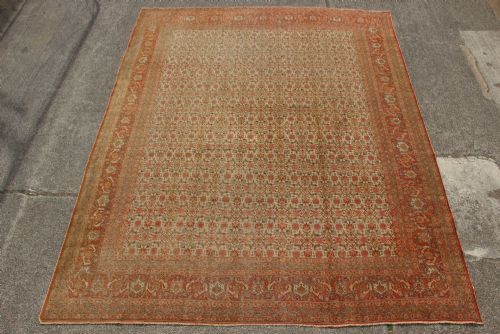
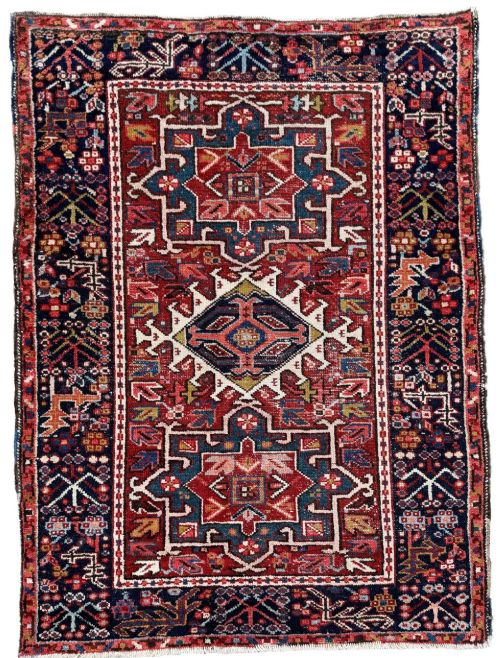
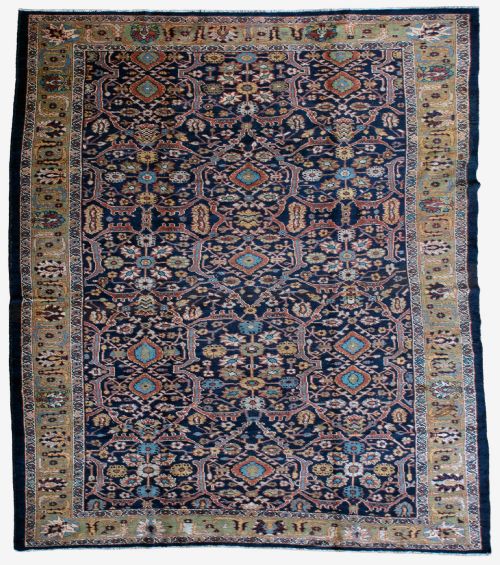
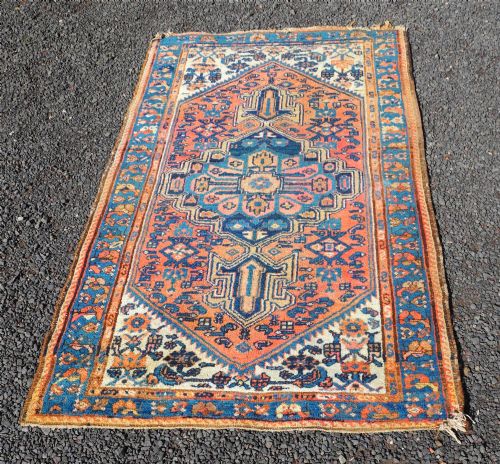
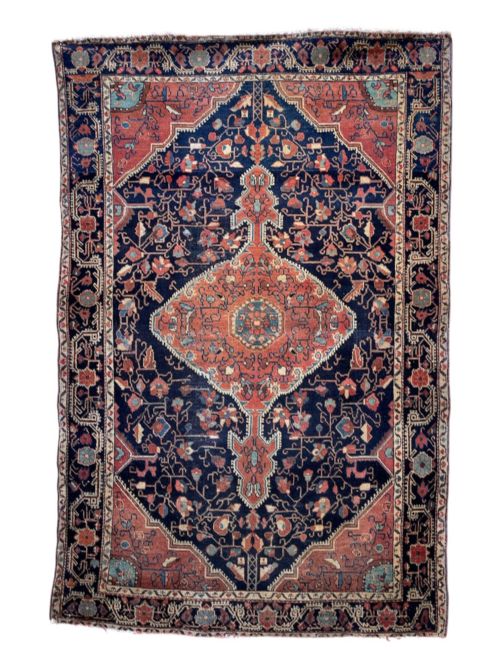
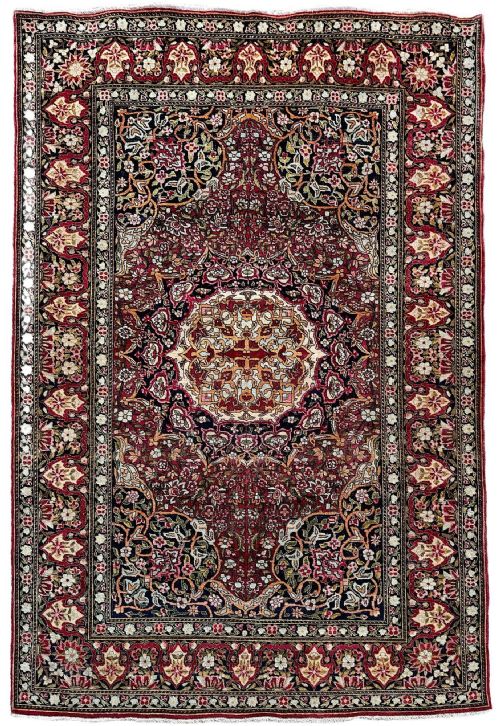
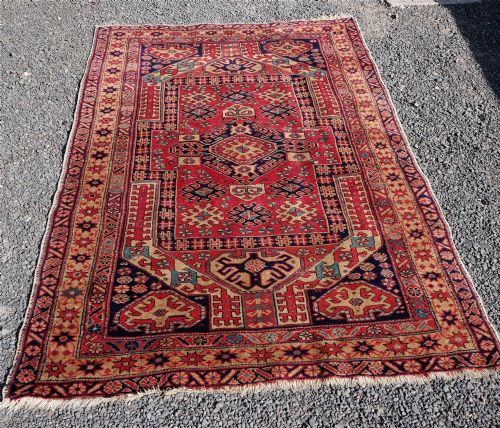
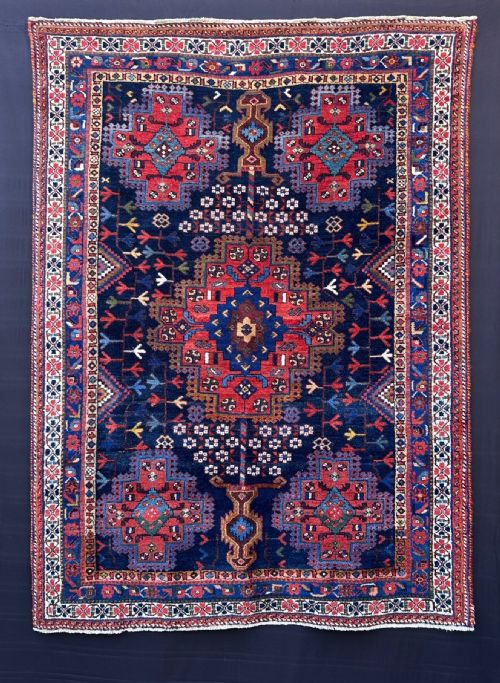
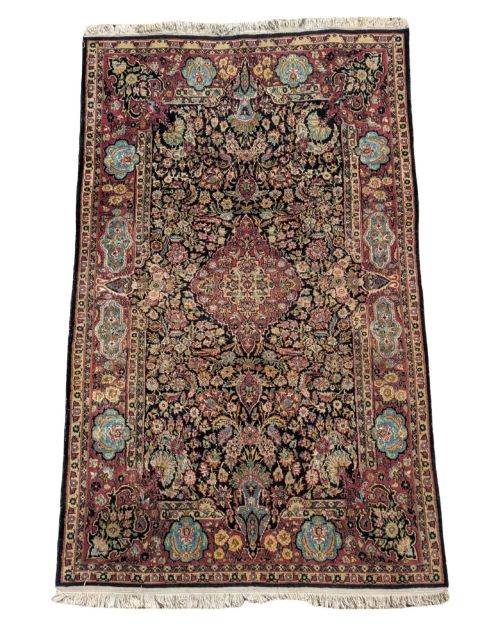
Buyers browsing this selection will frequently encounter village and tribal pieces dating from the nineteenth and early twentieth centuries. Common regional attributions include Heriz, Saroukh, Mahal, Bakhtiar, Hamadan, Afshar and Khamseh, each displaying distinct geometric or floral layouts.
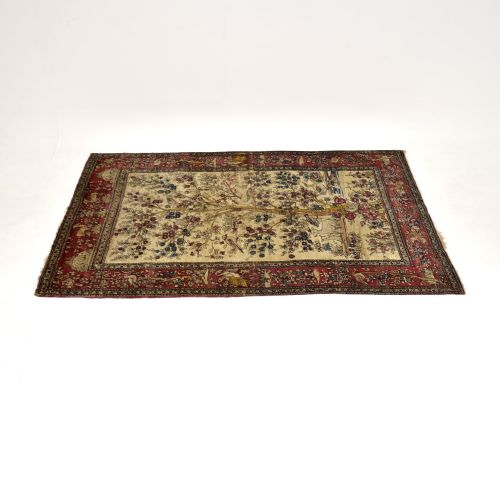
Forms vary from medallion carpets and all-over field patterns to pictorial tree-of-life designs and flat-woven bagfaces. Their varied formats suit hallways, living areas and studies alike, anchoring an interior with tactile history.
Materials and construction methods
Traditional Persian weaving relies primarily on wool, cotton and occasional silk highlights, spun by hand to create durable foundations and plush pile surfaces. Natural dyes extracted from plants and minerals provide the deep reds, blues and earthy tones characteristic of older pieces.
Weavers tied symmetrical or asymmetrical knots onto warp and weft threads, securing the structure with reinforced selvedges and kilim ends. This labour-intensive process yielded dense, resilient fabrics capable of withstanding heavy daily use over generations.
The listings span the nineteenth century up to the 1930s, featuring wool, cotton, silk, and natural dye palettes.
Distinctions in quality and execution
Quality in traditional Persian weaving is determined by knot density, precision of line work and the complexity of the design layout. Finer wool preparation and skilful handling of natural dye baths produce greater depth of colour and sharper geometric or floral definition.
Structural integrity also separates examples, with intact original borders and even wear reflecting careful historical use. Pieces retaining their full pile depth and balanced proportions stand out from heavily degraded or unevenly worn specimens.
Saroukh Mahal·Bakhtiar Rug·Heriz Carpet·Afshar Tribal
The Traditional Persian Weaving Glossary
- Medallion
- A central ornamental motif dominating the field of a rug or carpet. This focal design element often incorporates floral or geometric symmetry.
- Warp
- The stationary vertical threads stretched on a loom that form the structural foundation of the textile. Weft threads are woven horizontally across these warp strands.
- Weft
- The horizontal threads passed alternately over and under the warp threads to bind the knots in place. Together with the warp, they create the grid of the rug.
- Kilim
- A flat-woven carpet or rug produced without a pile. These textiles are often utilised for lighter floor coverings or wall hangings.
- Selvedge
- The reinforced side edges of a rug formed by wrapping the outermost warp threads. Good selvedges prevent fraying and maintain the rectangular shape of the textile.
Traditional Persian Weaving: Frequently Asked Questions
How do I care for an antique rug?
Vacuum gently without using a rotating beater bar to protect the delicate wool pile and structural foundation.
Professional cleaning by a specialist in antique textiles is recommended every few years to remove embedded grit safely.
Are these rugs suitable for high traffic areas?
Traditional Persian weaving uses resilient wool and dense knotting designed to withstand generations of daily household movement.
Placing a quality underlay beneath the rug prevents slipping and reduces friction against hard flooring surfaces.
How can I tell a village rug from a city carpet?
Village and tribal rugs often feature bolder geometric patterns, memorised designs and slightly irregular outlines.
City carpets from workshops tend to display finer floral curves, precise symmetry and higher knot densities.
What do natural dyes look like over time?
Natural dyes age gracefully, developing subtle variations in tone known as abrash across the wool field.
This organic fading process gives older Persian textiles a harmonious, muted depth that chemical dyes rarely replicate.