


Traditional Pendulum Timepiece
A traditional pendulum timepiece brings steady movement and polished wood into a room, measuring the hours just as it did in the Victorian era.
Traditional Pendulum Timepiece
A traditional pendulum timepiece encompasses wall clocks, bracket clocks, and mantel clocks spanning the nineteenth century and early decades of the twentieth century. These mechanical clocks are housed in timber or glass cases and rely on a swinging pendulum to regulate their movement.
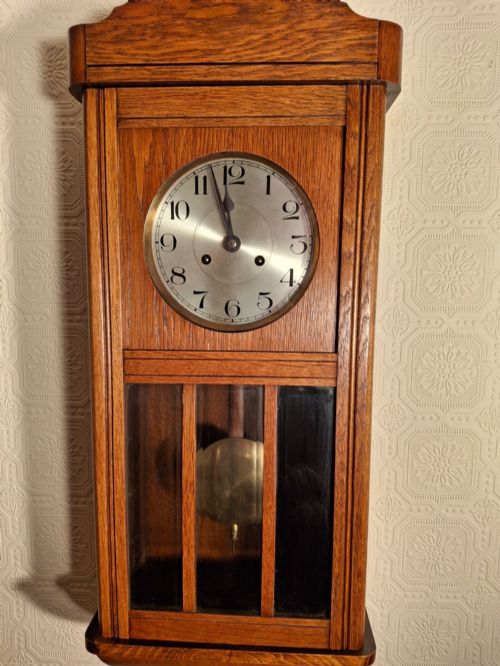
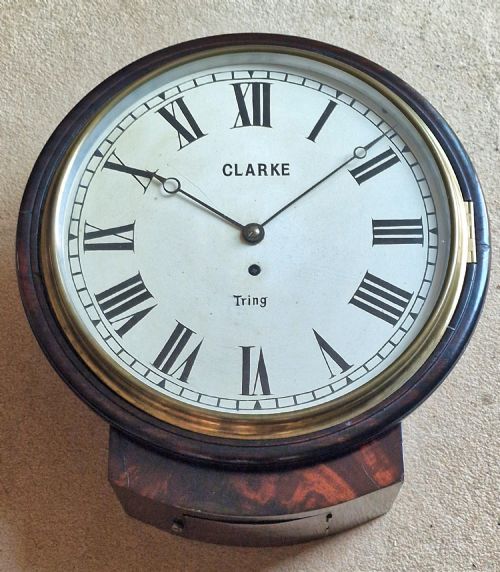
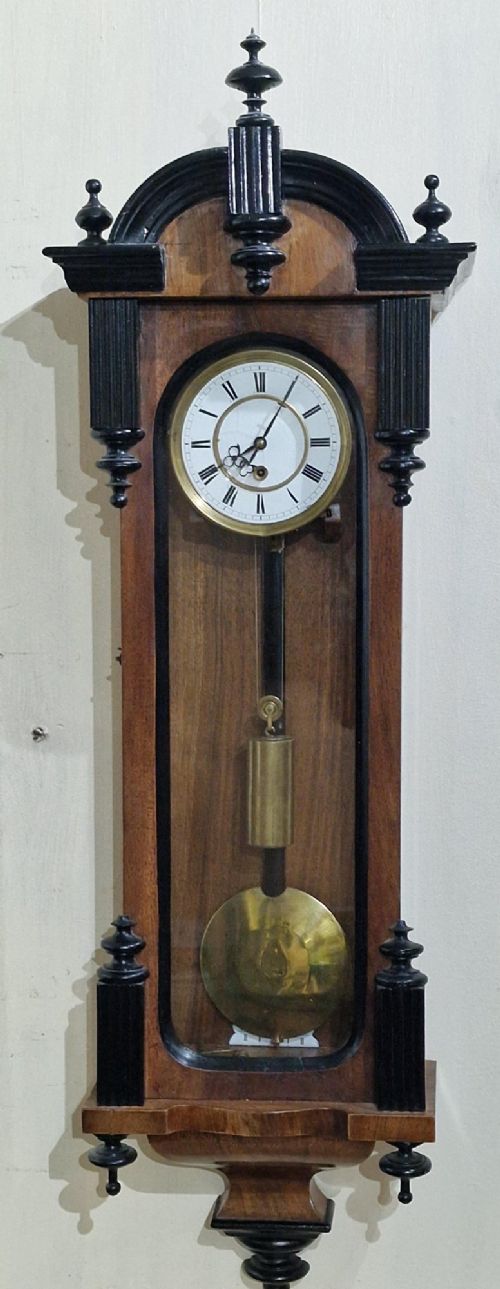
The versions most commonly met in this selection are wall-mounted drop-dial clocks and Vienna regulators, alongside desk or bracket pieces from the Victorian and Edwardian periods. They originate from English, French, and Austrian workshops, reflecting diverse regional cabinet-making traditions.
How they were made
Cases were constructed from dense hardwoods such as mahogany, walnut, oak, and rosewood, frequently shaped with curved drops or glass panels to display the pendulum and movement. Brass and ormolu provided structural mounts and decorative dial bezels.
Dials were typically formed from painted metal, enamel, or turned wood, featuring Roman or Arabic numerals. Movements relied on fusee or spring-driven mechanisms designed to keep time over eight-day intervals.
What varies in quality
Quality rests in the precision of the movement and the integrity of the cabinet work, where crisp carving and figured wood veneers distinguish superior examples. Finer makers invested greater care in dial legibility and the smooth finishing of internal brass components.
Proportion and material selection dictate the standing of a piece within its period style, whether it is an architectural Vienna regulator or a compact English fusee wall clock.
George Clarke·Tiffany·John Thwaites·Edward Hannam
The Traditional Pendulum Timepiece Glossary
- Fusee
- A conical pulley used in older mechanical clocks to maintain an even pull as the mainspring unwinds. This device helps the timepiece maintain consistent accuracy throughout its running cycle.
- Drop-dial
- A clock case featuring a circular dial at the top and an extended lower wooden trunk designed to house a swinging pendulum. This form was widely utilised for wall-mounted timepieces in public and domestic spaces.
- Vienna regulator
- A precision wall clock developed in Austria during the nineteenth century, known for its refined aesthetic and clear glass door revealing the pendulum. These pieces are prized for their clean lines and accurate timekeeping.
- Bracket clock
- A portable clock originally designed to sit on a wall bracket or a table surface. They often feature architectural wooden cases and refined brass carrying handles.
- Ormolu
- Gilded bronze used for decorative mounts and accents on nineteenth-century mantel clocks. It adds a bright metallic contrast to dark timber cases.
Traditional Pendulum Timepiece: Frequently Asked Questions
How do I wind a fusee clock?
Winding requires a key inserted into the dial aperture to tension the mainspring gently until resistance is felt. Care must be taken not to overwind the mechanism.
Keeping to a regular weekly schedule helps maintain the health of the internal brass components.
Where should I hang a wall clock?
Select an interior wall that is sturdy and free from excessive vibrations or dampness. Solid masonry walls provide the most stable support for heavier wooden cases.
Ensure the clock hangs level so the pendulum can swing freely without catching against the back of the case.
How do I tell Victorian clocks apart from Edwardian ones?
Victorian clocks often display heavier proportions and rich dark timbers like rosewood or burr walnut, reflecting ornate nineteenth-century tastes. Edwardian examples tend toward lighter oak or mahogany with simpler, cleaner Edwardian styling.
Examining the dial typography and internal mechanics provides further clues to the manufacturing date.
Do these clocks need professional servicing?
Mechanical clocks benefit from periodic cleaning and oiling by a qualified horologist every few years. Dust and dried oil can accumulate in the gear train over time.
Professional attention preserves the original brass and steel components for future decades.