
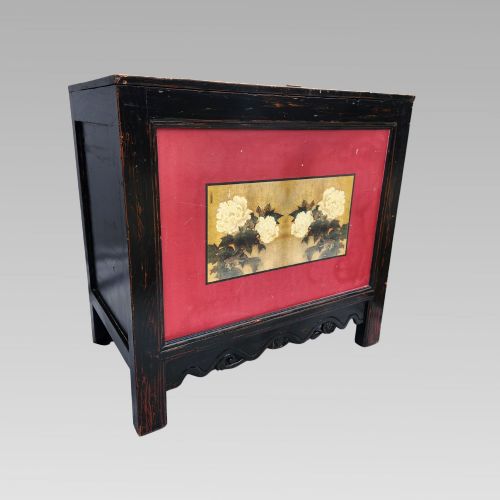

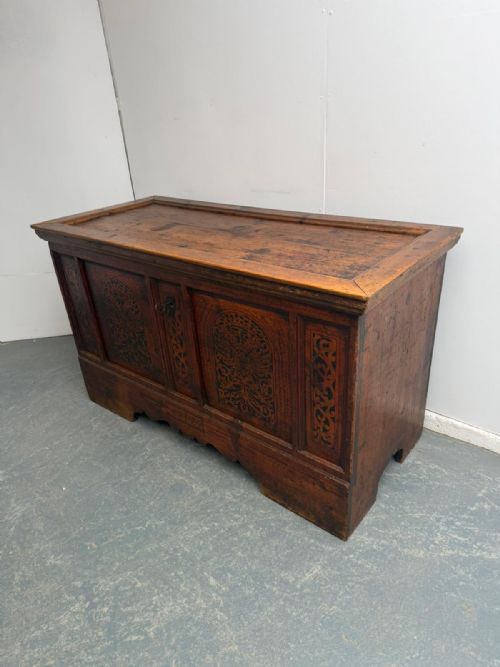


Traditional Painted Storage Trunk
A traditional painted storage trunk brings regional folk history into a room while holding blankets, linens, and winter woollens out of sight.

Traditional Painted Storage Trunk
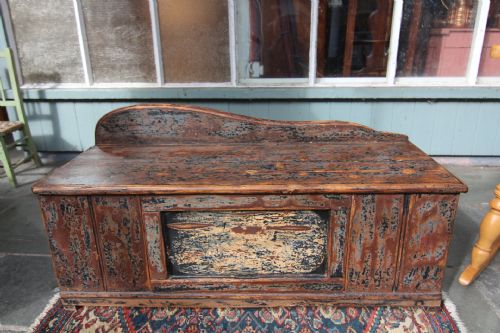
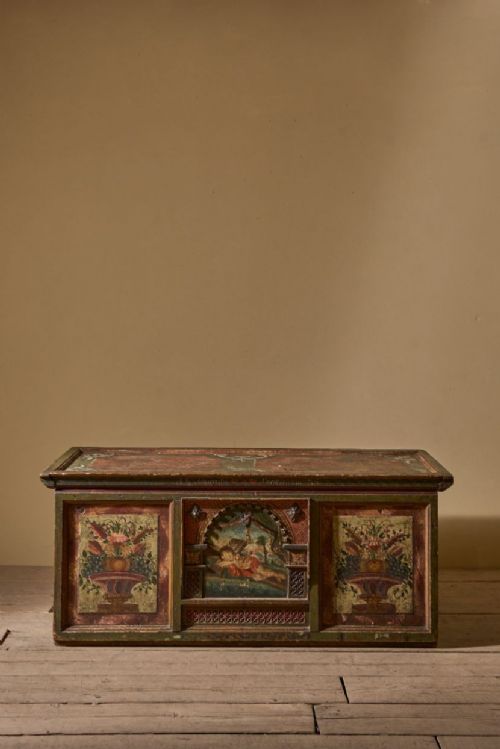
A traditional painted storage trunk serves as a robust receptacle for household textiles and domestic belongings, originating from various European regions and domestic British workshops. Buyers examining this page encounter pine and oak pieces ranging from compact blanket boxes to large marriage chests and dowry boxes. The selection spans the nineteenth century, including Victorian examples alongside Scandinavian, Hungarian, Spanish, and Italian regional works.
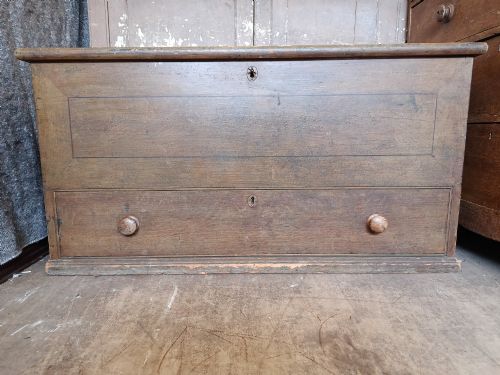
Forms include mule chests fitted with lower drawers, simple coffers, and oval-shaped boxes bearing folk art and floral motifs. The lineage encompasses rustic country styles, Scandinavian country designs, and Georgian country pieces built for practical service. Most items rely on sturdy timber construction finished with pigment, lacquer, or scumble glaze applied over generations.
Regional variations dictate the character of each box, from alpine marriage chests to English blanket boxes complete with keys and bracket feet. The selection reflects both utilitarian storage needs and ceremonial gift-giving traditions across rural Europe and Britain. Every trunk carries the physical patina of its original domestic environment.
How they were made
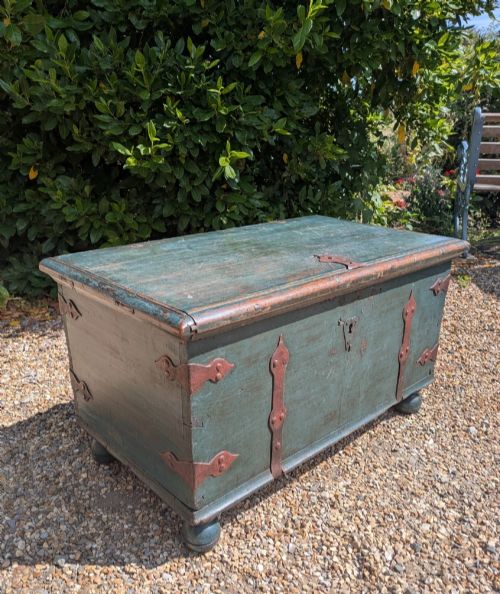
Makers constructed these storage pieces primarily from solid pine, oak, and regional softwoods, joining boards with dovetailed or pegged corners to withstand heavy loads. Hand-forged iron strapwork, brass hinges, and sturdy locks reinforced the structural integrity of large coffers and marriage chests. Smiths hammered and shaped iron mounts by hand to secure the lids and corners.
Artisans applied layers of pigment, lacquer, and scumble paint directly to the timber surfaces, often incorporating detailed floral motifs and folk art patterns. Painters utilised natural earth pigments and oils to create durable finishes that survived decades of daily use. Some boxes retained their original paint schemes intact, while others acquired graining effects applied with combs or brushes.
Listings feature pine and oak construction spanning the Georgian, Regency, and Victorian periods, alongside regional European folk art traditions.
What varies in quality
The standard of a traditional painted storage trunk rests upon the survival of its original surface decoration and the integrity of its timber. Pieces retaining untampered regional paintwork and hand-forged iron strapwork stand apart from later repainted examples. The crispness of folk art motifs and the balance of floral panels reveal the hand of a skilled regional decorator.
Structural honesty and original hardware distinguish superior examples from heavily altered utility boxes. Trunks that retain their original bracket feet, working locks, and interior tills preserve their historical context more completely. The weight of the timber and the tightness of the corner joints determine how well the box survived its working life.
The Traditional Painted Storage Trunk Glossary
- Mule chest
- A traditional storage chest featuring one or more drawers built beneath the main compartment. This form evolved from the simple coffer during the seventeenth century and remained popular through the Victorian era.
- Marriage chest
- A ceremonial painted box commissioned or decorated to mark a wedding and transport a bride's dowry. These pieces frequently display specific regional folk art symbols, initials, and dates.
- Scumble
- A translucent or semi-opaque layer of glaze applied over a lighter base coat and manipulated with combs or rags to imitate finer wood grain. Victorian makers utilised this technique to elevate plain pine furniture.
- Strapwork
- Flat strips of wrought iron or brass pinned across the exterior of a chest to reinforce the joints and corners. Blacksmiths hand-forged these metal bands for both utility and decorative contrast.
- Coffer
- A heavy wooden box with a hinged lid, traditionally used for storing valuables, documents, or textiles. Early examples rely on board construction joined with pegs.
Traditional Painted Storage Trunk: Frequently Asked Questions
What went into a marriage chest?
These ceremonial trunks held a bride's dowry, which typically included hand-woven linen sheets, embroidered textiles, garments, and personal valuables.
Families passed these filled chests down through generations as practical assets and family heirlooms.
How do I clean a painted pine box?
Dust the exterior gently with a dry microfiber cloth, avoiding modern chemical polishes and abrasive household cleaners.
Moisture can damage fragile historic pigments, so keep the timber in a stable environment away from direct heat sources.
Are these trunks safe for modern blankets?
Most interiors are constructed from plain untreated timber or historic paint finishes that safely house woollens and cottons.
Inspect the internal base for lingering dust or old debris before storing delicate fabrics inside.
How do I tell regional styles apart?
Scandinavian and Hungarian pieces frequently display vibrant floral folk art and specific regional colour palettes like teal or bright blues.
British country boxes tend to rely on plain pine, scumble glazes, or simple bracket feet without foreign decorative motifs.