


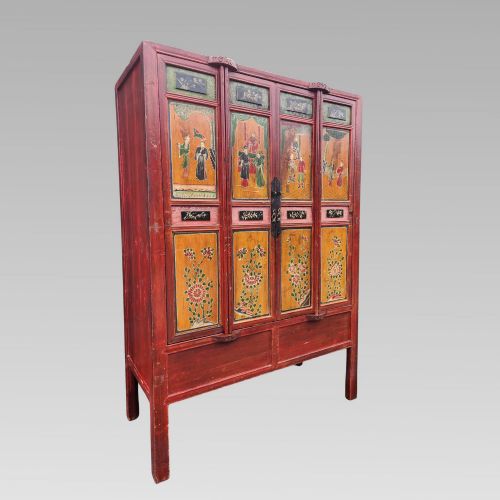
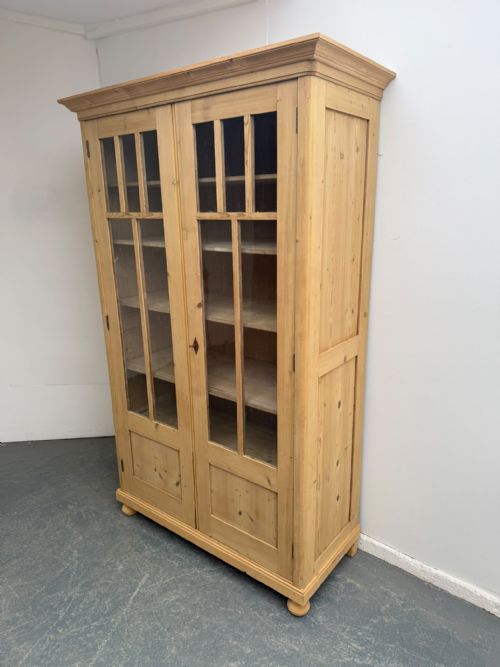


Traditional Painted Display Cabinet
A traditional painted display cabinet brings colour and character to a room while keeping porcelain and books safely enclosed behind glass.
Traditional Painted Display Cabinet
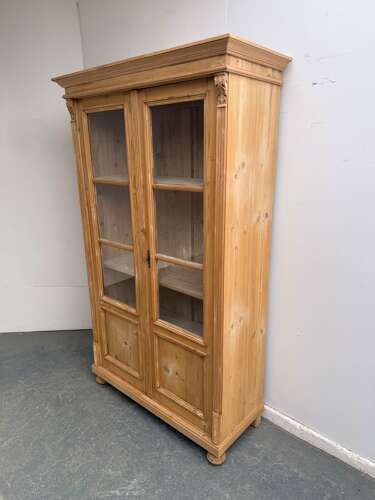
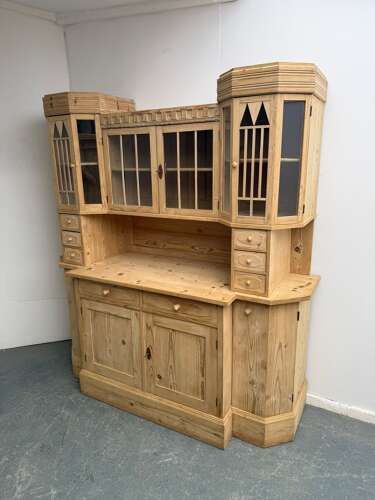
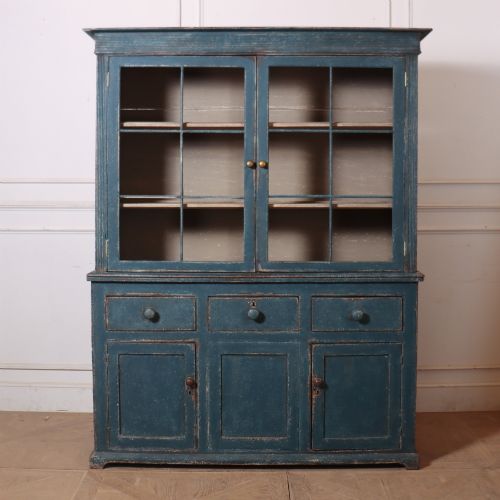
A traditional painted display cabinet is a storage piece designed to showcase prized objects, most commonly appearing on this page as kitchen dressers, glazed bookcases, and corner cupboards. These pieces emerge from the eighteenth and nineteenth centuries, taking forms shaped by English country workshops, Scottish makers, and Dutch cabinet makers.
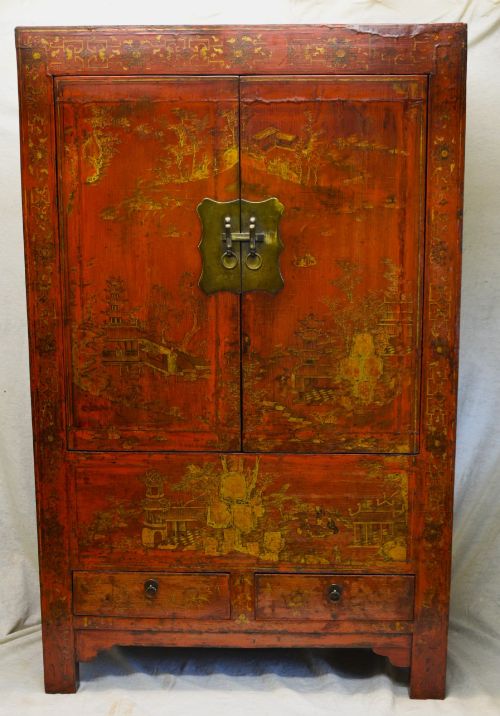
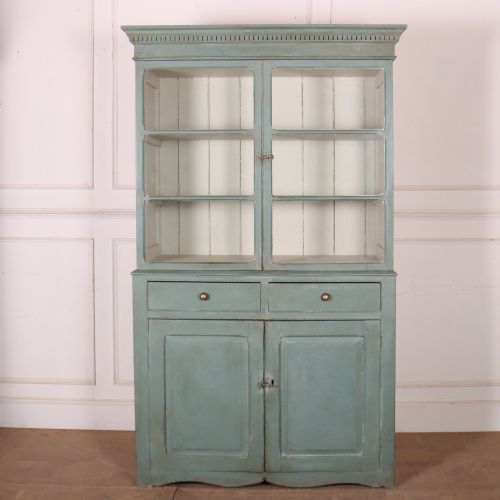
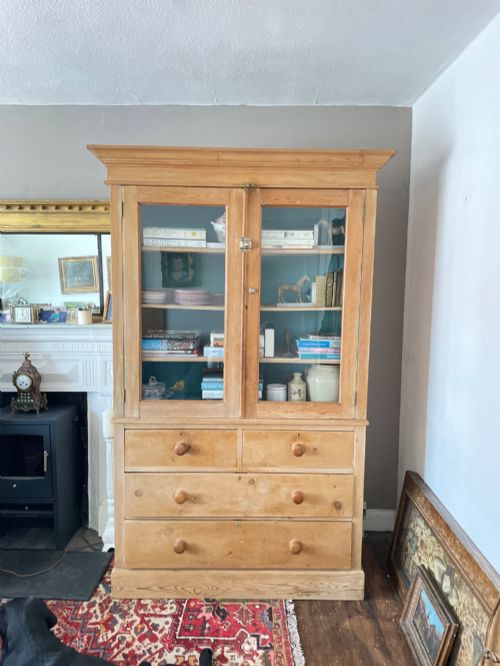
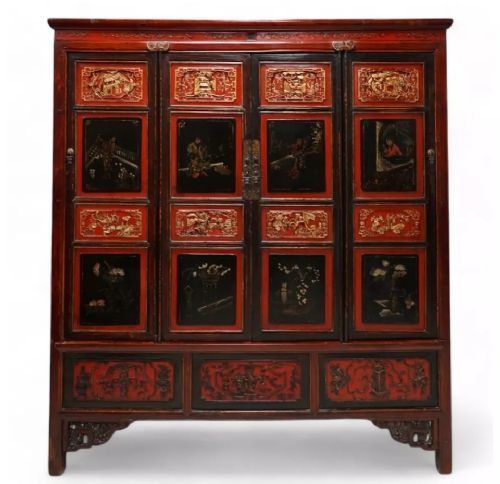
Regional variations dominate the selection, with sturdy pine West Country dressers sitting alongside grand breakfront bookcases and delicate Chinoiserie cupboards. Buyers encounter finishes ranging from original historic paint and waxed pine to vibrant red lacquer.
The practical function remains consistent across forms, combining open shelving or glazed upper doors for display with enclosed lower cupboards for storage. These cabinets reflect the domestic needs of past centuries, adapted from utilitarian kitchen furniture to formal parlour and library storage.
How they were made
Makers relied primarily on solid pine, elm, and mahogany, constructing carcasses with traditional joinery that allowed wood to expand and contract naturally. Glass panes were hand-blown and set into timber frame doors, often secured with wooden glazing bars.
Surfaces received successive layers of paint, lacquer, or wax, frequently applied over gesso in Asian export pieces or layered directly onto timber in regional British workshops. Brass hardware, including hinges and keyplates, provided functional and decorative accents to the painted timber.
Traditional Painted Display Cabinet Retail Price Guide 2026
Typical asking prices for traditional painted display cabinet among the pieces listed under this phrase on Sellingantiques today, from the lower quarter to the upper quarter. They describe what is for sale here now, not the wider market.
Regional styles represented include English country, Gustavian Swedish, Dutch, and Chinoiserie designs.
What varies in quality
Quality rests in the survival of original decorative surfaces and the crispness of applied motifs, particularly on Chinoiserie and lacquered examples where hand-painted birds and flowers distinguish superior artistry. The integrity of the timber frame and the presence of original glass panes alter the standing of a piece significantly.
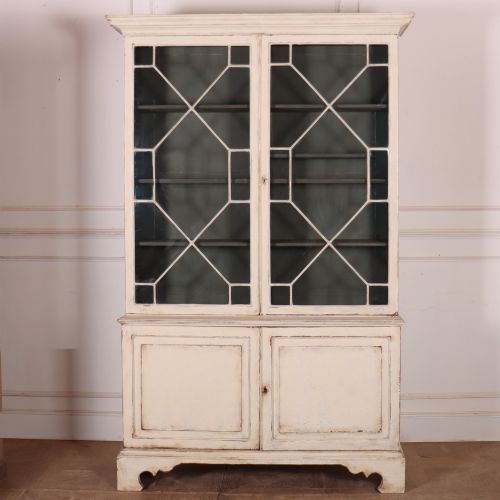
Proportion and execution separate utilitarian workshop output from refined cabinet making, seen in the balance of breakfront cornices and the delicacy of glazing bars. Cabinets retaining their original painted finish command greater interest from collectors than those stripped down or repeatedly repainted in later periods.
The Traditional Painted Display Cabinet Glossary
- Breakfront
- A cabinet facade where the central section projects forward from the flanking wings. This architectural arrangement adds depth and visual weight to large bookcases and dressers.
- Chinoiserie
- European decorative style imitating Chinese artistic traditions, featuring motifs like figures, pagodas, and birds. It gained immense popularity on painted furniture and lacquerwork.
- Vitrine
- A glass-fronted cabinet designed specifically for displaying porcelain, curiosities, and decorative objects. These pieces protect delicate items while offering all-around visibility.
- Glaze
- The glass fitted into doors or the translucent coating applied over ceramics. In cabinet making, glazed doors keep dust away from books and display items.
- Imari
- Japanese porcelain decorated in underglaze blue and iron red with gold additions. These plates and chargers frequently complement oriental cabinets in period interiors.
Traditional Painted Display Cabinet: Frequently Asked Questions
What is a traditional painted display cabinet?
A traditional painted display cabinet is a piece of furniture built to house and exhibit objects behind glass doors or open shelves, finished with painted surfaces rather than polished wood. These items encompass regional dressers, library bookcases, and vitrines dating from the eighteenth to the twentieth centuries.
Such cabinets served diverse roles in past homes, functioning as kitchen storage for ceramics, parlour display units, or library repositories for leather-bound books. Today, they bring historic character and practical storage to modern living spaces.
How do I care for a painted antique cabinet?
Caring for a painted antique cabinet requires keeping it away from direct sunlight and sudden temperature changes, which can cause timber to split and paint to flake. Dusting should be done gently with a dry, soft cloth without chemical polishes.
Waxed pine surfaces benefit from occasional feeding with appropriate furniture wax to maintain the finish. Care must be taken around original painted or lacquered areas to preserve the historic pigment.
Where were these cabinets made?
These cabinets originate from various regions including English rural workshops, Scottish country districts, Dutch cabinet makers, and overseas Asian workshops. Regional British pieces often utilise native pine or elm, reflecting local vernacular furniture traditions.
International pieces, such as Chinese lacquer cabinets, showcase distinct craftsmanship and materials like elm finished with red lacquer. Each geographic origin imparts unique structural and stylistic characteristics to the furniture.
How can I tell the period of a cabinet?
Dating a cabinet involves examining construction techniques, timber selection, hardware, and the characteristics of the glass panes. Hand-blown glass with irregularities and traditional hand-cut joinery generally point to eighteenth or early nineteenth-century origins.
Stylistic cues, such as Victorian proportions or Arts and Crafts simplicity, help narrow down the manufacturing era. Comparing the painted finish and decorative motifs to documented period examples provides further confirmation.