





Traditional Original English Watercolour
Traditional original english watercolour paintings bring the quiet light and changing weather of the countryside and coast directly onto the wall.
Traditional Original English Watercolour
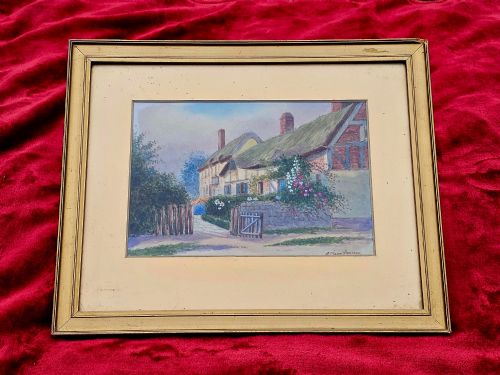
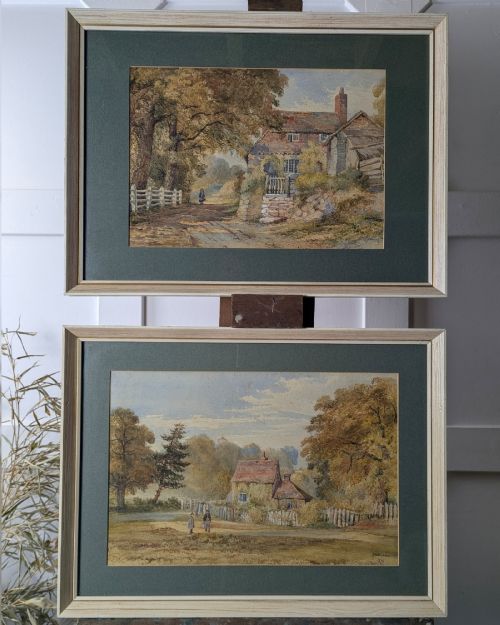
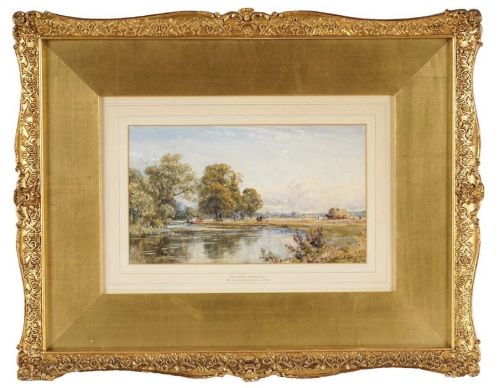
Traditional original english watercolour works capture landscapes, coastal views, rural cottages and pastoral scenes spanning from the nineteenth century into the mid twentieth century. Buyers seeking this phrase encounter framed artwork created by named artists working in watercolour pigment on paper, often housed behind glass within wooden and gilt frames.
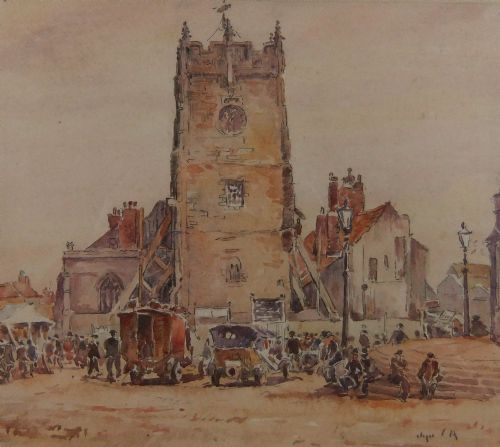
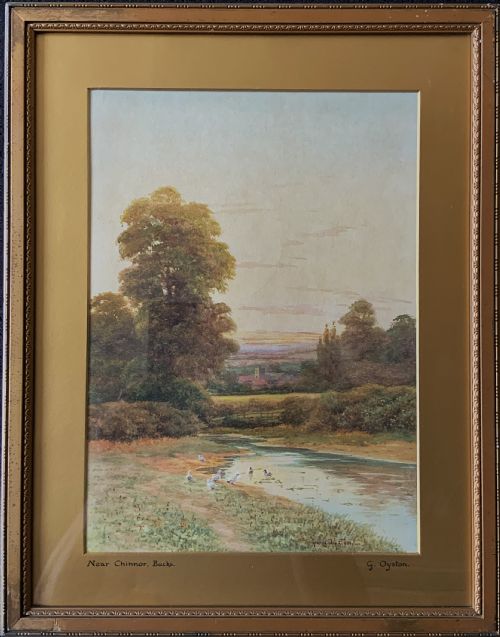
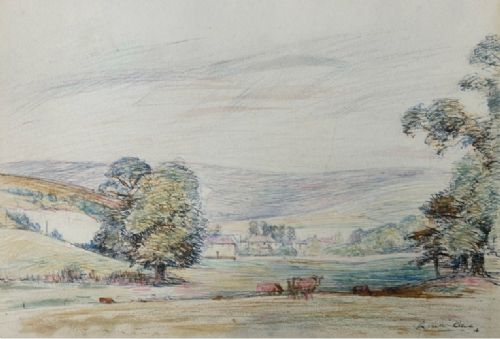
The subjects range from quiet river valleys and rural lanes to bustling market towns and pastoral fields with livestock. Most examples date from the Victorian and Edwardian eras, reflecting a sustained domestic tradition of landscape observation.
The format varies from intimate country scenes to exhibition size works intended for prominent wall display. Every piece represents a singular painted moment rather than a reproduction, carrying the immediate touch of the brush upon paper.
How traditional original english watercolour works were made
Artists applied watercolour pigment and bodycolour suspended in water onto sheets of prepared paper to build translucent washes and opaque highlights. The technique required confident handling because the medium permitted little correction once applied to the absorbent paper surface.
Finished paintings were commonly mounted behind protective glass and set into wooden frames, frequently finished in gilt to complement the domestic interiors of the period. The combination of paper support, water-based pigment and timber framing forms the standard construction seen across the selection.
Several Victorian pastoral scenes feature remarkably stern-looking sheep gazing directly out at the painter.
What varies in quality in traditional original english watercolour
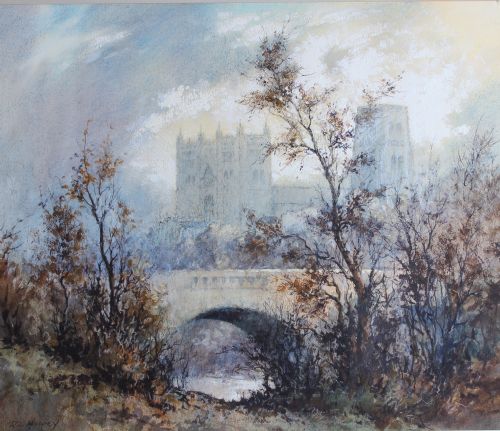
Quality rests upon the artist's ability to capture atmospheric light, depth and spatial arrangement within the restrictive properties of the medium. Stronger works demonstrate confident brushwork and precise tonal control, particularly in complex renderings of sky, water and foliage.
The handling of detail in architectural elements, figures and livestock distinguishes accomplished compositions from more formulaic topographical records. Preservation also plays a part, as works retaining their original pigment intensity and paper stability stand apart from those faded by excessive exposure to light.
George Sydney Shepherd·Alfred Young Nutt·Percy Lancaster·A Marie Parsons·William Banks Fortescue·Robert Thorne Waite·John Smith Atherton·George Oyston·Russell Sidney Reeves·Robert Leslie Howey·Henry Charles Fox·Robert Little·Henry John Kinnaird·Fred Lawson·George Graham·J S Ainley·Frederick Septimus Lewis·James Orrock·J Laporte·Theresa Stannard·Louie Stanley Maurice Prince·Robert Winchester Fraser·George Hamilton Constantine·George Arthur Fripp·Walter Follen Bishop
The Traditional Original English Watercolour Glossary
- Watercolour pigment
- Finely ground colour particles mixed with a water-soluble binder, applied in washes to paper. It allows artists to achieve luminous effects through the white of the paper shining through thin layers.
- Bodycolour
- Watercolour paint mixed with a white pigment to make it opaque. Artists used it to add highlights and solid details over transparent washes.
- Victorian
- The period of British history spanning the reign of Queen Victoria from 1837 to 1901. Works from this era often focus on detailed naturalism and narrative landscape scenes.
- Edwardian
- The period covering the reign of King Edward VII from 1901 to 1910. Pastoral and impressionistic tendencies gained favour during these years.
- Gilt wood
- Timber framing coated with a thin layer of gold leaf or metallic gilt gesso. It provided a traditional decorative border that enhanced the framed artwork.
Traditional Original English Watercolour: Frequently Asked Questions
How should I hang a watercolour painting?
Keep watercolours away from direct sunlight to prevent the pigments from fading over time. Hanging them on interior walls with stable humidity protects both the paper support and the timber frame.
Ensure the frame hangs securely from picture rail hooks rather than relying on adhesive hangers. This protects the glass and backing board from accidental knocks in busy rooms.
Can I reframe an antique watercolour?
Retaining the original frame is generally preferred by collectors when the timber and gilt match the period of the artwork. Many surviving examples retain their nineteenth or early twentieth-century mouldings.
If framing is structurally compromised, a conservation framer can replace backing materials using acid-free components. This prevents chemical degradation from damaging the original paper over the long term.
How do I date a traditional watercolour?
Dating relies upon artist signatures, exhibition labels, stylistic markers and framing techniques characteristic of specific decades. Victorian works often show meticulous naturalism, while later Edwardian examples lean toward softer pastoral tones.
Paper watermarks and inscriptions on the reverse of the backing board frequently provide additional clues. Comparing the handling of light and subject matter to known dated pieces helps narrow the timeframe.
What is the difference between watercolour and bodycolour?
Watercolour relies on transparent washes where the white paper reflects light back through the pigment. This creates luminous skies and translucent water effects.
Bodycolour incorporates opaque white paint to build solid highlights and heavier textures. Artists frequently combined both techniques in a single composition to balance atmospheric depth with sharp detail.