










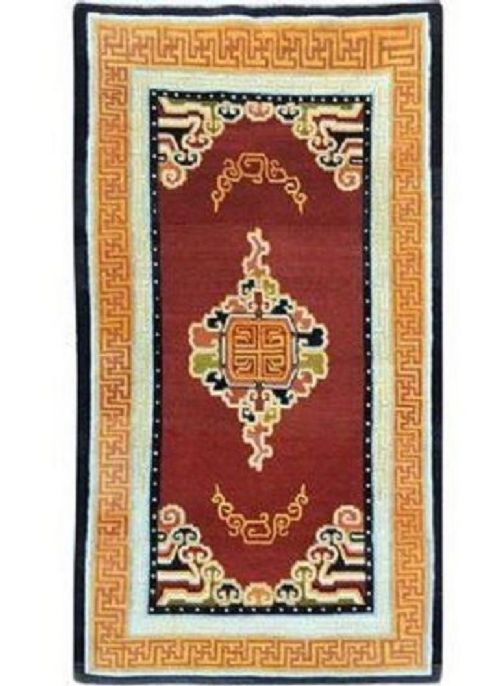
Traditional Oriental Runner Rug
Traditional oriental runner rugs bring historic warmth to narrow spaces through centuries-old regional weaving traditions.
Traditional Oriental Runner Rug
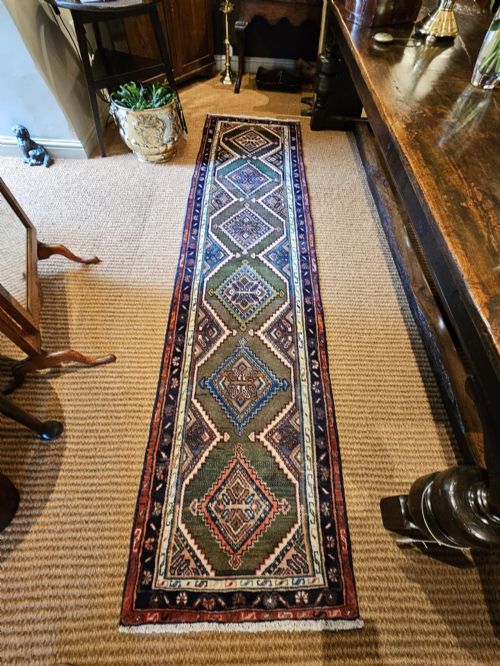
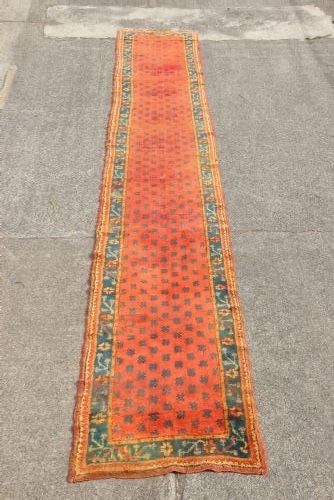
A traditional oriental runner rug is a long, narrow floor covering created for hallways, corridors and passageways in homes. These pieces emerge from diverse weaving traditions across Persia, the Caucasus, Anatolia, Central Asia and Tibet, spanning periods from the mid nineteenth century into the twentieth century. They manifest as specific regional forms such as Heriz, Hamadan, Oushak, Kazak and Tibetan runners.
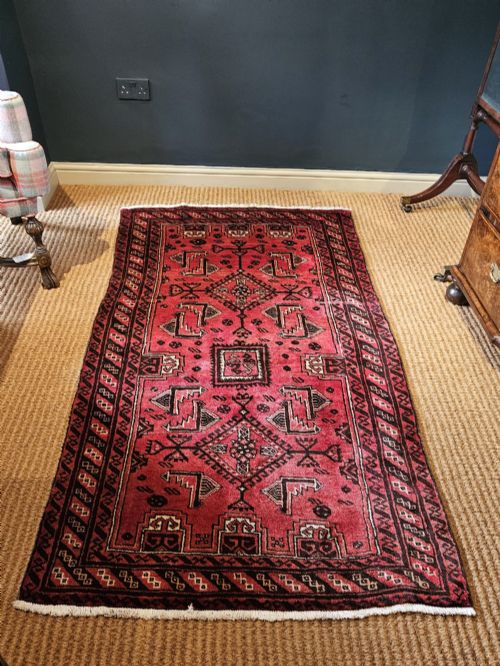
Buyers encountering this selection meet long, narrow formats designed to fit corridors, alongside broader village and tribal carpets. The origin ranges from Kurdish and Baluch tribal workshops to specific regional centres like Kirsehir, Saroukh and Bidjar. Each piece reflects the distinct geometric or floral vocabulary of its specific provenance.
How traditional oriental runner rugs were made
Weavers constructed these textiles primarily using wool, cotton foundations, pure wool piles, silk and occasional camel hair. The materials were hand-spun and dyed to achieve distinct palettes, utilising olive green, rust and mellow hues. Foundations relied on sturdy cotton or wool warps and wefts to support dense pile construction.
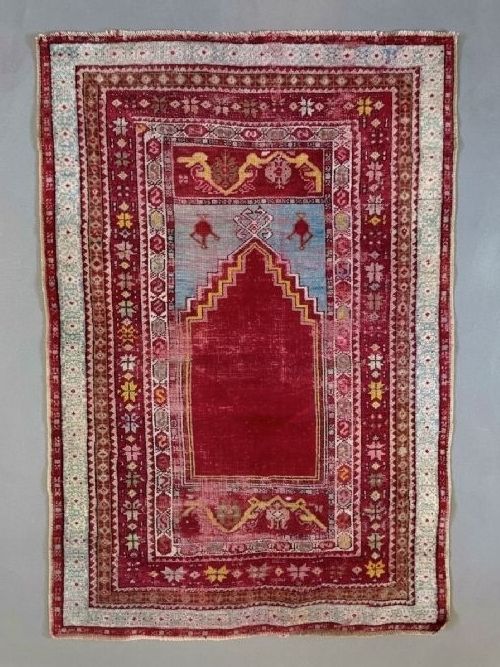
Tribal and village workshops employed knotting and weaving techniques passed down through generations, creating durable floor coverings. Specific structures include double mihrab prayer designs, lattice patterns, and large guls characteristic of Turkmen, Afghan and Caucasian production.
Materials recorded across the inventory include pure wool, cotton, silk and camel hair utilised in runners and prayer rugs.
What varies in quality
Quality differences stem from the tightness of the weave, the handling of wool materials and the clarity of regional design execution. Finer pieces demonstrate precise knot density and sophisticated handling of traditional motifs, while simpler village rugs exhibit bolder, more rustic tribal geometry.
The integrity of the foundation materials and the richness of the natural or early synthetic dyes dictate the enduring character of the piece. Superior examples maintain balanced proportions in long runner formats and retain the structural crispness intended by the original weavers.
Kizyl Ayak Tribe
The Traditional Oriental Runner Rug Glossary
- Runner
- A long, narrow carpet format specifically designed for hallways, corridors and staircases. These pieces measure significantly longer than they are wide.
- Mihrab
- A niche design element found in prayer rugs, representing the direction of prayer. It typically appears as an arched shape at one or both ends of the rug.
- Gul
- A medallion or repeating octagonal motif frequently utilised in Turkmen, Baluch and Central Asian tribal carpets. This design element acts as a clan or tribal identifier.
- Kelim
- A flat-woven carpet or rug produced without a pile. These textiles rely on interlocking weft threads to create geometric patterns.
- warp
- The vertical foundation threads stretched tightly on the loom before knotting begins. Weft threads pass horizontally through these warps to secure the pile.
Traditional Oriental Runner Rug: Frequently Asked Questions
Where should I place a runner rug?
Traditional oriental runner rugs suit narrow spaces such as hallways, corridors, entryways and long landings where floor protection and warmth are needed.
Their elongated proportions direct movement through a home while adding historic colour and texture to otherwise plain transitional areas.
How do I identify a Kazak runner?
Kazak rugs originate from the Caucasus region and typically feature bold geometric medallions, primary colours, and structured tribal motifs.
They display a distinct rustic character that separates them from the finer floral curves seen in traditional Persian workshop carpets.
What is a prayer rug?
A prayer rug is a smaller format textile featuring a mihrab niche design that indicates a directional orientation for daily devotions.
These pieces were woven in regions such as Anatolia, the Caucasus and Baluchistan with specific symbolic iconography.
How do I care for an antique wool runner?
Care for these wool and cotton textiles involves regular gentle vacuuming without a beater bar and professional cleaning when necessary.
Keeping them out of direct, harsh sunlight preserves the natural dyed wool colours over decades of domestic use.