




Late Nineteenth Century Rug
These late nineteenth century rug examples bring genuine tribal character and enduring craftsmanship into a modern interior.
Late Nineteenth Century Rug
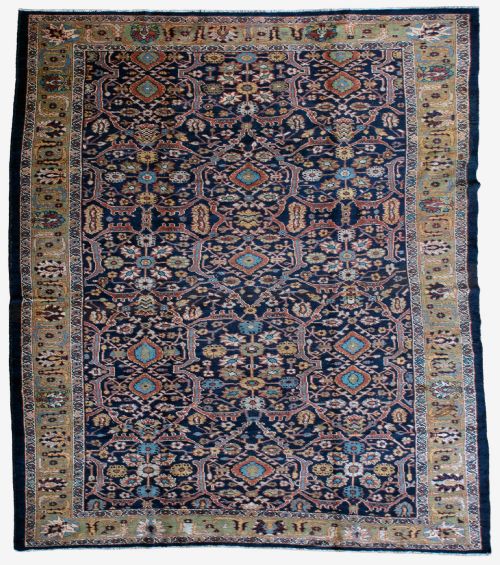
A late nineteenth century rug is a floor covering or wall hanging created across Persia, Anatolia, and Central Asia during a period of traditional textile production. Buyers searching for a late nineteenth century rug often encounter regional weaves such as Ushak, Mahal, and various tribal pieces from Turkmen, Uzbek, and Baluch makers.
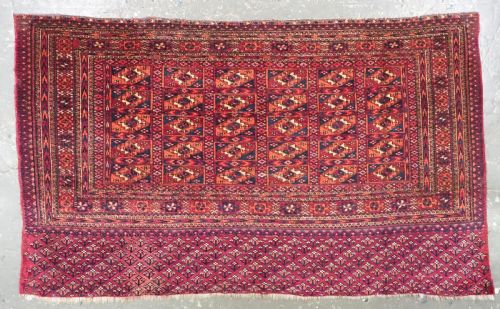
The selections available here showcase distinct formats ranging from large gallery carpets to smaller dowry embroideries and bag faces like chuval panels. These pieces reflect the specific cultural motifs and knotting techniques of their originating tribes and workshops without modern mechanical interference.
How they were made
The construction relies primarily on wool, hand-spun wool, cotton, and occasional silk foundations or pile yarns, depending on whether the piece originated in a nomadic camp or a settled town workshop. Weavers utilised natural dyes to colour the wool, creating rich patinas that deepen over decades of exposure and use.
Nomadic and village groups employed upright or horizontal looms to knot or embroider their textiles directly from memory, incorporating traditional tribal symbols such as the aina gul or lattice patterns. Town workshops in centres like Ushak and Mahal produced larger carpets with more structured floral and geometric layouts using similar fibrous materials.
Late Nineteenth Century Rug Retail Price Guide 2026
Typical asking prices for late nineteenth century rug among the pieces listed under this phrase on Sellingantiques today, from the lower quarter to the upper quarter. They describe what is for sale here now, not the wider market.
Nomadic weavers frequently embedded small protective amulets or deliberate minor flaws into their geometric patterns to ward off the evil eye.
What varies in quality
The distinction between average and exceptional specimens rests upon the fineness of the knotting and the integrity of the original materials. Tightly packed wool piles and crisply defined geometric or floral motifs indicate a higher level of weaver skill and greater durability.
Colour saturation and the harmonious balance of natural dye variations also determine the visual success of the piece. Ushak and Mahal carpets with well-preserved proportions and clear drawing command greater appreciation than those with muddled palettes or heavy restoration.
The Late Nineteenth Century Rug Glossary
- Chuval
- A large storage bag face produced by Turkmen tribes, often featuring multiple güls and detailed elem panels at the base.
- Ilgich
- A dowry embroidery created by Central Asian Uzbek and Lakai groups, traditionally utilised as a hanging ornament within the nomadic tent.
- Gul
- A medallion or repeating floral motif characteristic of Turkmen and other Central Asian carpet designs.
- Mahal
- A style of Persian carpet originating from the Sultanabad region, known for large-scale, spaced floral patterns and subdued colour palettes.
Late Nineteenth Century Rug: Frequently Asked Questions
Can I place these rugs in high traffic areas?
Sturdier village and town carpets handle moderate foot traffic well when paired with a quality underlay.
Finer wall hangings and delicate silk embroideries are better suited to low-traffic spaces or wall display.
What is the difference between tribal and town carpets?
Tribal pieces reflect nomadic traditions with geometric patterns and asymmetric irregularities woven from memory.
Town carpets display formal symmetry, complex floral compositions, and precise workshop planning.
How do I identify Ushak carpets?
Ushak carpets typically feature large-scale floral medallion designs rendered in soft terracotta, madder, and secondary pastel tones.
Their wool tends to have a lustrous quality with a looser knot count than fine Persian equivalents.